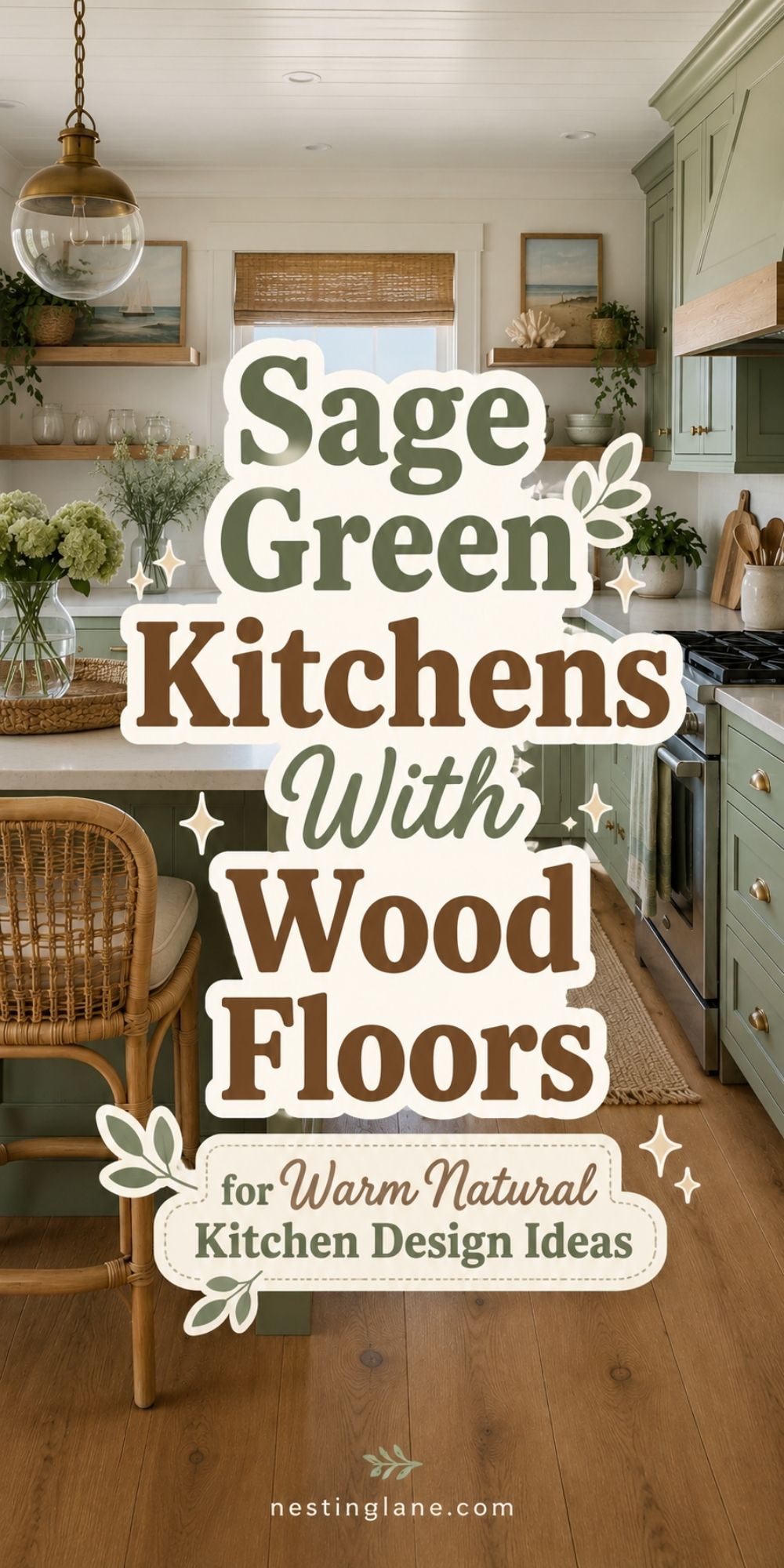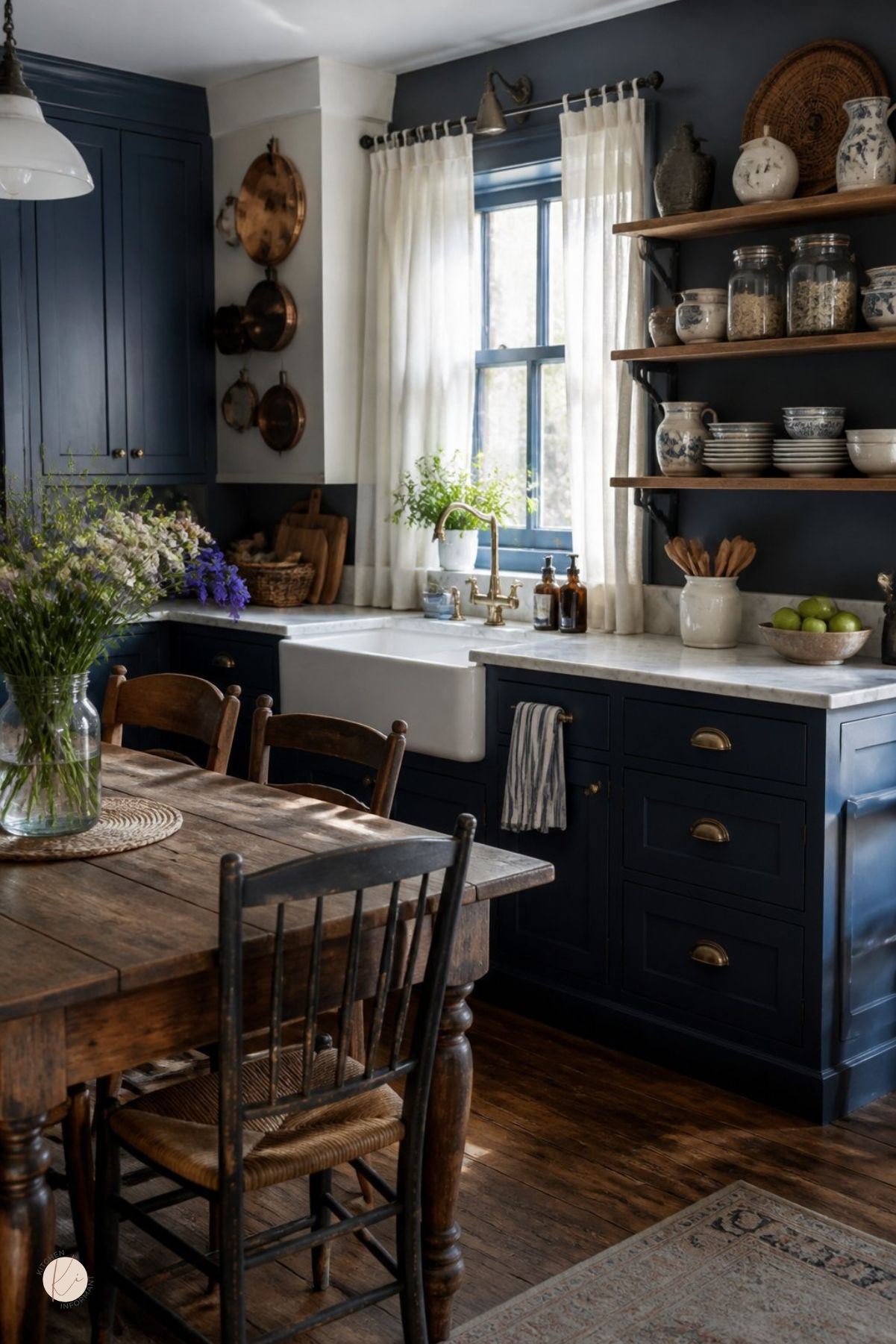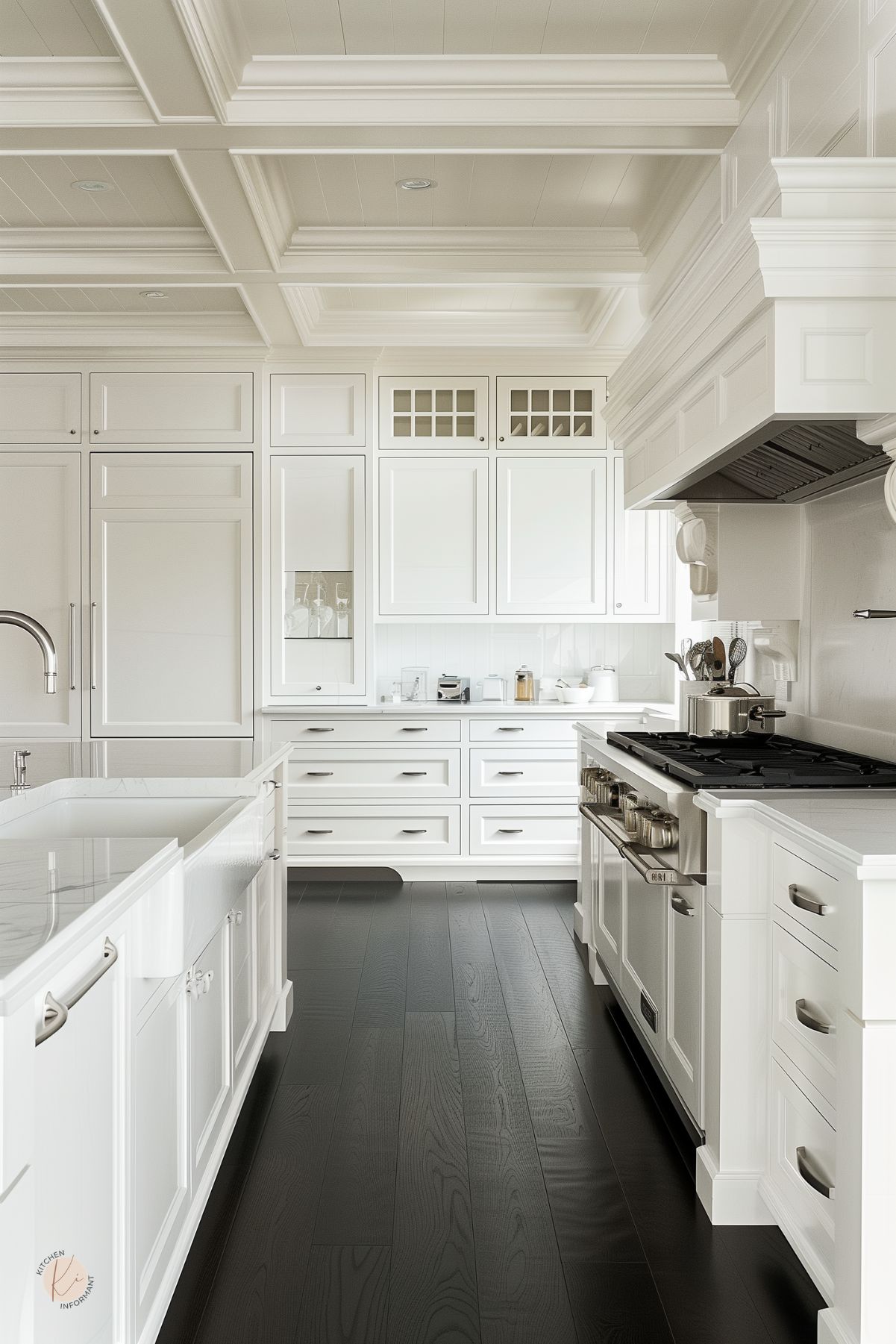
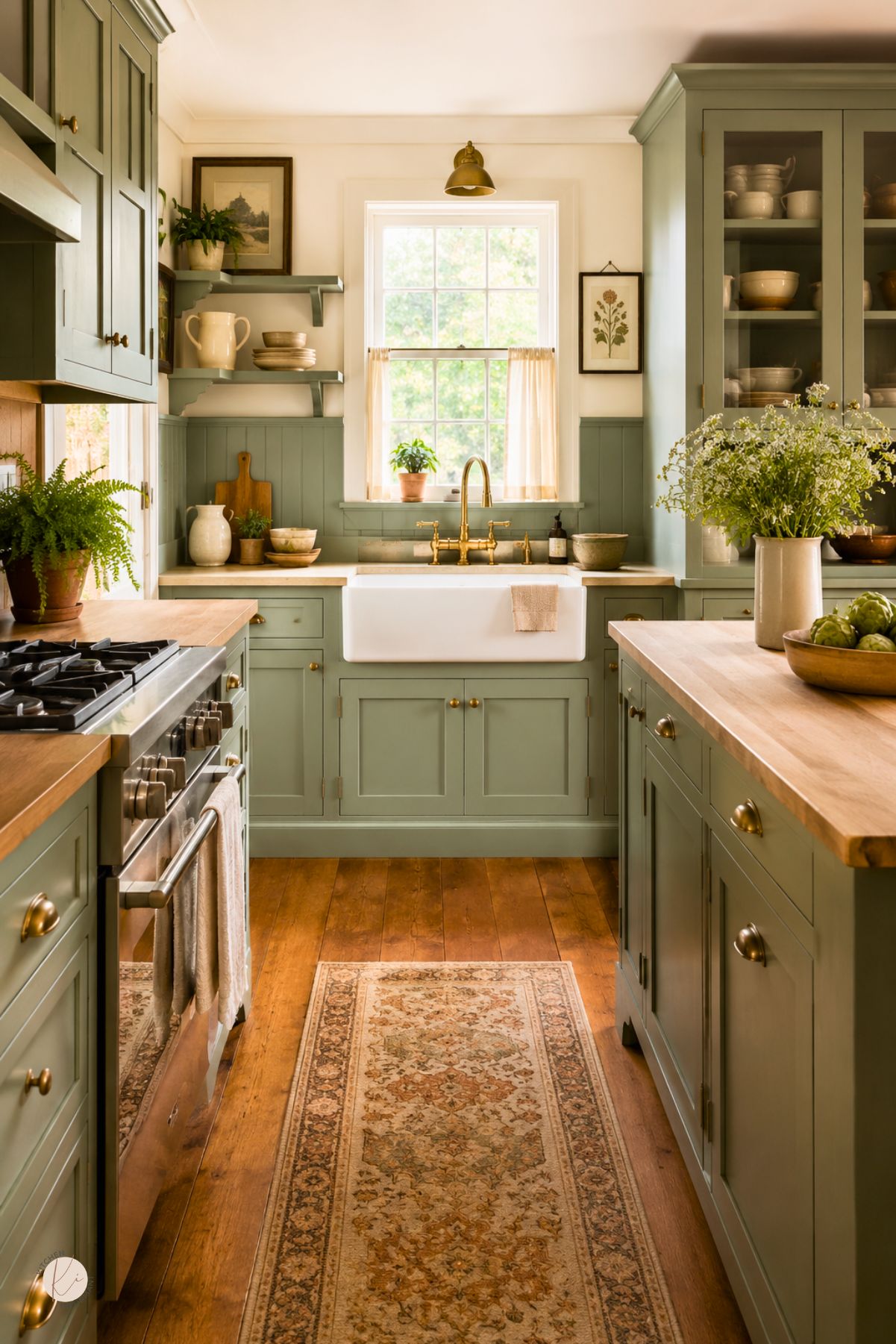
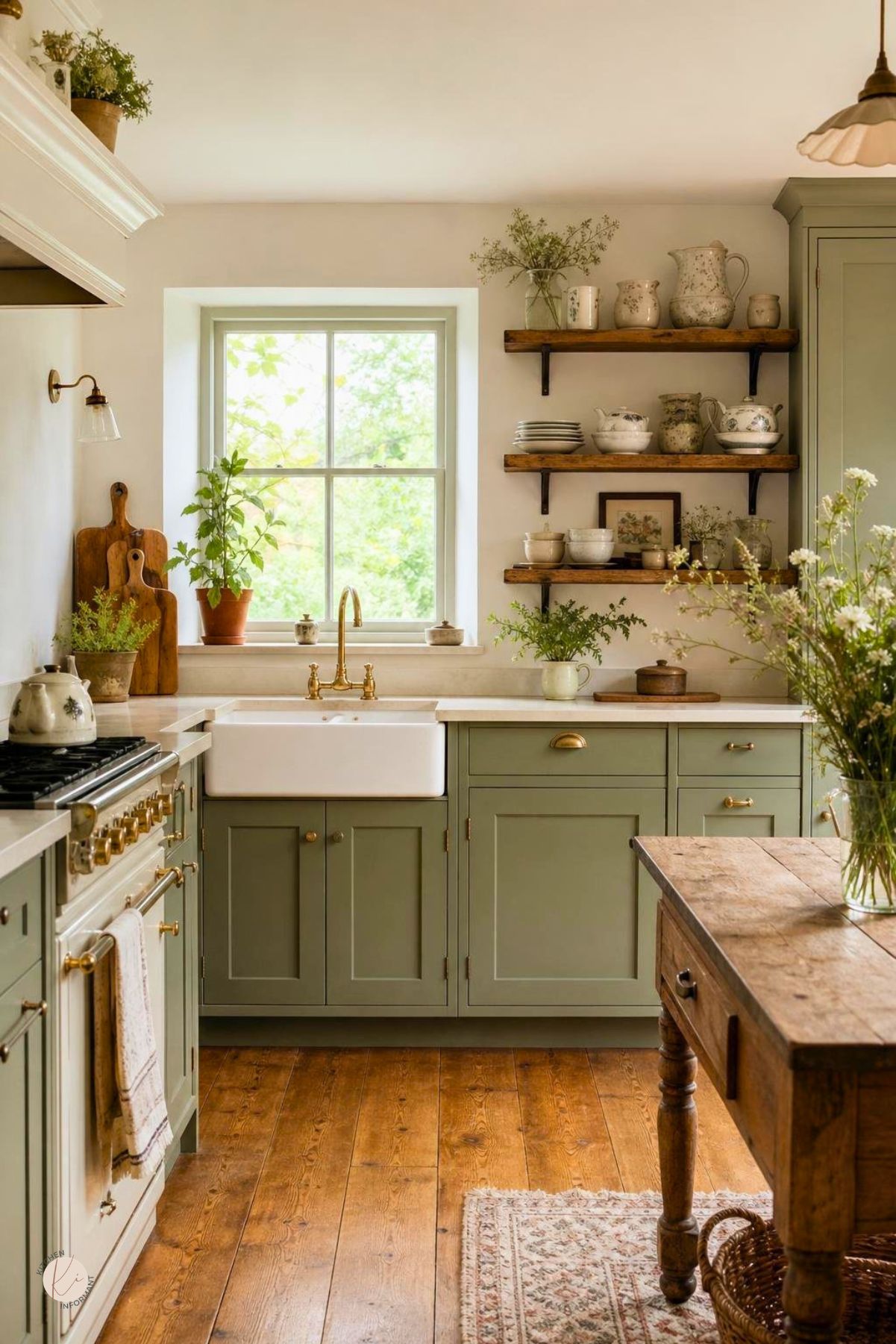
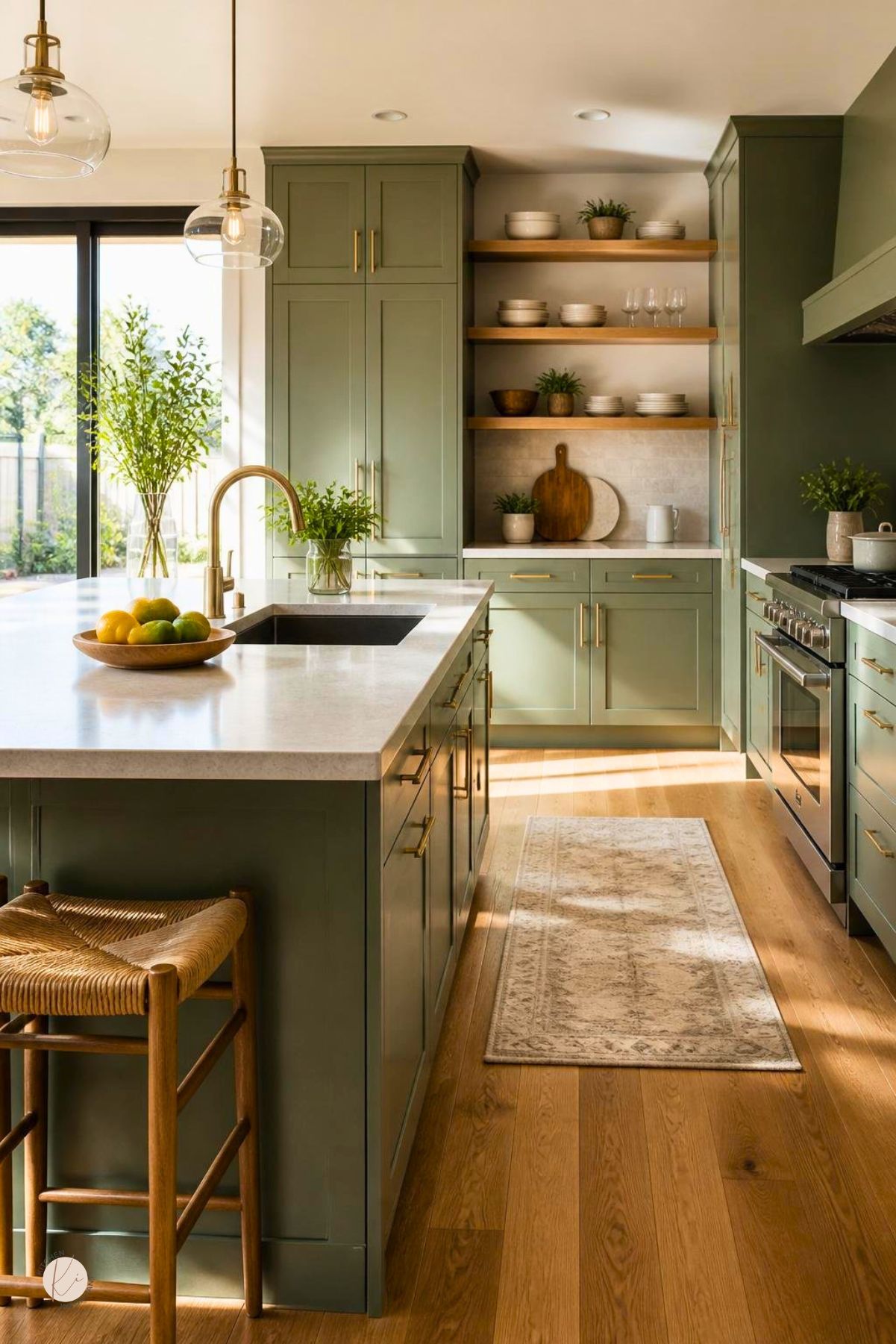
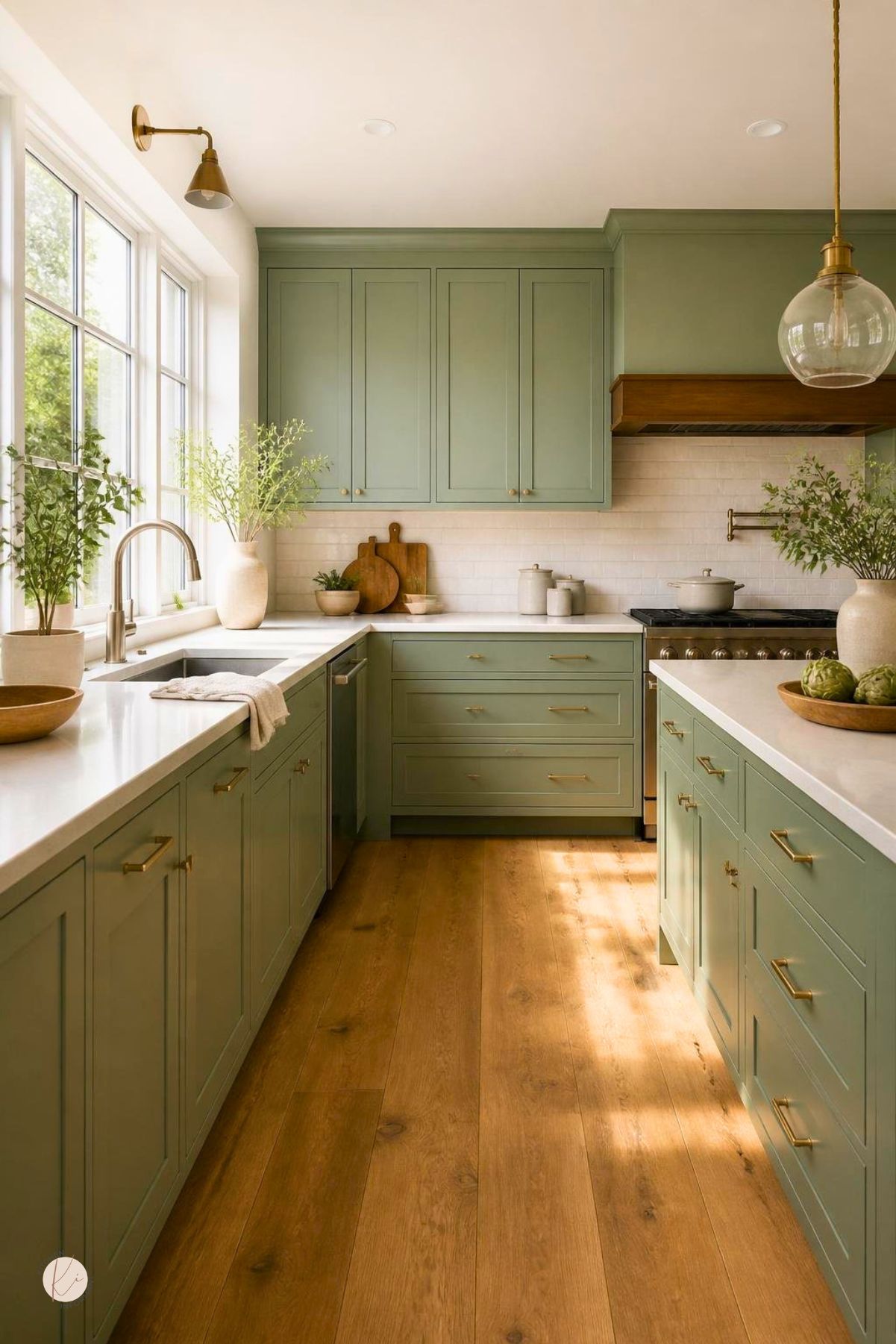
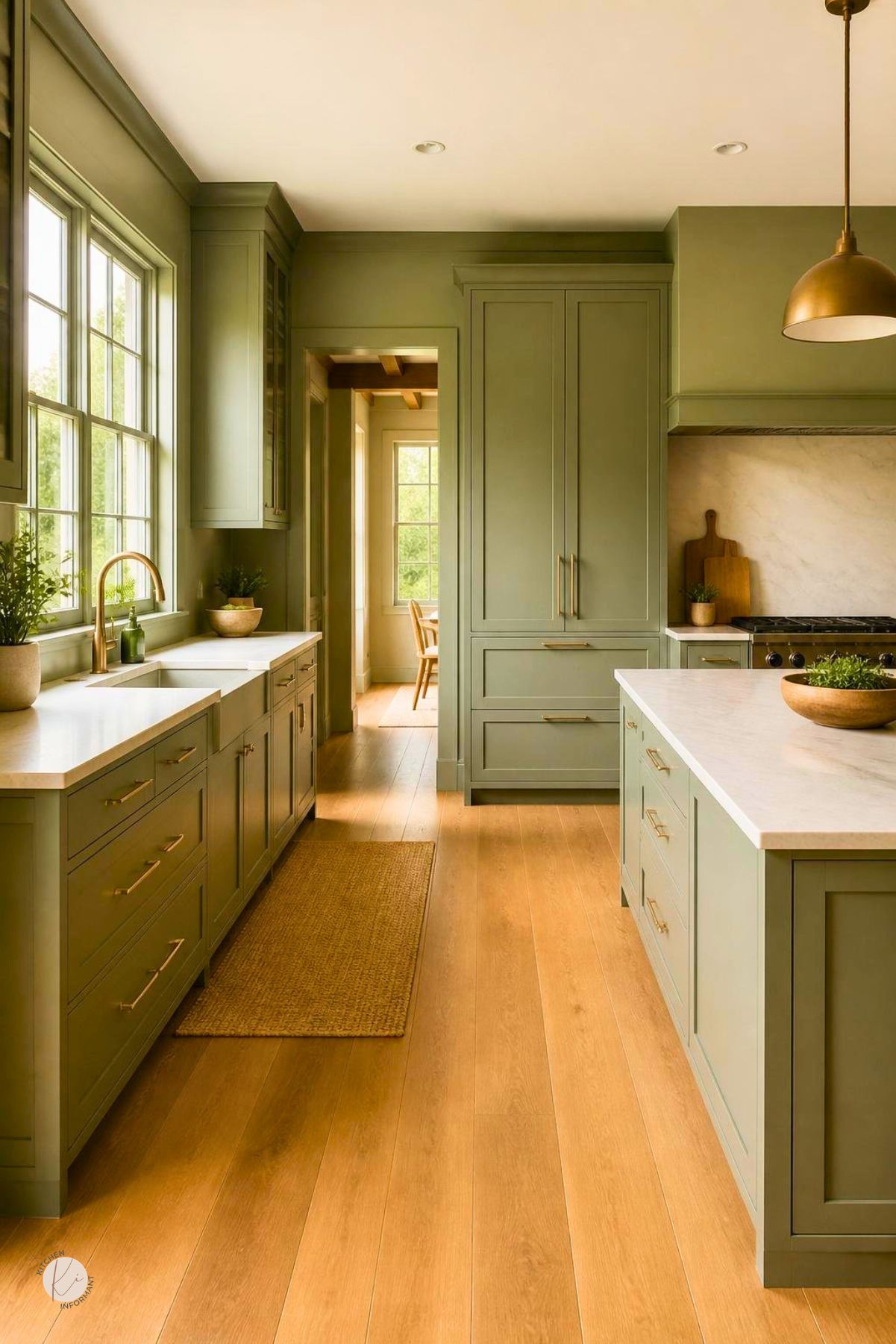
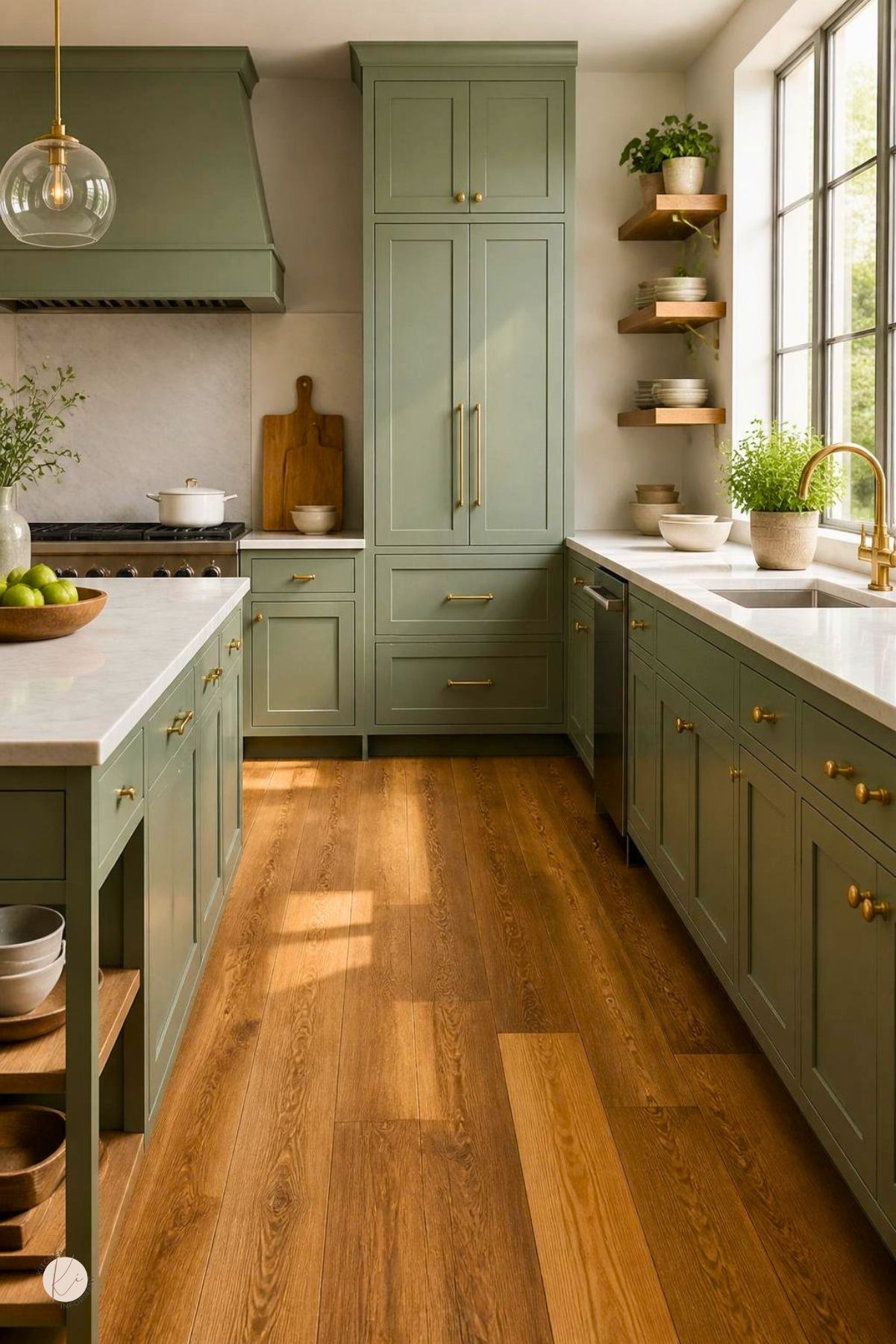
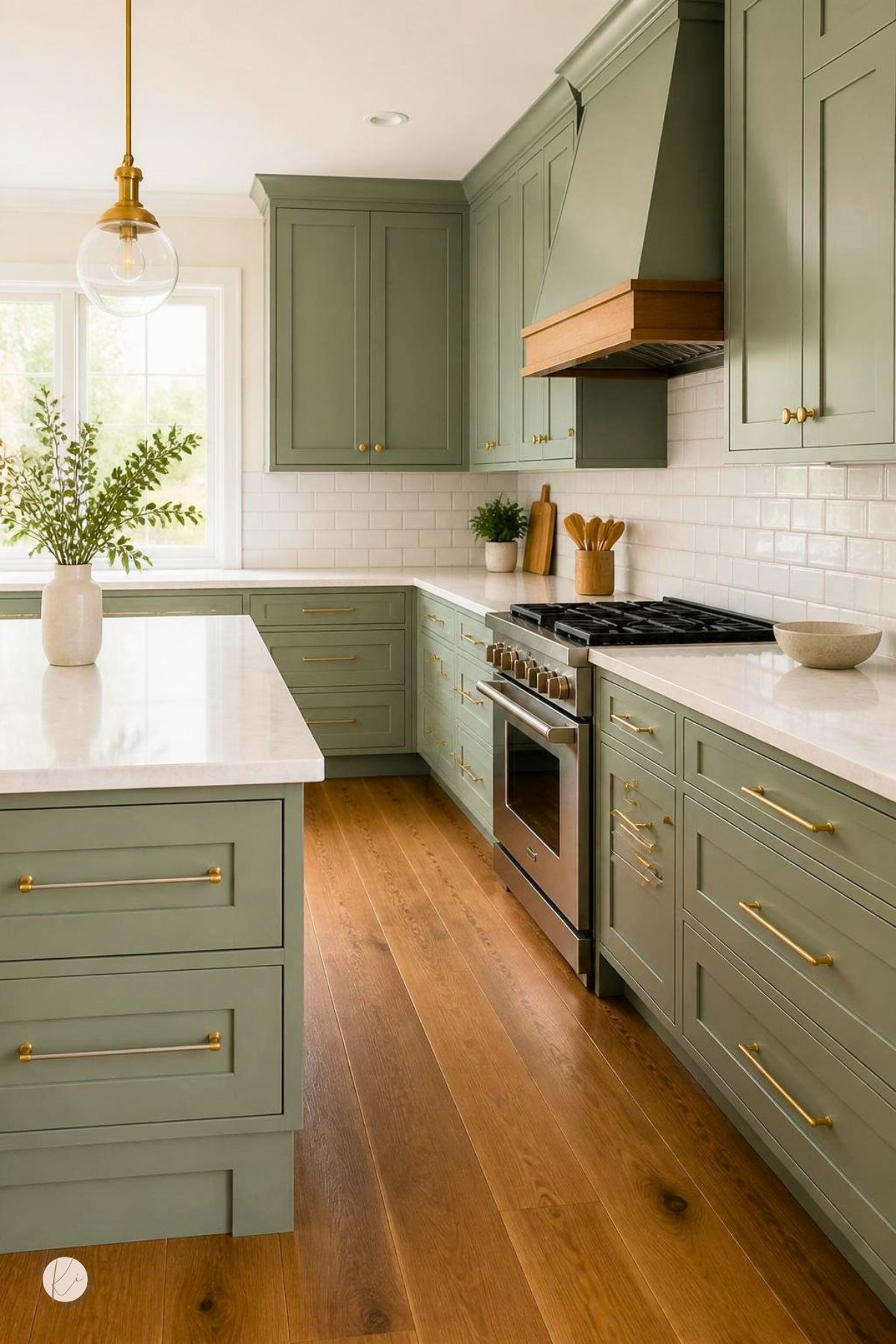
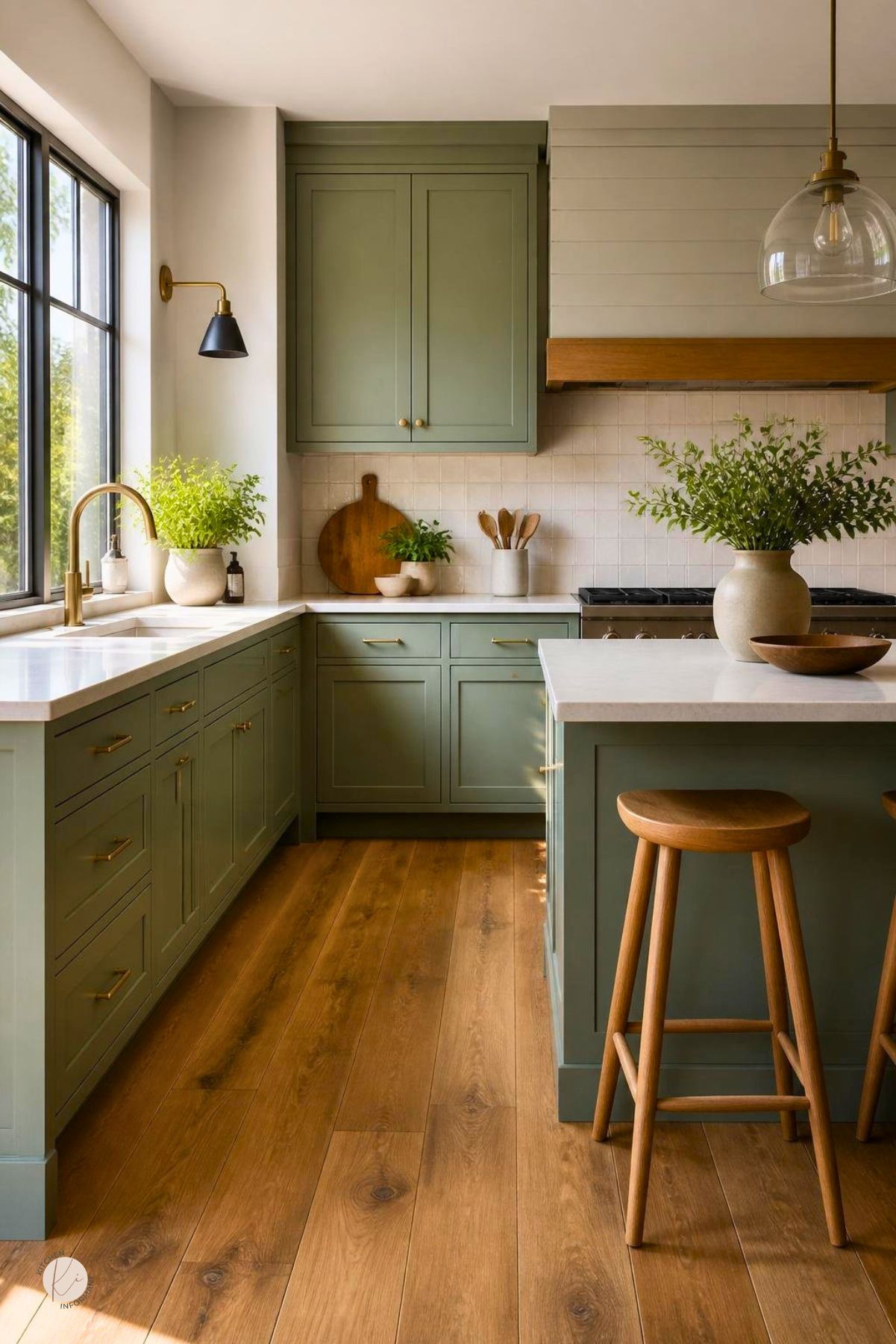
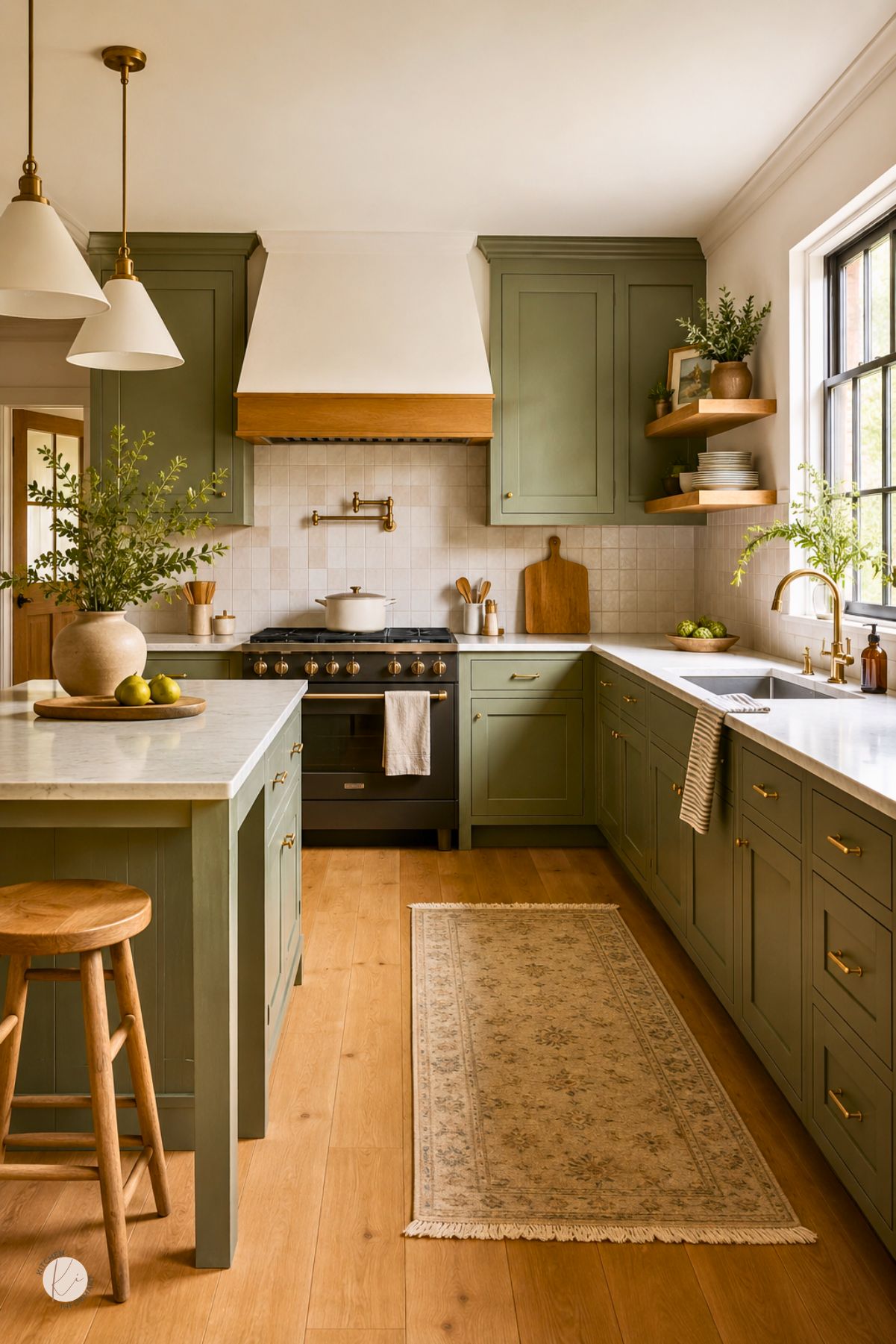
Sage Green Kitchens with wood floors just work. Sage brings a calm, muted color, while wood floors add warmth, texture, and a sense of age that feels familiar in many American homes.
The two materials support each other instead of competing for attention. The trick is matching the green’s undertone to the floor’s stain depth, then tweaking cabinets, counters, and lighting so the room feels balanced, not busy.
This pairing is especially helpful when you already have wood floors or older oak features you want to keep. You don’t always need a full remodel—sometimes a better paint choice, cleaner trim color, and a few new surfaces can make the room feel fresh without fighting what’s already there.
Why This Color-And-Material Pairing Works
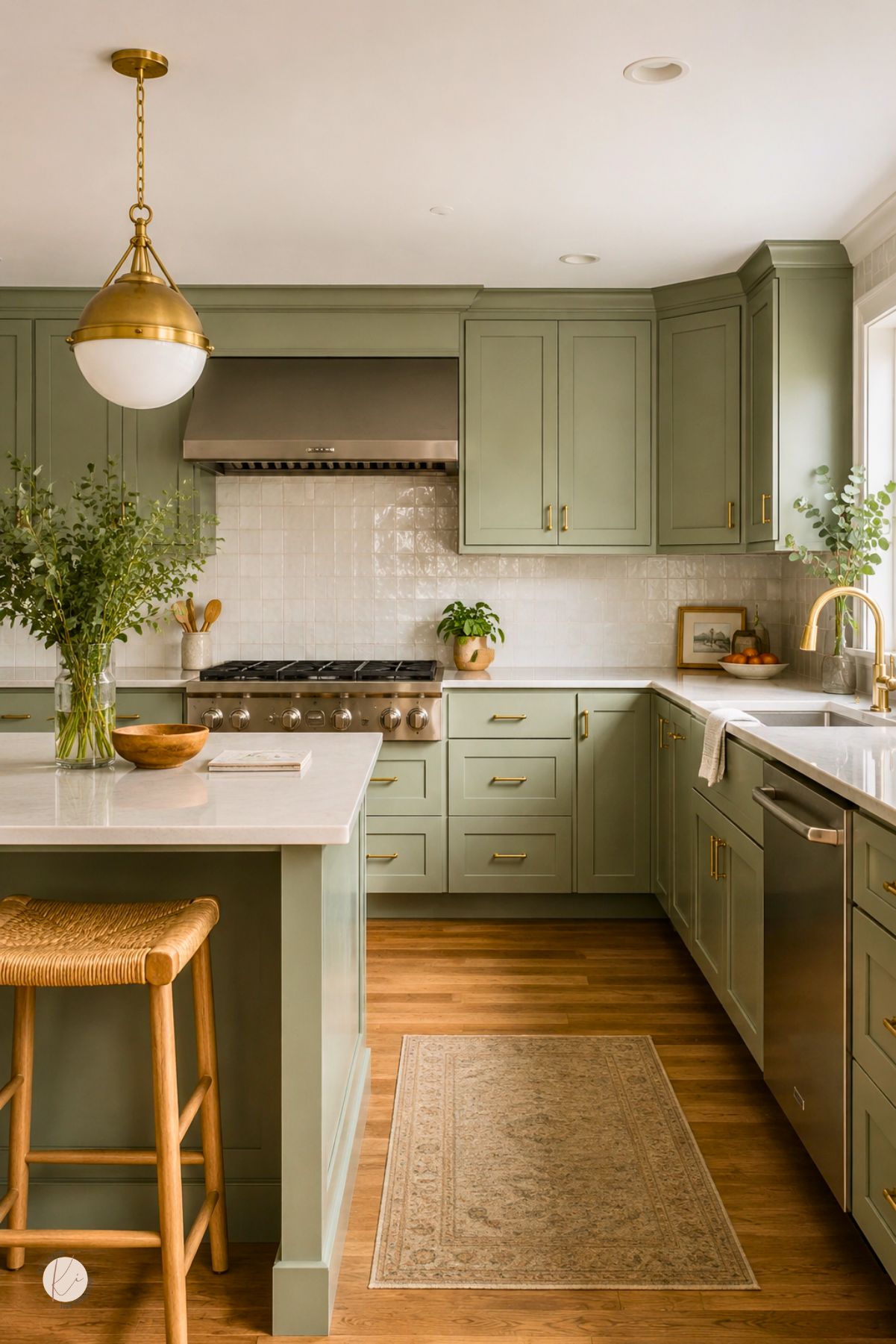
Sage green and wood floors belong together because both feel natural. The room gets a quiet, grounded vibe, which is great if you’ve got strong grain patterns, seams, or older cabinet details.
Your space ends up feeling finished, not fussy.
How Sage Green Changes The Mood Of A Kitchen
Sage green softens up hard kitchen surfaces. It lowers the contrast you’d get with white, black, or bright colors, so the room feels more settled and less harsh.
That can help older kitchens feel updated without looking like you tried too hard. The color also shifts with the light – bright rooms make sage look airy, while lower light can make it read more muted and a touch gray.
What Wood Floors Add To Warmth And Balance
Wood floors bring warmth, keeping sage green from feeling cold. They also anchor the eye, connecting cabinets and walls to the rest of the home.
With oak, hickory, maple, or walnut-look flooring, the grain adds enough movement that you don’t need a loud paint color. That’s handy if your floor is staying put for practical reasons.
Assessing Your Existing Wood Tone
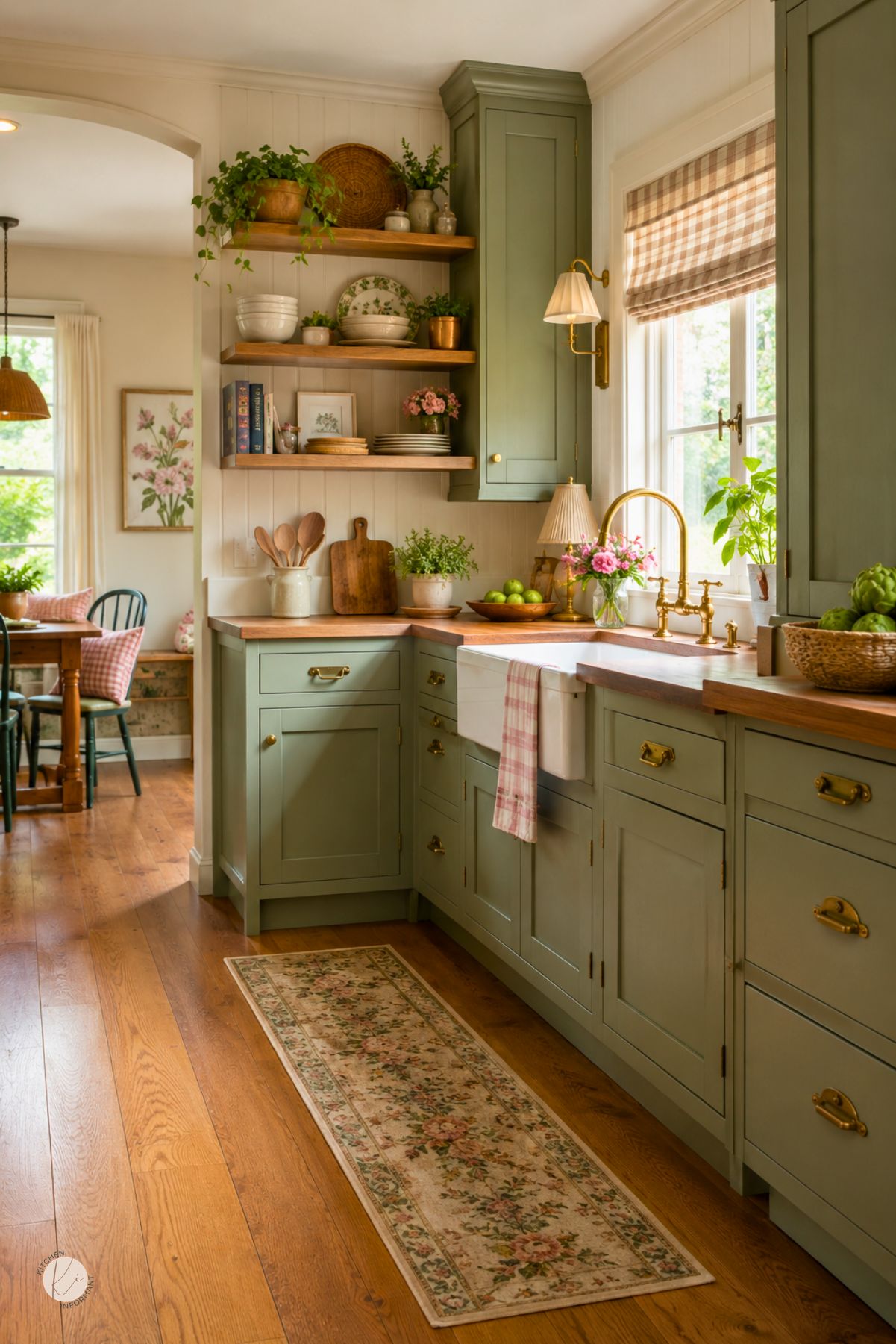
The wood tone you’ve got should guide every paint choice. Floor color, stain depth, and sheen can either make sage green sing or push it into a muddy or yellow mess.
Just test your paint sample near the room’s natural light, it’s usually enough to spot the direction that works best.
Light Oak, White Oak, And Blonde Finishes
Light oak and white oak usually play nice with cool or balanced sage. Their pale tone lets the green stand out without weighing down the kitchen.
Blonde finishes work best with a sage that has a soft gray base. That keeps things light and avoids a jarring contrast between cabinets and floors.
Medium Brown And Honey-Toned Planks
Medium brown floors often bring warm undertones, especially in older homes. Sage green should lean a bit muted or gray-green here, so things stay calm instead of turning super rustic.
Honey tones can turn some greens yellow, so always check a paint sample next to the floor in different light. If your floor has a lot of orange, a cooler sage is usually safer.
Dark Stain And Walnut-Look Flooring
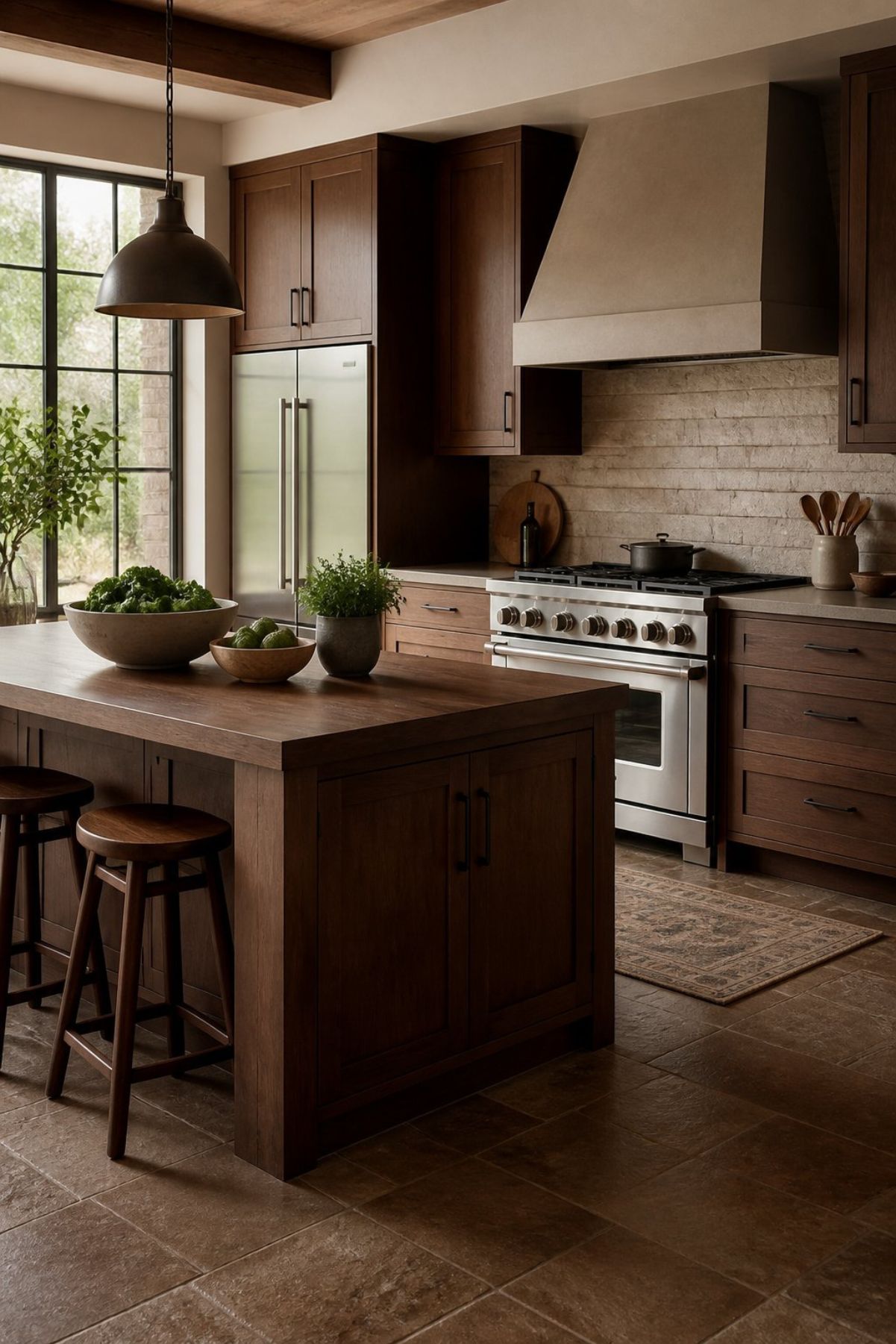
Dark wood floors give you a stronger base and can make sage green feel richer. This combo works when cabinetry stays simple and counters are light enough to break up the depth.
Walnut-look flooring also pairs well with deeper sage shades, especially if you get good daylight. In rooms with limited light, a lighter wall color and brighter countertop can help keep things from feeling too closed in.
Choosing The Right Shade Of Green
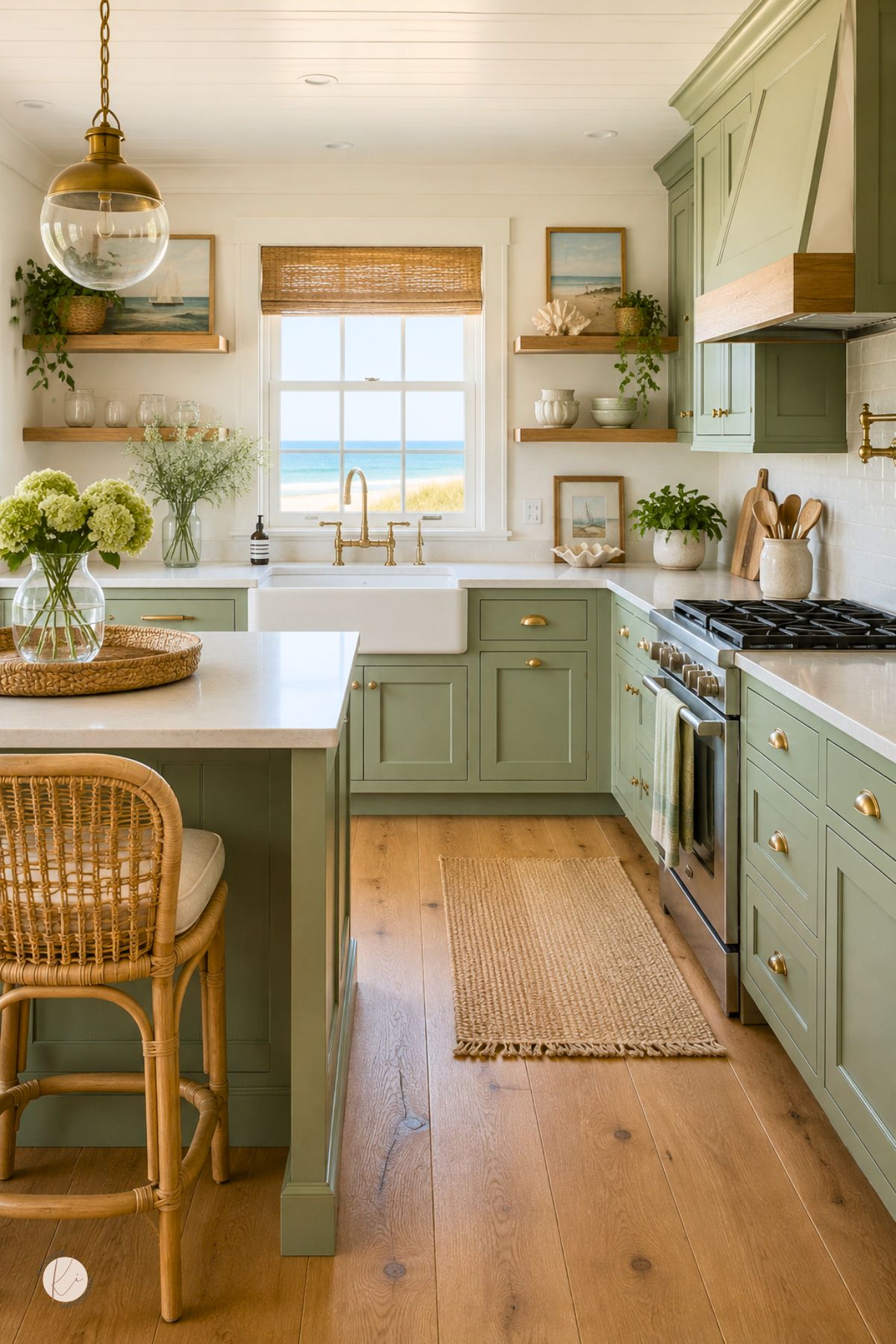
The right sage depends on your floor, cabinet style, and how much light you get. Always view paint samples next to the actual floor, not just on a white wall.
Even small undertone shifts can make a visible difference.
Muted Paint Colors For A Soft Look
Muted sage shades are usually the safest bet. They’ve got enough gray to stay calm, which helps them work with both oak and darker wood.
This softer approach fits homes with classic cabinets, simple tile, or visible floor grain. It also keeps the kitchen from feeling too trendy (which, honestly, is a relief sometimes).
Gray-Influenced Options For Modern Spaces
Gray-influenced sage feels right in modern kitchens—think flat-front doors, clean lines, minimal hardware. These colors cut yellow undertones and create a more tailored look.
They’re a strong choice if your wood floor has a golden or red cast, since the gray influence helps balance out those warmer notes.
Warm Green Picks For Traditional Rooms
Warm sage shades fit best in traditional kitchens with shaker cabinets, detailed trim, or antique-style wood floors. These colors echo the warmth that’s already in the room.
The key is not going overboard. A warm sage should still stay muted enough to avoid looking like mint or bright herb green.
Coordinating Cabinets, Walls, And Trim
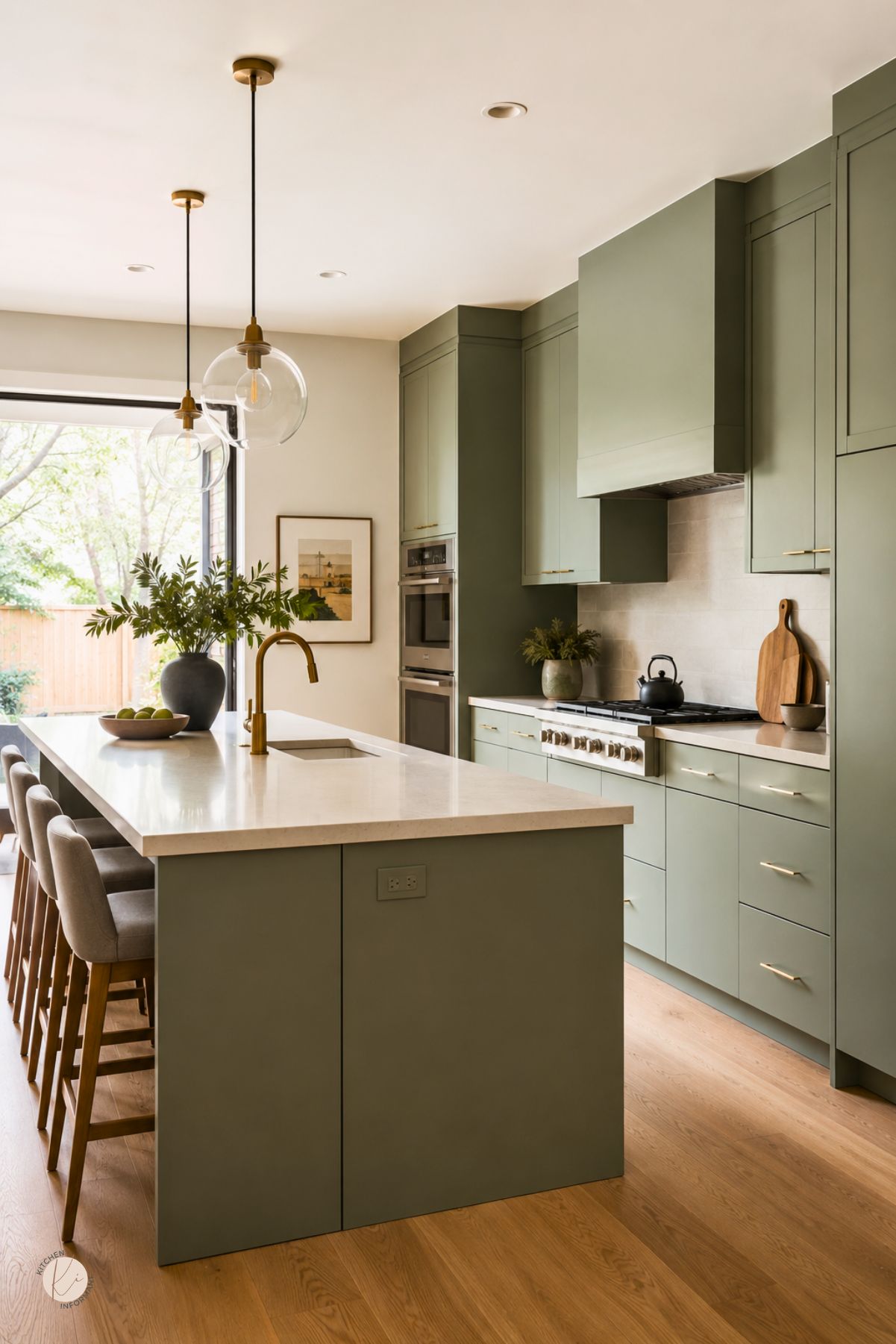
Cabinets, walls, and trim need to work together as a team. If one surface is too bright, creamy, or cool, the sage and wood pairing can fall apart.
Keeping the palette consistent helps the kitchen feel calm and intentional.
Best Cabinet Placements For Sage Tones
Sage often looks best on lower cabinets, an island, or all cabinetry in a room with plenty of light. Using color on the lowers gives the kitchen personality without overwhelming it.
In smaller kitchens, upper cabinets can stay white or off-white while the lowers go sage. That keeps things open but still interesting.
Wall Colors That Keep The Room Bright
Walls should usually be lighter than the cabinetry. Soft white, pale warm gray, or a light neutral with a hint of green or beige can keep the room feeling bright.
If you’ve got dark floors, a lighter wall color matters even more. It helps reflect light and keeps the wood from taking over.
Trim And Ceiling Choices That Reduce Contrast Problems
Trim works best in a clean white or soft off-white that matches the room’s vibe. High contrast can make older cabinet lines or uneven walls stand out more than you’d like.
Ceilings should stay close to the trim color for a smoother transition. That way, you don’t draw attention upward—especially helpful if the kitchen ceilings are low.
Selecting Countertops, Backsplashes, And Hardware
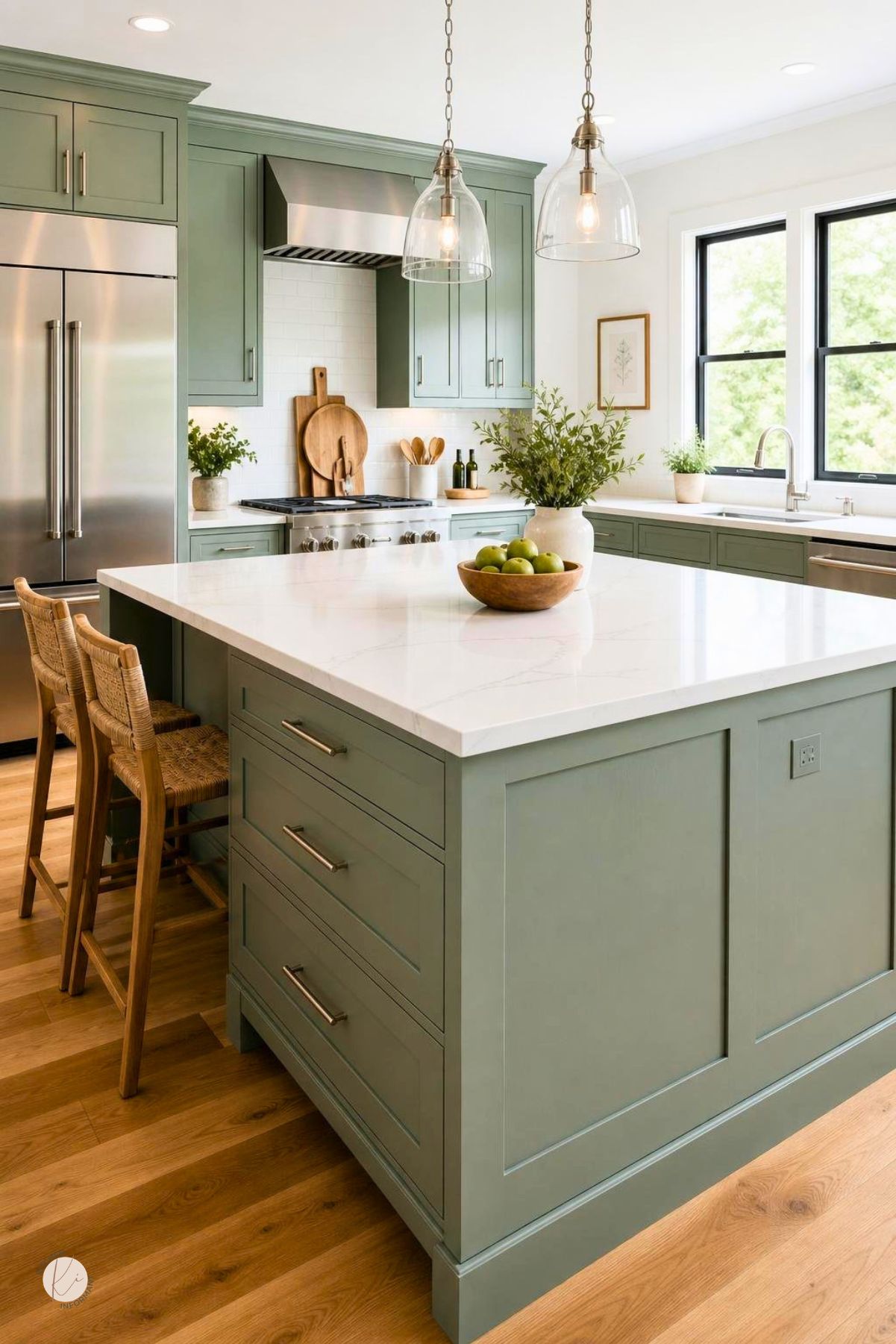
Countertops, tile, and hardware need to bridge the gap between green and wood. The best choices don’t compete they support the palette and make the kitchen easy to live with.
Stone And Quartz Surfaces That Complement Both Finishes
Light stone and soft quartz usually play well with sage and wood floors. White quartz with subtle veining, honed marble-look surfaces, and warm gray stone can keep things bright without looking harsh.
If your floor is super warm, skip countertops with heavy yellow veining. Cleaner, cooler surfaces often give a better balance.
Backsplash Materials That Prevent Color Clash
Simple backsplash materials are the safest bet. Classic white tile, handmade-look ceramic, soft cream zellige, or a low-contrast stone slab all let the sage and wood stay in focus.
Busy patterns can clash with the floor grain and cabinet color. If you already have strong wood tones, a quiet backsplash usually wins.
Metal Finishes That Sharpen Or Soften The Palette
Brass and brushed gold add warmth, which pairs nicely with sage and most wood floors. They’re great when you want a softer, more traditional feel.
Matte black or dark bronze sharpens up the palette and adds some definition. Stainless steel stays neutral and practical, especially if you’re already using cooler quartz or gray-green paint.
Lighting, Decor, And Styling Details
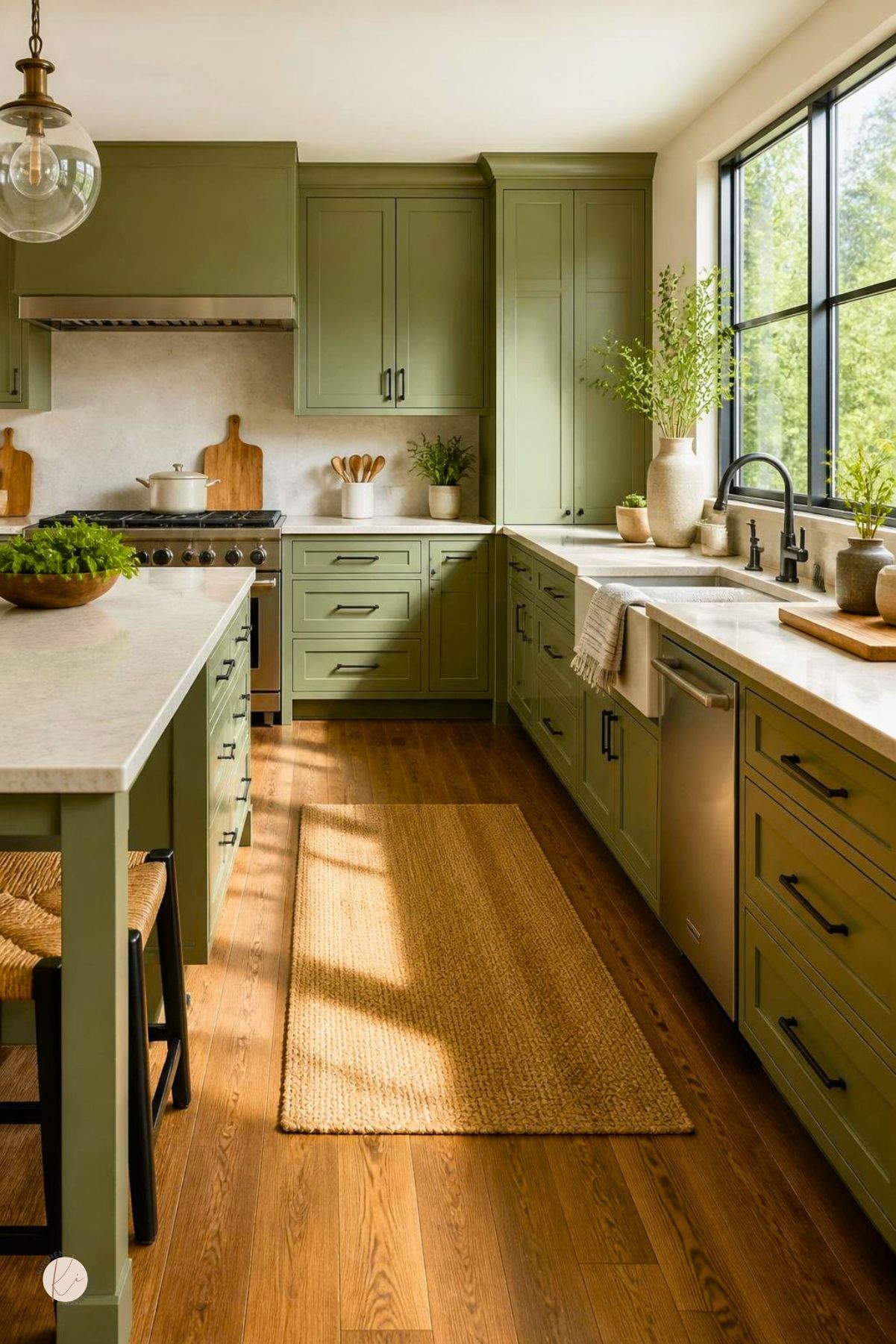
Lighting changes the look of sage green more than almost anything else. Decor should reinforce the palette but not add clutter.
The goal? A kitchen that feels calm, finished, and genuinely usable every day.
How Natural Light Affects Green And Wood
North-facing light can make sage look cooler and a bit grayer. South-facing light usually brings out the warmth in both paint and floor.
East and west light shift the color throughout the day, so check your samples at different hours. Rooms with little natural light often need lighter counters and trim to keep the sage from looking flat.
Pendant And Under-Cabinet Fixture Ideas
Pendant lights should stay simple if you’ve got strong wood grain. Clear glass, slim metal shades, or soft domes work in a lot of layouts.
Under-cabinet lighting helps show off the real cabinet color and makes wood floors look cleaner by boosting contrast in the work zone.
Decor Accents That Add Depth Without Visual Noise
A handful of materials can add depth without making a room feel chaotic. Linen, stoneware, woven baskets, and just a bit of wood on shelves or stools all blend nicely with the palette.
Plants work well too, as long as you don’t tuck them into every corner. If you’ve got a kitchen with sage cabinets and wood floors, keeping things simple usually feels more refined than cramming in too much stuff.
You May Also Like: