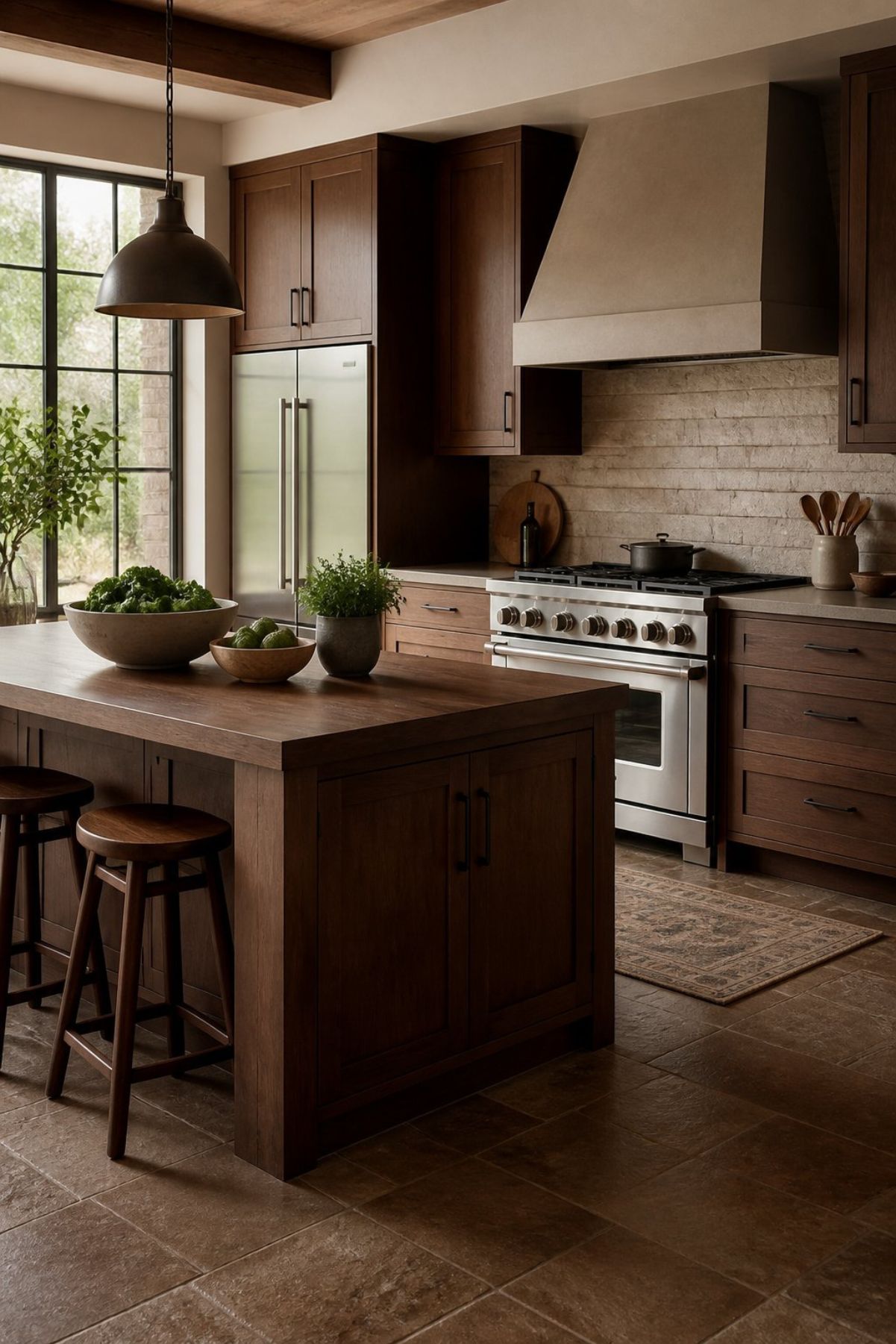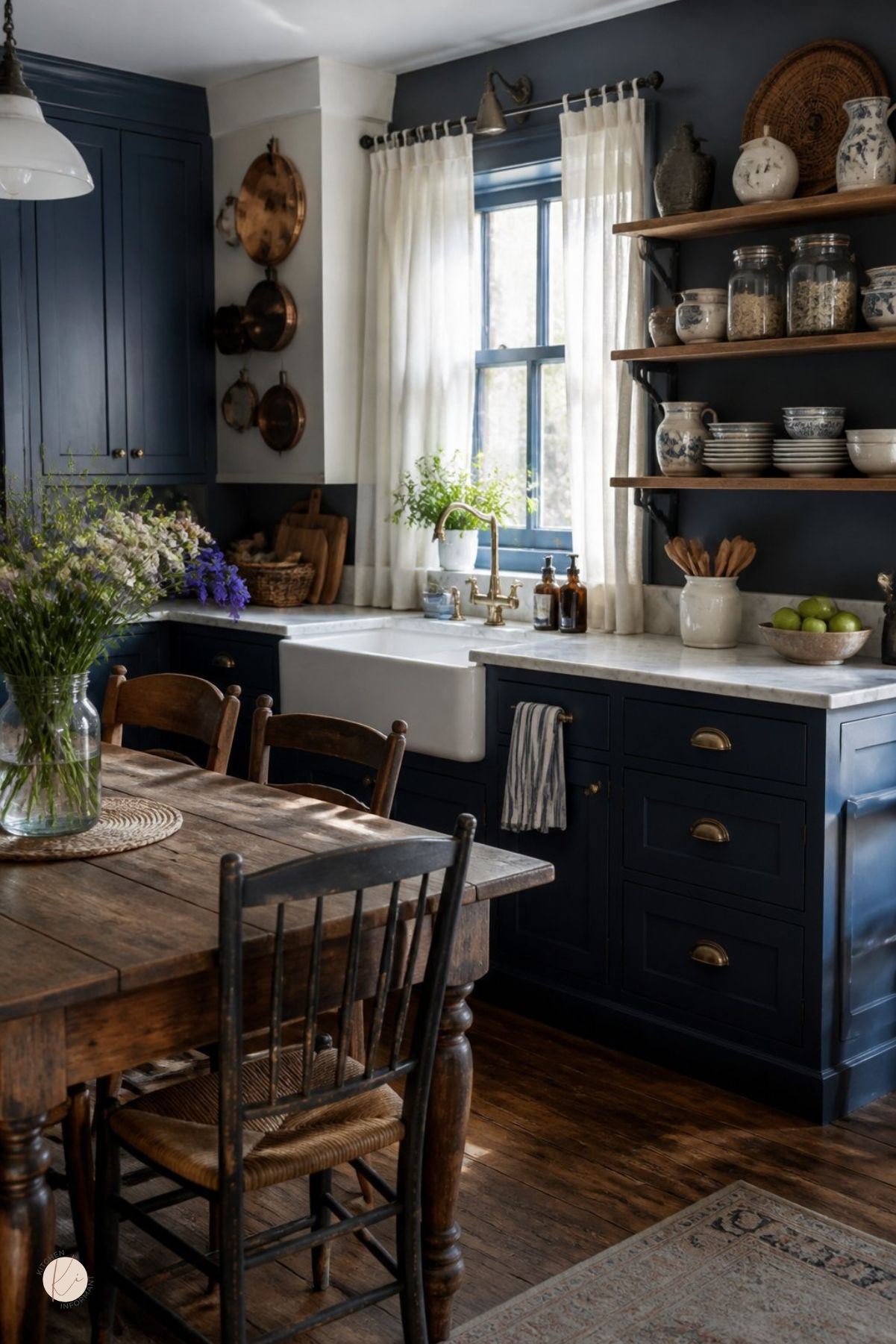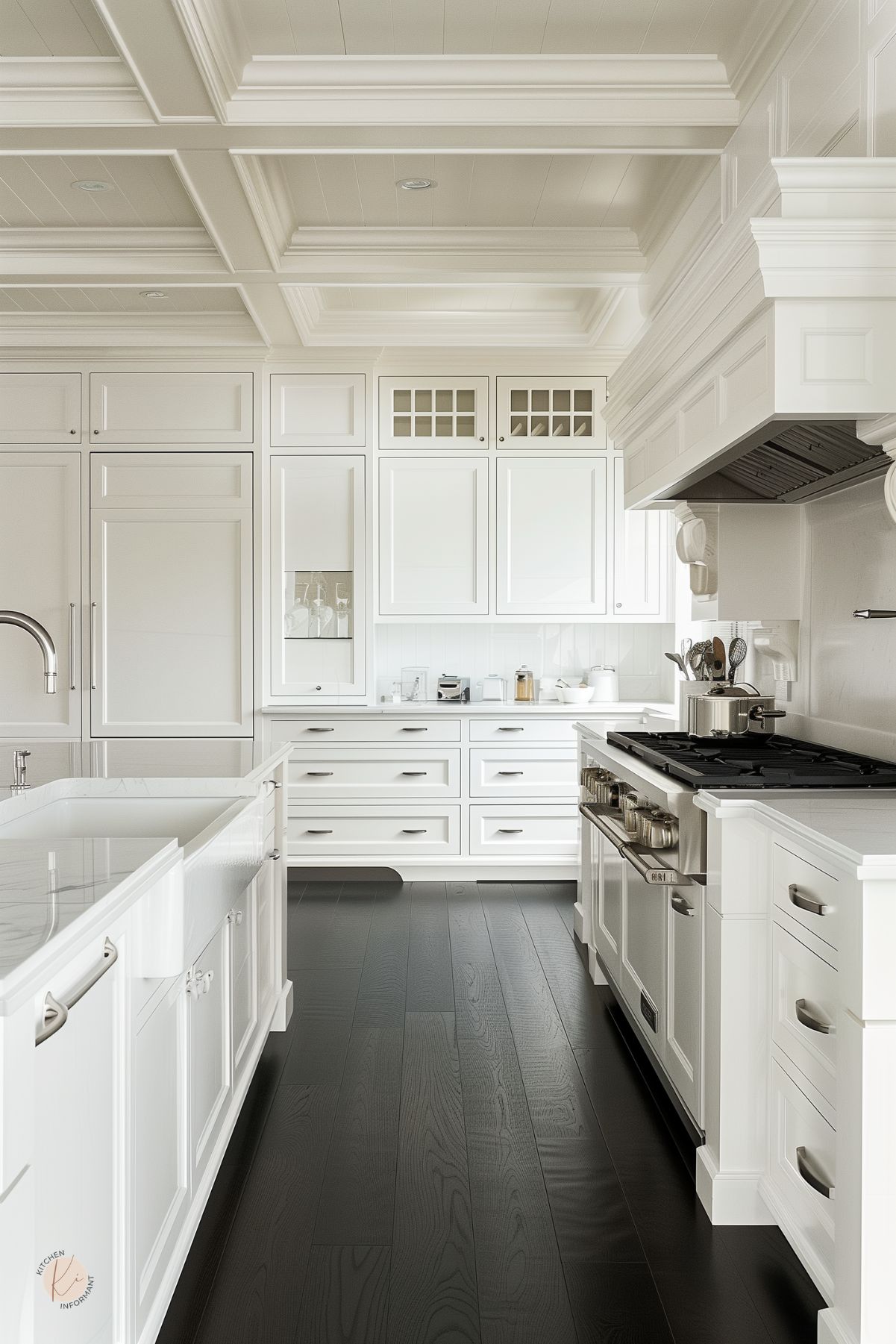
The cottage core farmhouse aesthetic kitchen blends soft color, lived-in texture, and practical function in a way that feels calm rather than staged.
It works especially well in homes with older oak cabinets, because the style can soften warm wood instead of fighting it.
The most effective updates usually come from a careful mix of color, finish, light, and a few well-chosen details, not from a full remodel.
That makes the style useful for homeowners who want a room that feels warmer, brighter, and more personal without replacing everything at once.
Defining the Look
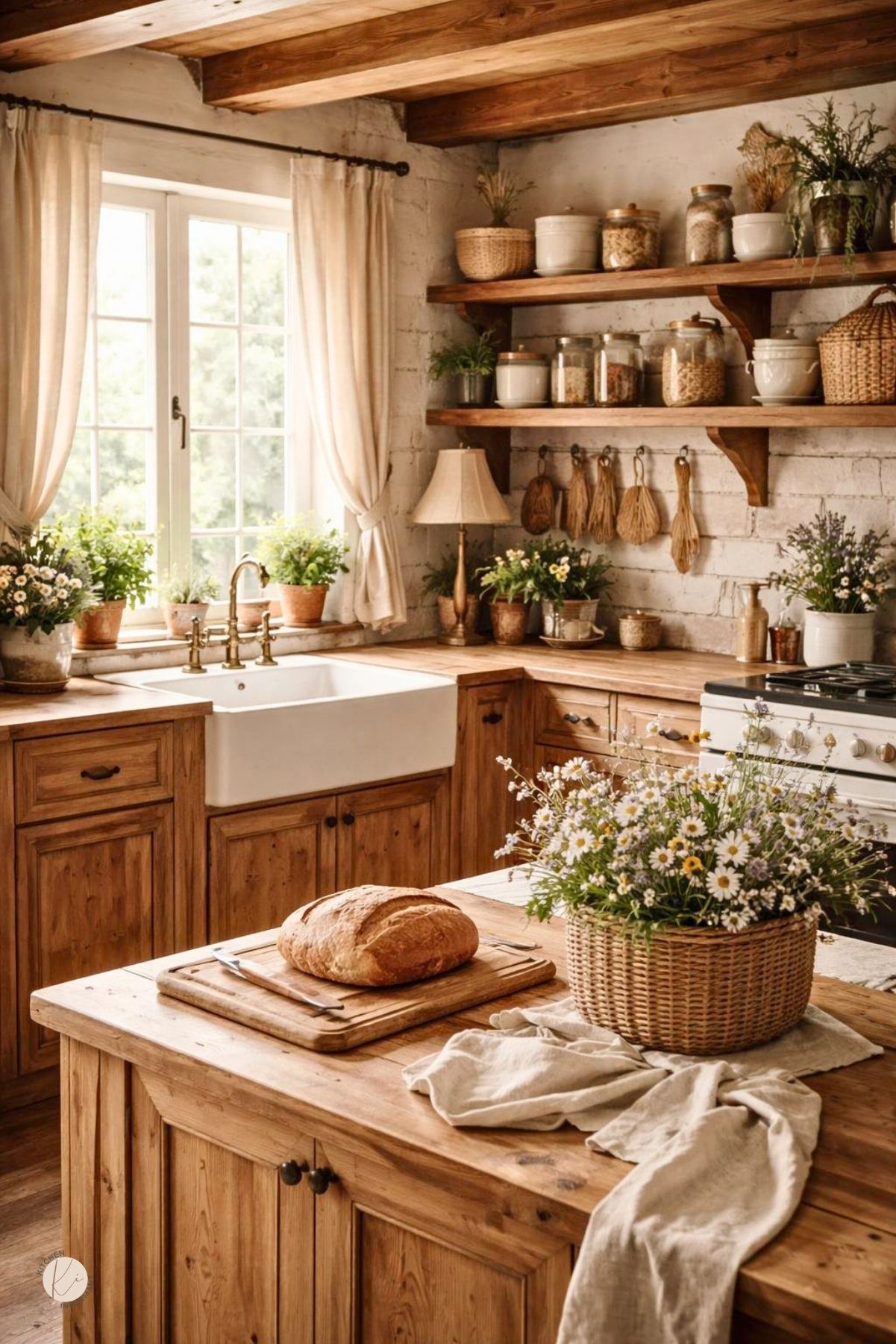
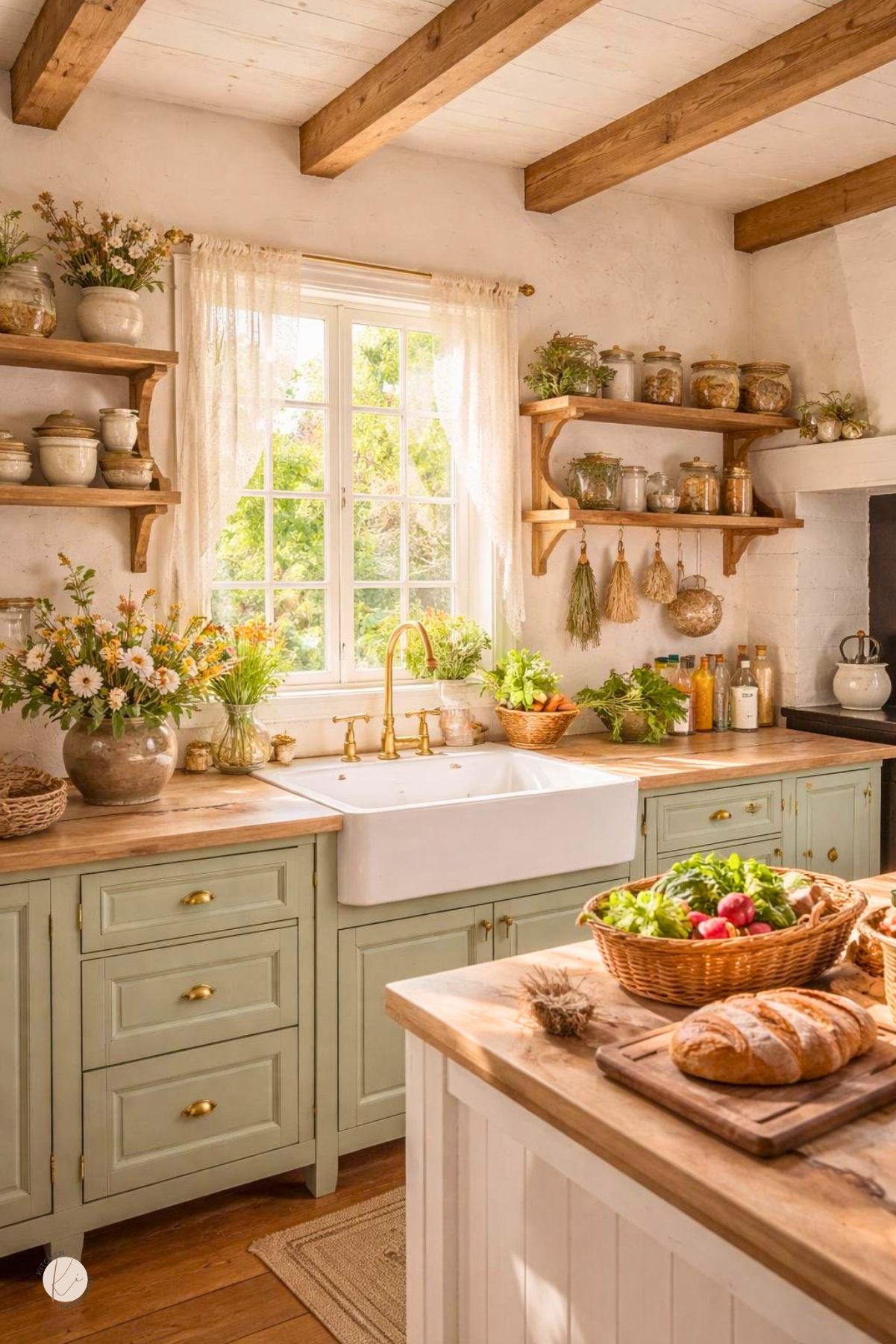
A cottage core farmhouse aesthetic kitchen usually feels relaxed, natural, and welcoming.
It leans on wood, painted surfaces, soft textiles, simple shapes, and details that look useful as well as decorative.
Core Visual Traits
The look often includes warm whites, muted blues, buttery yellows, natural wood, and matte or lightly aged finishes.
Open shelves, apron-front sinks, woven baskets, ceramics, and fresh or dried plants reinforce the style.
Soft contrast matters more than sharp contrast.
A space can still feel calm when oak cabinets, painted walls, and stone surfaces are mixed with care.
Difference Between Rustic and Refined
Rustic rooms can feel rough, heavy, or strongly weathered.
Refined cottage farmhouse rooms keep some texture, yet the surfaces read cleaner and lighter.
That balance matters in kitchens with existing oak.
The goal is not to erase age, it is to make the room feel intentional and well cared for.
How Farmhouse and Cottage Influences Overlap
Farmhouse design adds practicality, sturdy materials, and familiar forms.
Cottage style adds softness, color, and a more collected feeling.
Together, they create a kitchen that feels lived in, not overly formal.
That overlap is what makes the style flexible for real homes, including older kitchens with strong wood tones.
Working With Existing Oak Cabinets
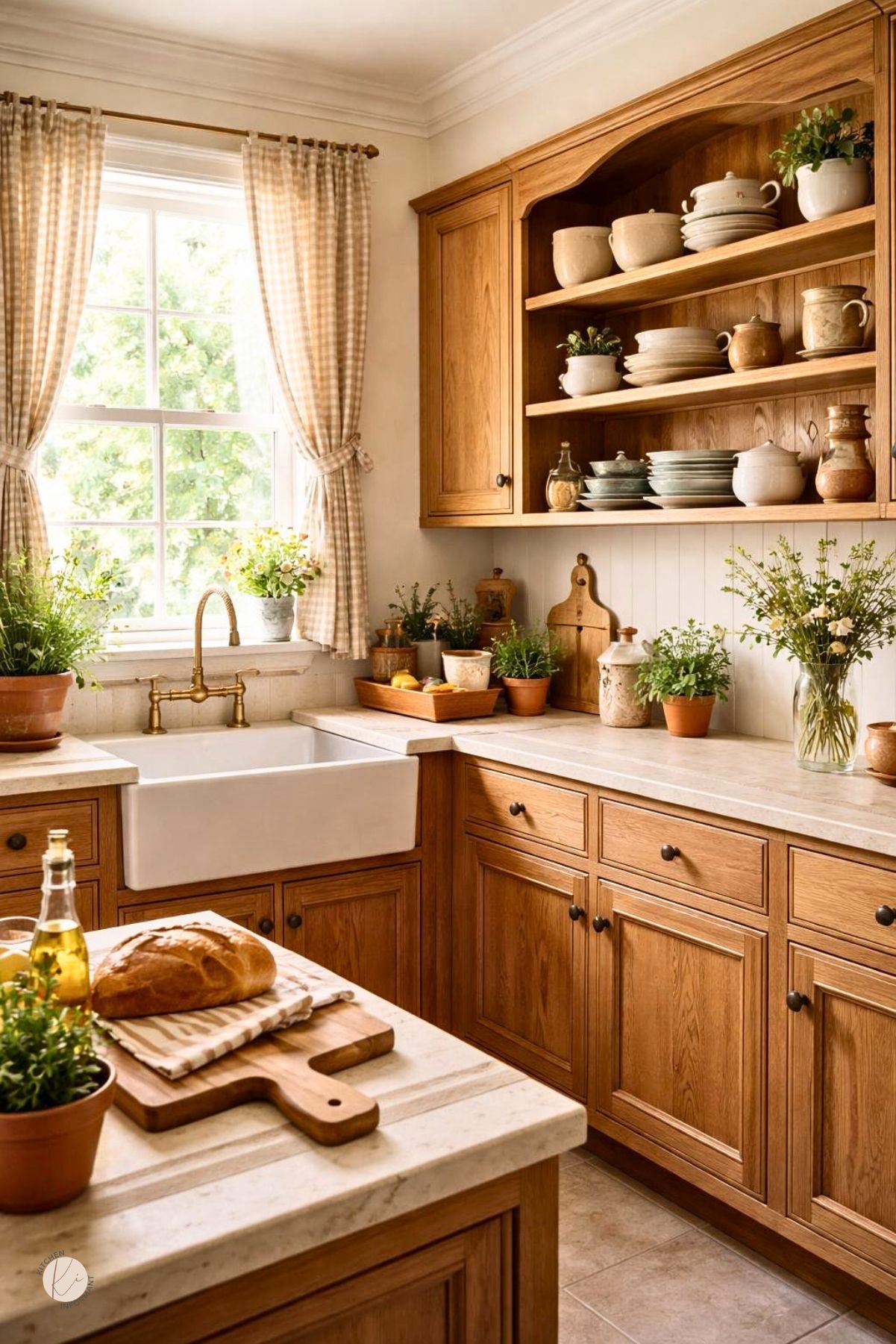
Oak cabinets can be a strong base for this style if their condition and color tone are working in the right direction.
Before choosing paint or finishes, it helps to judge the cabinet structure, the surface condition, and the warmth of the wood.
How to Assess Cabinet Condition
Start with the basics.
Doors, drawer boxes, hinges, and cabinet frames should be checked for swelling, loose joints, worn edges, and deep scratches.
If the boxes are solid and the doors are stable, the cabinets may only need cosmetic updates.
If the layout is poor or the structure is failing, replacement may make more sense than repeated patching.
Reading Oak Undertones
Oak can read orange, red, golden, or tan depending on the stain, age, and lighting.
That undertone affects every nearby finish.
Orange-leaning oak tends to need cooler or softer balancing colors.
Golden oak often works well with cream, muted blue, and warm white.
When to Keep, Refinish, or Replace
Keep the cabinets when the structure is sound and the finish still has life.
Refinish when the wood is good but the stain feels too heavy, orange, or glossy.
Replace only when the cabinets are damaged beyond repair, the layout is not functional, or the cost of refinishing comes close to a better long-term solution.
For many homeowners, keeping oak and updating the room around it gives the best value.
Color Strategy for a Warmer Space
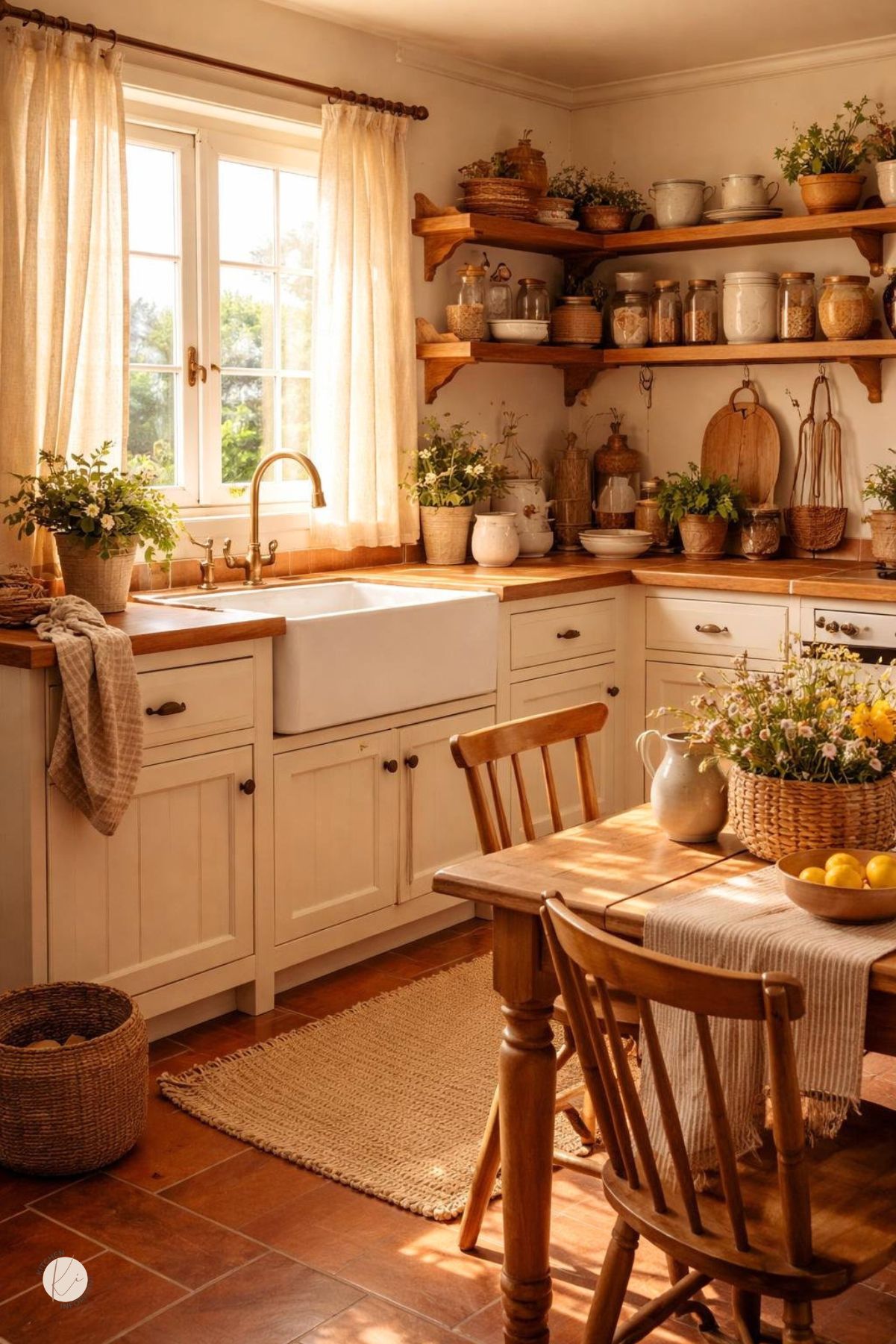
Color is one of the fastest ways to shift oak cabinets toward a cottage core farmhouse aesthetic kitchen.
Blue and yellow are especially useful because they bring softness and warmth without making the room feel flat.
Using Blue With Oak Finishes
Blue can calm strong oak tones and make the space feel fresher.
Muted blue-gray, dusty denim, slate blue, and soft sage-blue work better than bright primary blue in most kitchens.
Blue often works well on walls, tile, textiles, or lower cabinets if the room has enough natural light.
In darker kitchens, keep the blue lighter so the wood does not feel heavy.
Where Yellow Fits Best
Yellow works best as a warm accent, not a full-room color in most cases.
Soft butter, cream-yellow, and pale ochre can make oak look friendlier and less orange.
It can appear in roman shades, dish towels, vase ceramics, framed art, or a painted island.
Small amounts go a long way.
Balancing Warm and Cool Elements
Oak needs balance, not a fight.
If the cabinets are very warm, cool the room with blue tile, pale gray paint, or brushed nickel details.
If the wood reads lighter and golden, warm whites, cream, and gentle yellow accents can keep the room cohesive.
A simple rule helps: let one warm tone lead, then support it with one cooler tone and one neutral.
Materials, Finishes, and Surfaces
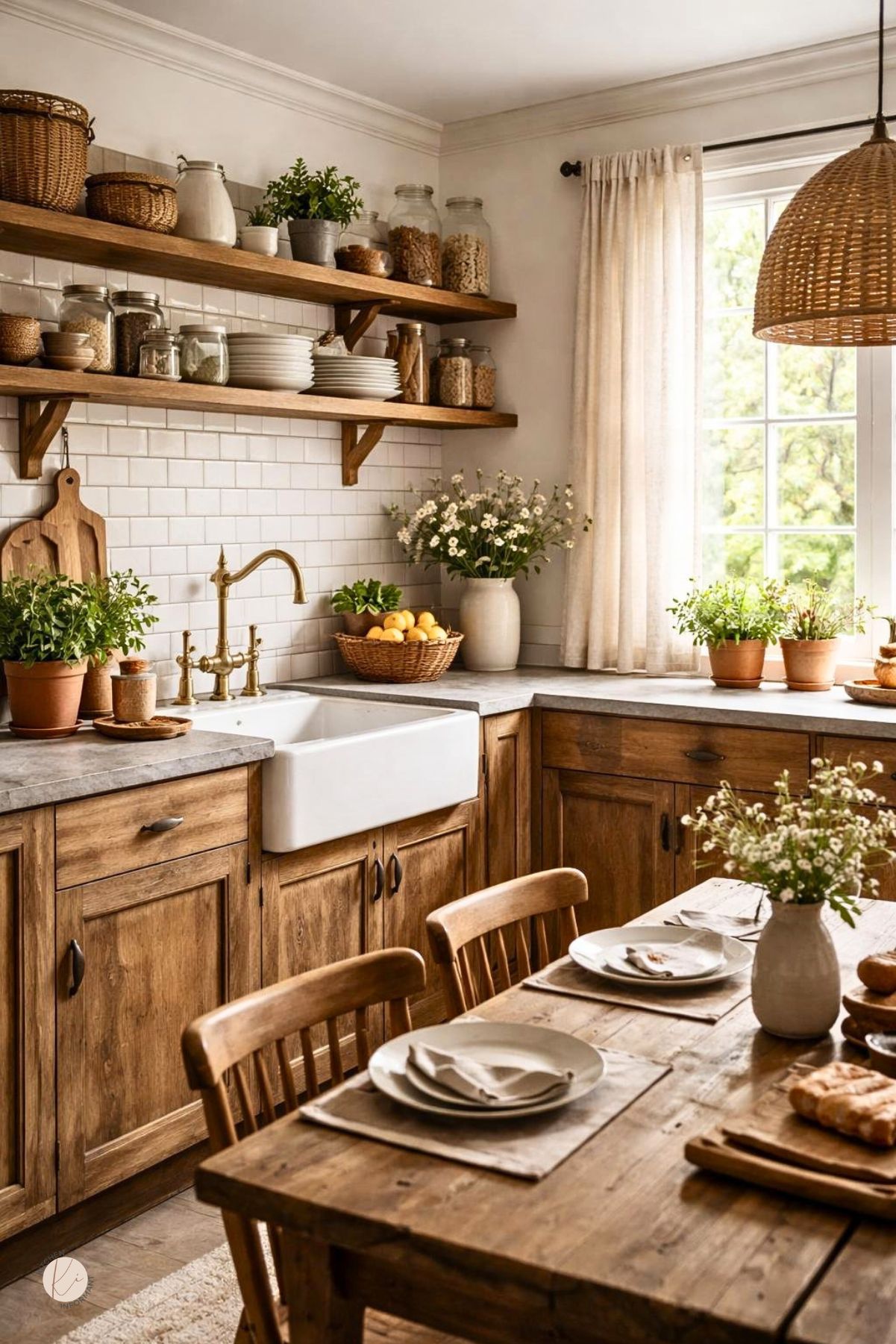
Material choices should support the oak, not compete with it.
The best pairings usually have some texture, a soft sheen, and enough contrast to keep the room from feeling dated.
Countertop Pairings
Light quartz, butcher block, soapstone-look surfaces, and softly veined stone all pair well with oak.
White countertops can brighten the room, while warm beige or creamy stone can make the kitchen feel more traditional.
If the oak is orange or red, avoid busy counters with strong gold veining, since they can intensify the warmth too much.
A quieter surface usually looks better.
Backsplash Options
Simple tile often works best.
Handmade-look ceramic, small subway tile, zellige-style tile, and soft blue or cream patterns can support the cottage feeling without clutter.
A backsplash with a little texture helps the kitchen feel collected and not overly polished.
For stronger oak, pale cream or muted blue tile can soften the whole wall.
Hardware and Fixture Finishes
Brass, aged brass, oil-rubbed bronze, and matte black all can work, depending on the cabinet tone.
Brushed nickel is a safer choice when the room already has a lot of warmth.
A farmhouse sink and simple bridge or gooseneck faucet fit the style well.
Keep the shapes classic so the room feels timeless rather than themed.
Light, Layout, and Everyday Function
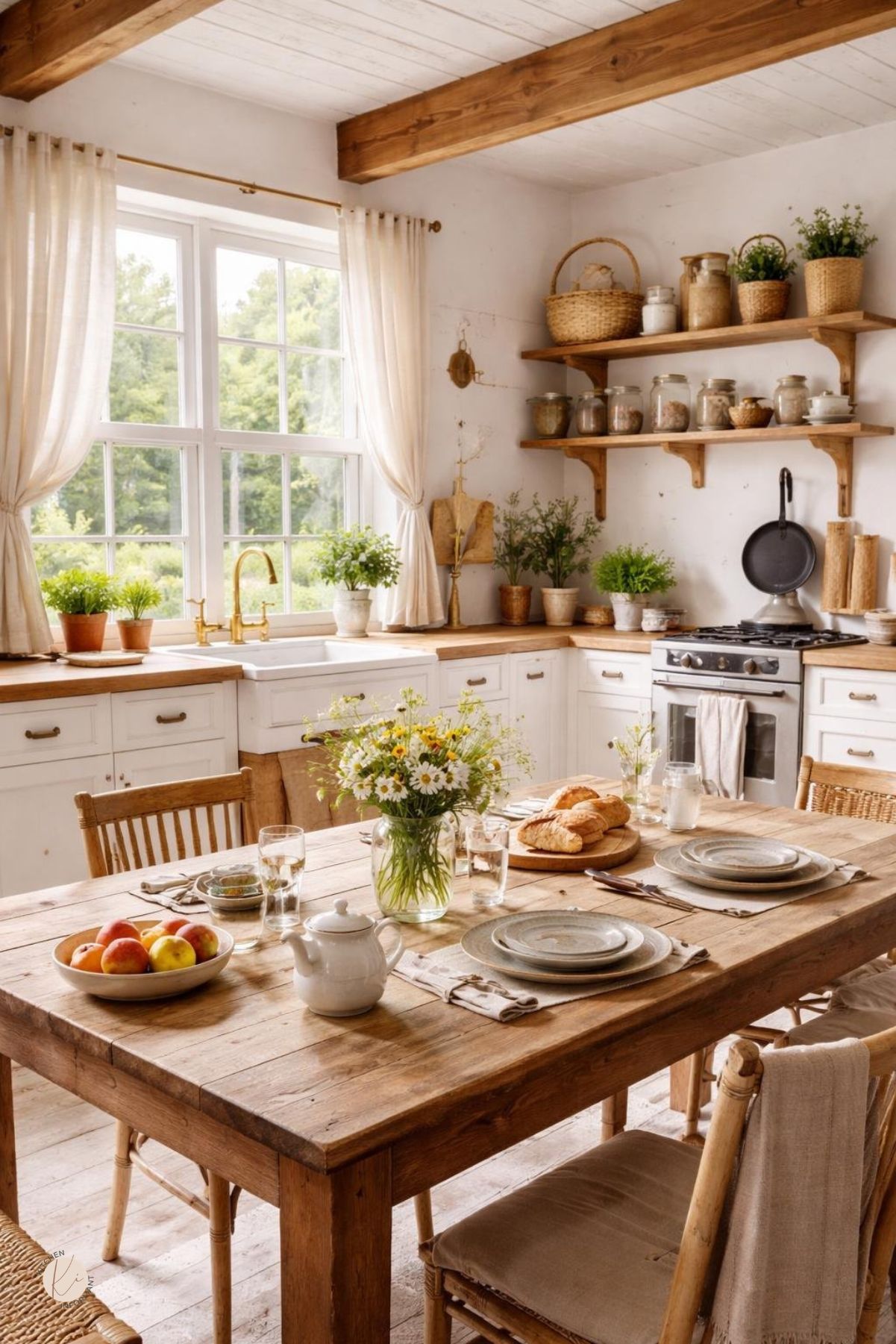
Light changes everything in a kitchen with oak cabinets.
The same cabinet finish can look rich, yellow, or orange depending on direction, window size, and the type of bulbs used at night.
How Natural Light Changes Color
North-facing rooms often make oak look cooler and deeper, while south-facing rooms can make the same cabinets look brighter and more golden.
East-facing light feels fresh in the morning, and west-facing light can turn very warm in late afternoon.
That means paint samples should be tested on more than one wall.
A blue that looks quiet in one room may turn too gray or too strong in another.
Task Lighting Priorities
Good task lighting keeps the kitchen useful and makes wood finishes read more accurately.
Under-cabinet lights, sink lighting, and focused pendant lighting should be warm enough to feel inviting, yet not so yellow that they distort color.
Choose bulbs in a comfortable warm-white range.
Very cool bulbs can make oak look flat and the room feel less welcoming.
Storage Choices That Support the Style
Closed storage helps reduce visual clutter.
Open shelving can work, though it looks best when used sparingly for dishes, jars, and a few everyday items.
Baskets, pantry cabinets, and simple drawer organization help the space stay practical.
That matters, because the style works best when the kitchen looks easy to live in.
Decor Details That Add Character
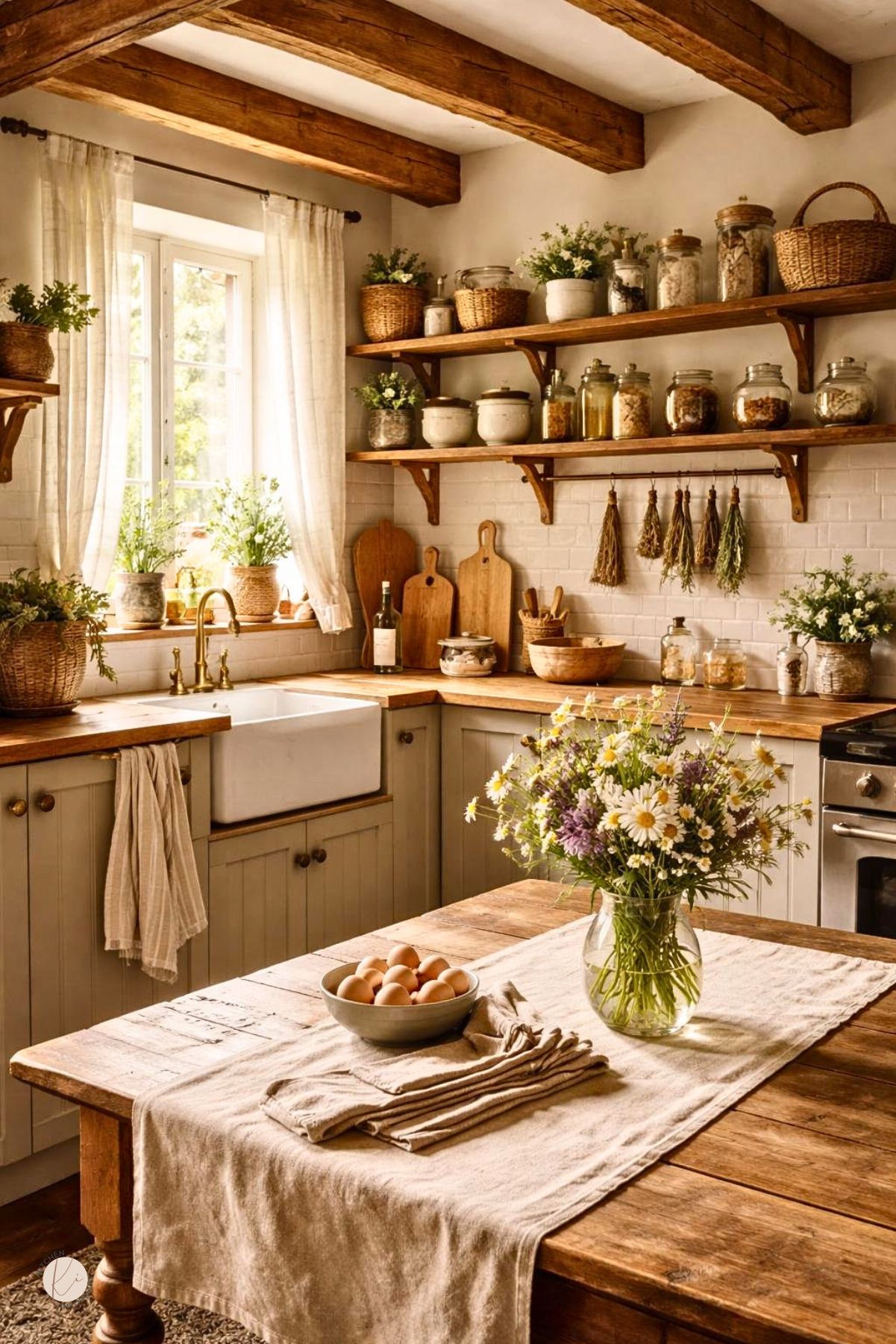
Small details give the kitchen its cottage feeling.
The best choices look useful first and decorative second.
Textiles and Window Treatments
Cotton, linen, ticking stripes, checks, and small florals fit the style well.
Curtains, roman shades, and cafe curtains can soften windows without blocking needed light.
Blue and yellow can appear here in subtle ways.
A blue check curtain or a warm yellow tea towel may be enough to tie the room together.
Open Shelving Styling
Open shelves should look edited, not crowded.
Mix white dishes, wooden bowls, glass jars, and one or two ceramic pieces with soft color.
Keep the arrangement practical.
Items used often should stay easy to reach, while decorative pieces should stay limited.
Vintage-Inspired Accessories
Old cutting boards, enamel pitchers, crockery, woven baskets, and simple glass containers add age and texture.
Fresh flowers, herbs, or dried stems bring the room to life without much cost.
A few pieces with real wear can make a new update feel more grounded.
That is especially helpful when the cabinets are older oak and the rest of the room needs a softer finish.
You May Also Like: