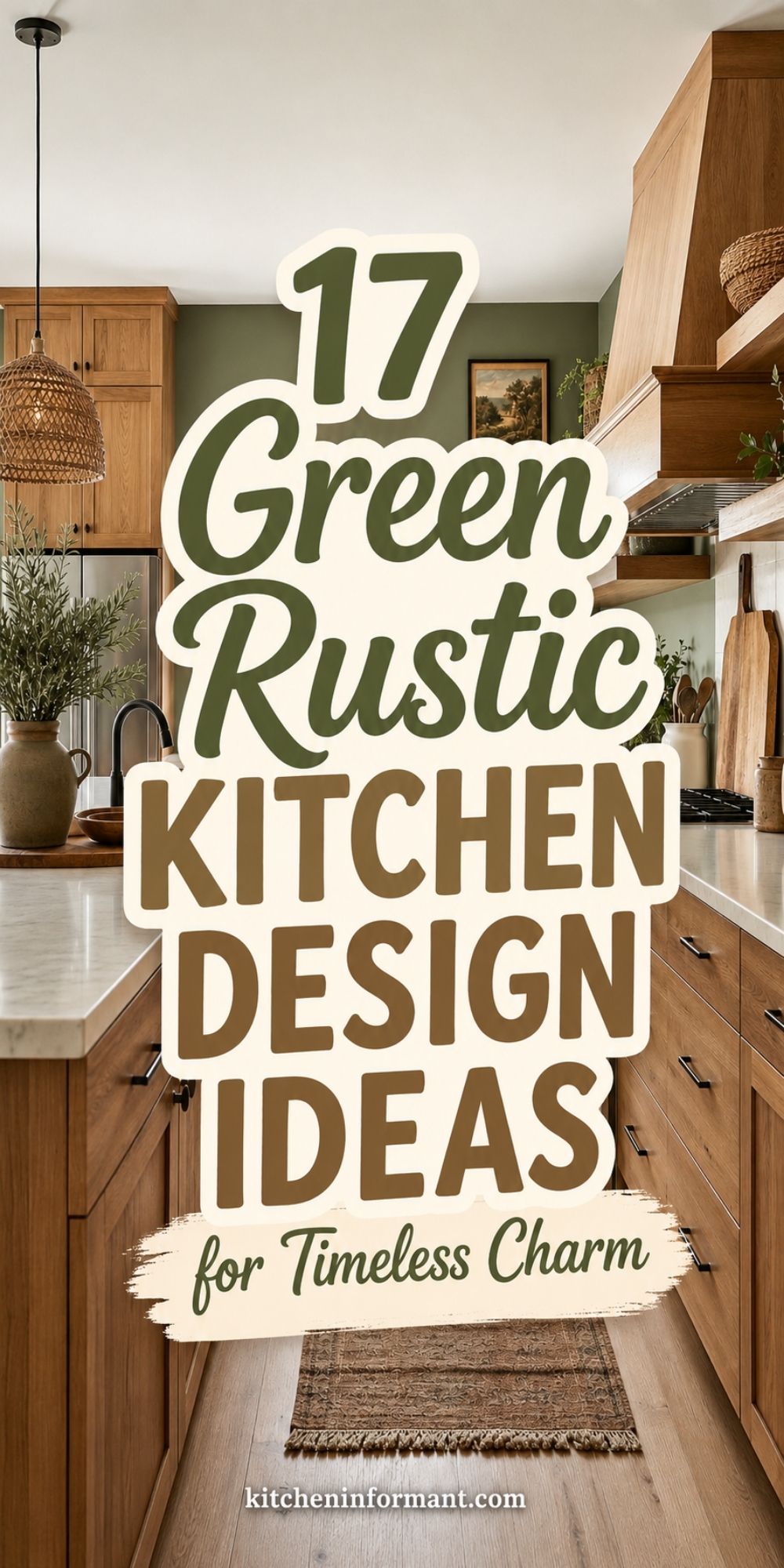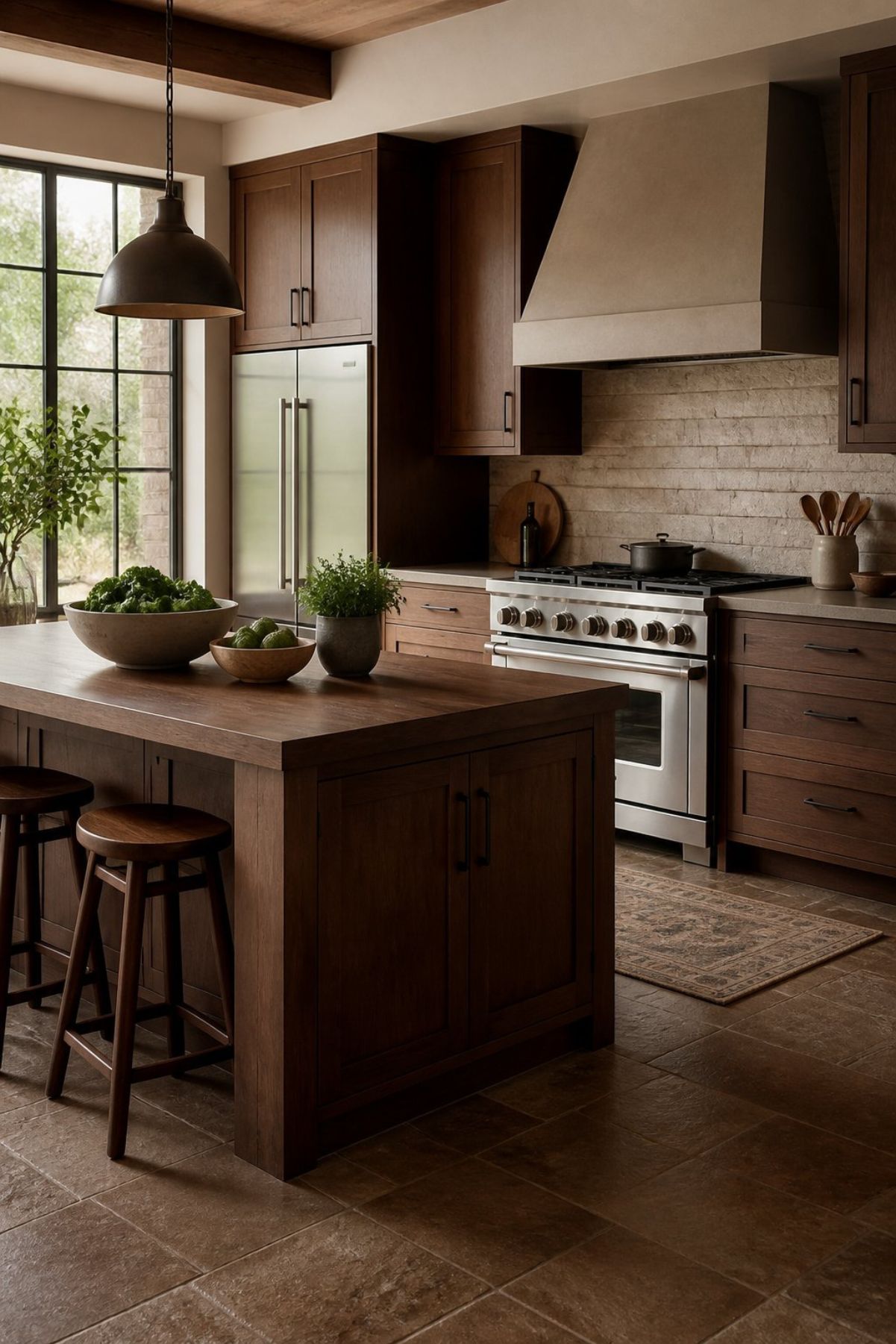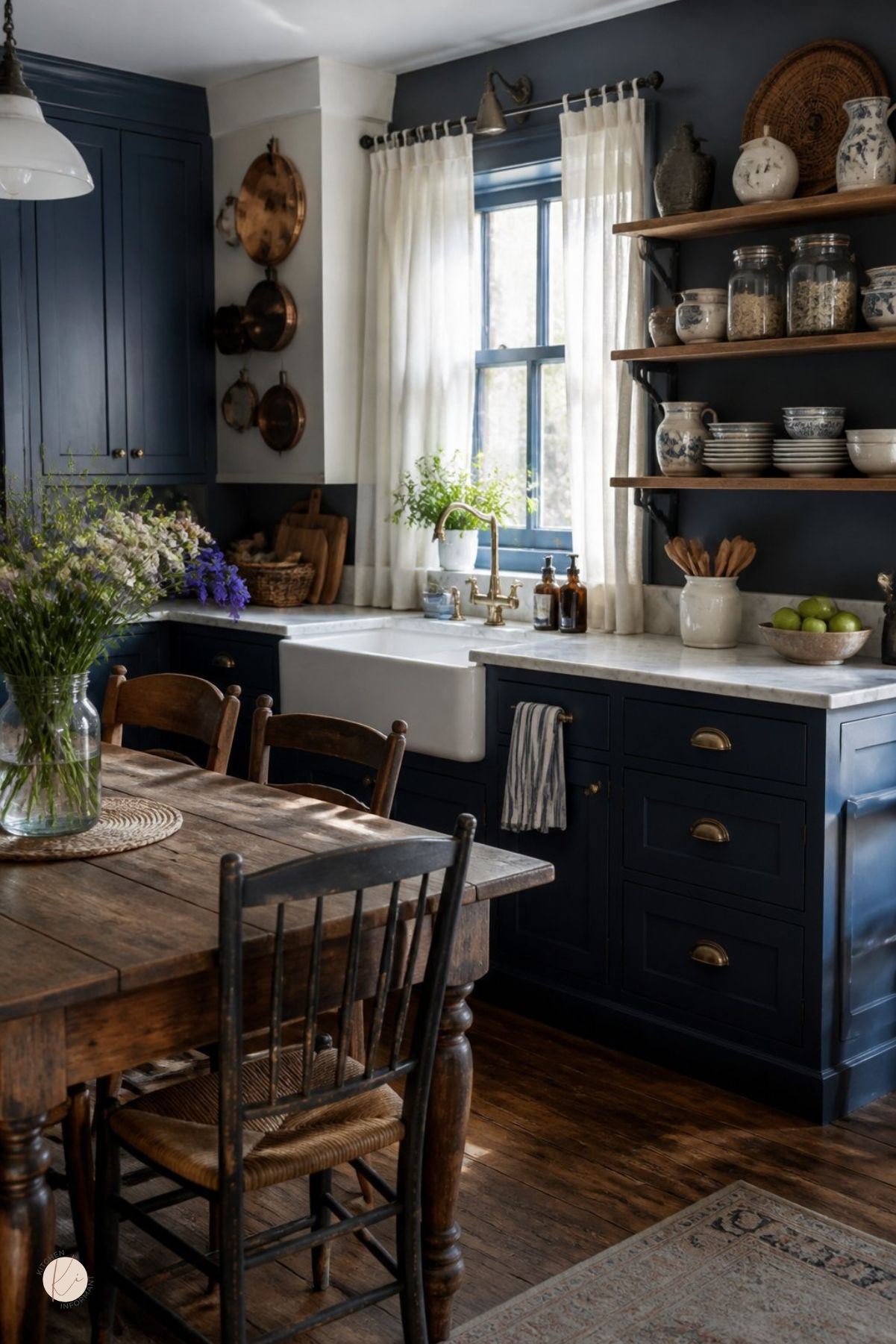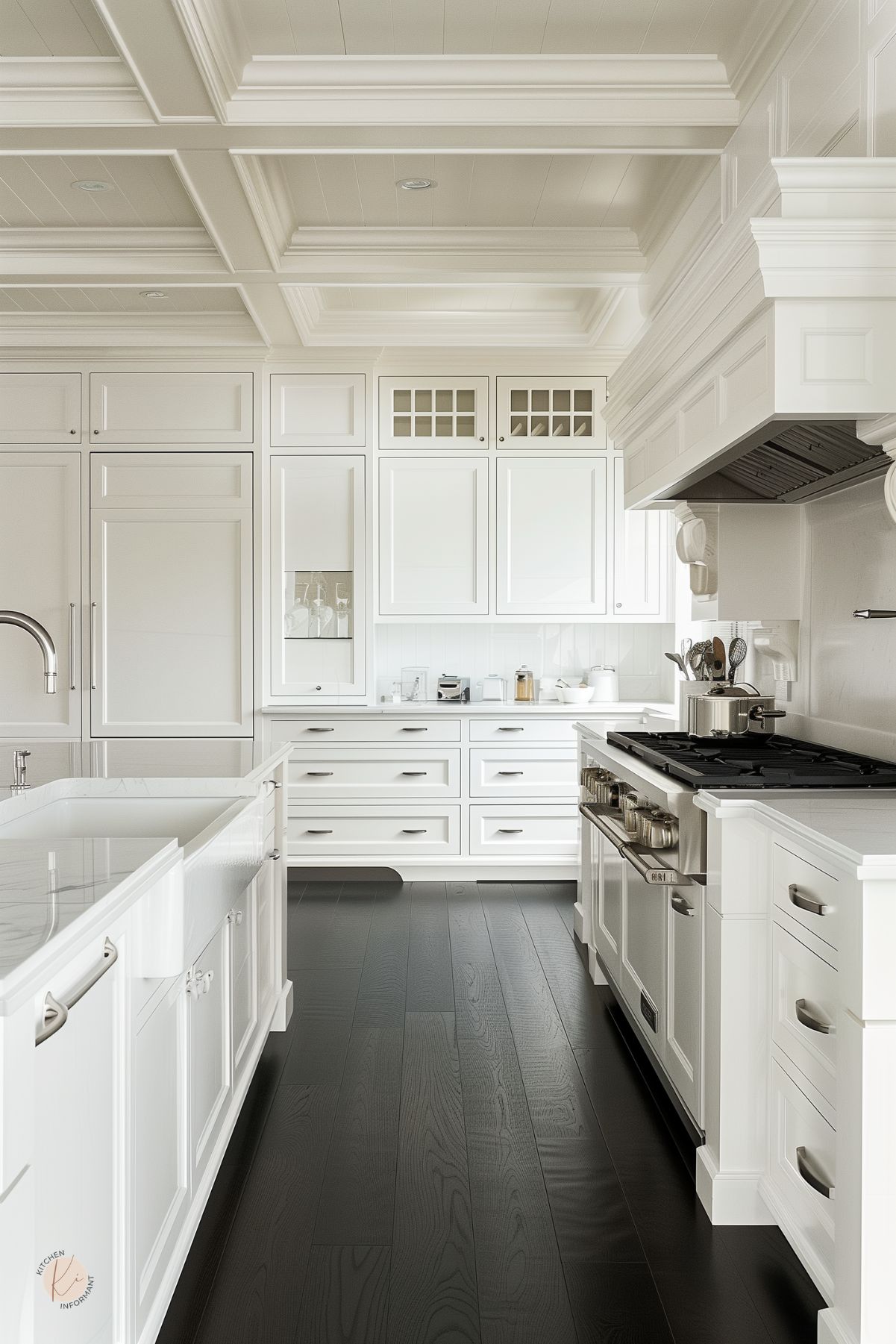
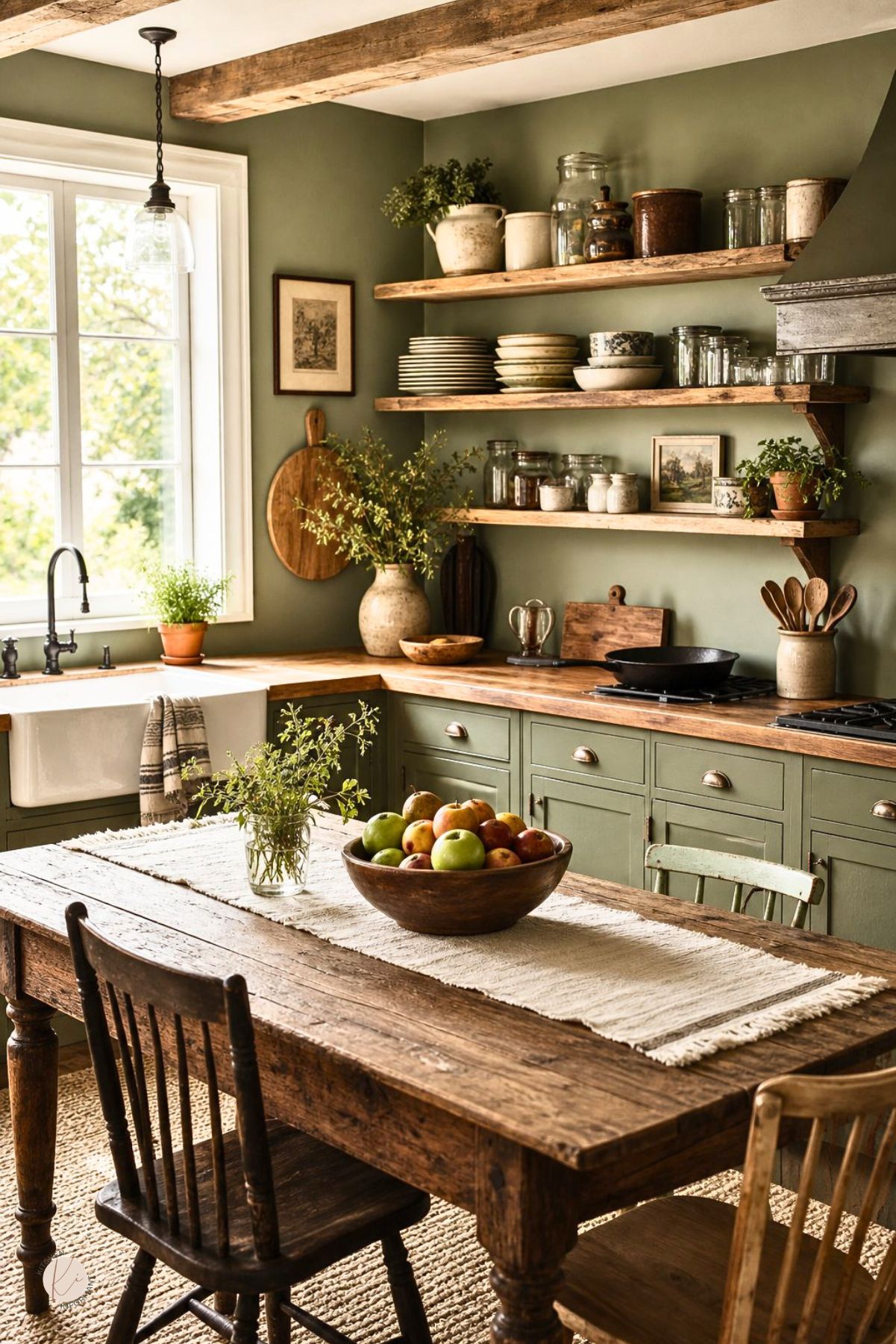
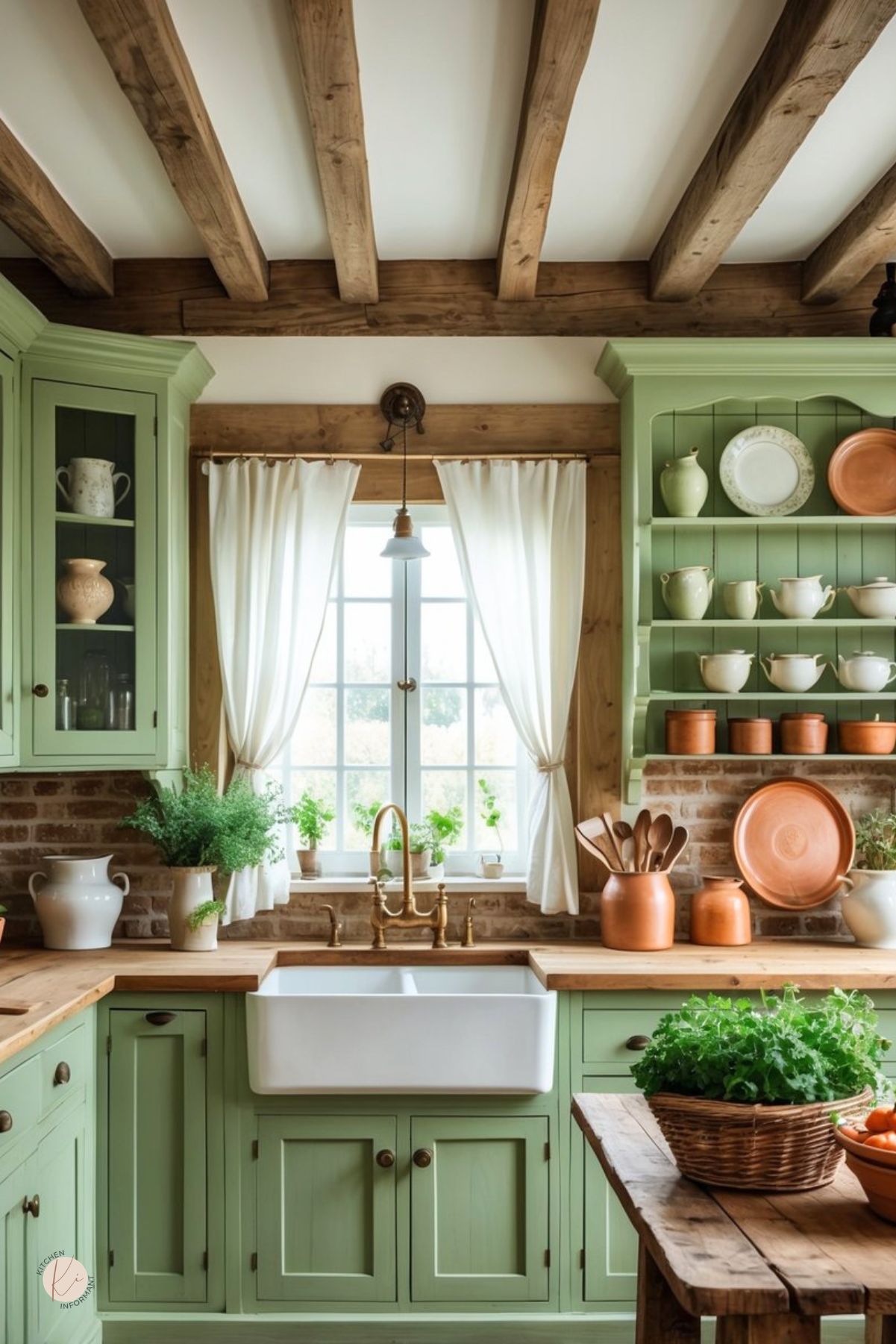
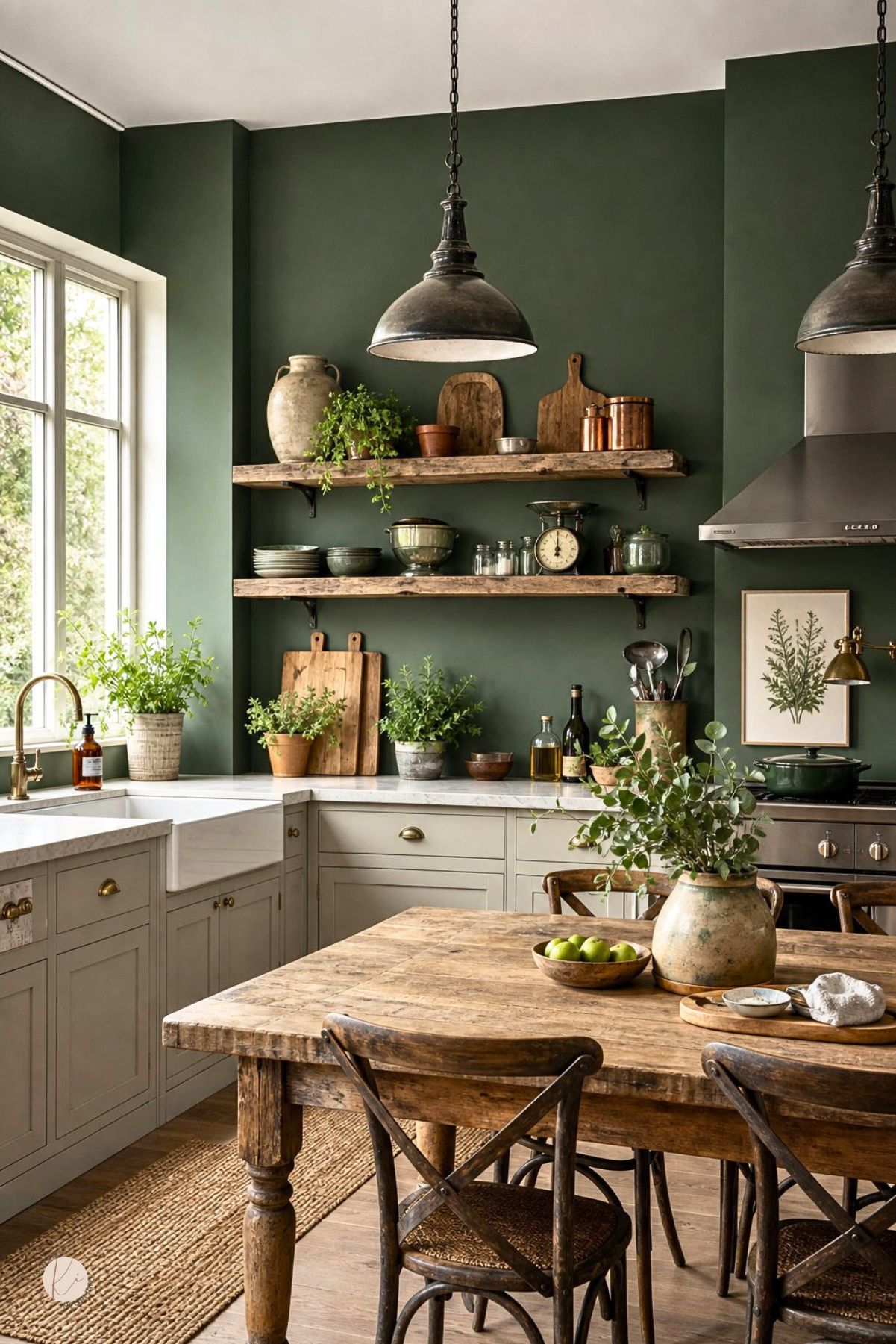
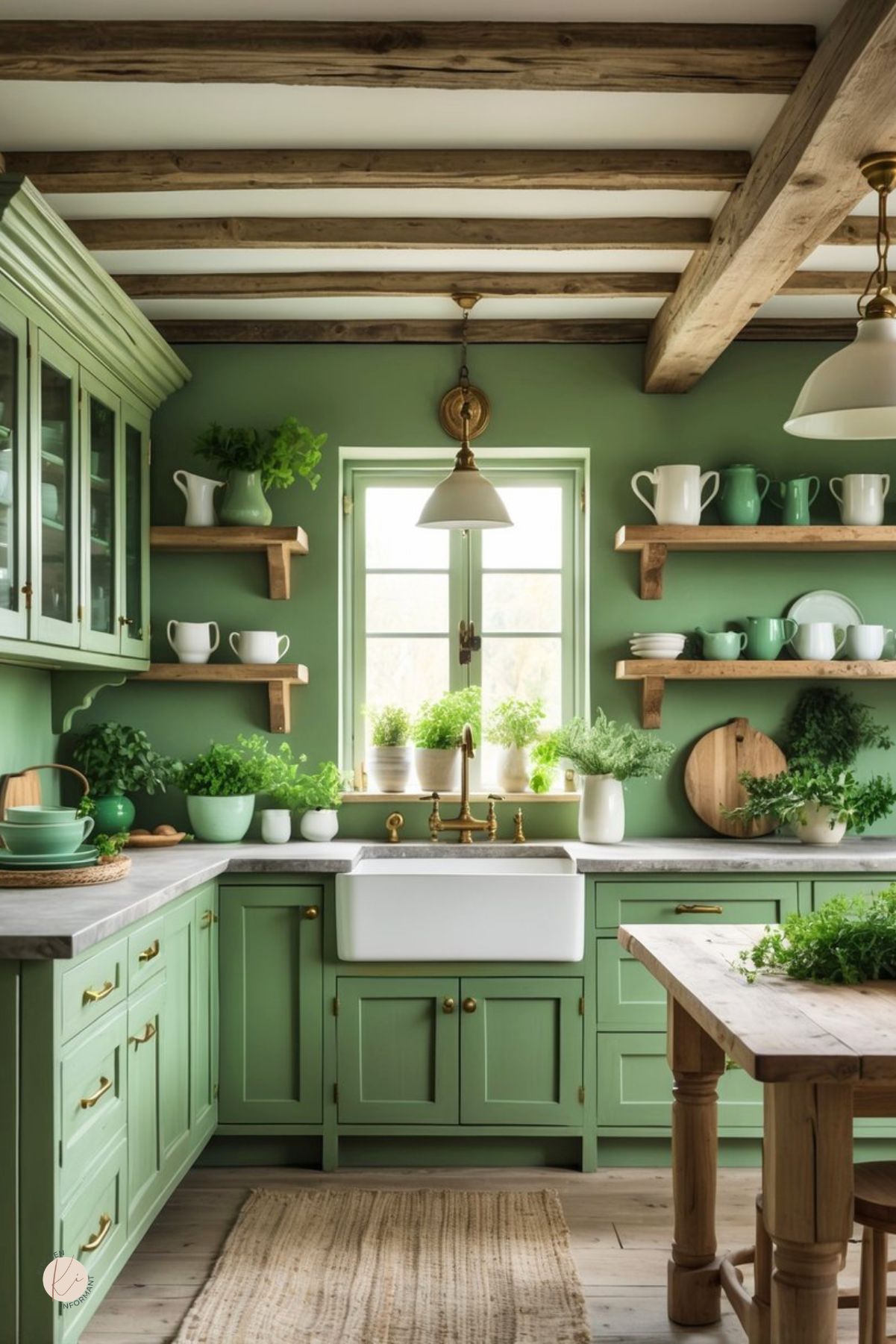
A green rustic kitchen blends natural earthy tones with a cozy, lived-in vibe.
You’ll often see reclaimed wood, soft green shades, and vintage accents coming together to make the space warm and welcoming.
This style mixes nature-inspired colors with simple, practical design. It brings comfort and beauty right into the heart of the home.
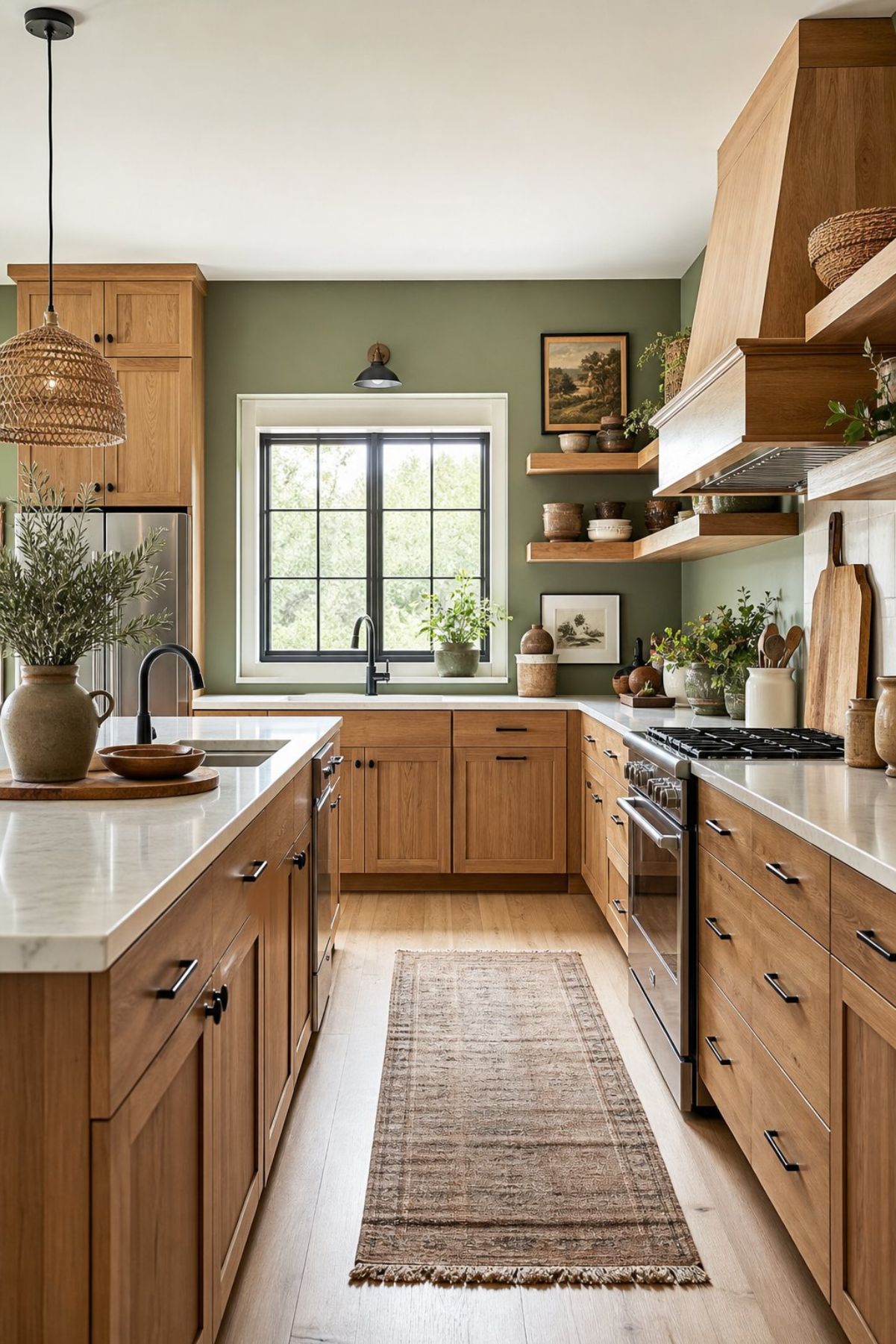
Green brings a calming, refreshing touch that works well with wood and other natural materials. From soft sage to deep forest green, these shades help the kitchen feel balanced and grounded.
Mixing traditional rustic features with modern green tones means this kitchen style fits lots of different tastes. It’s a timeless way to bring the outdoors in, all while keeping that classic farmhouse charm.
Defining the Green Rustic Kitchen
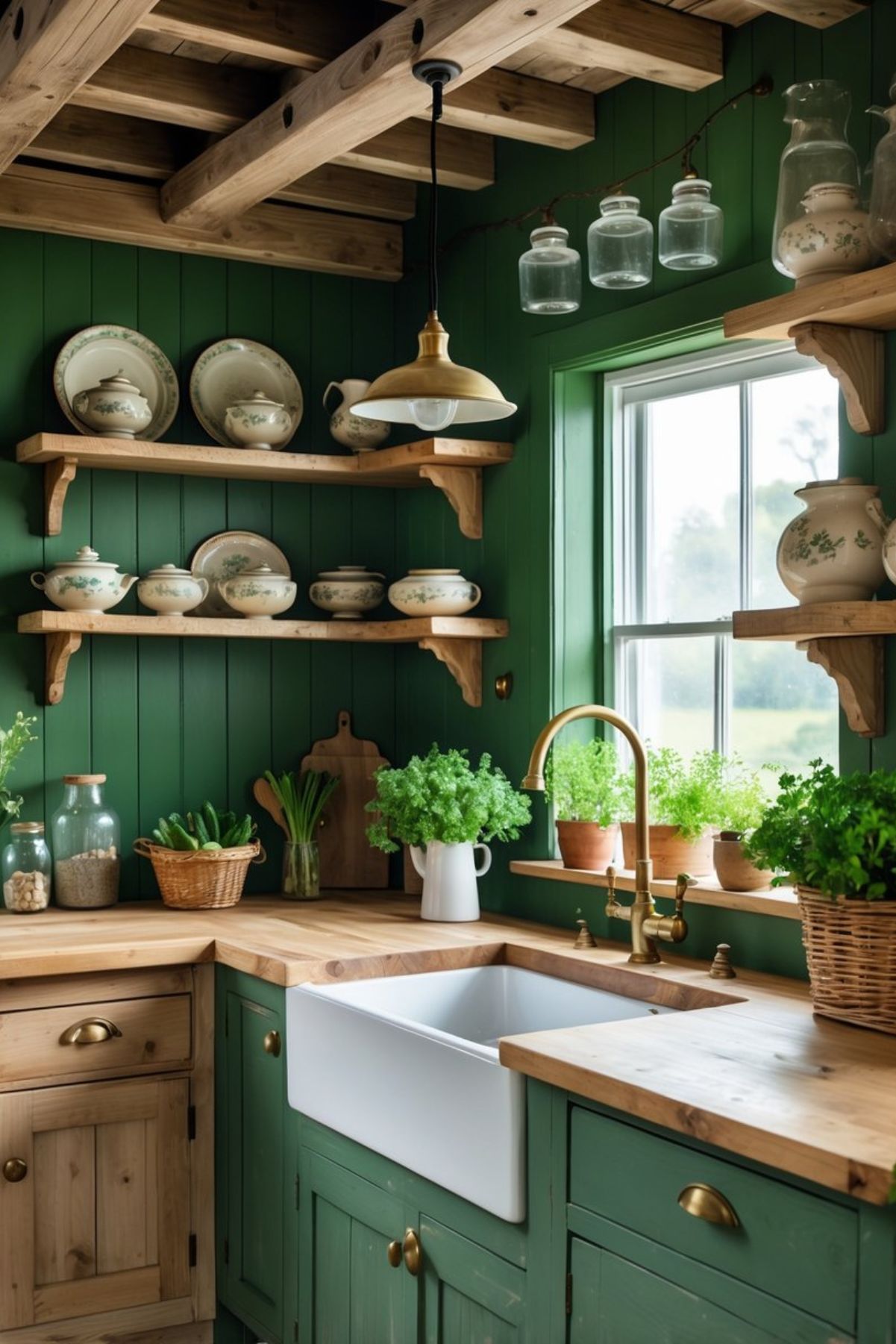
A green rustic kitchen combines natural colors and textures with practical, straightforward design. It leans on earth tones and classic materials for a sense of warmth and charm.
This look balances old-fashioned details with natural elements and thoughtfully chosen green shades. There’s something about it that just feels right, you know?
Key Design Elements
Think natural wood, open shelves, and farmhouse sinks. Cabinets usually have a matte or weathered finish no shiny surfaces here.
Brass or black metal hardware adds a vintage edge. Countertops are often stone or wood, which really fits the rustic mood.
Walls might show off beadboard or shiplap for extra texture. Lighting leans industrial or farmhouse-style, which just works with the rugged vibe.
Open shelving lets you display pottery or glassware, making everything feel lived-in. All these choices help the kitchen feel both useful and welcoming.
Popular Green Tones
Green shades in rustic kitchens go from soft sage to deep olive. Sage green feels breezy and calm, perfect for lighter spaces.
Olive green brings more warmth and depth. Forest green is bold and dramatic, great for statement cabinets.
Mint or pale green can make smaller kitchens brighter while keeping that rustic spirit. The right green depends on your kitchen’s size and how much light you get.
Earthy, muted greens are popular—they echo the colors you’d find outside.
Rustic vs. Modern Rustic Styles
Rustic kitchens focus on raw, natural materials and don’t worry about polish. Floors might be rough wood, and cabinets often show off knots and grain.
Colors stick to muted greens and browns, keeping things simple. Modern rustic adds cleaner lines and less clutter, but still uses rustic colors and textures.
Cabinets might look sleeker, and you’ll see more open layouts and modern lighting. The modern rustic style mixes old and new, while traditional rustic really leans into farmhouse charm and worn-in details.
Both styles use green to connect the kitchen to nature.
Choosing the Right Green Palette
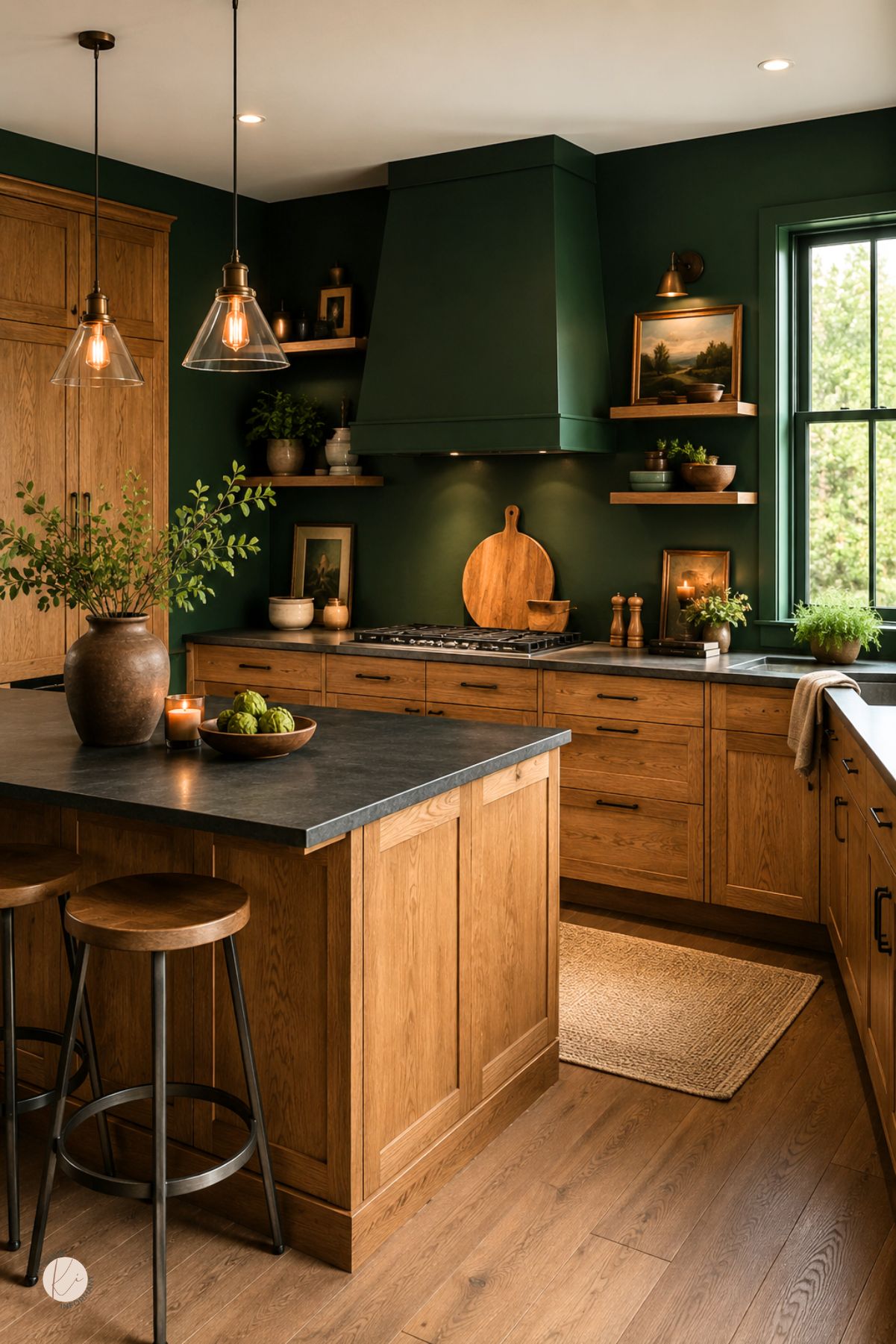
Picking the right green for a rustic kitchen depends on light, style, and the materials you want. Greens can be soft and muted or bold and attention-grabbing.
How those colors work with wood finishes really shapes the mood.
Earthy and Muted Greens
Earthy greens like sage, olive or moss create a calm, grounded feel. These muted tones blend with natural elements and never overpower the room.
They work in all kinds of lighting. In dim light, they keep things cozy. In sunlight, they make wood grain and stone stand out.
These colors match best with matte or weathered finishes, which add to that lived-in vibe. They pair nicely with copper or aged metal. For a relaxed look, go for soft green walls or cabinets.
Bold and Vibrant Greens
Bolder greens like emerald or chartreuse liven up rustic kitchens. They make a statement and work well for islands or standout cabinets.
Bright greens need lots of natural light, or they can feel heavy. They contrast well with neutrals like cream or beige.
Glossy surfaces boost the vibrancy of bold greens, making them pop and adding a modern twist. When you use bright greens, it’s smart to balance them so the space still feels warm.
Coordinating with Wood Finishes
Choosing wood finishes that work with green tones is key for a pulled-together look. Reclaimed woods with knots and visible grain add texture and warmth to green cabinets or walls.
Lighter woods like pine or oak go well with softer greens, giving the kitchen a fresh, open feel. Darker woods like walnut or mahogany pair with deeper greens and make things feel richer.
Matte or natural wood finishes avoid shiny clashes with rustic greens. Mixing wood tones can add depth, but keep it balanced to avoid a messy look.
| Green Shade | Wood Finish | Effect |
|---|---|---|
| Sage, Olive | Light or reclaimed | Calm and natural |
| Emerald, Chartreuse | Dark wood | Bold and rich |
| Muted greens | Matte wood | Soft and cozy |
Essential Rustic Materials
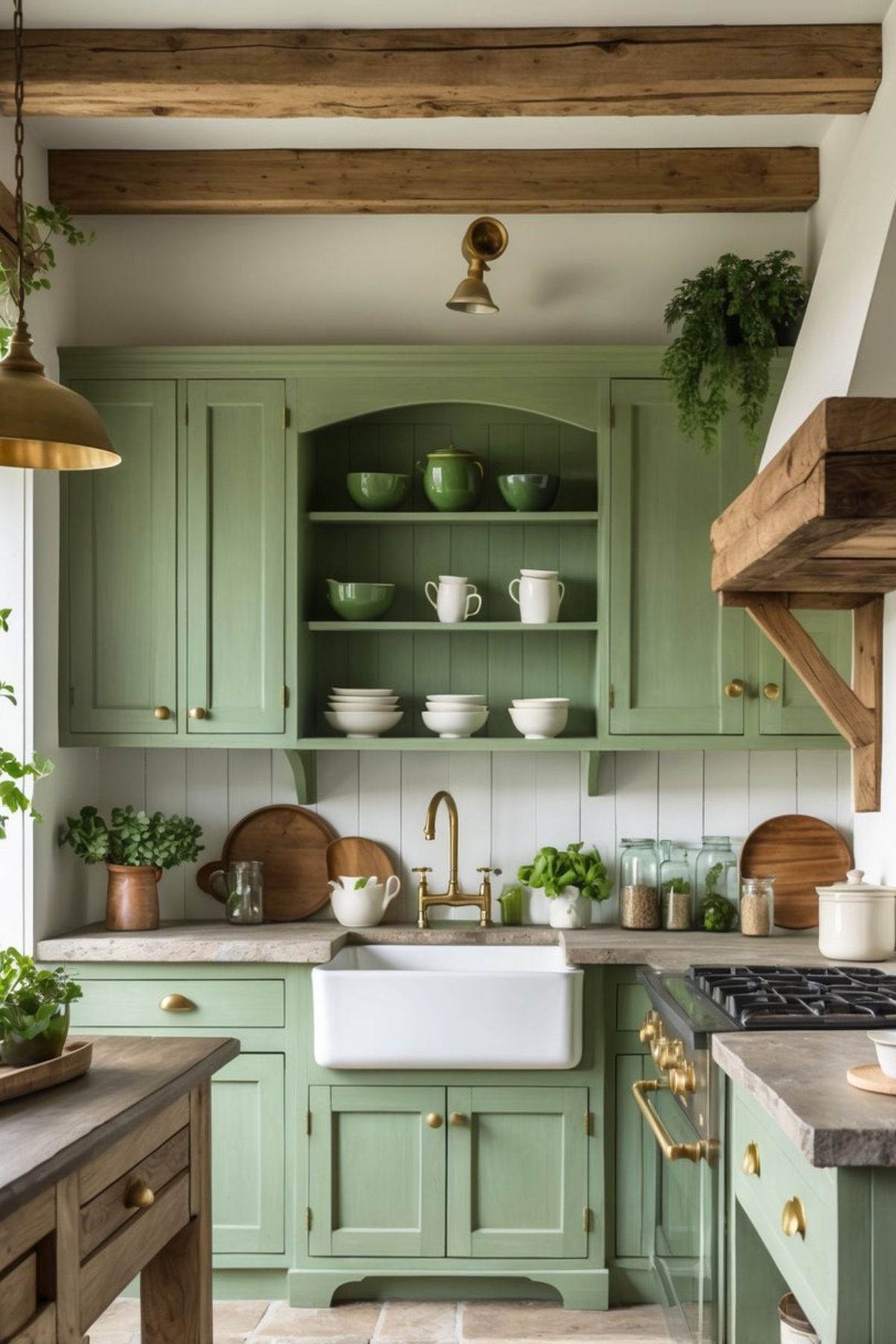
A green rustic kitchen relies on natural, tough materials that bring warmth and texture. The right mix of wood, stone, and metal keeps things balanced and practical.
These materials boost rustic charm while standing up to daily use. There’s something satisfying about a kitchen that feels sturdy and looks good.
Reclaimed Wood
Reclaimed wood is a go-to in rustic kitchens. Its worn textures and varied tones give the space a real, lived-in feel.
You’ll see it in cabinets, shelves, or exposed beams—each piece has its own story. This wood is eco-friendly, too, since it reuses old materials.
The uneven surfaces and scratches make every bit unique. Reclaimed wood looks great with green tones, especially when you want contrast between soft colors and earthy wood.
Natural Stone Accents
Natural stone brings strength and beauty to rustic kitchens. Granite, slate, and marble are all solid picks.
Stone shows up in countertops, backsplashes, or floors, making surfaces that last. Its rough or honed finish works perfectly with rustic style.
Natural veining and color variation add depth next to green cabinets. The coolness of stone balances out all the wood, keeping things from feeling too heavy or dark.
Aged Metal Fixtures
Aged metal fixtures tie the rustic look together and add useful details. Wrought iron, brass, and bronze are popular choices.
These metals usually show some patina or weathering, helping everything feel more relaxed and real. Hardware like handles, faucets, and lights in aged metal brings out texture and detail.
They look especially nice with softer greens, like sage, and make the kitchen feel extra cozy.
Layout and Space Planning
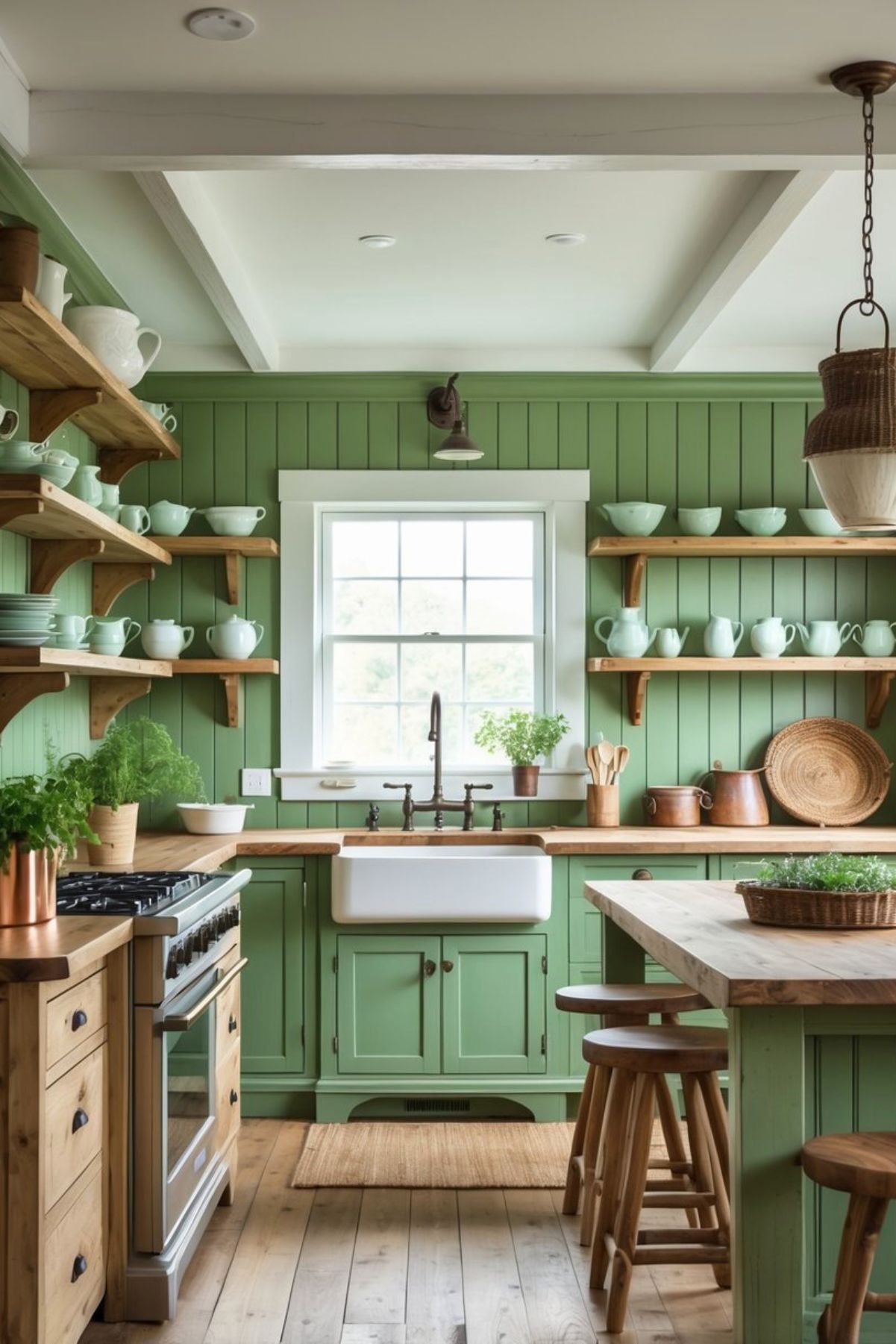
Good layout and space planning make a green rustic kitchen work for real life. A thoughtful setup balances natural elements with everyday needs.
It’s all about open flow, cozy arrangements, and getting as much natural light as possible.
Open Concept Kitchens
Open concept green rustic kitchens blend cooking and living spaces. You’ll often find big kitchen islands with natural wood and green cabinets perfect for working and hanging out.
Placing the sink or stove by a window is pretty common, so you get a nice view while you cook. Using reclaimed wood and stone keeps the space rustic but still open and bright.
Open shelves or glass-front cabinets in matching greens keep things interesting without making it feel crowded. This kind of setup makes it easy to move around and enjoy meals together.
Cozy Cottage Layouts
Cozy cottage layouts make the most of small, intimate spaces. Earth-toned green cabinets and vintage hardware set a warm tone.
Corners and nooks get used for built-in seating or pantry storage. Wood countertops and beadboard walls add to the cottage vibe.
These kitchens group the stove, sink, and fridge close together for efficiency. The result is a welcoming space that still works for cooking.
Maximizing Natural Light
Natural light really makes green colors and rustic textures shine. Big windows or skylights bring in sunlight and make the space feel bigger.
Light walls and reflective surfaces like glossy green cabinets or glass backsplashes—bounce light around. Putting work areas near windows means better light for cooking.
In green rustic kitchens, sunlight brings out the best in sage or olive tones. Sheer curtains can keep things private while letting in plenty of light.
Cabinetry and Storage Solutions
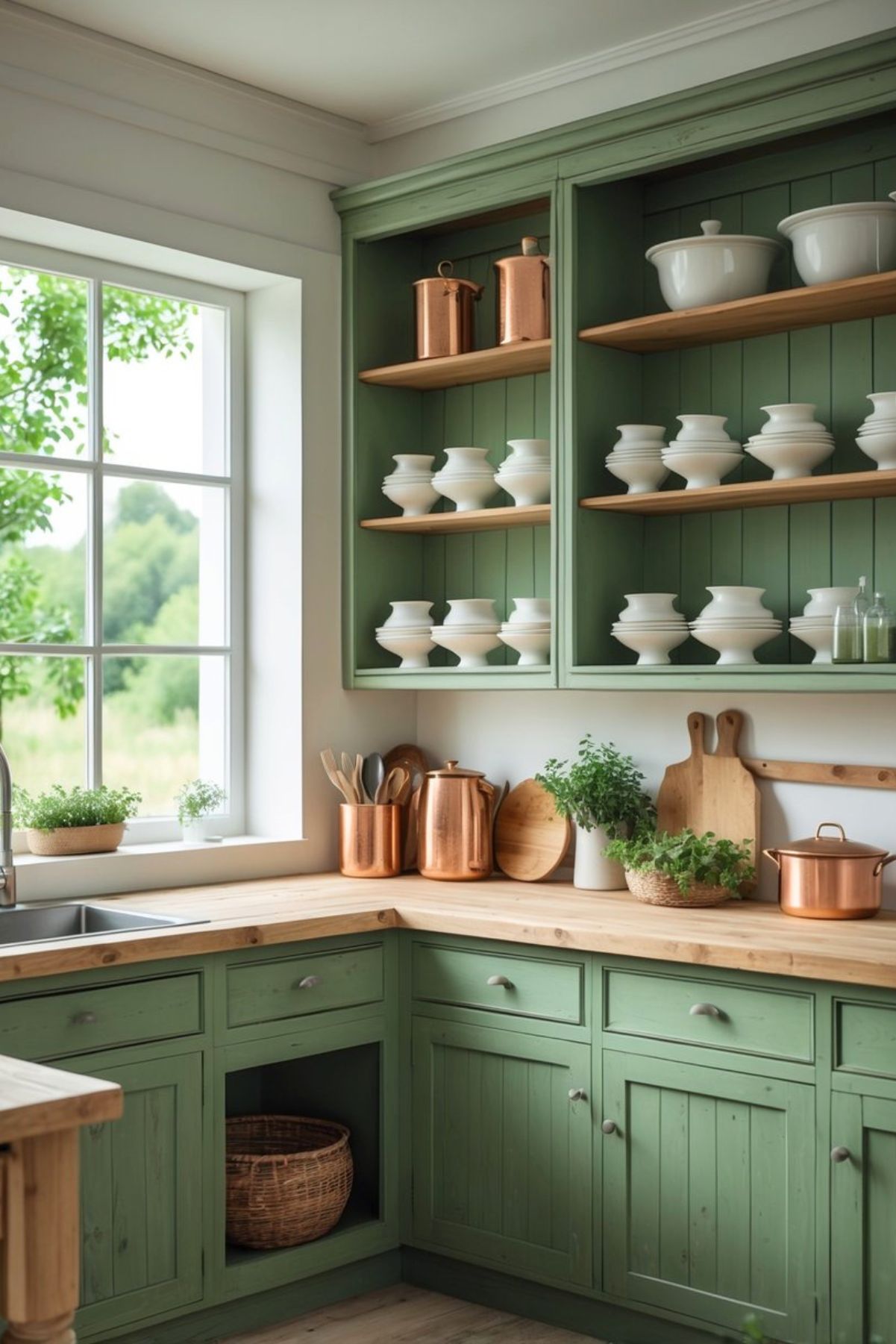
Green rustic kitchens depend on smart cabinet and storage choices to keep things both stylish and practical.
The right paint, open shelves, and hardware really help show off their natural charm and keep clutter at bay.
Painted Green Cabinets
Sage green pops up often in rustic kitchens because it calms the space without taking over. It gets along well with wood and stone classic rustic materials.
The finish makes a difference. Matte or satin finishes feel more rustic, plus they hide dings better than glossy ones and keep things looking soft.
Painting cabinets green gives you a lot of freedom. Dark greens cozy things up, while lighter shades make the room feel open. Either way, green grounds the design and brings in that earthy vibe.
Open Shelving Ideas
Open shelving works wonders in green rustic kitchens by making the space feel bigger and keeping essentials within reach. Wood shelves especially reclaimed or rough-cut crank up the rustic factor.
They’re perfect for showing off dishes, cookbooks, or old jars. Open shelves nudge you to stay tidy since everything’s out in the open.
Adding open shelves next to green cabinets creates a nice layered look. Mixing closed cabinets with open shelves keeps storage practical and visually interesting.
Vintage-Inspired Hardware
Knobs and pulls really tie the cabinetry together. Vintage-style hardware in a rustic green kitchen adds character and makes the space feel lived-in.
Aged brass, black iron, and oil-rubbed bronze are favorites. These finishes stand out against green paint and add a bit of warmth.
Simple shapes like round knobs or cup pulls, fit best. Hardware with a little distressing or patina gives everything that timeless, not-too-perfect charm.
Countertops and Backsplashes
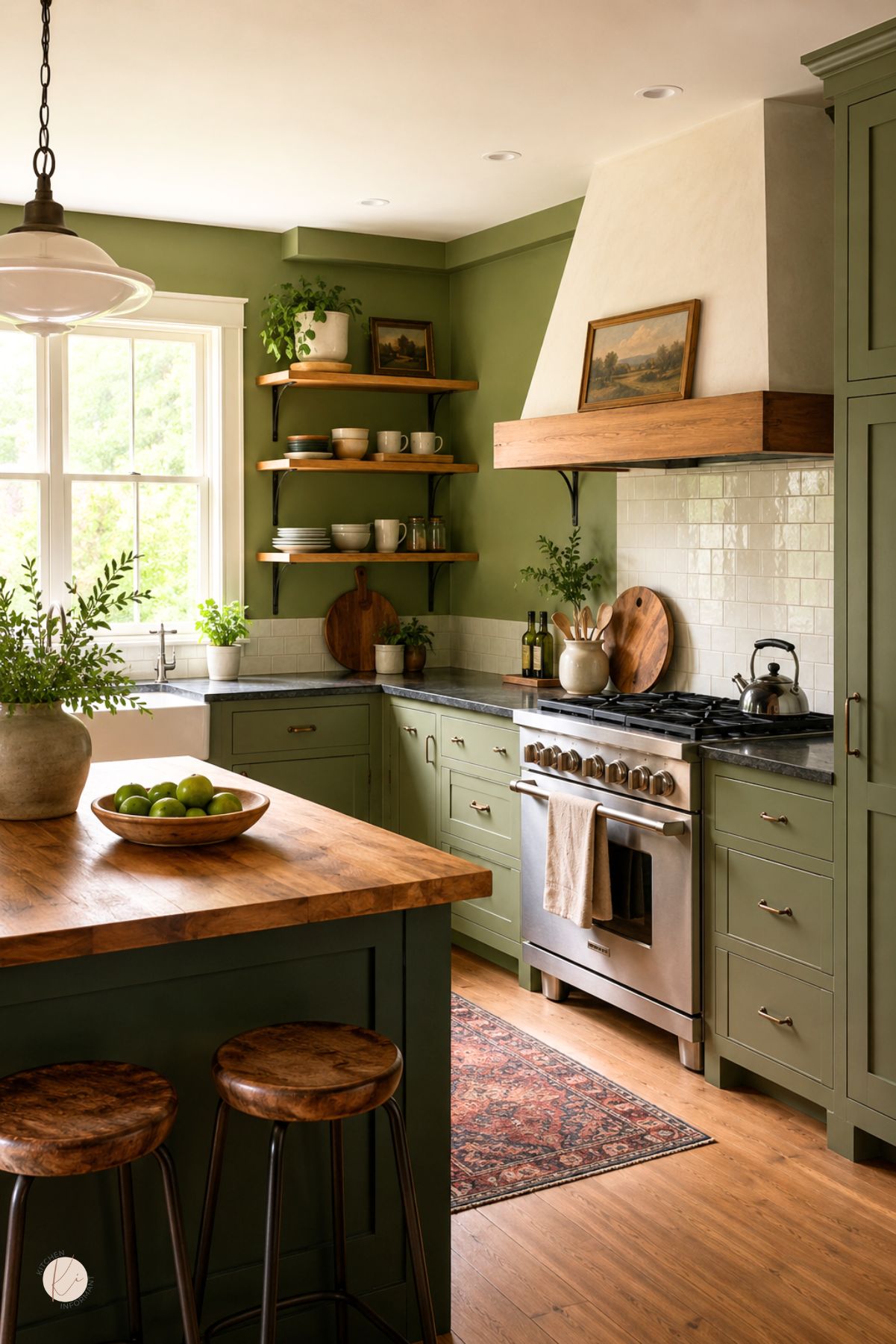
The right countertops and backsplashes really set the mood in a green rustic kitchen. Warm wood, sturdy stone, and eye-catching backsplash patterns all bring together beauty and function.
Each piece supports the rustic vibe and highlights those green details in your cabinets or tiles.
Butcher Block Counters
Butcher block countertops add warmth and texture. The wood grain pairs beautifully with green, especially olive or sage shades.
They’re practical for prepping food and feel great to the touch. You’ll need to seal or oil them regularly to keep stains and moisture away.
Lots of people pick butcher block for that handmade, organic touch. It contrasts nicely with metal hardware or stone, and it works well with open shelves or farmhouse sinks.
Natural Stone Surfaces
Granite and marble bring durability and a touch of elegance. Moss green granite, for example, adds earthy veining and fits right into rustic kitchens.
Stone counters handle heat and everyday wear, so they’re great for busy cooks. Marble looks softer and pairs well with pastel green cabinets for a vintage twist.
Stones in muted greens or neutrals keep the rustic feel going without making things too bold. They’re easy to wipe down, which is always a plus.
Statement Backsplash Designs
Backsplashes can steal the show in a green rustic kitchen. Olive or moss green ceramic tiles add warmth, especially if you have wood or stone counters.
Patterned tiles like emerald green herringbone, bring in some modern flair but still fit the rustic theme. Matte or textured tiles suit farmhouse or industrial looks.
Light backsplash colors, such as white subway tile, help brighten things up if you go with darker green cabinets. It keeps the space from feeling too heavy.
Flooring Options for a Rustic Look
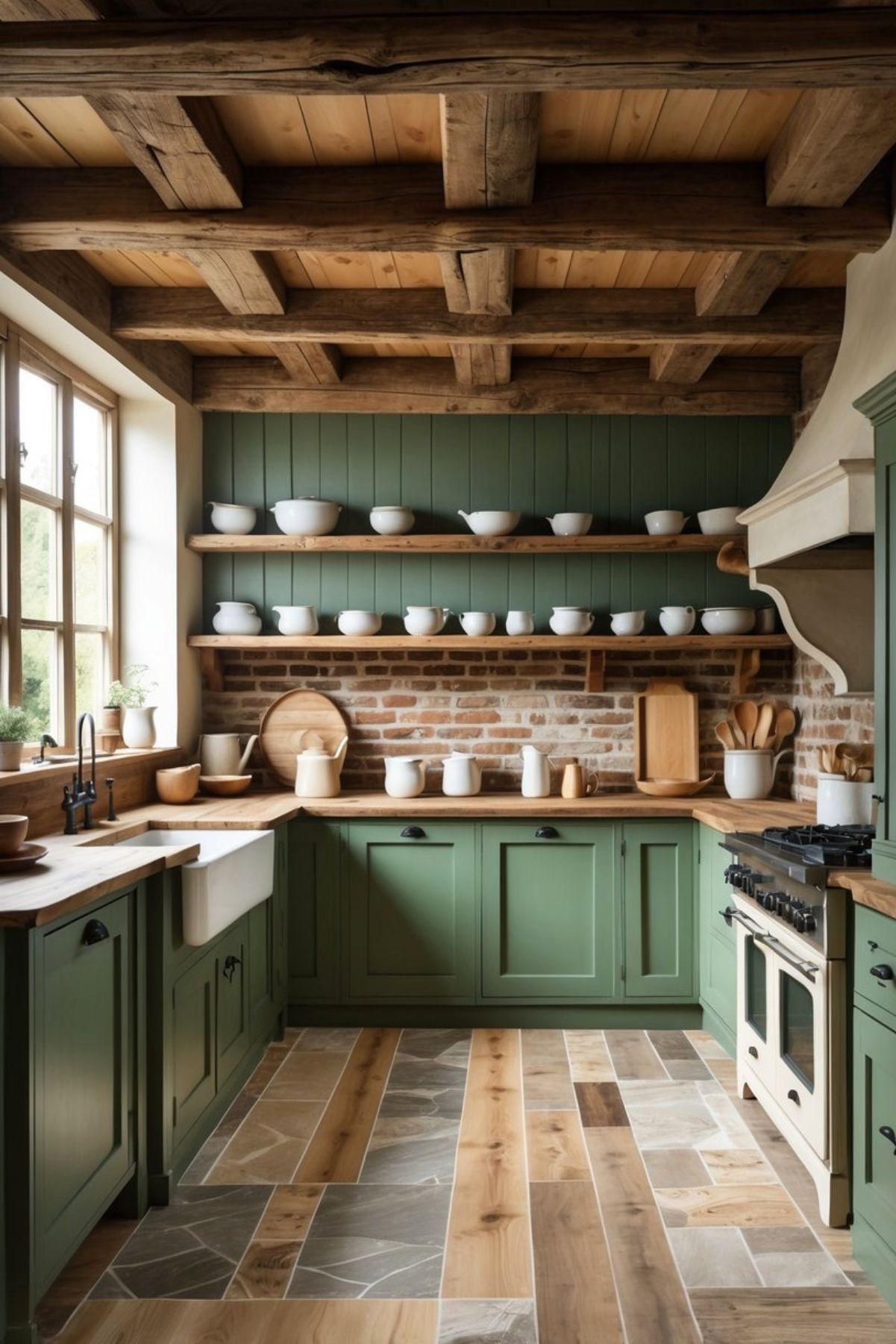
Flooring choices can make or break a green rustic kitchen. The right floor adds warmth and texture, working with the green tones instead of fighting them.
Materials that show a bit of age or character usually work best here.
Wide-Plank Hardwood
Wide-plank hardwood is a go-to for rustic kitchens. The big boards show off grain and knots, bringing in loads of natural texture.
Oak, pine, or hickory are common picks because they’re warm and timeless. You can finish hardwood floors with matte or slightly distressed looks to up the rustic factor.
They look great with green cabinets or accents, balancing earthy and wood tones. Maintenance is pretty straightforward: regular cleaning and sometimes refinishing to keep them looking good.
Textured Tiles
Textured tiles offer both durability and style. Slate, stone, or terracotta all bring a natural, rugged look.
Their rough surfaces add contrast to smoother cabinets or countertops. You can find tiles in dark gray, earthy browns, or muted greens—great for tying in the green theme or making it pop.
They’re tough against water and stains, so they’re practical for kitchens. Oversized tiles or mixed shapes can boost the rustic appeal. Just remember to seal them to protect the texture.
Lighting and Fixtures Selection
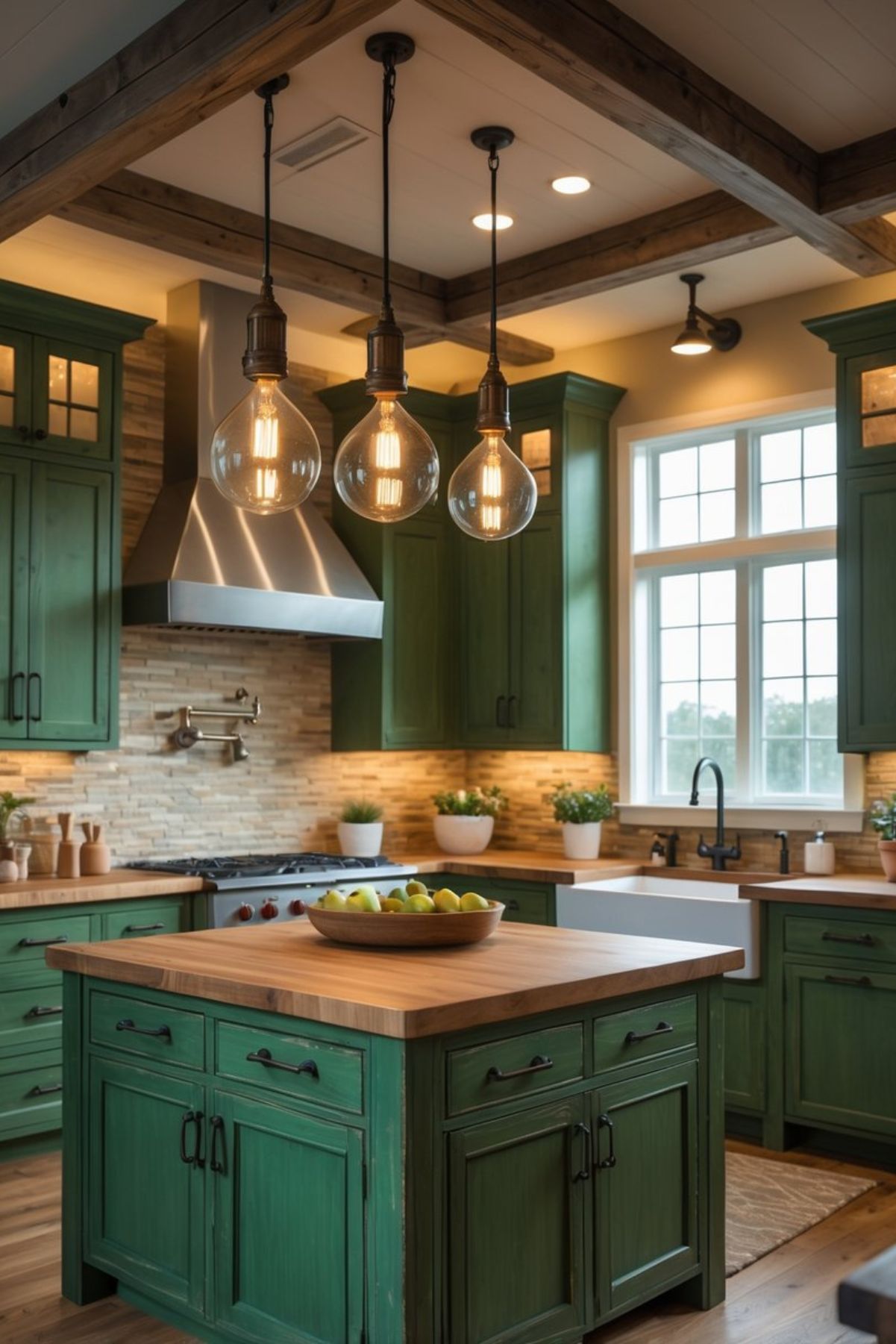
Lighting and fixtures do a lot to shape the mood in a green rustic kitchen. The right lights show off textures and colors, and make the space work for real life.
It’s all about mixing vintage charm with what you actually need.
Pendant Lighting
Pendant lights above islands or dining spots create strong focal points. Hand-forged iron or black metal pendants look sharp against green walls, adding contrast without being too much.
Clear or amber glass shades bring in a warm glow. Mason jar pendants are still a favorite for that farmhouse look simple, homey, and just bright enough.
Make sure pendants hang low enough to light things up, but not so low they get in the way. Adjustable cords or chains help you tweak the height. Grouping two or three together can also add depth and better coverage.
Farmhouse Chandeliers
Farmhouse chandeliers bring in classic rustic style. Weathered wood, wrought iron, or a mix of both work well with sage green cabinets and wood accents.
They’re perfect over big tables or islands, offering strong light and making a statement. Candle-style or Edison bulbs fit the vintage look without going overboard.
Pick a size that fits the space, too big and it overwhelms, too small and it gets lost. Rustic finishes like blackened iron or distressed wood tie the look together and add warmth.
Decorative Accents and Accessories
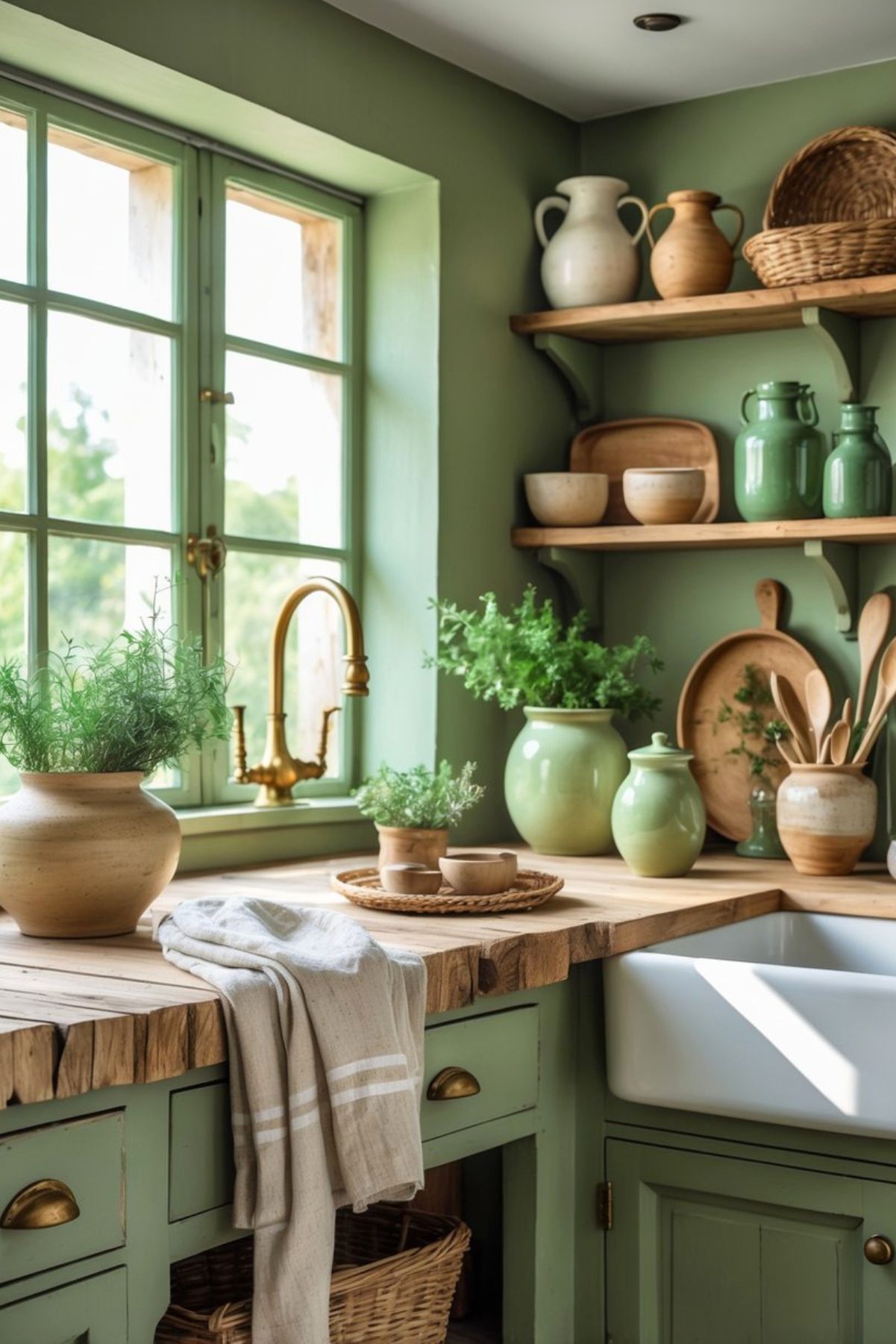
Decorative accents and accessories give green rustic kitchens real personality.
The right touches add warmth and texture without making things feel crowded. Details matter, and they help the space feel cozy and lived-in.
Antique Finds
Vintage dishes, old metalware, and weathered crates add instant charm. They bring a sense of history that pairs nicely with rustic green tones.
A natural wood oven hood or aged copper pots add subtle contrast. Antiques should look worn but cared for—hardware with patina or reclaimed wood shelves keep things authentic.
Displaying old kitchen tools or dishes on open shelves gives the kitchen a homey, collected feel. It’s a balancing act, though—too many antiques and it starts to feel cluttered.
Botanical Touches
Green kitchens and plants just make sense together. Potted herbs on the windowsill or hanging planters bring in fresh color that matches the cabinets.
Easy plants like pothos, ferns, or succulents work well in kitchens. Dried flowers or eucalyptus wreaths add rustic charm without needing much care.
Plants help freshen the air and soften up all the wood and metal. They also pull the color scheme together in a subtle way.
Textiles and Rugs
Textiles add a layer of softness and warmth. Rugs should be tough but still feel homey—look for rustic patterns in sage, olive, or deep green.
Wool or jute rugs fit the vibe best. Potholders, towels, and napkins in matching greens help reinforce the color story.
Checks, stripes, or simple florals are classic for rustic textiles. Layering rugs under tables or islands adds comfort and keeps floors safe. Just don’t go overboard—too much fabric can get messy fast.
Sustainable and Eco-Friendly Features
Green rustic kitchens can look great and still go easy on the planet. Using materials and products that do less harm makes a real difference.
Picking safer paints and reusing what you can helps you build a kitchen that’s stylish and sustainable.
Low-VOC Paints
Low-VOC (volatile organic compounds) paints release fewer toxic chemicals, which keeps indoor air healthier. That’s especially important in kitchens where people spend lots of time.
These paints still come in rich, deep greens that work perfectly for rustic styles. Matte or satin finishes look great on cabinets and walls, creating a peaceful, natural feel.
Choosing low-VOC paints cuts down on pollution both at home and when the paint is made. Many brands now offer them with just as much durability and coverage as the old stuff.
Upcycled Materials
Upcycled materials take old stuff and turn it into something useful again. This approach cuts down on waste and gives your kitchen a story.
In a rustic kitchen, you might use reclaimed wood for cabinets or countertops. That wood brings in texture and character you just can’t fake.
It’s got that natural aging, those little imperfections, and honestly, it just fits with rustic style. Most of the time, people find this wood from old barns, factories, or even torn-down buildings.
That way, you don’t have to chop down more trees. Plus, there’s something cool about knowing your cabinets had a past life.
Other smart options? Try hardware made from recycled metals. Or maybe go for repurposed glass on your backsplash.
These details save resources and give your kitchen a look that’s both authentic and kind of eco-friendly. It feels more personal, too like it couldn’t belong anywhere else.
Maintenance and Care Tips
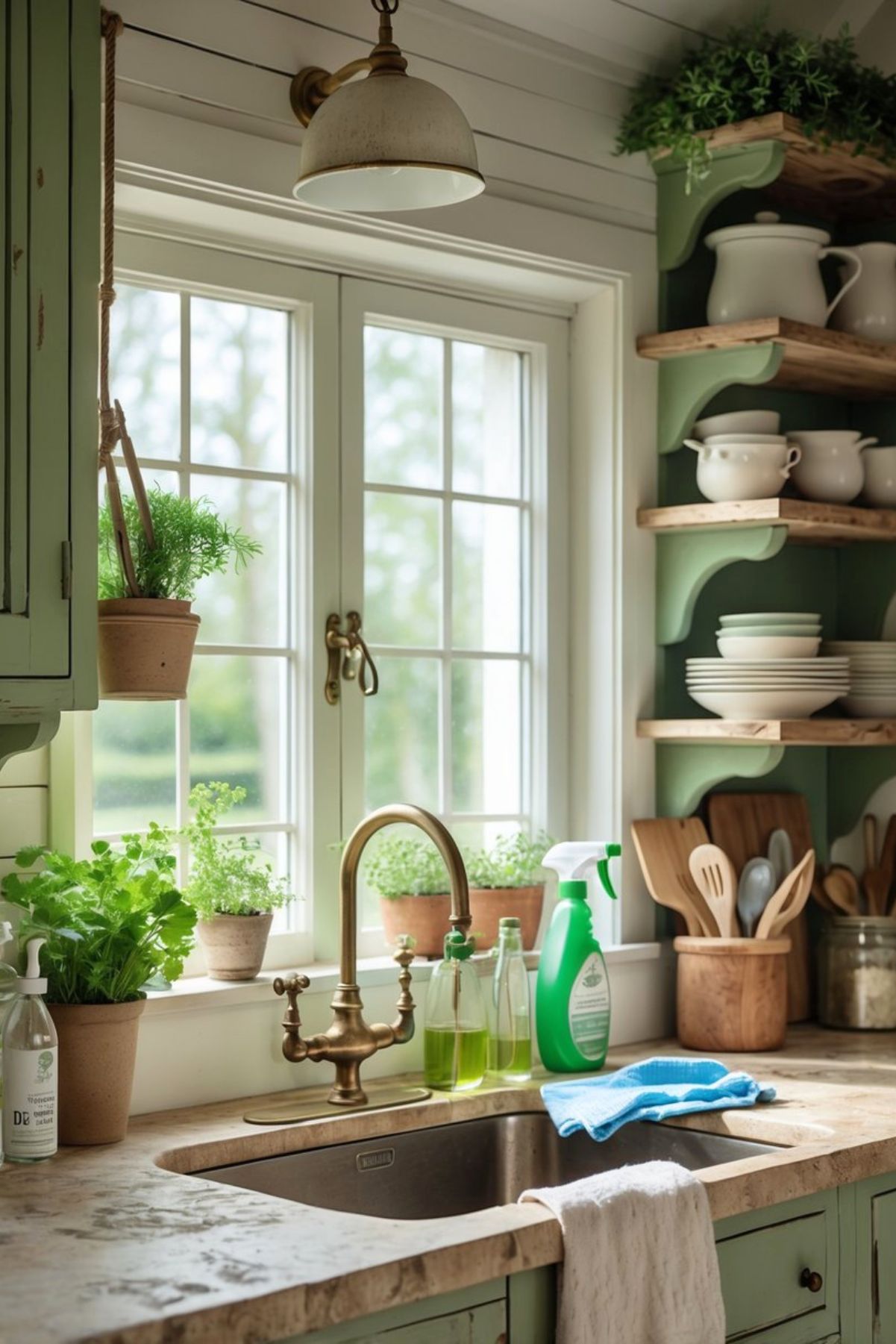
Keeping a green rustic kitchen in good shape takes a bit of attention to both natural and painted surfaces. Cabinets painted in olive or sage green look best when you clean them regularly with a soft cloth and a little mild soap.
Skip the harsh chemicals they’ll just mess up the finish. Wood countertops and backsplashes need steady care too.
Wipe up spills right away if you can. That way, you avoid moisture damage and ugly stains.
Stick to wood cleaners that won’t mess with the rustic vibe. Brass fixtures and hardware add a lot of charm, but they need gentle polishing now and then.
Use a non-abrasive cleaner so you don’t end up scratching or dulling the metal. Always dry these fixtures after cleaning to keep water spots at bay.
Open shelves and accessories? They collect dust fast, so give them a quick wipe often. It’s smart to check for little signs of wear catching small problems early makes life easier.
Daily Care Checklist:
- Wipe cabinets and surfaces with mild soap solution
- Clean spills on wood instantly
- Dust and polish metal fixtures gently
- Avoid abrasive cleaning tools and products
You May Also Like: