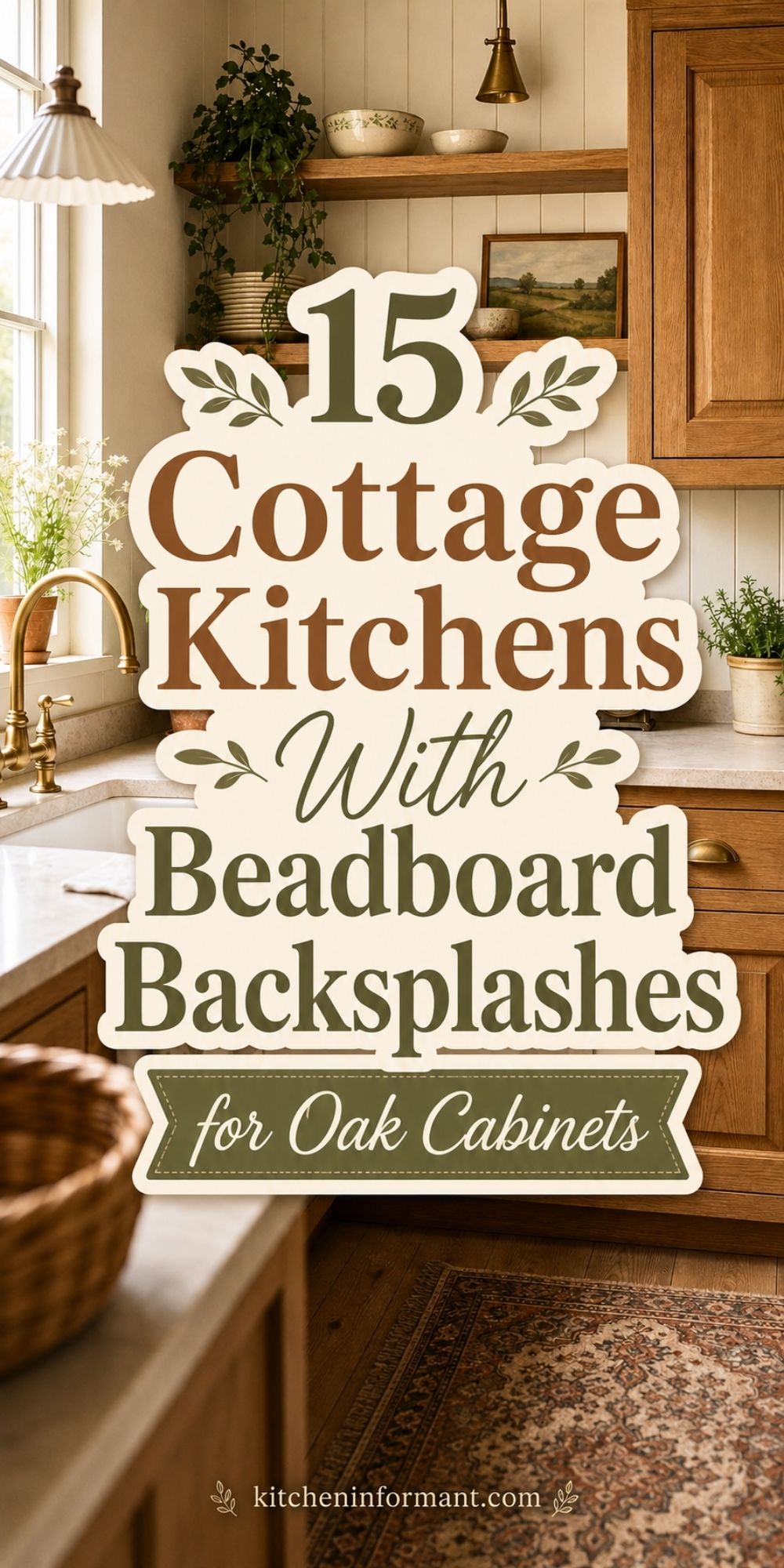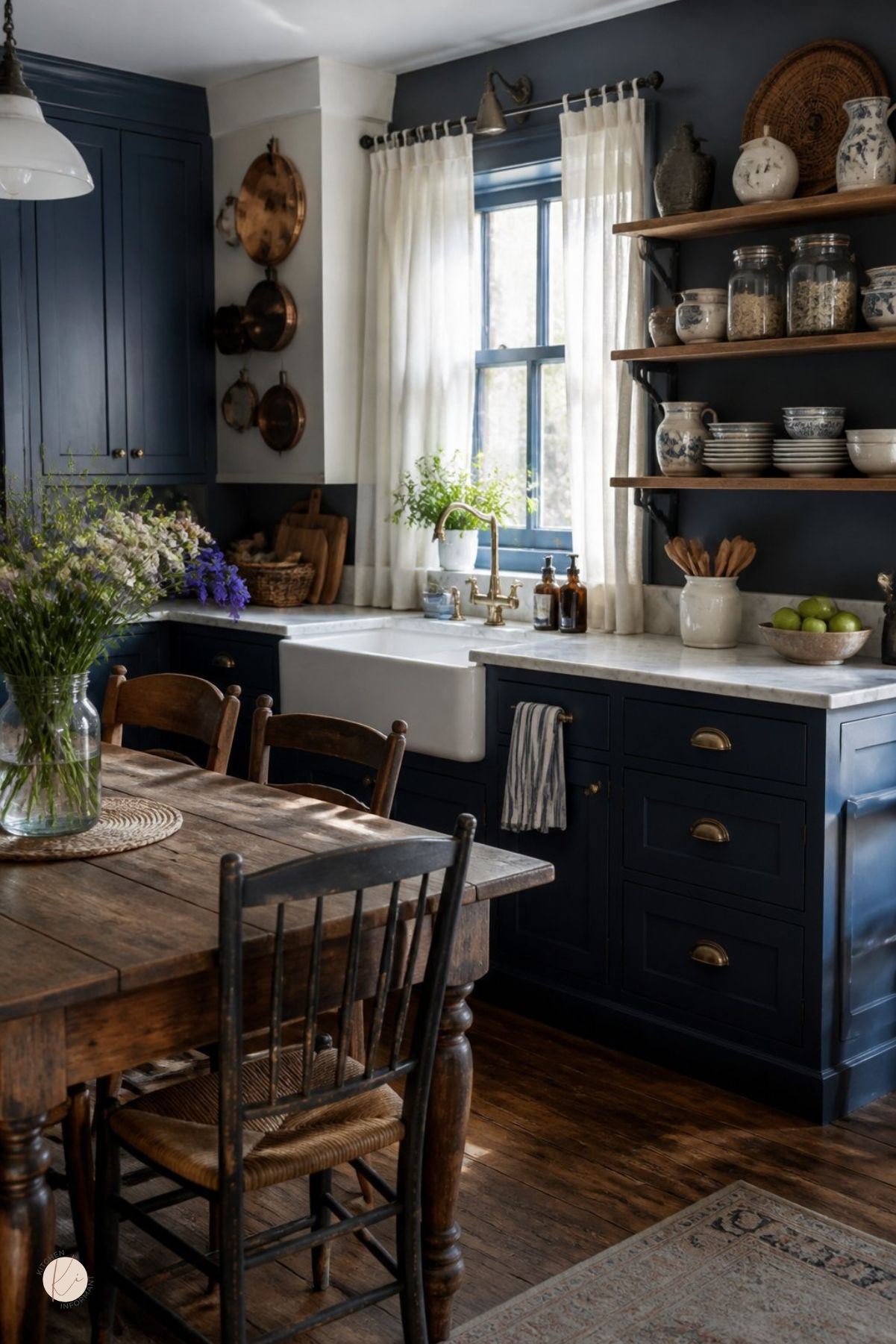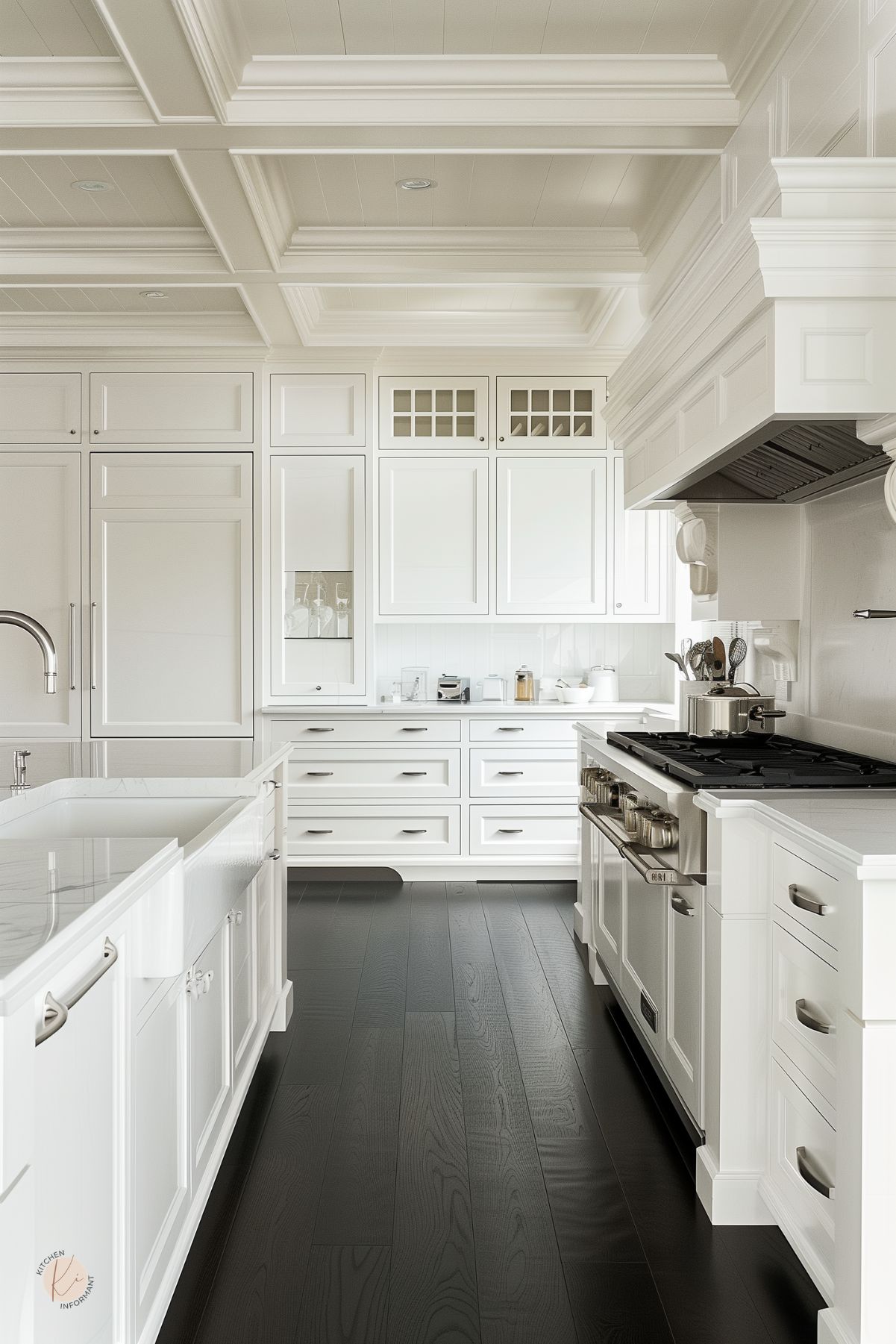
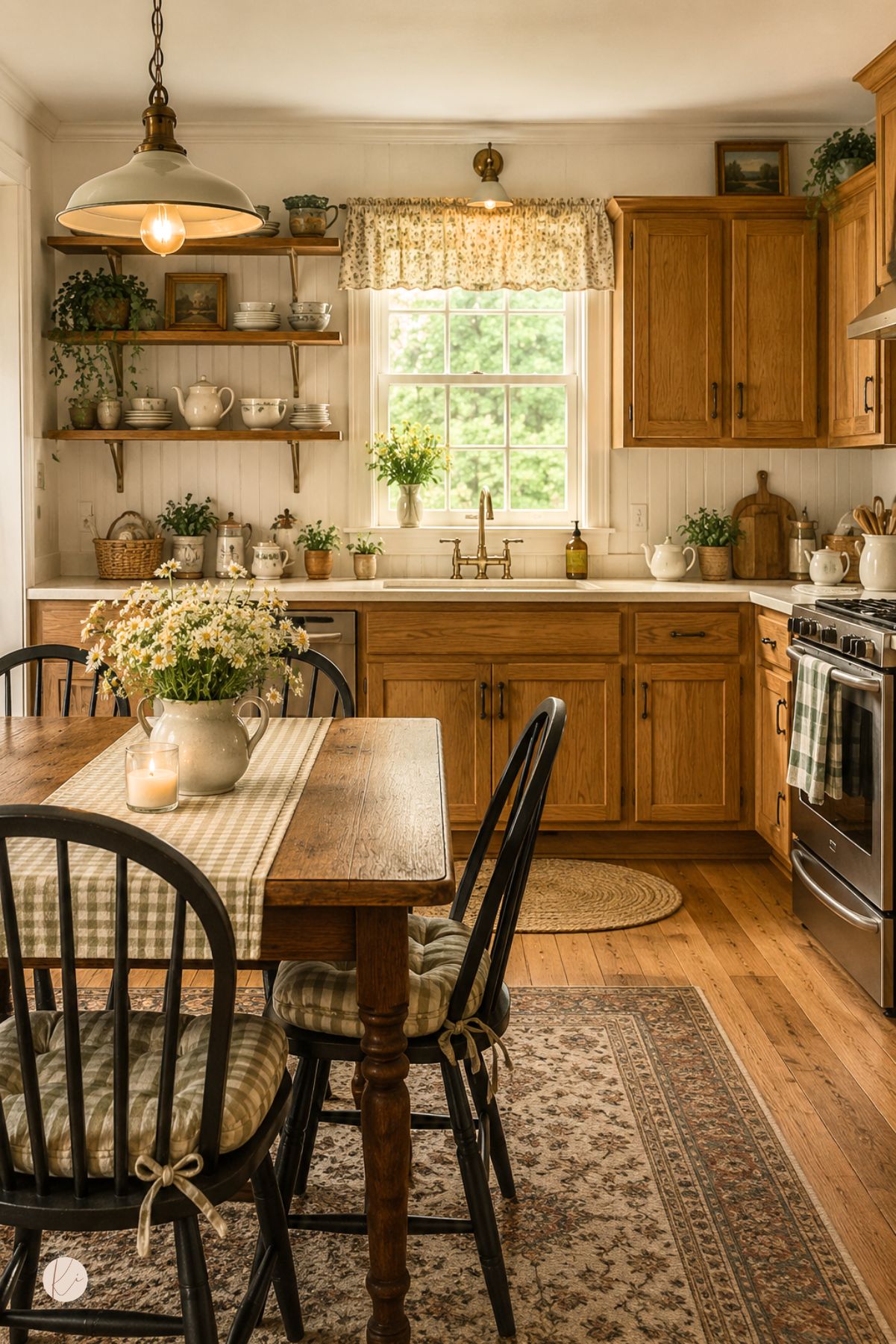
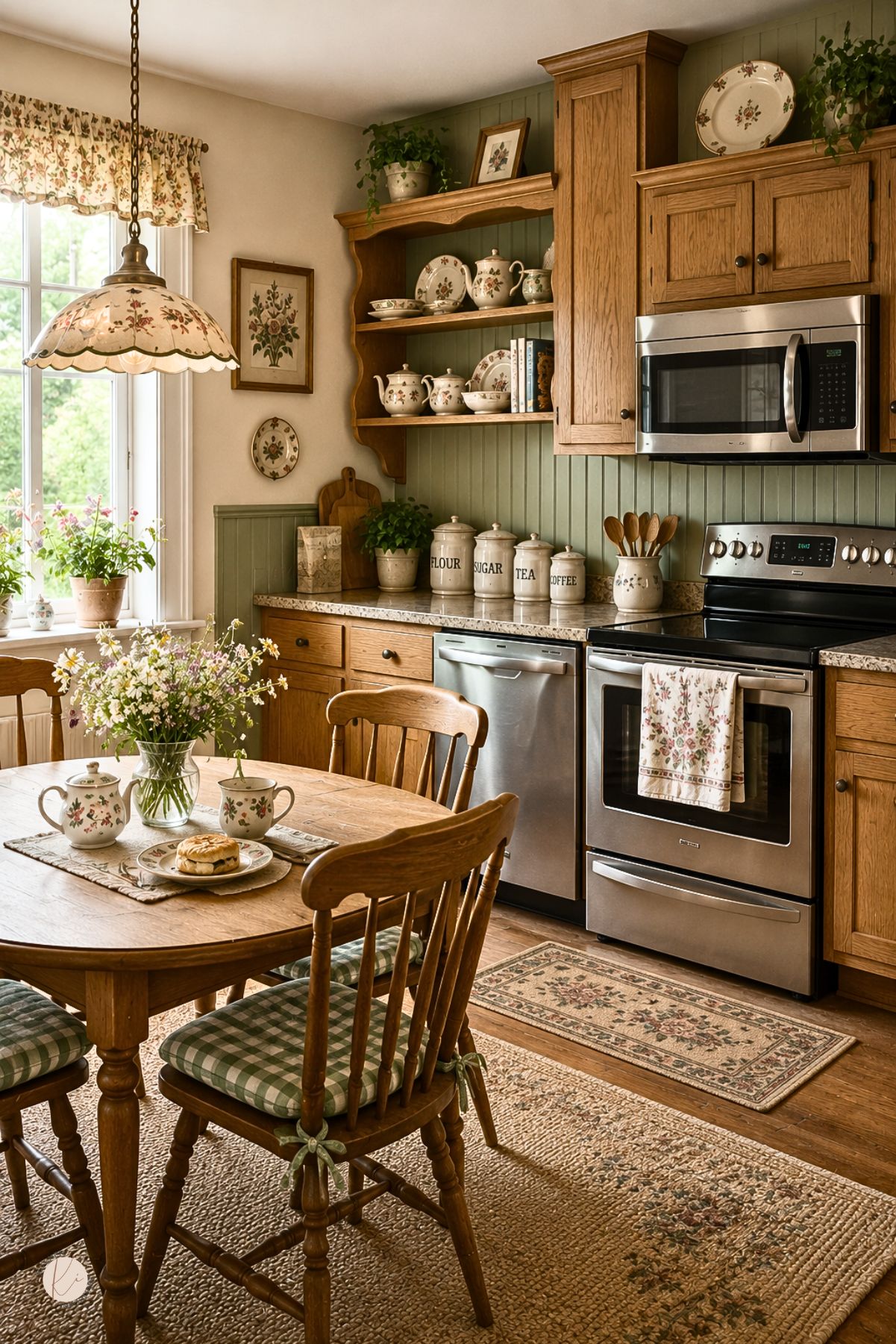
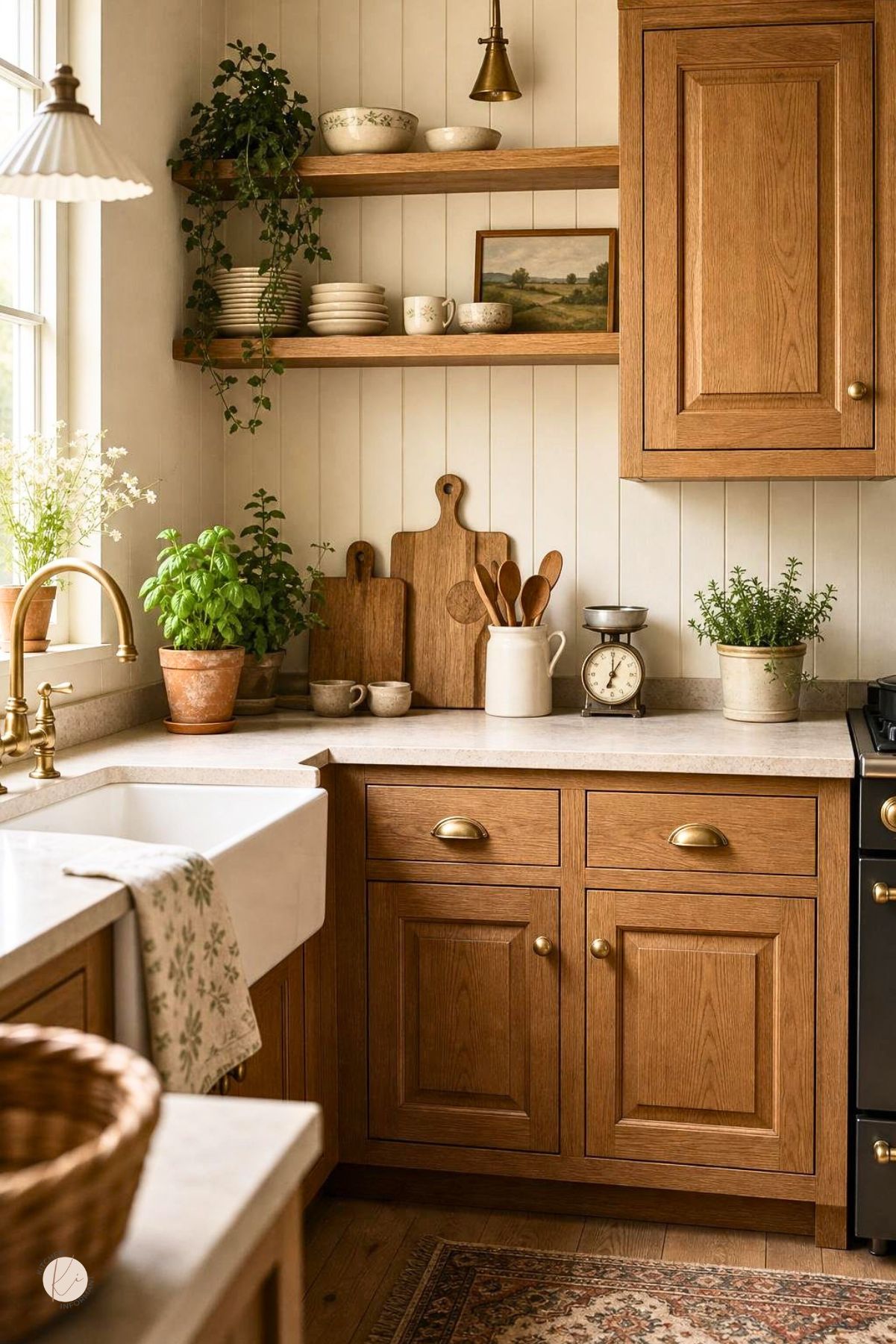
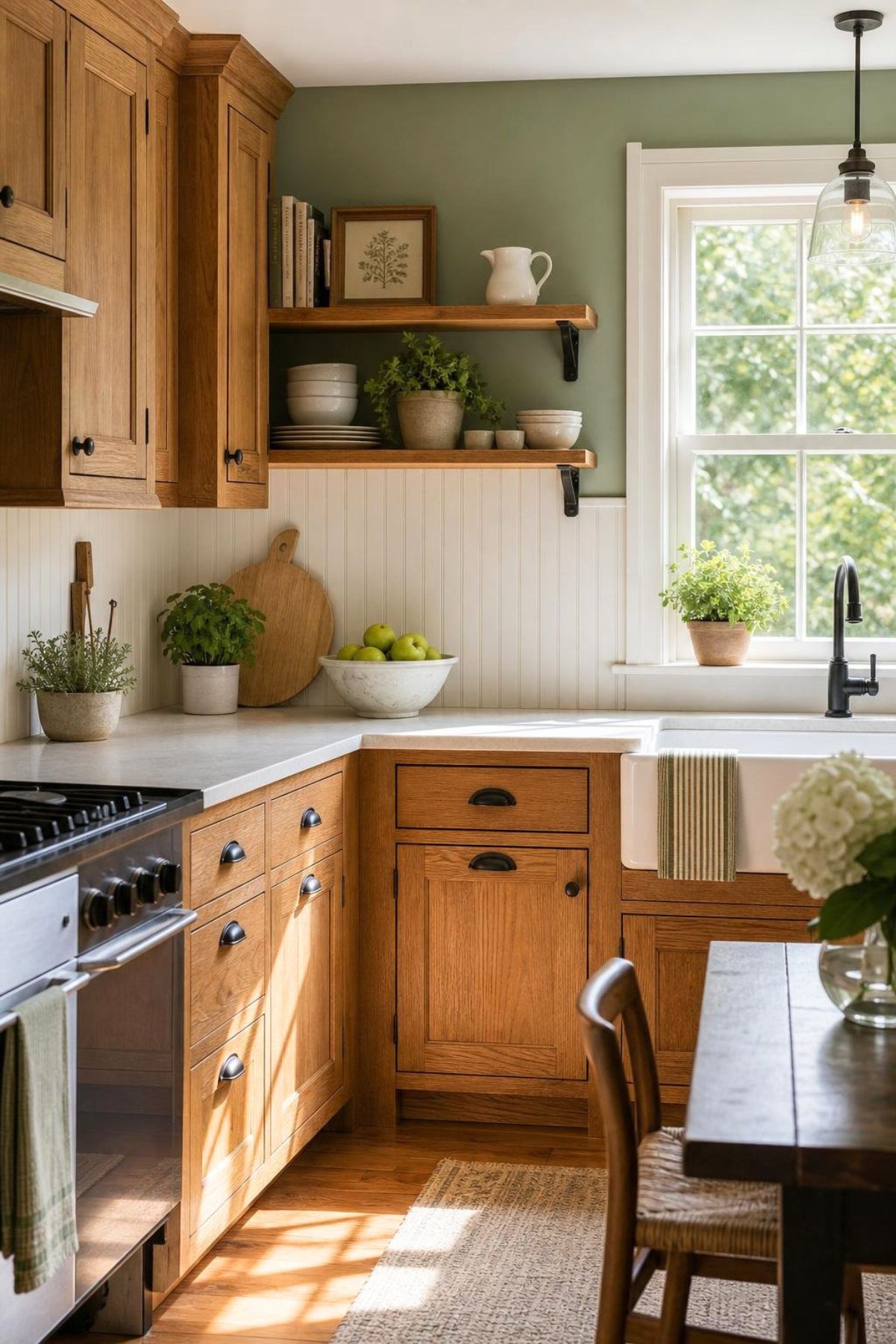
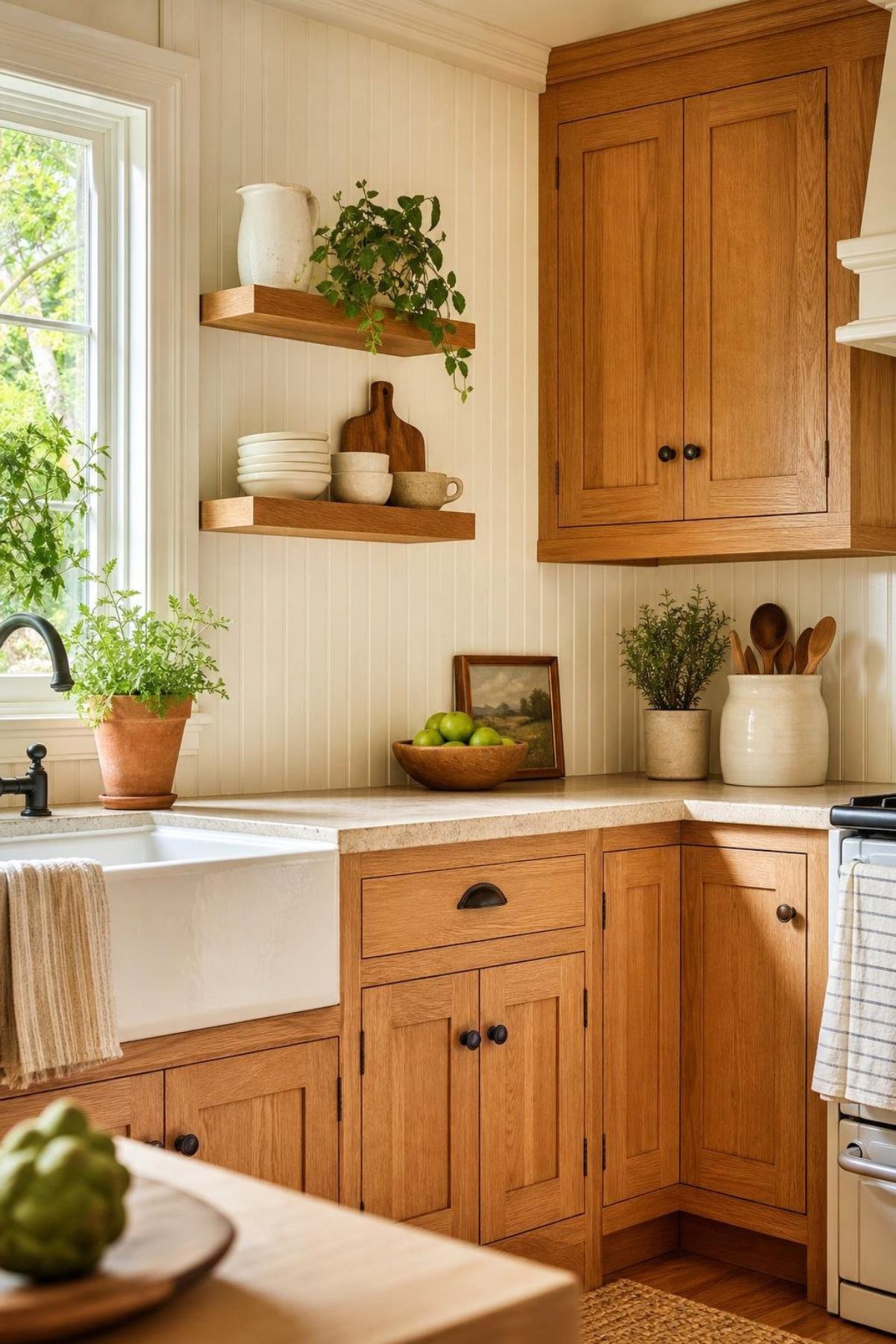
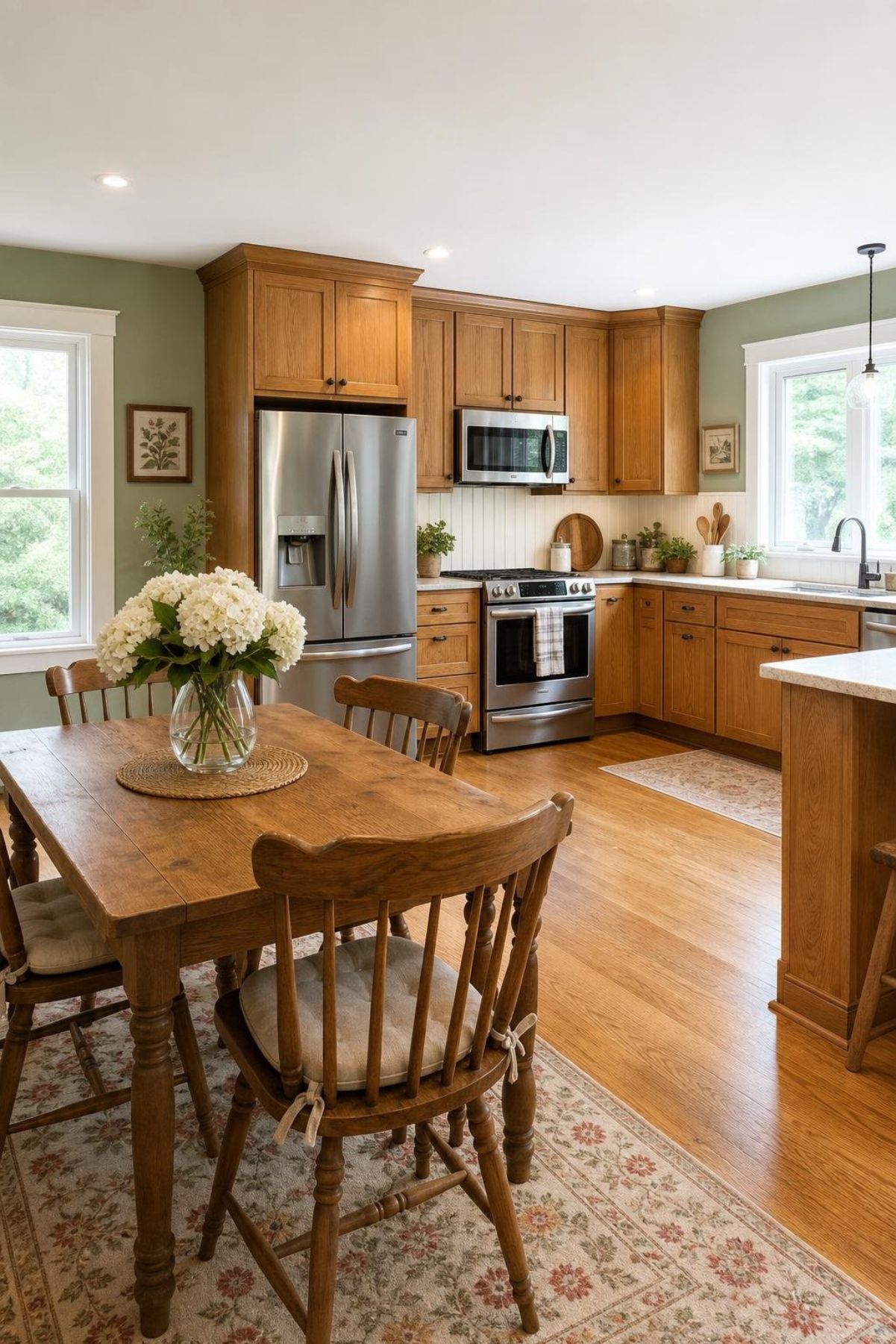
Cottage kitchens with beadboard backsplashes can really soften oak cabinets—no need to rip them out. The pairing adds texture, movement, and an easygoing vibe, so older wood cabinets feel intentional, not tired.
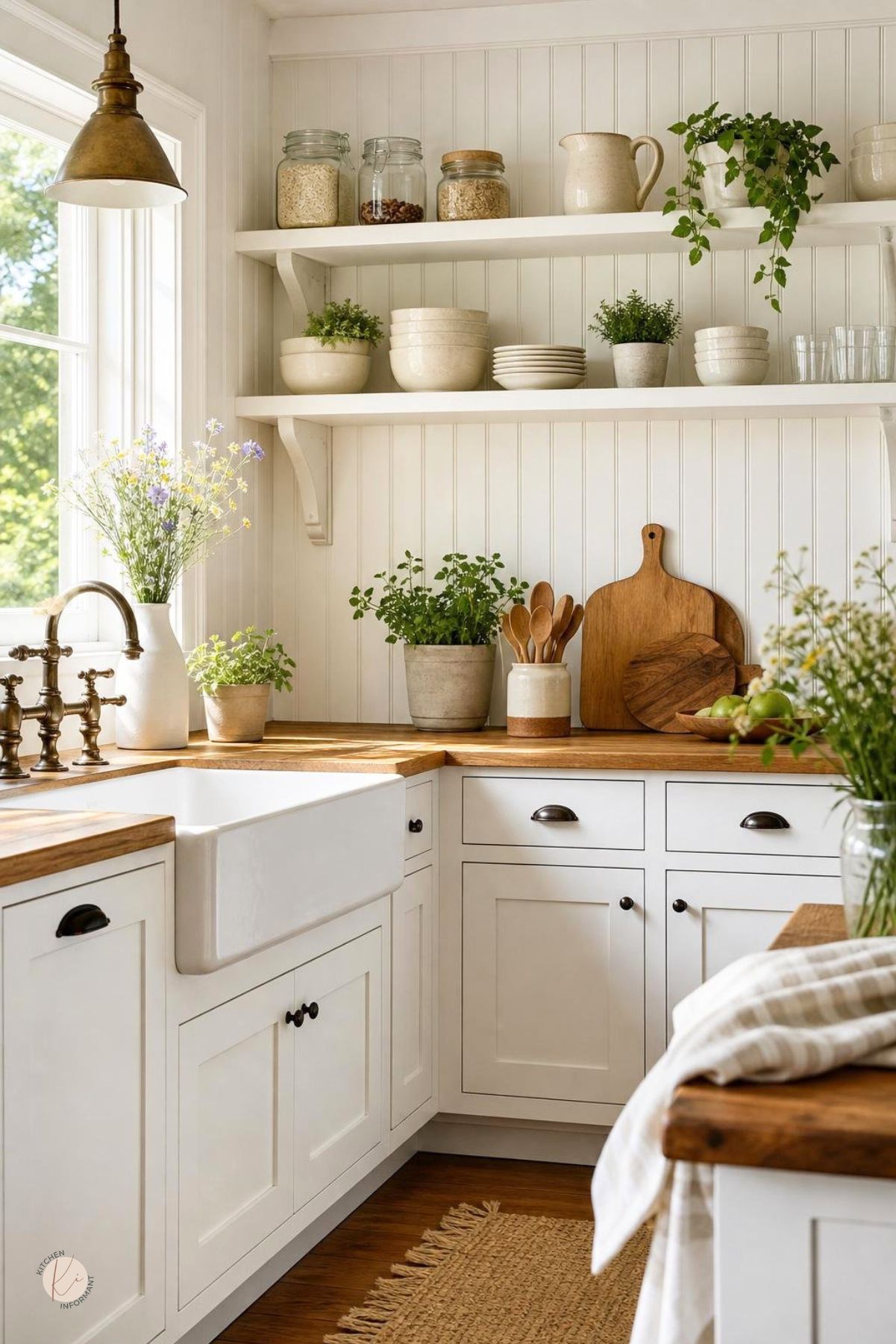
Oak cabinets usually provide solid storage and structure, even if their color seems a bit heavy-handed. When you add beadboard, the eye shifts to the walls, making the kitchen feel more open and less about the wood grain.
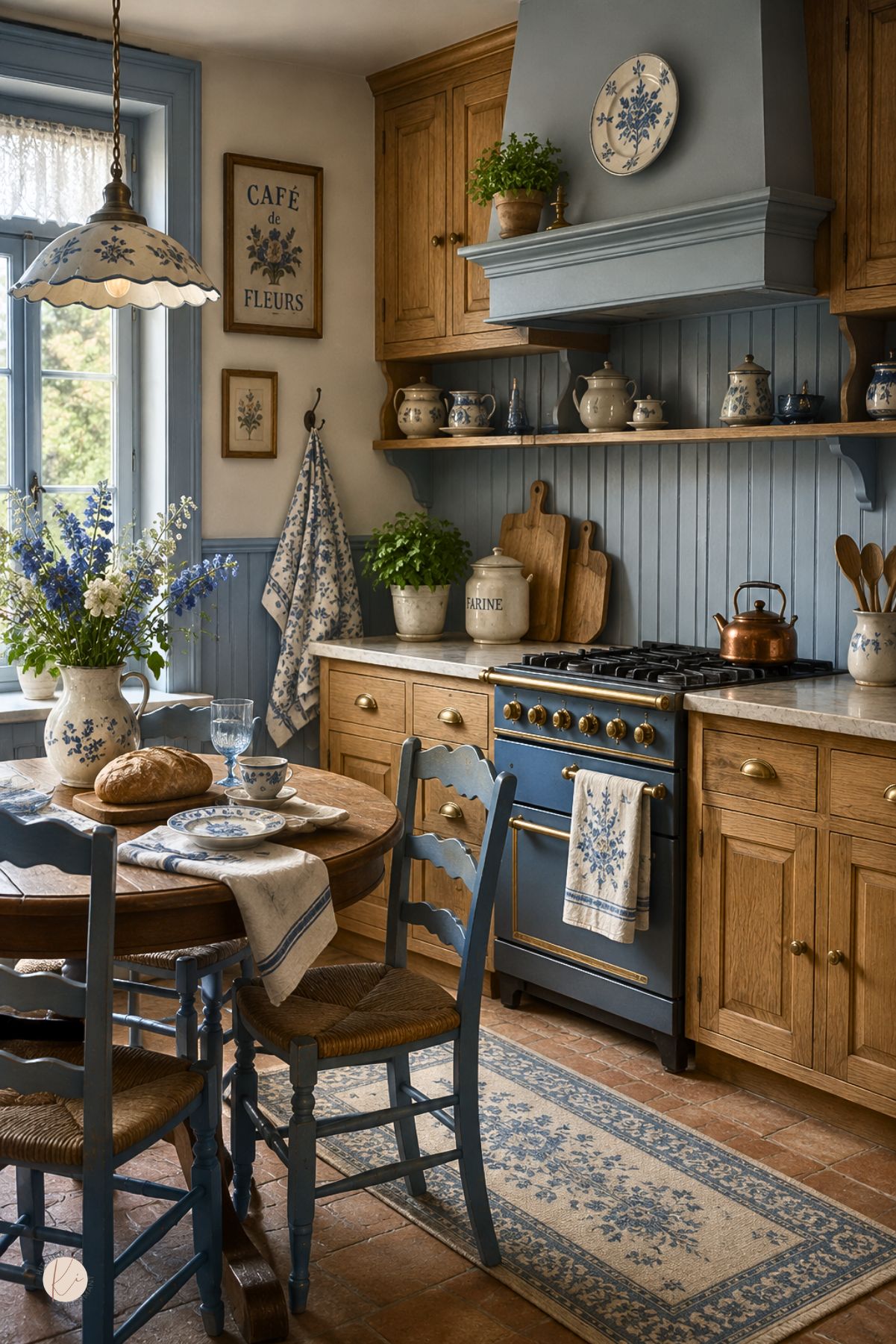
This really matters in cottage-style kitchens, where comfort and simplicity win out over high-contrast drama. Blue and yellow touches can boost the mood without clashing with the cabinets or backsplash.
What Makes This Pairing Work
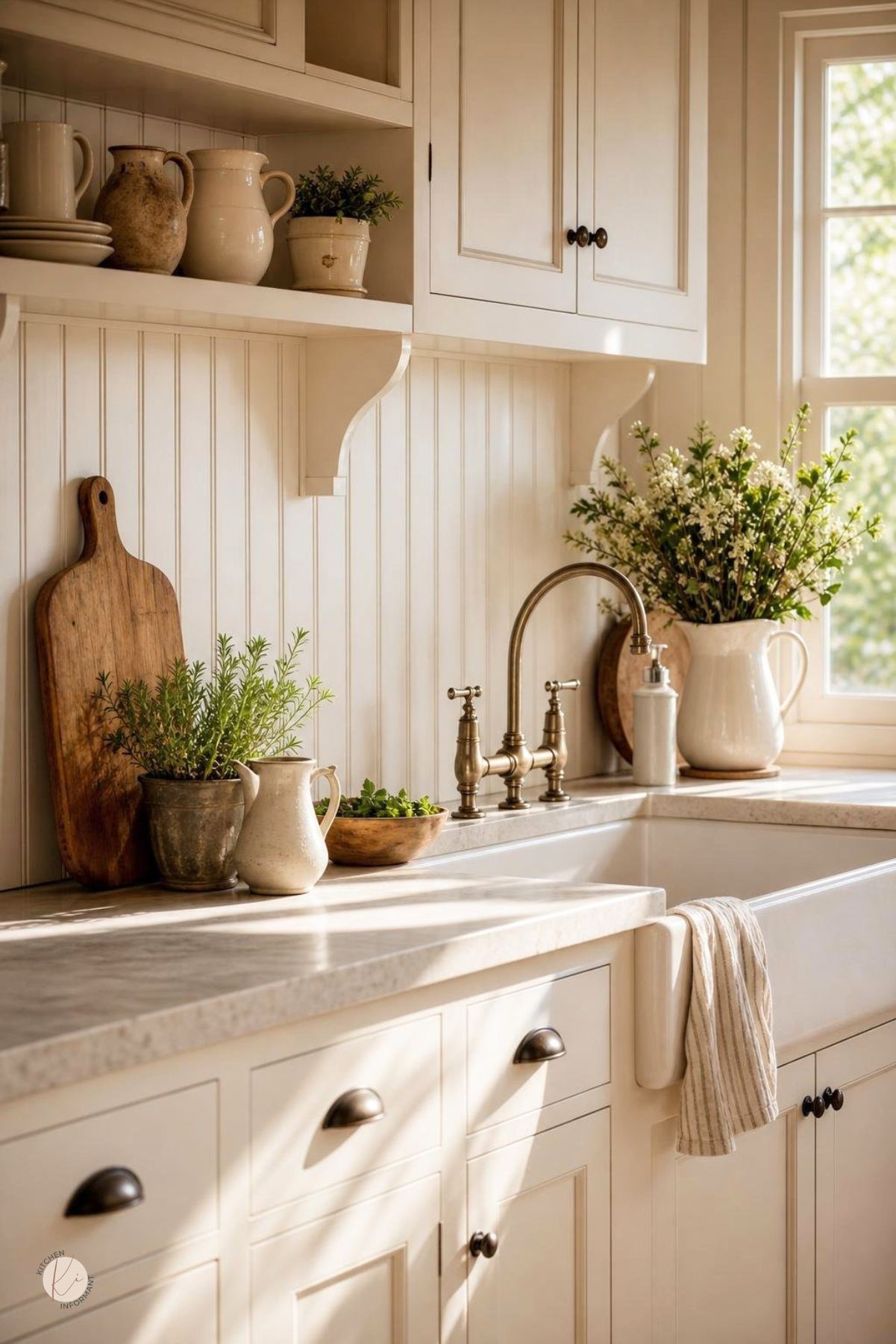
Cottage kitchens with beadboard backsplashes work because the materials feel familiar and calm. Oak cabinets bring warmth and structure, while beadboard gives the walls vertical detail so they don’t fall flat.
Cottage Character Without a Full Remodel
Beadboard gives a kitchen cottage charm without touching the cabinet layout. It works as a full backsplash or even as a lower wall treatment, so you get a visible change with minimal mess.
The look supports classic cottage elements—painted trim, simple shelves, and a bit of vintage. You can keep your oak cabinets and still get a style bump.
Why Beadboard Softens Heavy Wood Grain
Oak has strong grain patterns and warm undertones. Beadboard breaks up that intensity with narrow grooves and a lighter rhythm, so the wall and cabinets don’t fight for attention.
The lines pull the eye up, creating a tidy backdrop for oak doors. This helps, especially if you already have upper cabinets or open shelves adding more visual action.
Assessing Existing Oak Before Any Changes
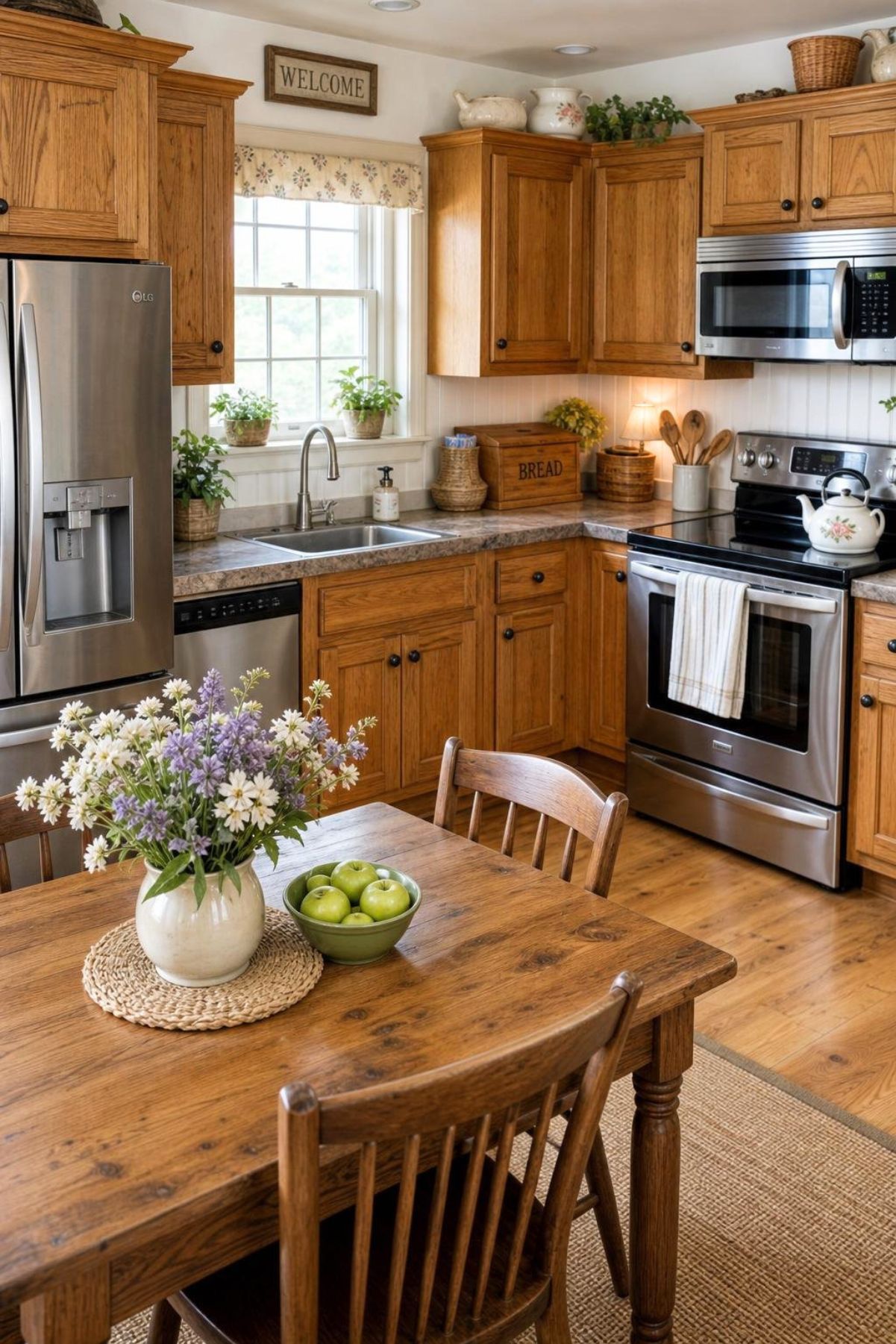
Before you pick paint or beadboard, study your cabinets up close. The box quality, door style, and exact oak shade all matter when you want a simple update to look polished.
Cabinet Quality and Door Style Check
Solid cabinet boxes and good hinges make a refresh worth it. If the frames are straight, doors close well, and the wood’s in decent shape, a new backsplash and coordinated finishes can really transform things.
Door style matters too. Flat or simple raised-panel doors look calmer with beadboard, while ornate doors can make the space feel busy. Cottage style usually likes simpler lines.
Reading Oak Undertones Accurately
Oak can look golden, orange, red, or brown. That undertone influences every other finish, especially beadboard paint and countertop color.
Check the cabinets under natural light to see the real tone. Artificial light can hide warmth during the day and make oak look harsh at night.
When Keeping the Original Finish Makes Sense
Keep the original finish if the oak is sturdy and the color still feels warm. A good finish pairs well with cream beadboard, soft blue walls, and brushed metal hardware.
If the kitchen layout still works, cosmetic updates may give you the best value without extra cost or hassle.
Color Strategy With Blue and Yellow
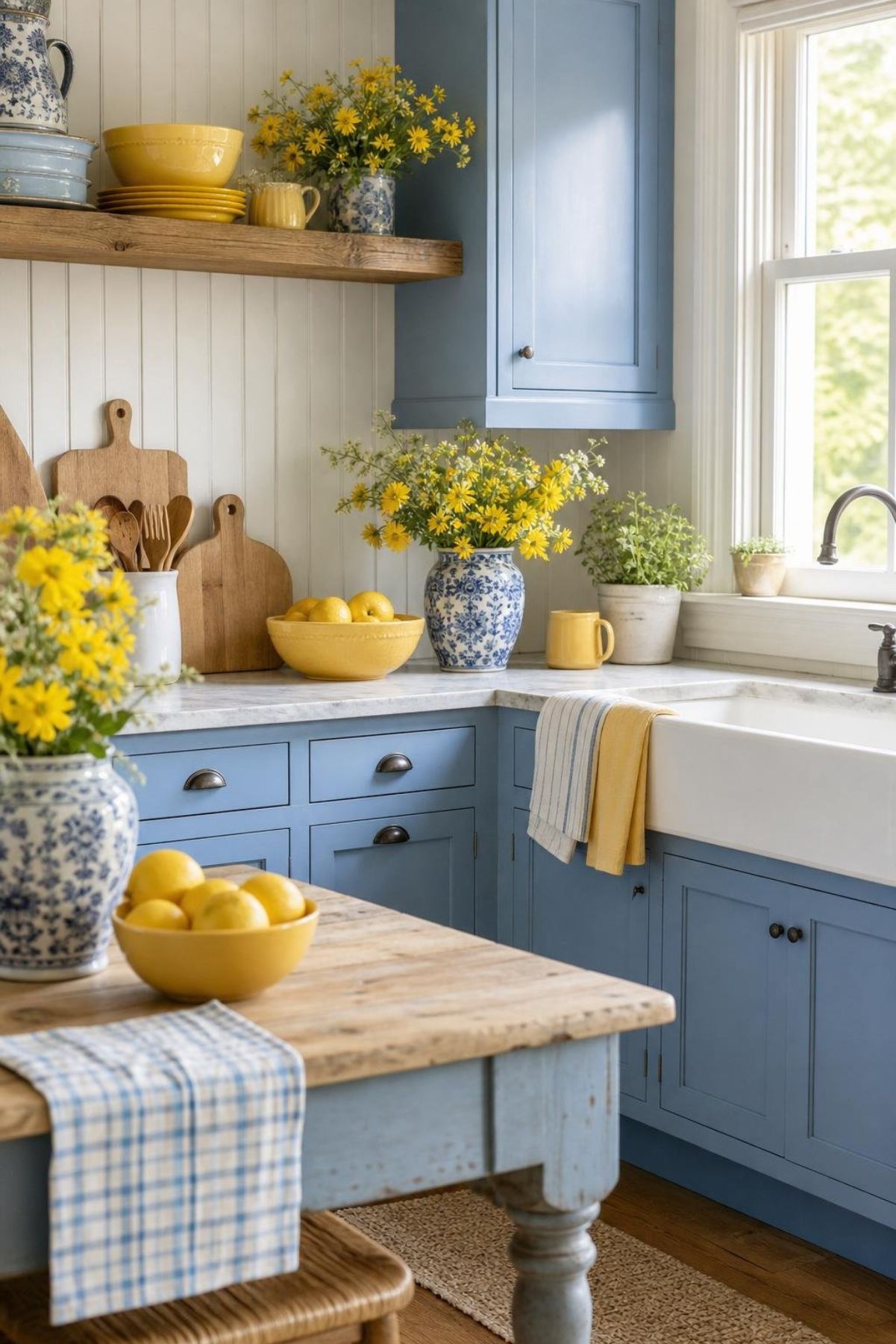
Blue and yellow can make oak feel more intentional, especially with beadboard. The trick is to keep the colors soft enough so the wood still feels like part of the plan, not an afterthought.
Best Blue Directions for Warm Wood
Soft powder blue, muted slate, and gray-blue cool the room without making oak look orange. Navy can work too, but you’ll want some white or cream nearby to keep things light.
Try blue on walls, stools, dishes, or textiles. Small doses can shift the mood without taking over the kitchen.
Where Yellow Adds Light Without Overpowering
Yellow works best as an accent when oak is already warm. Pale butter, aged brass, or muted sunflower tones add a bit of light without overdoing it.
A yellow lamp shade, runner, or bowl can brighten things up, but strong yellow walls need careful testing in natural light before you commit.
Balancing Saturation Across Walls, Textiles, and Decor
The kitchen feels best when just one or two surfaces carry the strongest color. If the walls are blue, keep textiles neutral. If you use yellow in decor, let the beadboard and cabinets stay quiet.
Try this: one major surface light, one supporting surface soft, and one accent color small. It keeps things cheerful, not cluttered.
Choosing the Right Beadboard Material and Finish
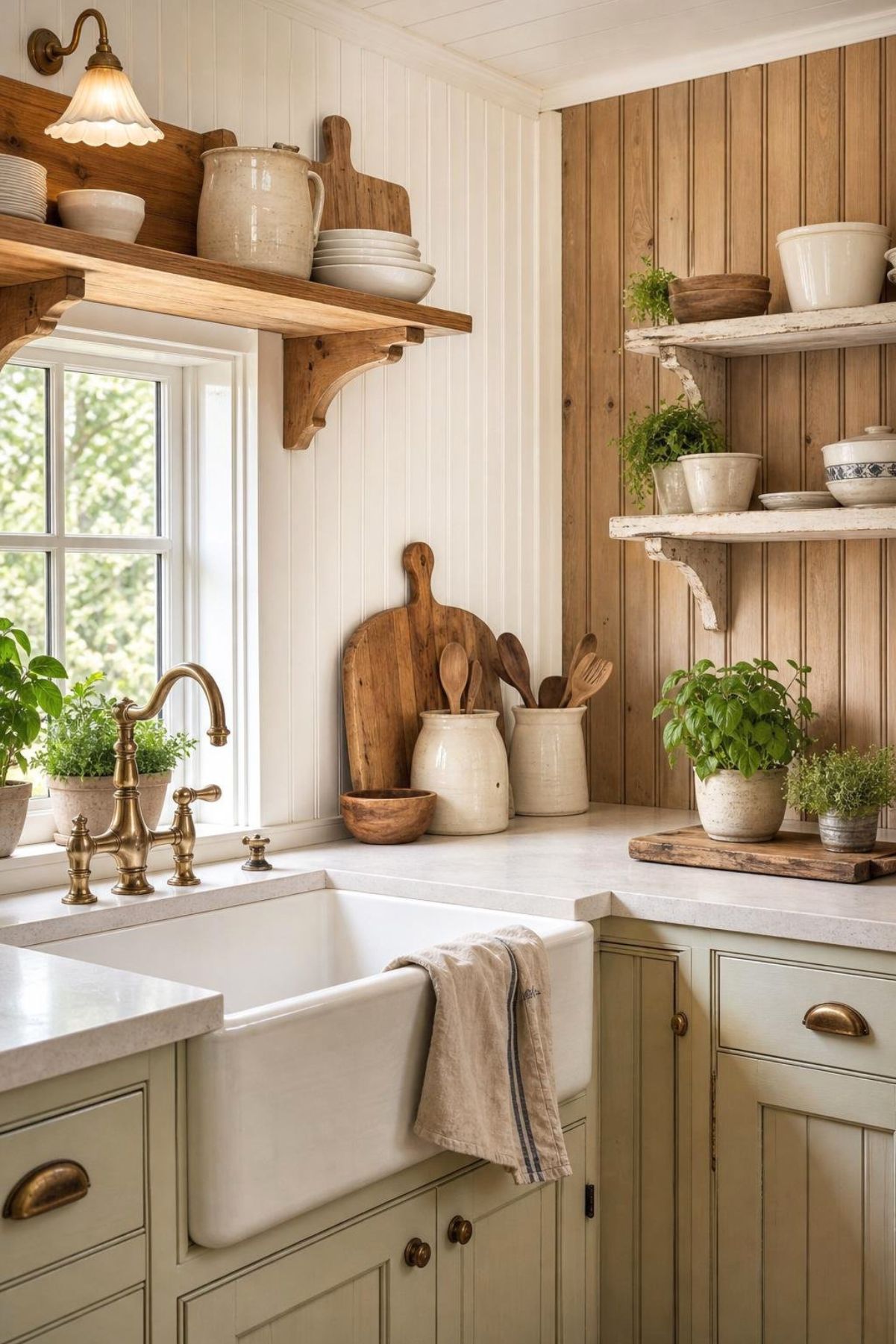
Pick beadboard based on moisture, cleaning, and detail needs. The backsplash should handle splashes and wipe down easily, so material matters as much as the look.
Painted Panels Versus Stained Applications
Painted beadboard is the go-to for cottage kitchens—it’s clean and bright. White, cream, and soft blue finishes usually play well with oak.
Stained beadboard adds wood texture, but matching is tricky. If oak already dominates, a stained backsplash could tip the balance to “too much brown.”
Moisture Resistance and Cleanability
Backsplashes live near sinks and stoves, so moisture resistance comes first. MDF, PVC, and other water-resistant types are easier to care for than raw wood in a busy kitchen.
A smooth, painted finish with a protective topcoat usually offers the best mix of charm and practicality. You want to wipe it down without fuss.
Trim Profiles, Groove Spacing, and Panel Height
Trim style changes the finish. A simple cap or chair rail makes the transition from backsplash to wall feel more deliberate.
Groove spacing shifts the room’s mood. Narrow grooves feel traditional; wider ones seem more casual. Panel height should match the cabinet layout—don’t let it stop at a weird line.
Lighting, Hardware, and Countertop Coordination
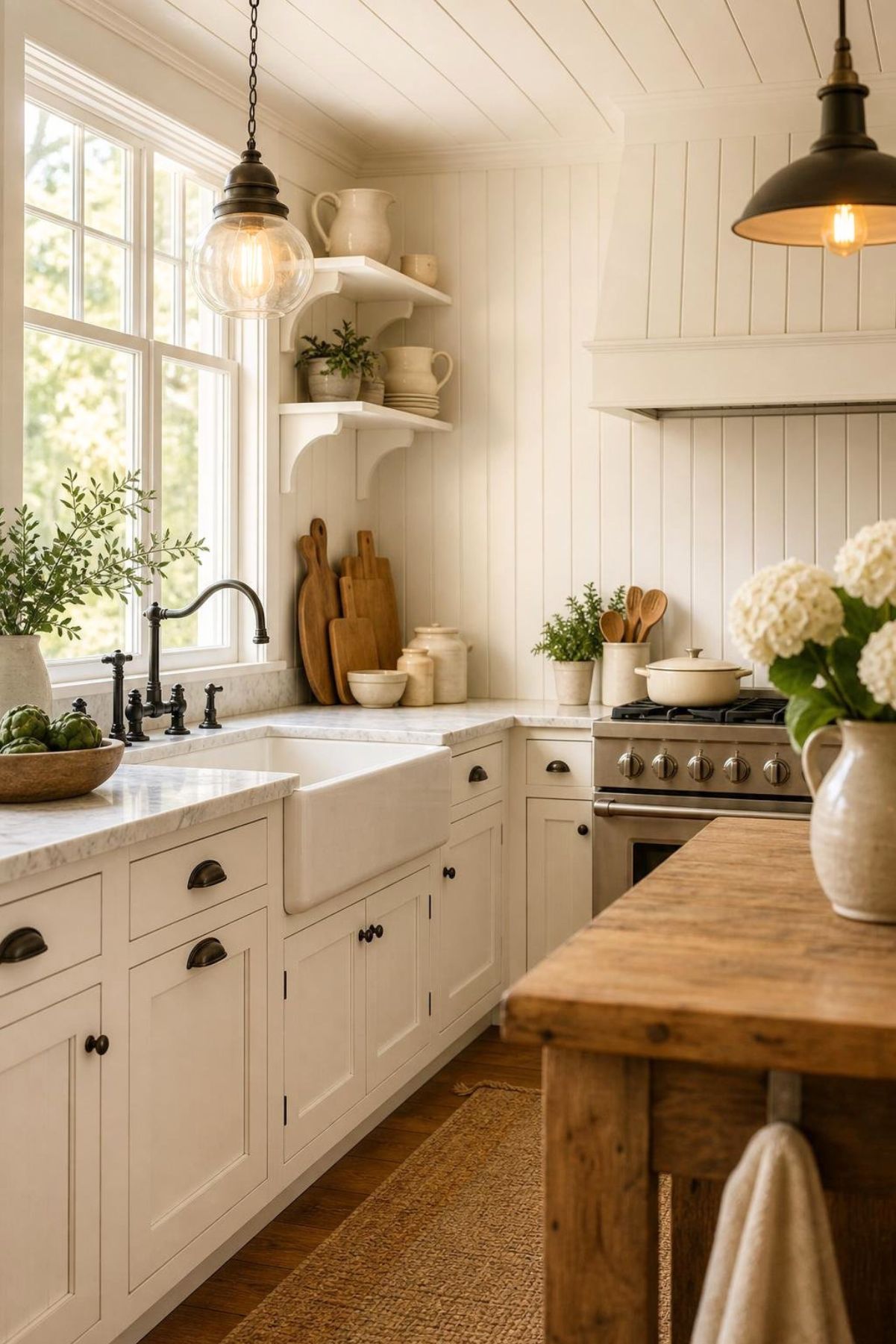
Lighting, hardware, and counters decide if the kitchen feels pulled together or just thrown together. They should play nicely with oak and beadboard, not compete for attention.
How Natural Light Changes Color Perception
North-facing light cools oak and makes it look grayer. South-facing light brings out gold and orange undertones, which can shift how the beadboard color looks as the day goes on.
Test samples in morning and late afternoon to avoid surprises. A color that seems soft one hour might turn bold the next.
Metal Finishes That Suit Cottage Styling
Brushed nickel, antique brass, aged bronze, and unlacquered brass work well for cottage kitchens. They feel relaxed and pair easily with warm wood.
Bright chrome can still fit, but it leans modern. Usually, it’s safest to echo the faucet or light fixture finish you already have.
Surface Pairings That Prevent Visual Clutter
Countertops should calm the room, not add more pattern. Light stone, soft quartz veining, butcher block, or muted laminate all work with oak and beadboard.
If the backsplash has strong grooves, keep the countertop visually quiet. Too many patterns in a small kitchen can crowd the space fast.
Refresh, Upgrade, or Replace
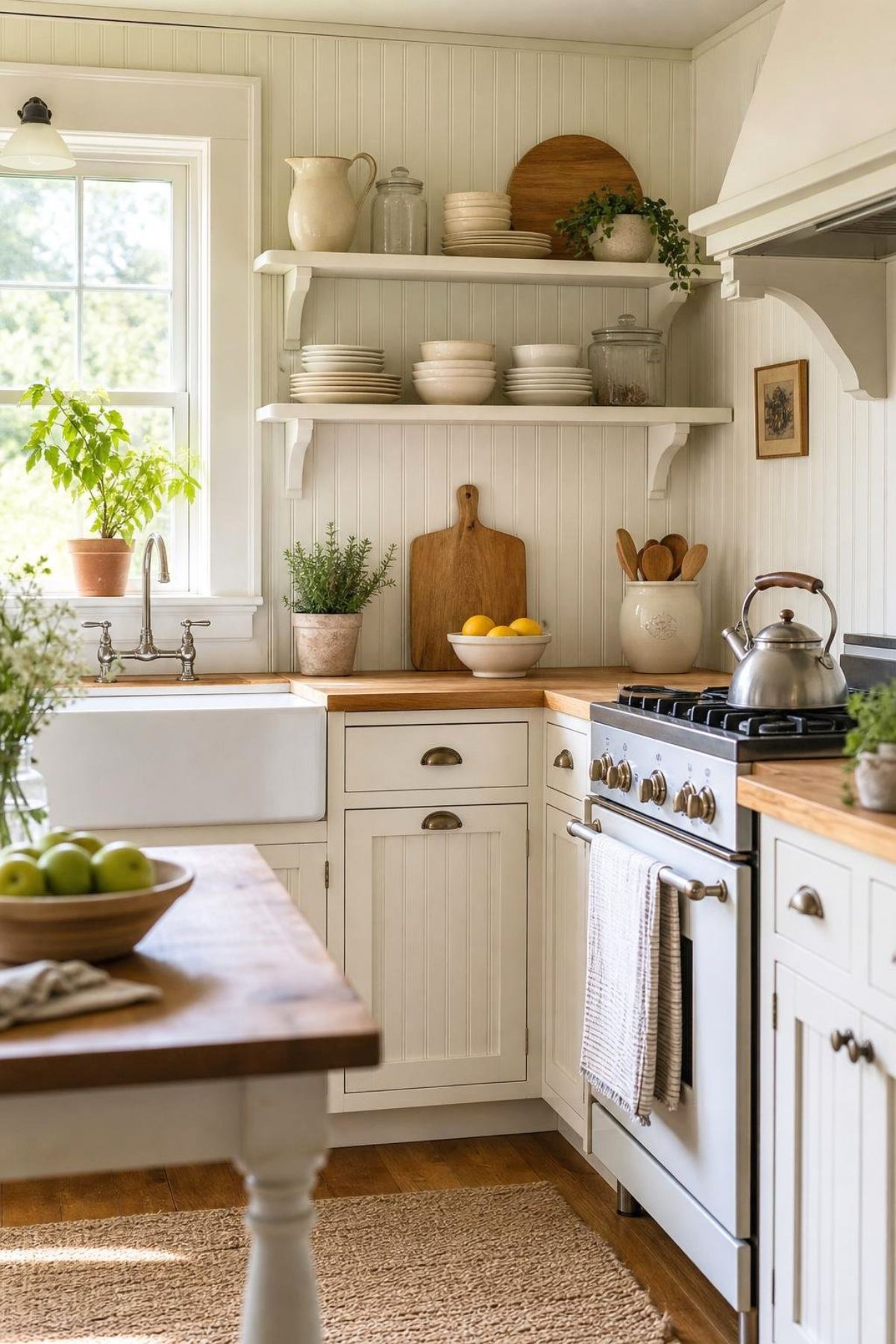
The best move depends on your cabinets, budget, and how much change you want. A lot of oak kitchens perk up with simple updates, but some need more work to really shine.
Low-Cost Improvements With the Biggest Impact
New hardware, better lighting, a fresh wall color, and beadboard backsplash often give you the biggest bang for your buck. Swapping out old outlet covers and sharpening up trim details help too.
These fixes work best if your cabinets are still solid. Small tweaks can make old oak look intentional, not accidental.
Signs a Partial Update Is Enough
If your cabinet boxes are sound, doors are stable, and the layout fits your life, a partial update usually does the trick. When the oak finish is just worn—not wrecked—cosmetic fixes can buy you years of use.
If your main complaint is color, not function, you probably don’t need a whole new kitchen. Beadboard and better finishes can solve the problem.
When Replacement Is the Better Long-Term Move
Replacement makes more sense when doors are damaged or boxes are failing. If the layout creates constant frustration, that’s another sign it’s time for a bigger change.
Water damage, poor storage, and warped components can really limit what a cosmetic update can fix. Sometimes, it just doesn’t make sense to keep patching things up.
If the kitchen needs major structural repair, spending on surface changes probably won’t deliver enough value. In those cases, going for a new cabinet plan just feels like the smarter investment.
You May Also Like: