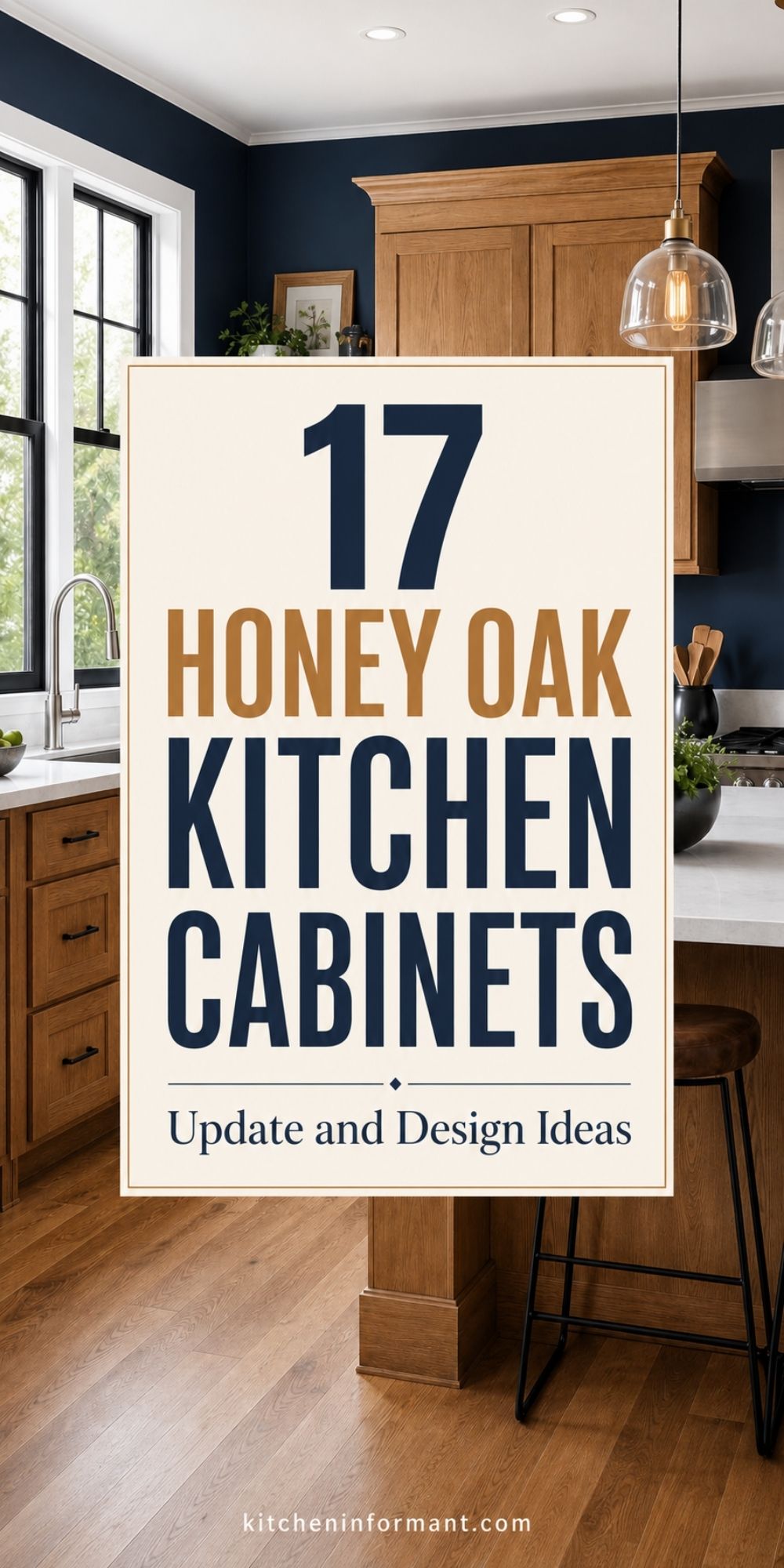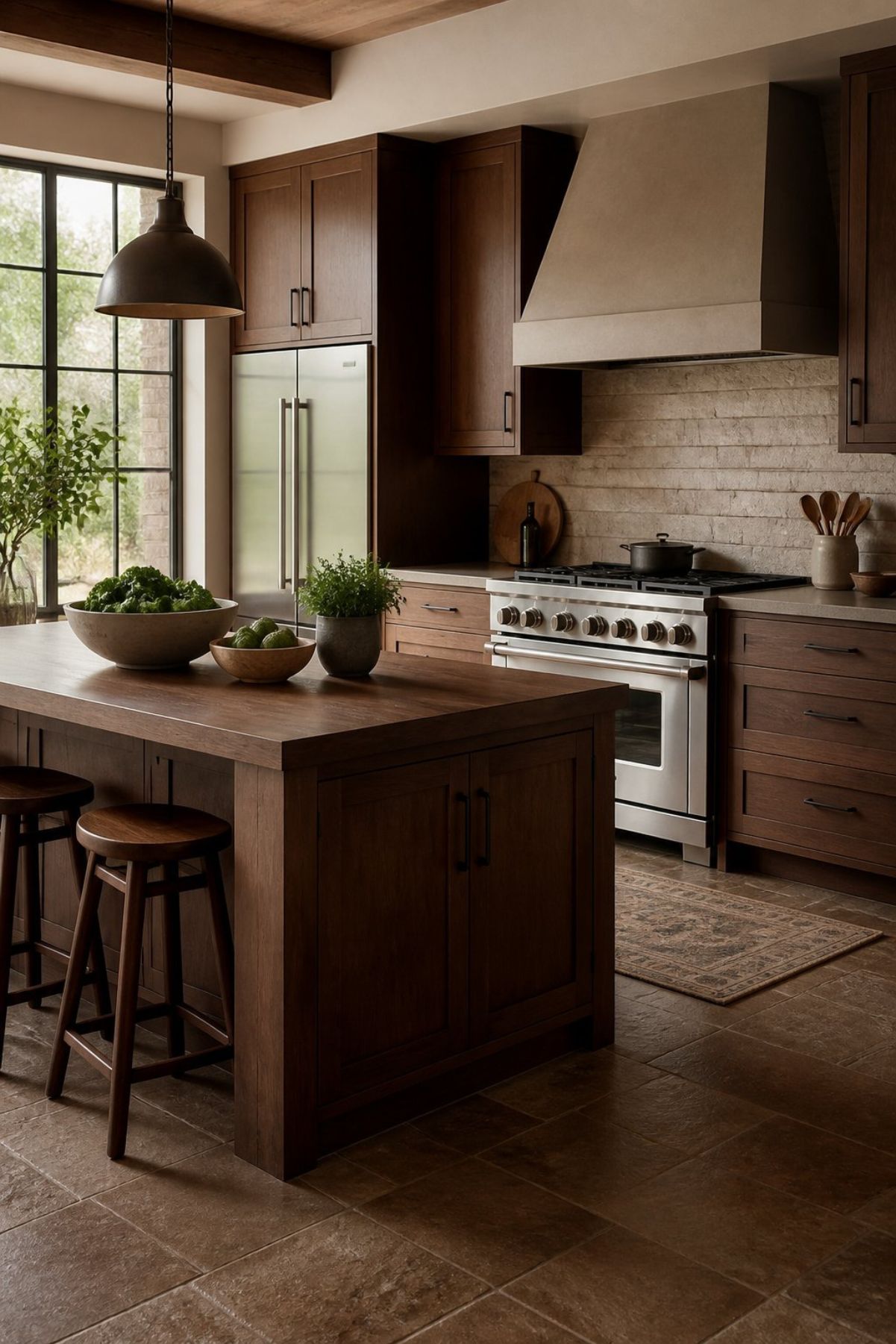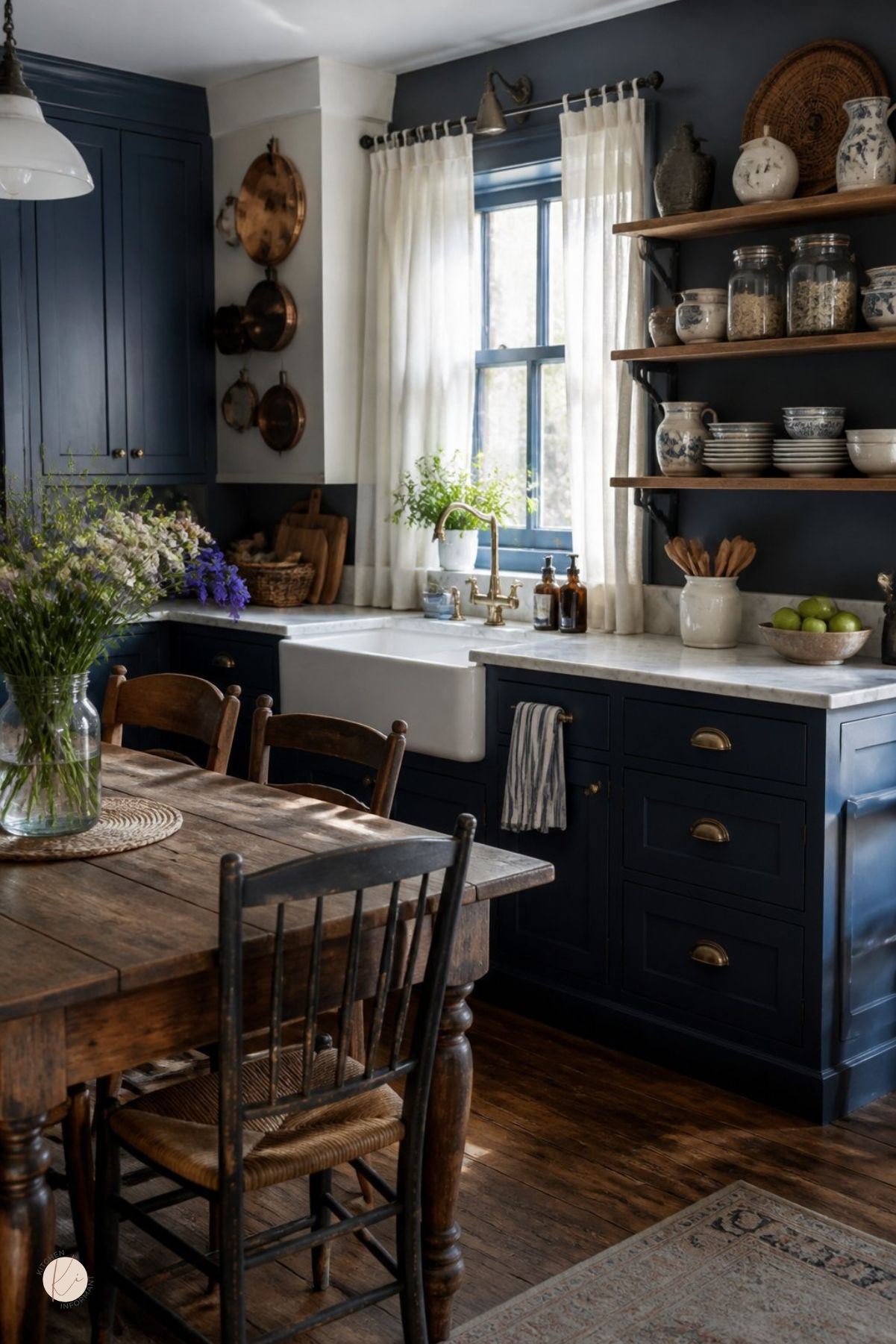
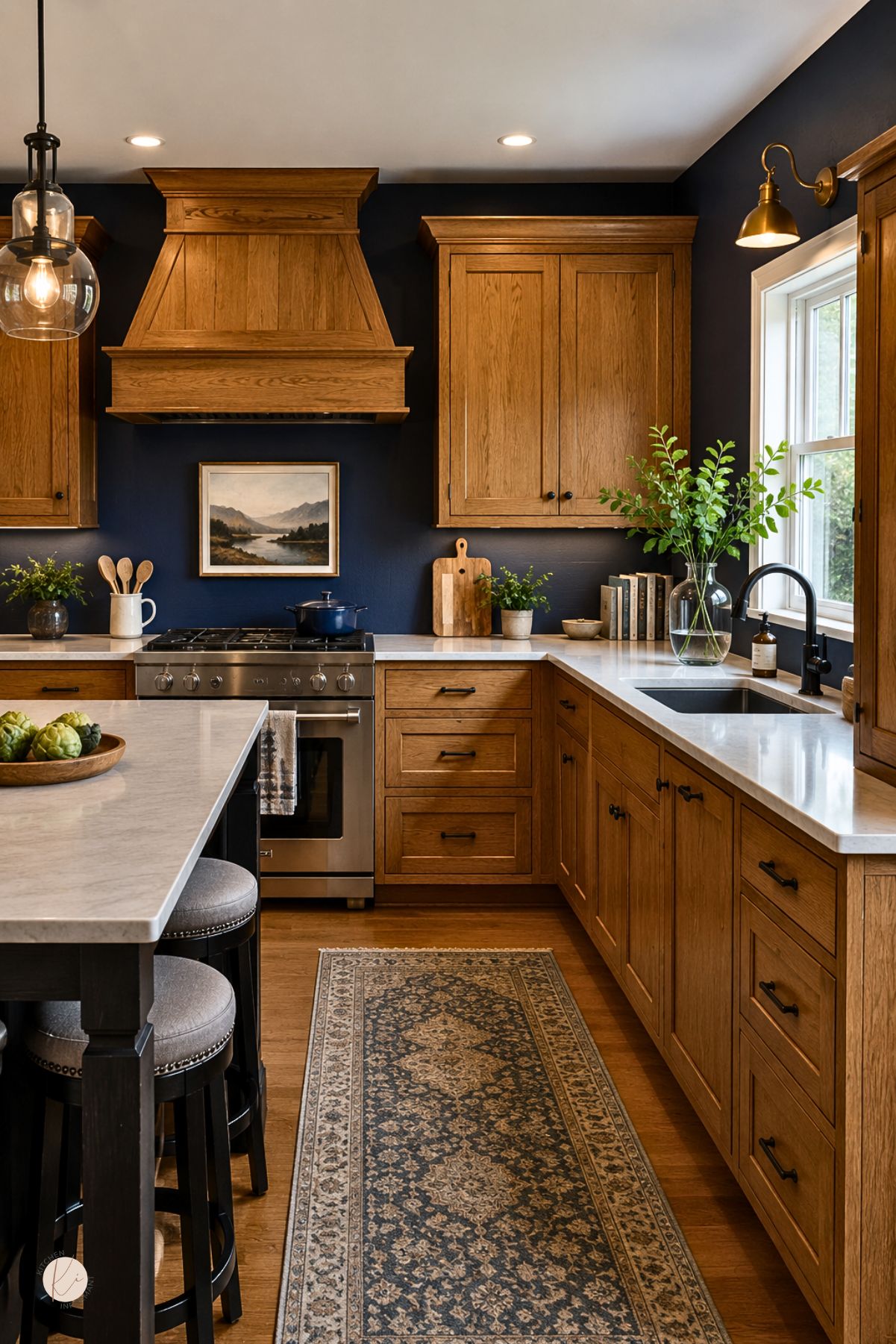
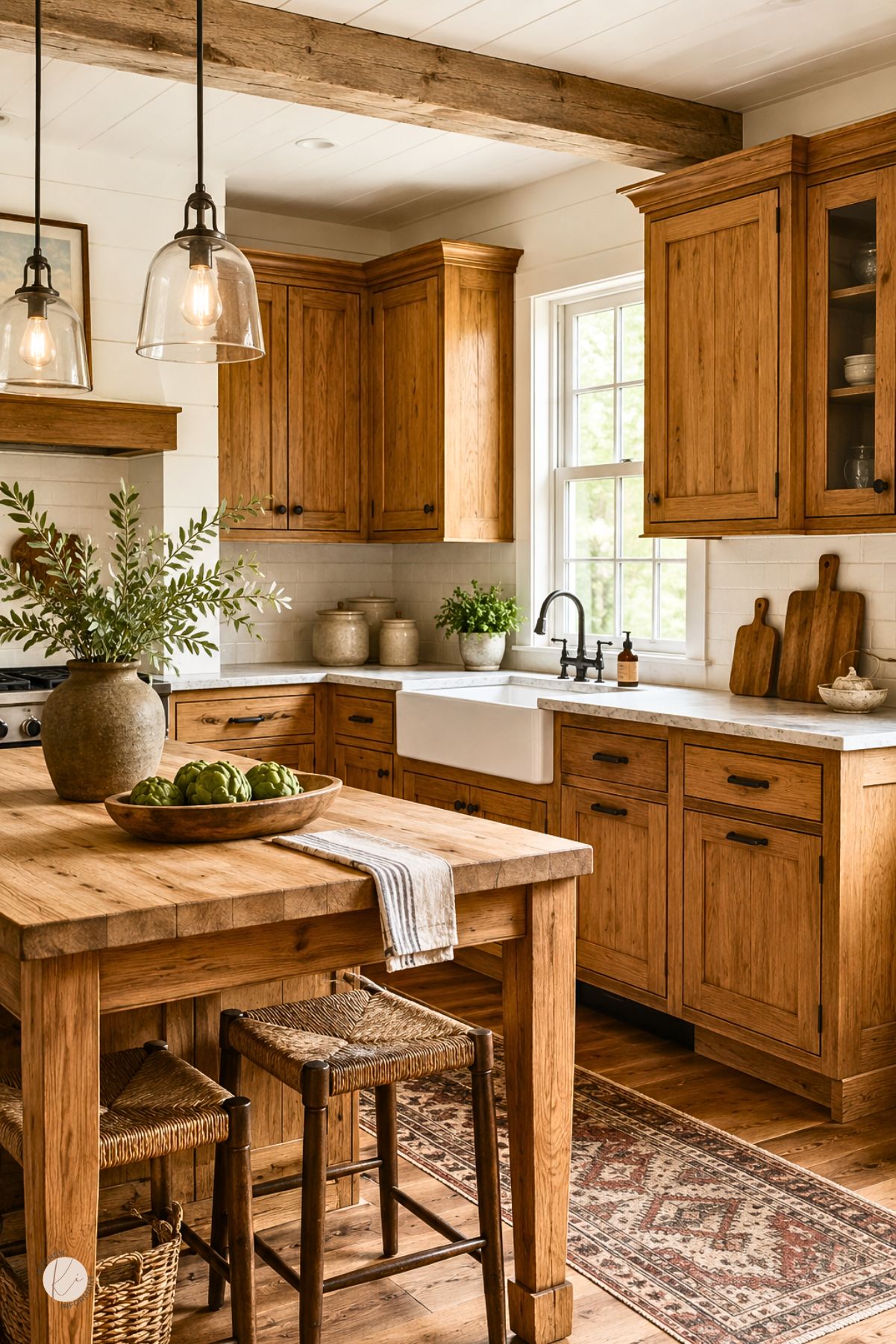
Honey Oak Kitchen Cabinets can still work well in a modern kitchen when you treat them as a fixed design element and make the rest of the room support them.
Their warm tone, visible grain, and solid presence can either feel dated or feel intentional, depending on the surrounding finishes.
The most useful approach is not to fight the wood, but to check the cabinet condition, the room’s light, and the materials around them before deciding what to change.
That gives you a clearer path, whether you refresh the space with paint and hardware or invest in refinishing or replacement.
What Makes This Wood Finish Distinct
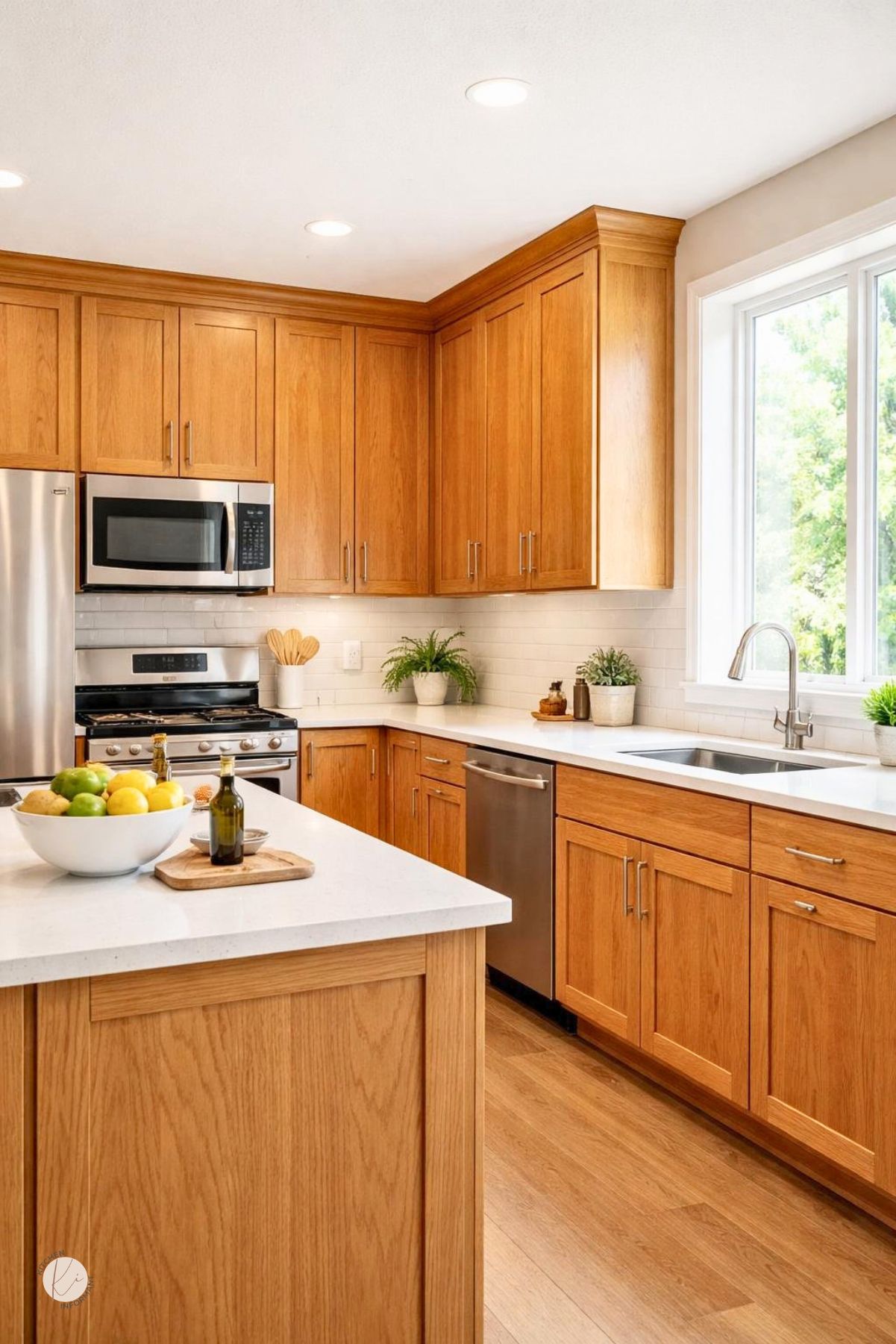
Honey oak has a warm, golden look that stands out more than many neutral wood stains.
The grain usually reads clearly, so the cabinet faces carry a lot of visual texture even from across the room.
Color Undertones And Grain Character
Honey oak often leans yellow, amber, or orange-gold.
That warmth can brighten a kitchen, especially if the room gets limited daylight.
The grain is also a big part of the look.
Oak has a strong, open grain pattern, so the finish rarely looks flat.
That texture gives the cabinets character, and it also means wall color, hardware, and countertops need to work with a busy surface.
Why It Became So Common In Older Homes
Honey oak became popular because it felt sturdy, traditional, and easy to live with.
In many homes built from the late 1980s through the early 2000s, it was used as a practical mid-range choice that looked warm and held up well.
You still see it often because the cabinets were built to last.
In many cases, the structure is better than the finish, which is why updating around them can be smarter than removing them.
How To Assess Your Existing Space
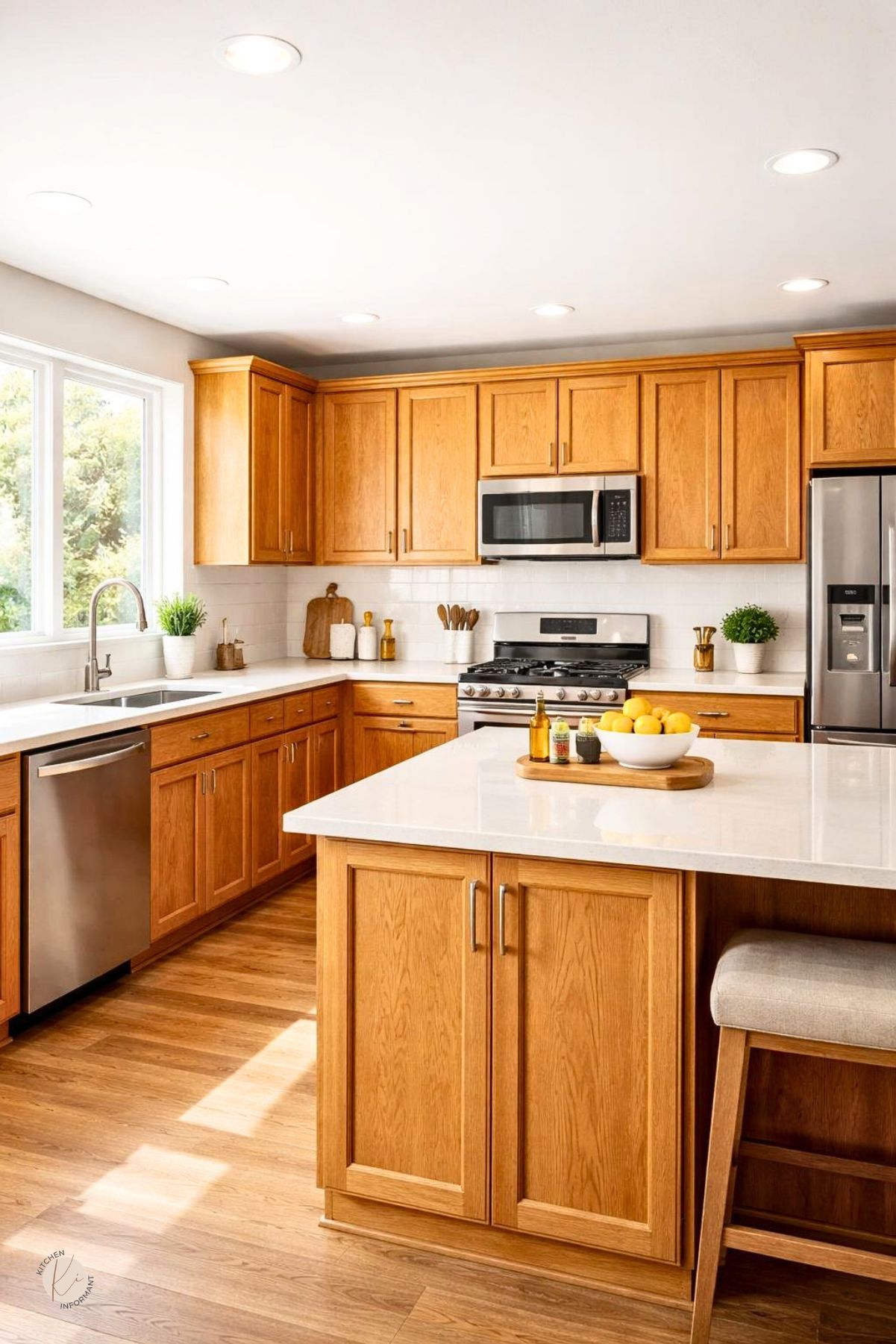
Before you choose paint or new fixtures, look closely at the cabinets and the room around them.
The right update depends on how sound the boxes are, how the other finishes interact with the wood, and how much light the space gets.
Cabinet Condition And Structural Quality
Check for sagging shelves, warped doors, loose hinges, damaged boxes, and water wear near sinks or dishwashers.
If the cabinet frames are solid, you have more options.
If the doors close properly and the layout still fits your daily routine, you may only need surface updates.
If the cabinets are stable and well built, they are often worth keeping.
Countertops Flooring And Backsplash Conflicts
Some existing materials make honey oak look louder or more orange.
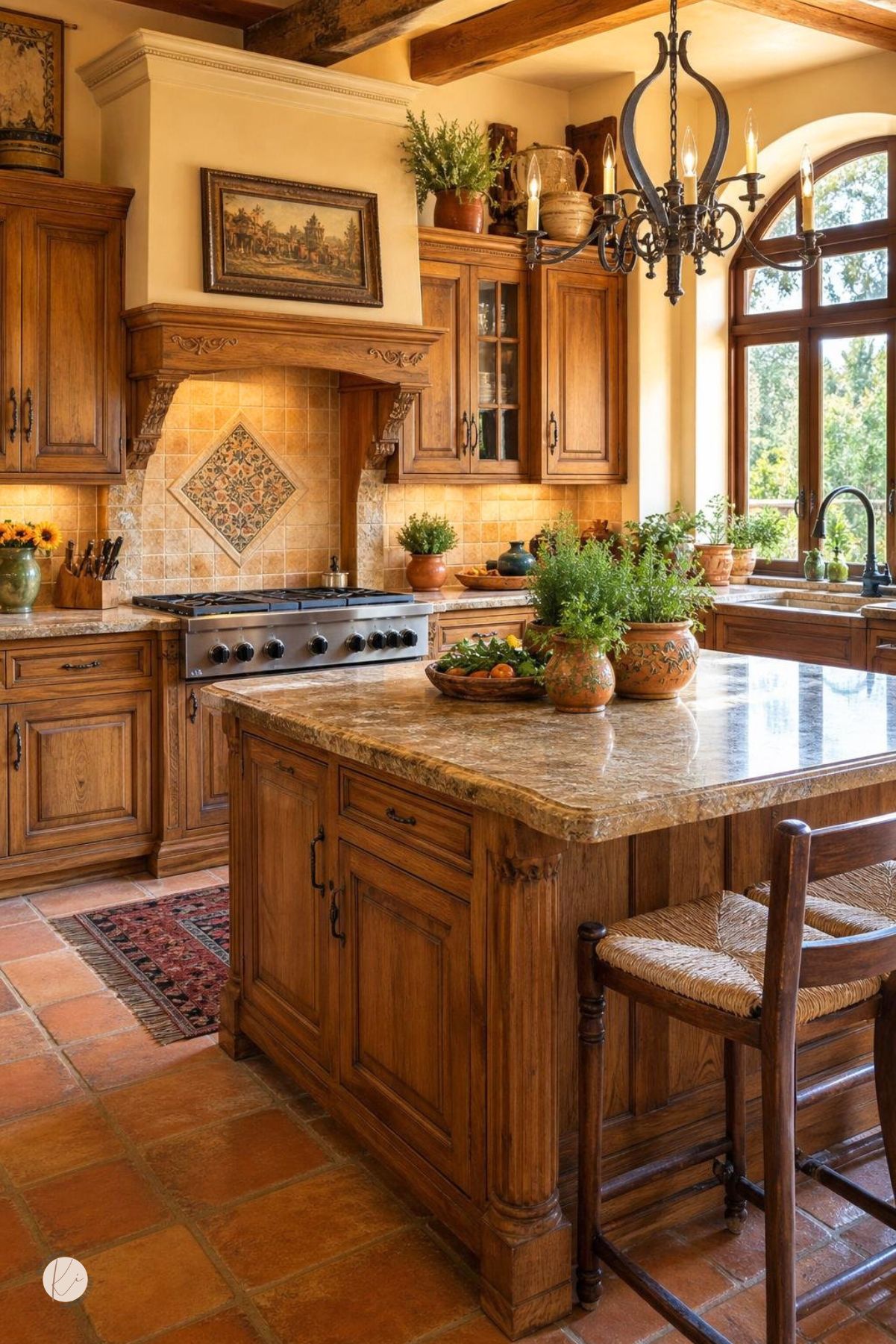
Busy granite, yellow-tinted laminate, or reddish flooring can crowd the room and make the cabinets feel older.
Look at the full mix of finishes.
If your counters, backsplash, and floors all compete with the wood, a few targeted changes can create a much calmer result.
Lighting That Changes The Overall Look
Lighting can shift honey oak from warm and fresh to heavy and yellow.
Natural light, under-cabinet lighting, and brighter ceiling fixtures all affect how the stain reads.
Cool bulbs can make oak seem dull, while overly warm bulbs can intensify the orange cast.
A balanced white bulb usually gives the most accurate result.
Design Strategies That Modernize The Room
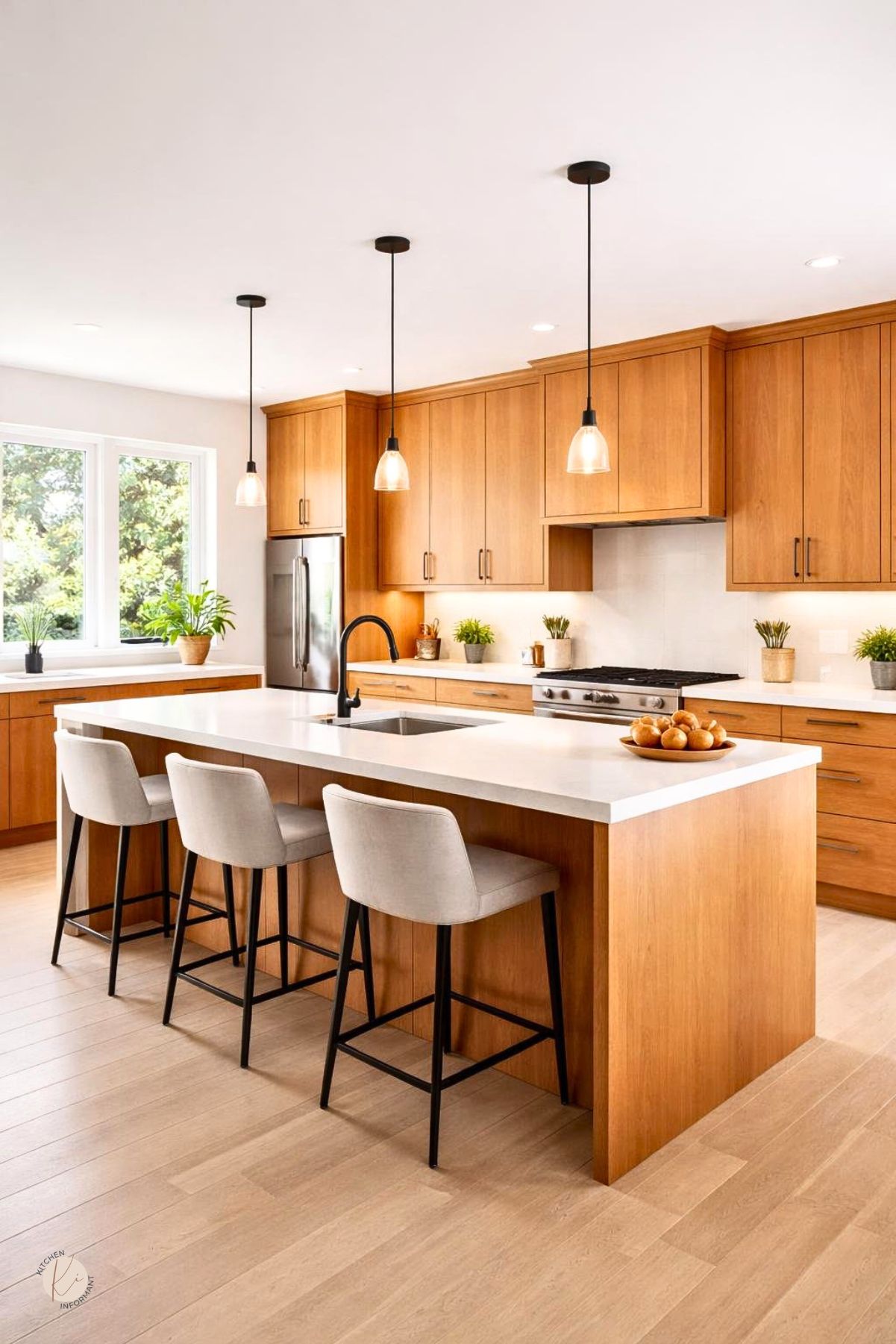
The fastest improvements usually come from changes that reduce visual friction.
Wall color, hardware, and styling can make the cabinets feel more current without forcing the whole kitchen into a new style.
Wall Paint Colors That Balance Warm Tones
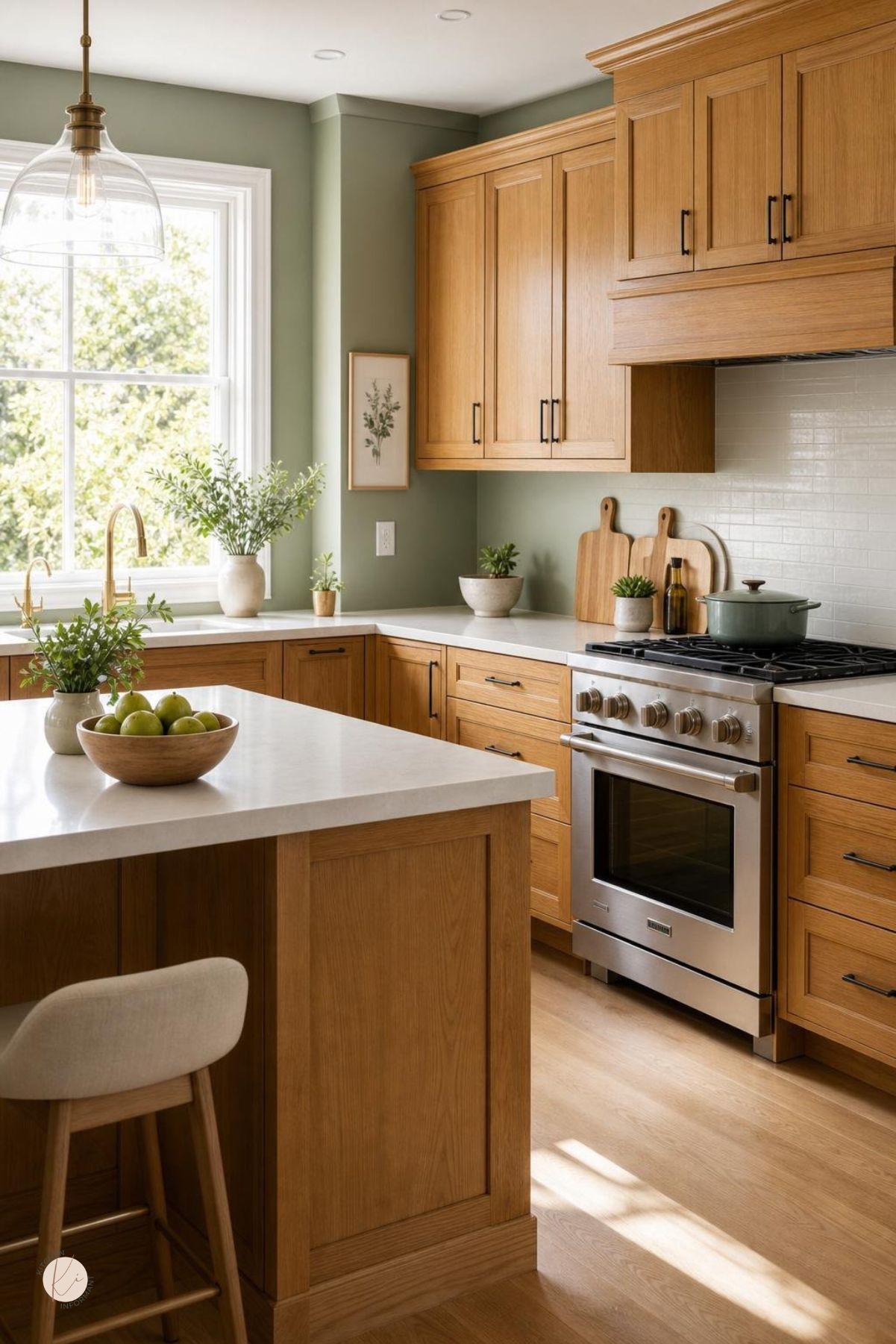
Soft greige, muted sage, warm white, and beige with a slight green or gray cast usually work better than stark white or icy gray.
These shades let the cabinets look intentional instead of overly yellow.
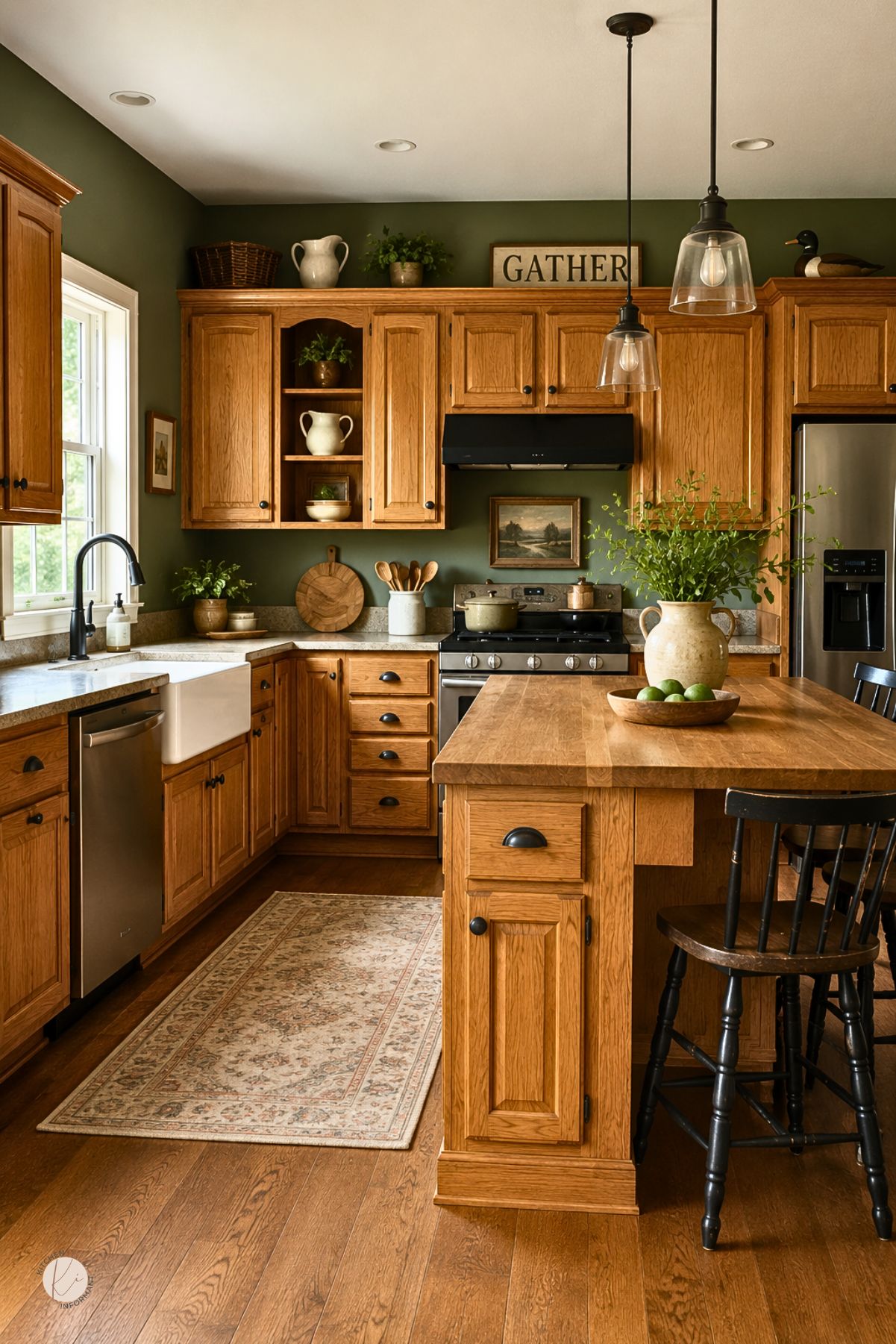
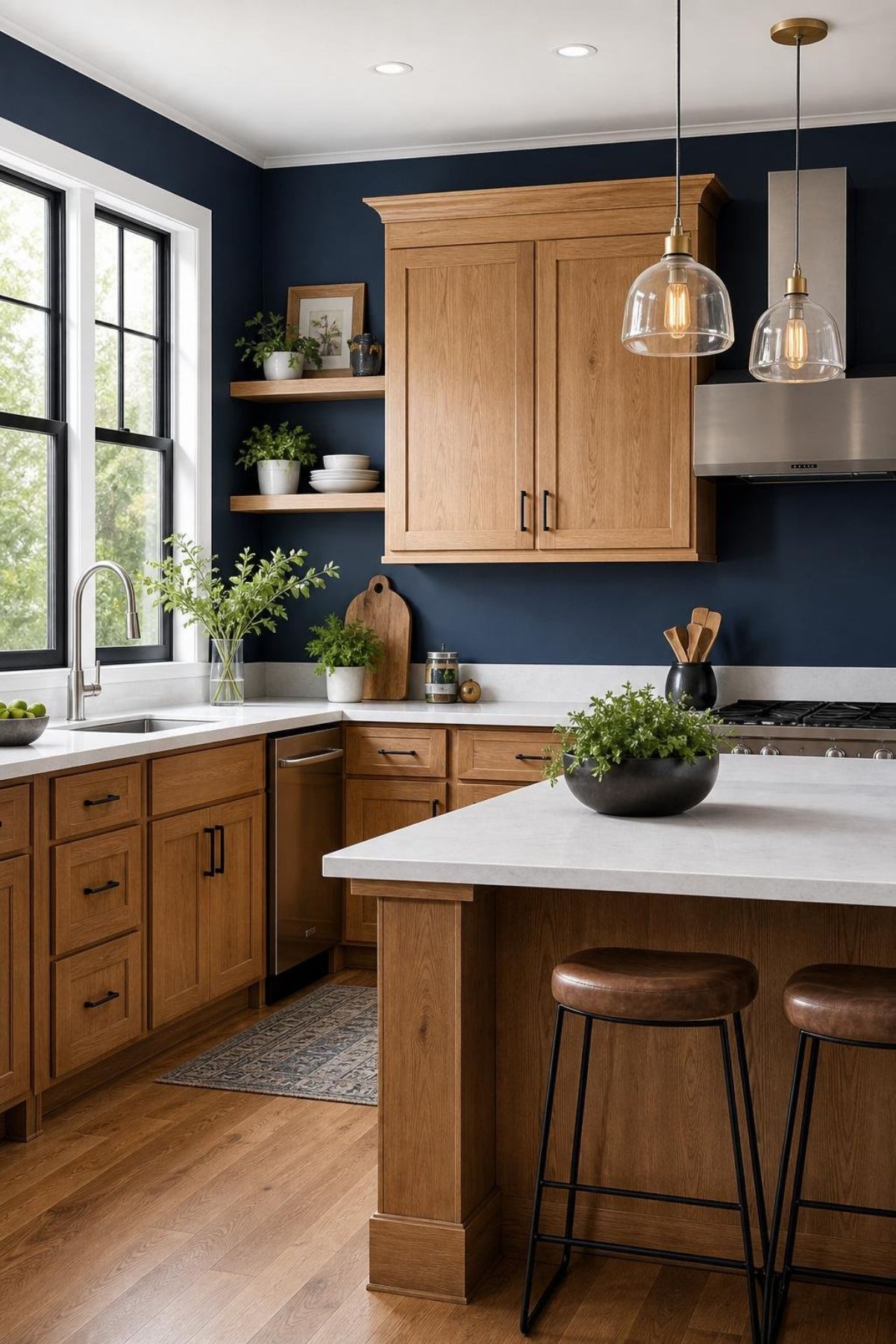
If you want more contrast, deeper olive, charcoal, or muted blue-green can work in larger kitchens with enough light.
The goal is balance, not color shock.
Hardware Styles That Shift The Aesthetic
Hardware is one of the easiest updates.
Matte black gives clear contrast, brushed brass adds warmth, and satin nickel can work when the rest of the room is already cool and simple.
Choose clean shapes rather than ornate pulls if you want a more current look.
Straight bars, slim knobs, and understated cup pulls tend to age better.
Simple Styling Changes With Big Visual Impact
Keep counters clear and use only a few intentional pieces.
A neutral runner, simple bar stools, and plain window treatments can make the space feel more open.
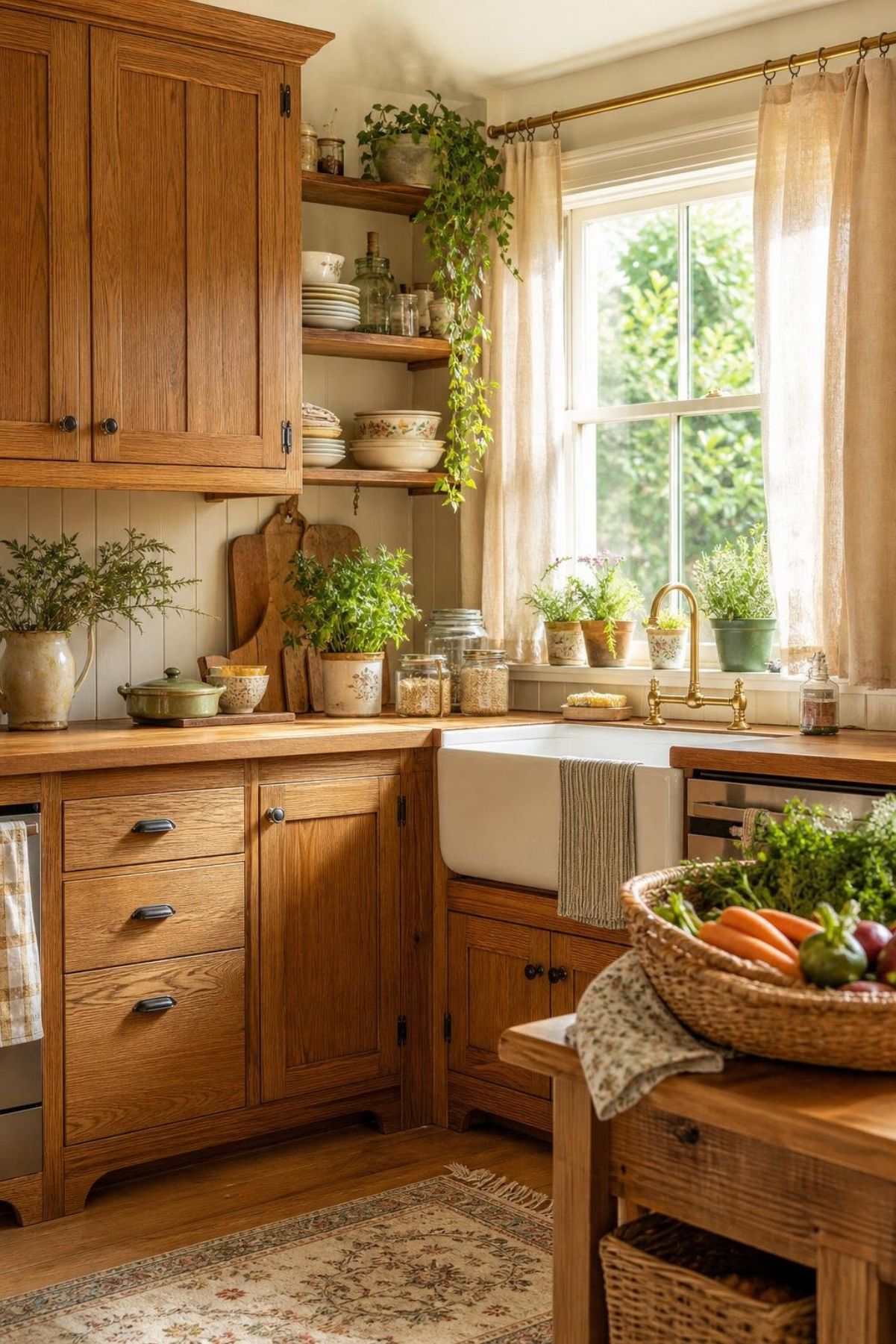
Add one or two materials that soften the wood, such as ceramic, linen, or matte metal.
Too many decorative items can make the room feel busy and smaller.
When To Refinish Paint Or Replace
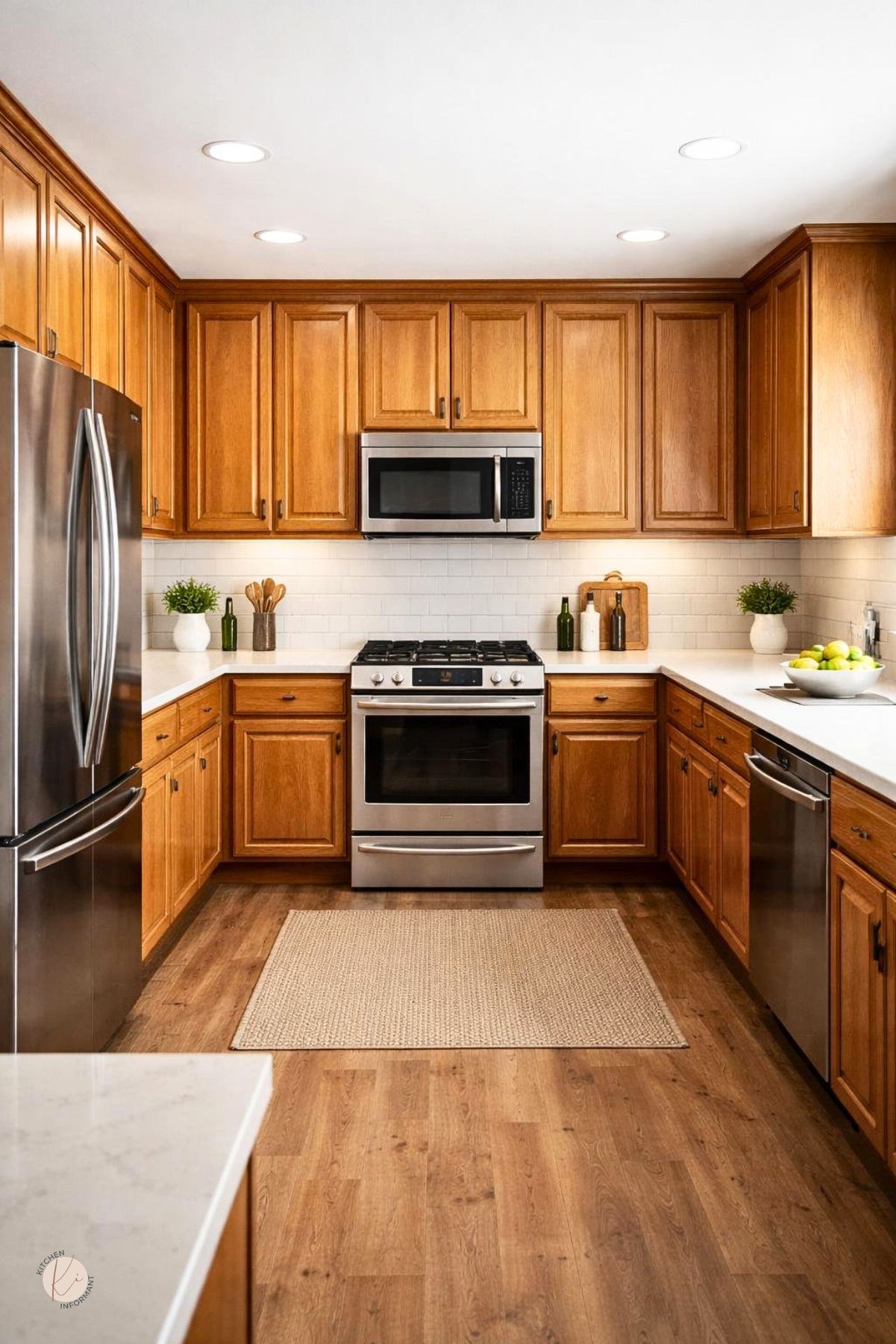
The right choice depends on cabinet condition, layout, and your budget.
If the structure is strong, keeping the boxes and changing the finish can save time and money.
Best Reasons To Keep The Original Boxes
Keep the cabinets when the boxes are solid, the layout works, and the doors are in decent shape.
That is especially true if the cabinets are custom fit to the room or still use quality wood construction.
Refinishing or painting also makes sense when you want a visible change without changing plumbing, appliances, or flooring.
It is often the most practical path in a good kitchen shell.
Signs A Full Replacement Makes More Sense
Replace the cabinets if the boxes are damaged, the hinges and drawers no longer function well, or moisture has caused swelling and decay.
A poor layout can also justify replacement if storage is badly limited.
If you already plan to move walls, change appliance locations, or redo major parts of the kitchen, new cabinets may fit the larger project better.
Cost And Effort Comparison By Option
- Keep and clean up: Lowest cost, least disruption, best when the structure is sound.
- Refinish or paint: Mid-range cost, more labor, good when you want a major visual change.
- Replace: Highest cost, most disruption, best when the cabinets are failing or the layout must change.
Best Material Pairings For A Cohesive Look
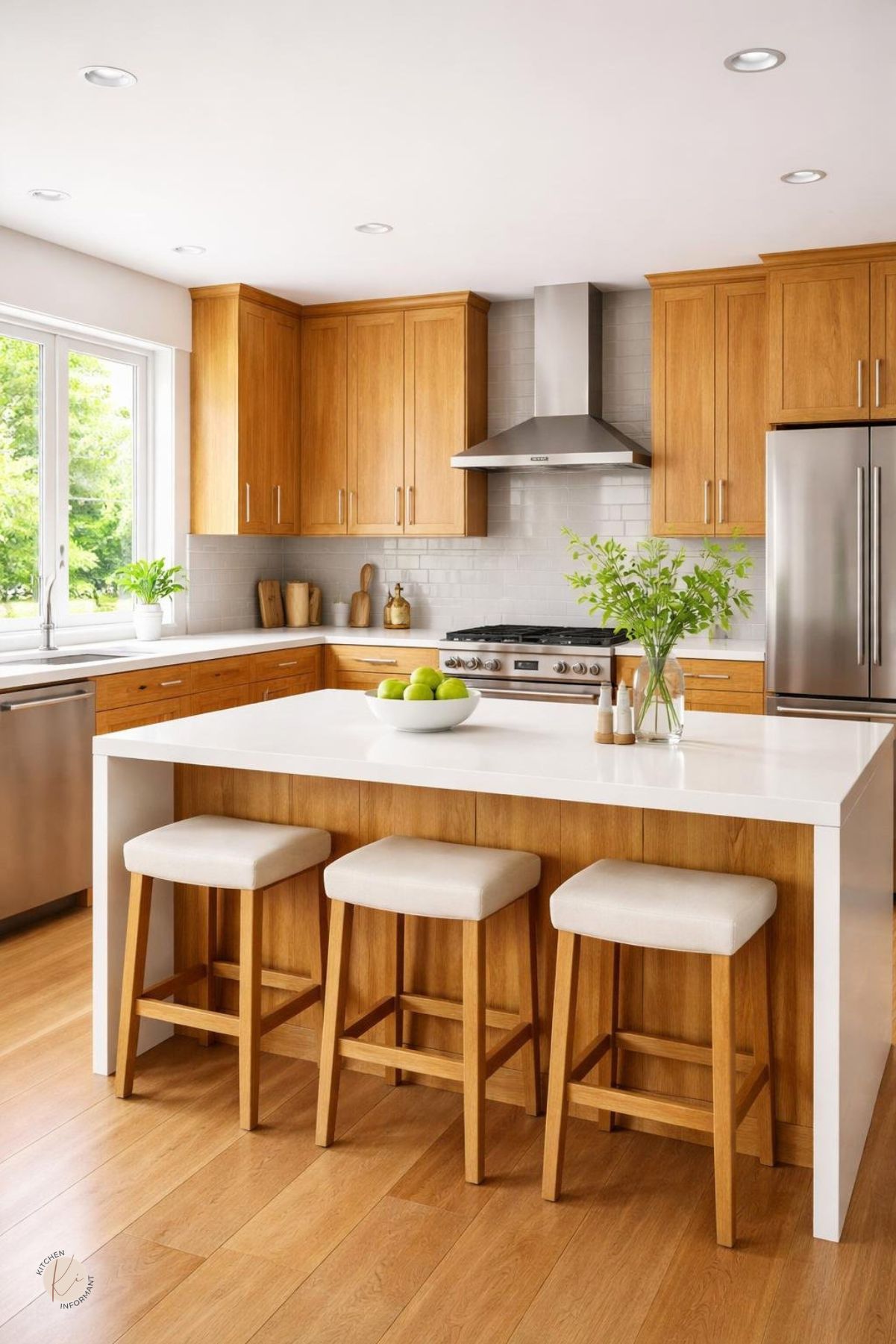
Honey oak looks best when nearby materials either calm the warmth or repeat it in a controlled way.
Hard surfaces matter most, because they cover the largest visible areas around the cabinets.
Countertop Choices That Complement Warm Wood
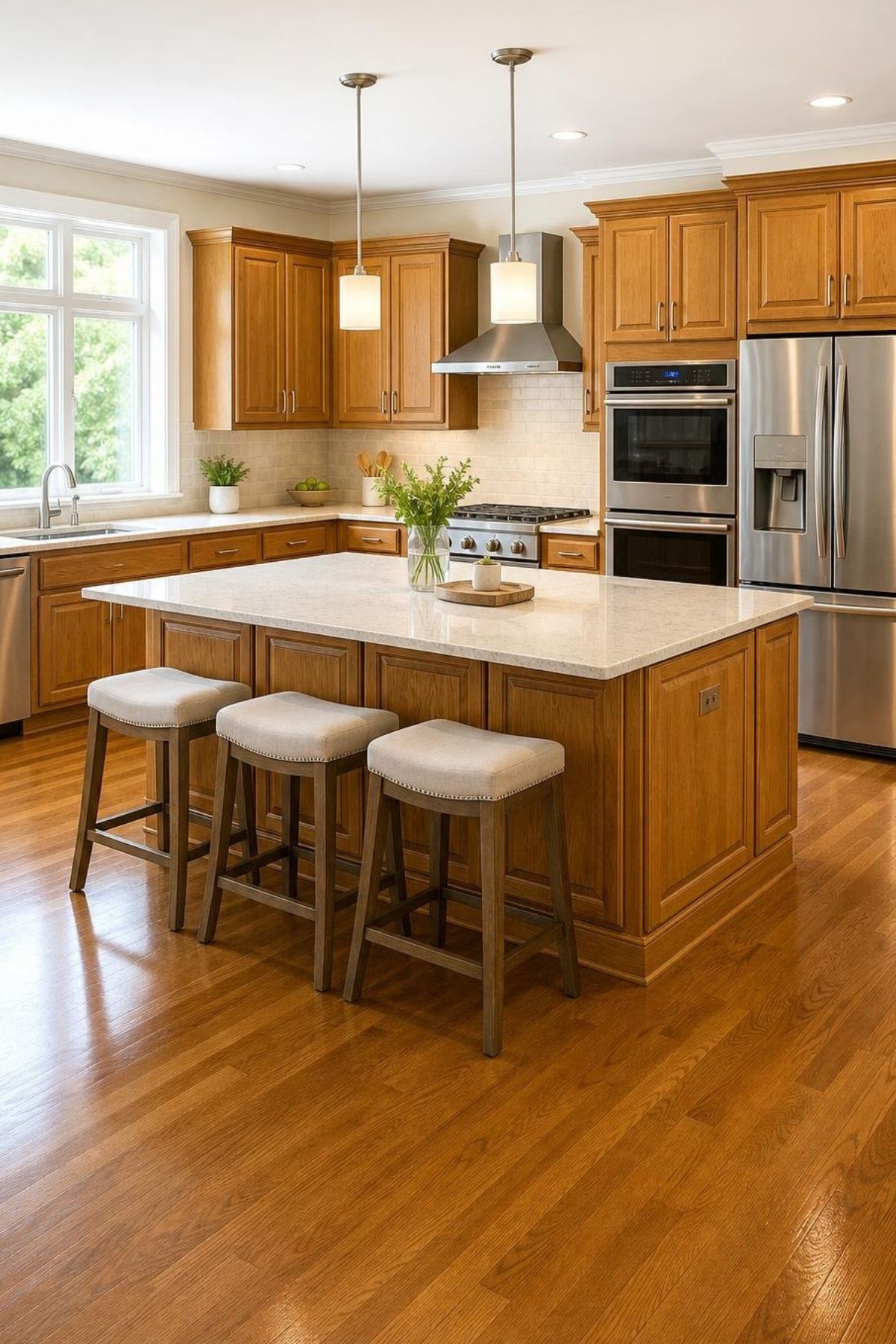
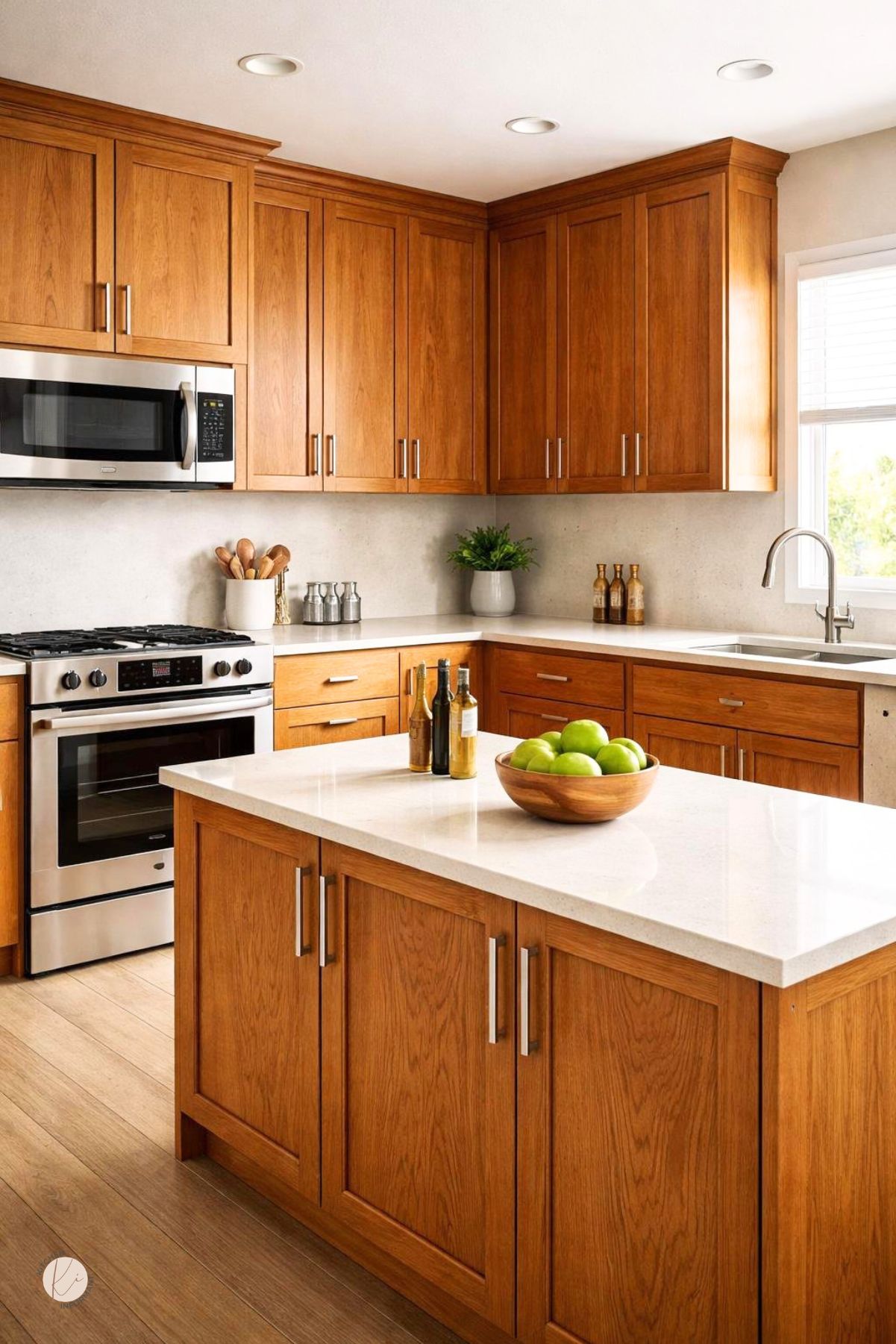
Light quartz, soft veined stone, and restrained granite patterns can balance the cabinet color.
Mid-tone counters also work when they stay quiet and avoid strong yellow or red undertones.
If you want contrast, black or deep charcoal counters can sharpen the look in a kitchen with good light.
Wood counters can work too, as long as the tone is clearly different from the cabinets.
Backsplash Finishes That Reduce The Orange Cast
A backsplash with a soft white, cream, pale green, or light gray cast can ease the warmth of the cabinets.
Matte or satin finishes often look calmer than glossy tile with heavy movement.
Simple subway tile, handmade-look ceramic, or large-format tile can all work.
The key is keeping the pattern restrained so the oak grain stays the main texture.
Flooring Options That Avoid A Dated Feel
Flooring should either contrast clearly or stay quiet.
Light oak, medium-toned wood, warm gray tile, and simple stone-look materials usually work better than orange-toned wood or busy patterns.
Avoid floors that compete with the cabinets in both color and grain.
Too much similarity can make the room feel flat, while too many different tones can make it feel disjointed.
Common Mistakes To Avoid During An Update
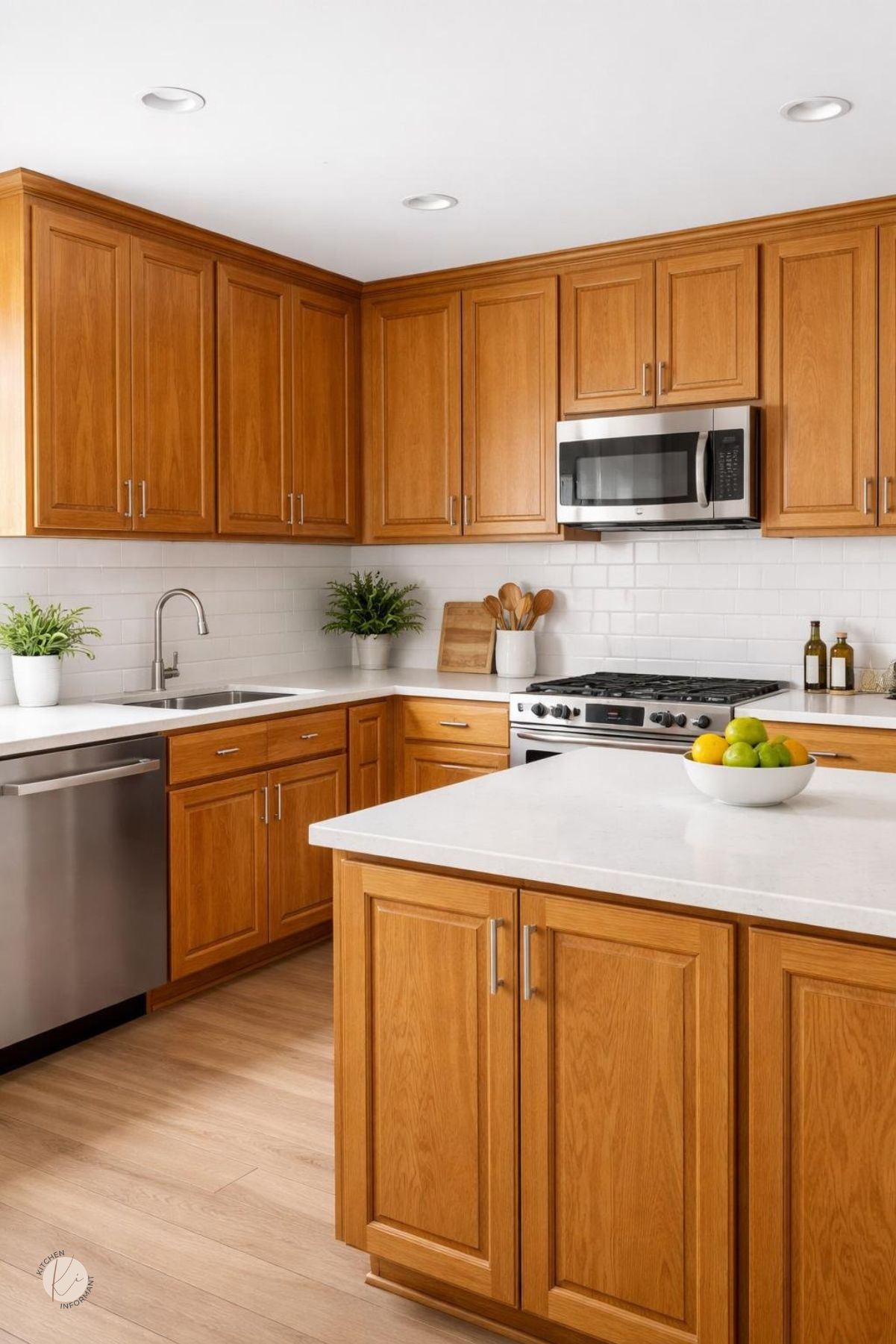
A good update is usually simple, balanced, and consistent.
The most common problems come from trying to force the cabinets into a style that does not fit the rest of the room.
Overcooling The Palette
Very cool gray paint, blue-white walls, and icy finishes can make honey oak look more yellow.
That contrast often works against the cabinet tone instead of softening it.
You usually get a better result with warm neutrals or muted earth tones.
Those colors give the wood room to read as natural rather than outdated.
Mixing Too Many Wood Tones
Too many wood species or stains can make the kitchen feel busy.
If the cabinets are honey oak, nearby wood should either clearly match or clearly contrast.
Keep trim, furniture, stools, and shelves intentional.
A small number of well-chosen tones looks cleaner than a room full of near-matches.
Ignoring Natural And Artificial Light
Paint and materials can look very different under daylight, evening light, and under-cabinet fixtures.
If you choose finishes without testing them in the real room, the oak may shift more orange than expected.
Check samples at different times of day.
That simple step can help you choose colors that stay balanced in daily use.
You May Also Like: