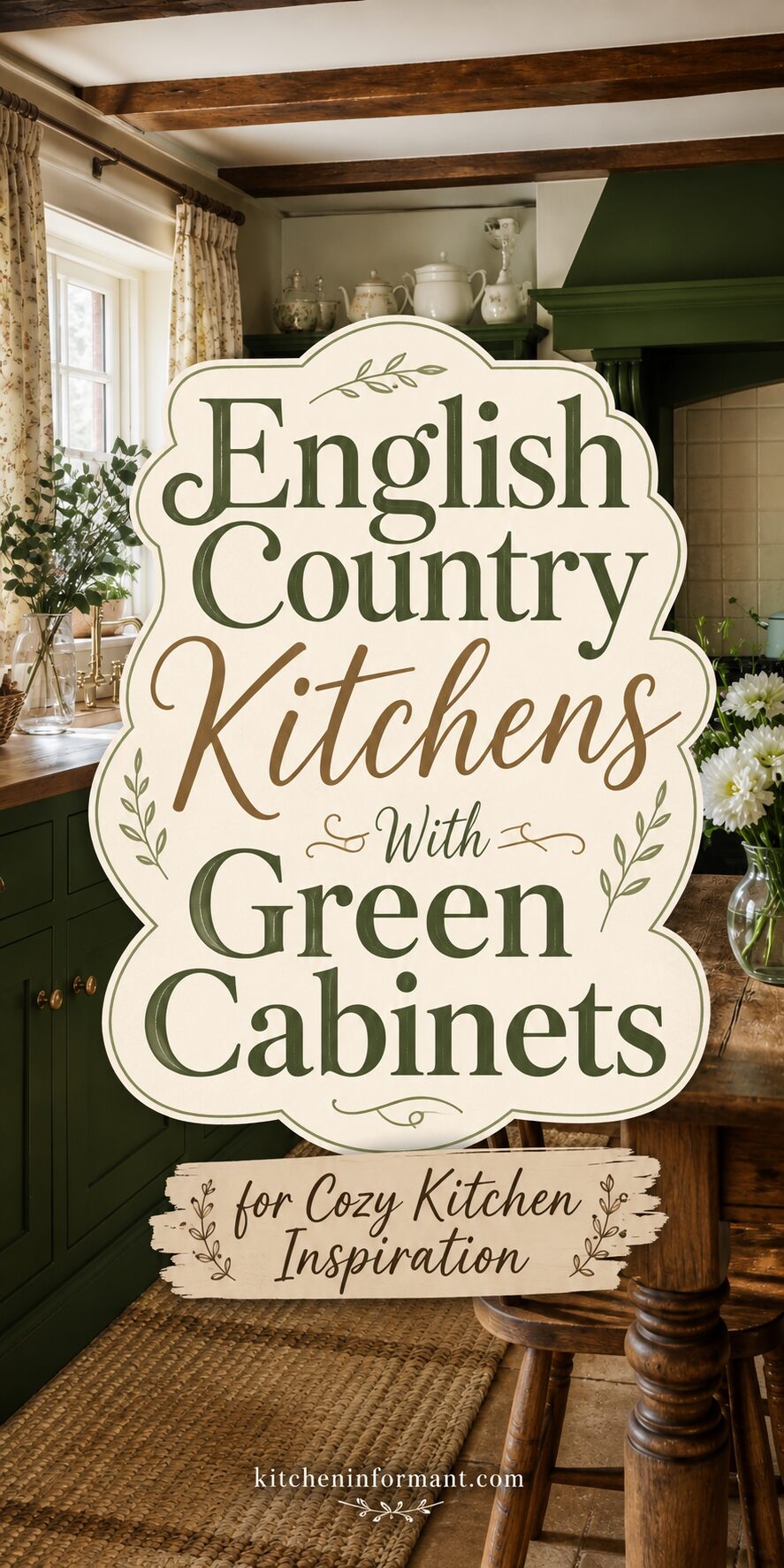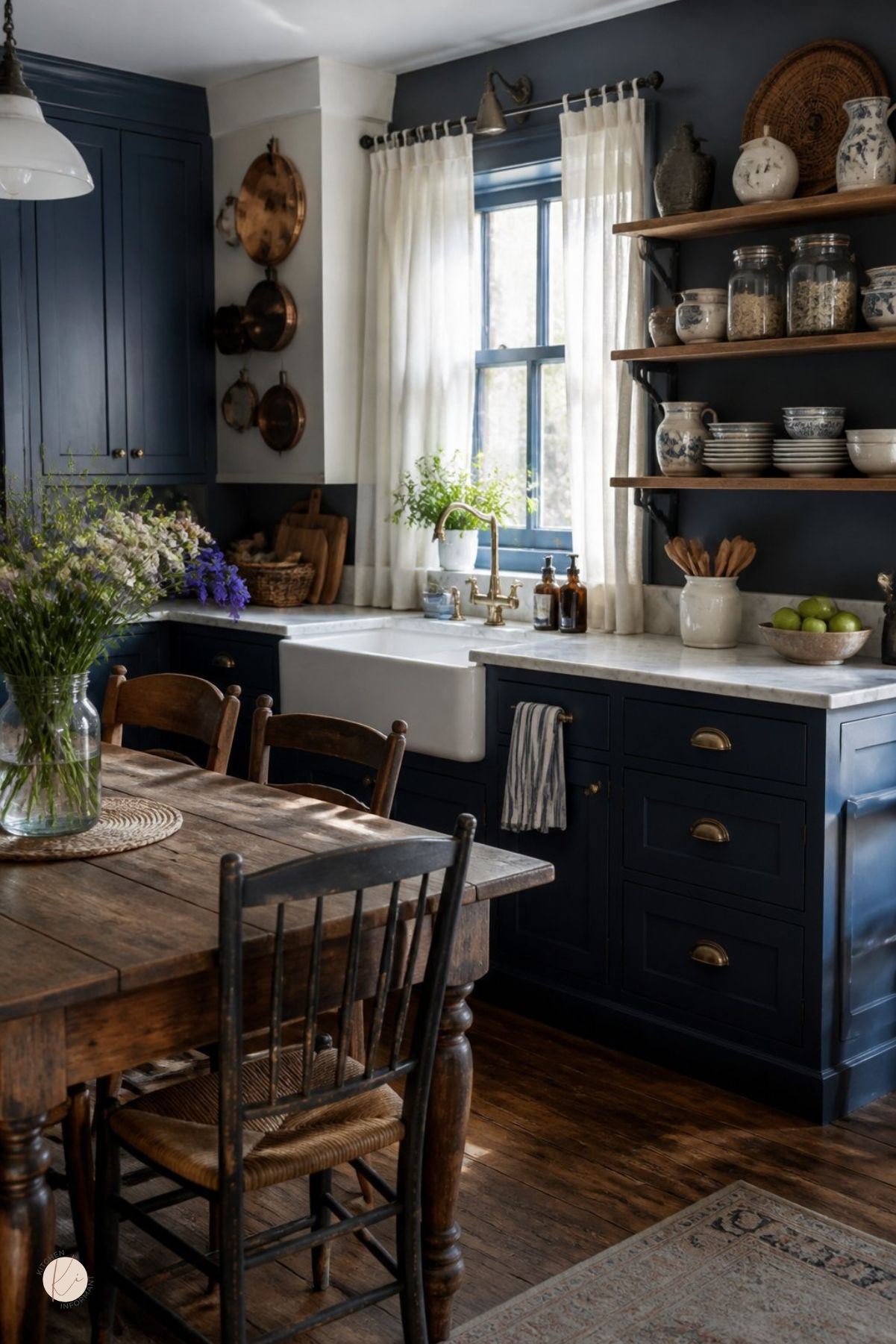
English Country Kitchens with green cabinets have a certain charm. They blend calm colors, traditional shapes, and a cozy, lived-in vibe that works in both old houses and new builds.
The best results come when you treat the kitchen as one connected system. Cabinet depth, wood tones, natural light, and finishes all need to play nicely together.
An English country kitchen feels practical before it feels decorative. You’ll usually spot Shaker or panel-front cabinets, warm materials, soft greens, and honest, unfussy details.
If you’re updating older cabinets, this style can work wonders. A fresh paint color, some new hardware, and a couple of material swaps can add loads of character—no need to rip everything out.
Defining the English Country Look
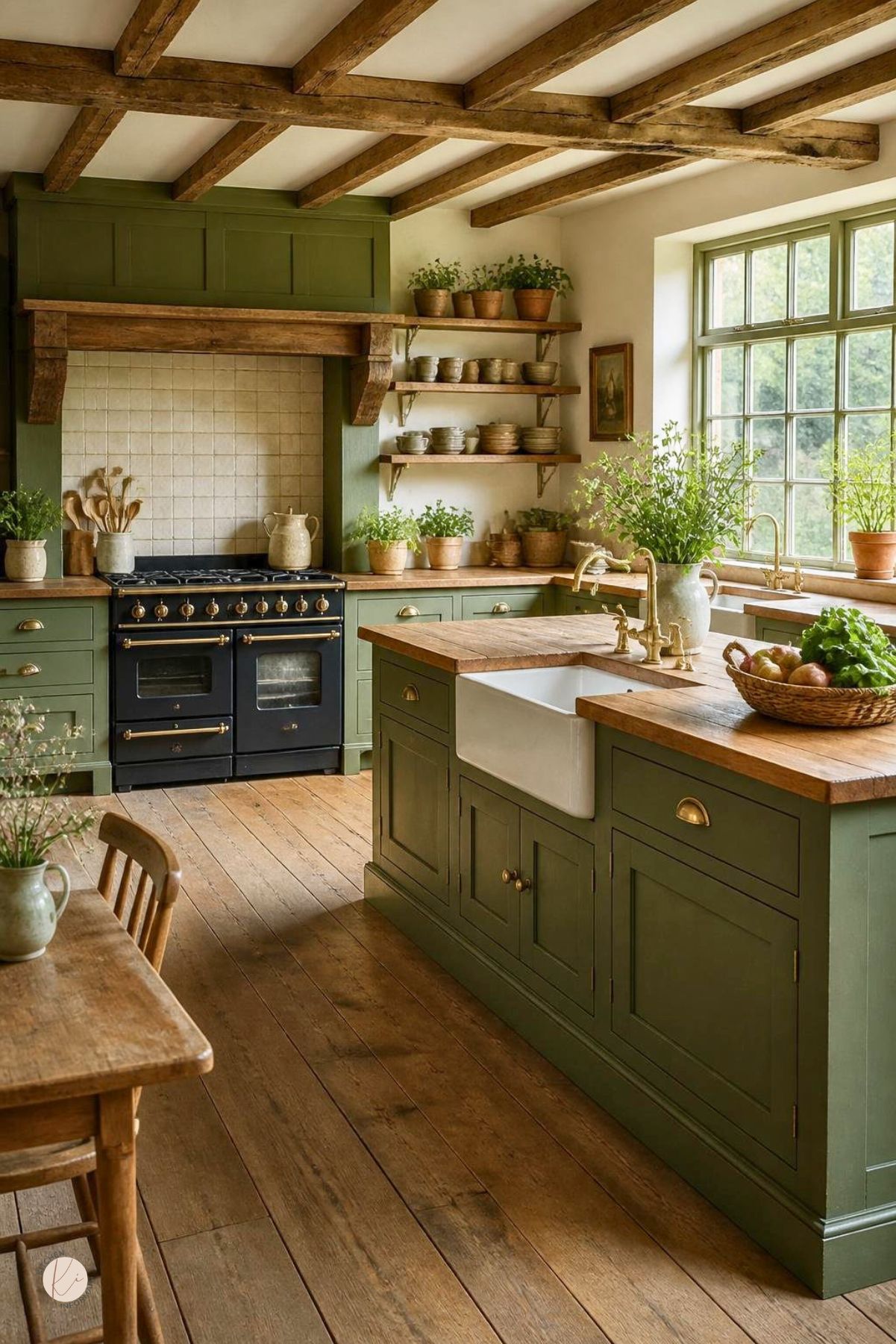
The English country look leans into comfort, tradition, and clever storage. It’s all about built-in character, natural materials, and cabinet colors that blend in quietly with the rest of the space.
Core Characteristics
You’ll usually see painted cabinets, simple paneling, wood accents, and a collected, layered feel. The palette? Think green, cream, warm white, brown, and muted blue.
Some classic details:
- Shaker or beaded cabinet doors
- Visible wood grain or hand-finished paint
- Farmhouse or deep apron-front sinks
- Open shelves or dressers for display
- Traditional brass or iron hardware
This style shines when it feels relaxed and a bit imperfect. Cabinets don’t have to match every other surface, as long as the materials feel like they belong together.
How It Differs From Farmhouse And Cottage Styles
Farmhouse kitchens go more rustic, with heavier wear, rougher wood, and a focus on utility. Cottage kitchens feel lighter, smaller, and sometimes a little more playful.
English country kitchens sit in the middle. They’re softer than farmhouse, but more grounded than most cottage kitchens. Green cabinets help hit that sweet spot, especially paired with aged metals, wood, and classic shapes.
Choosing the Right Green
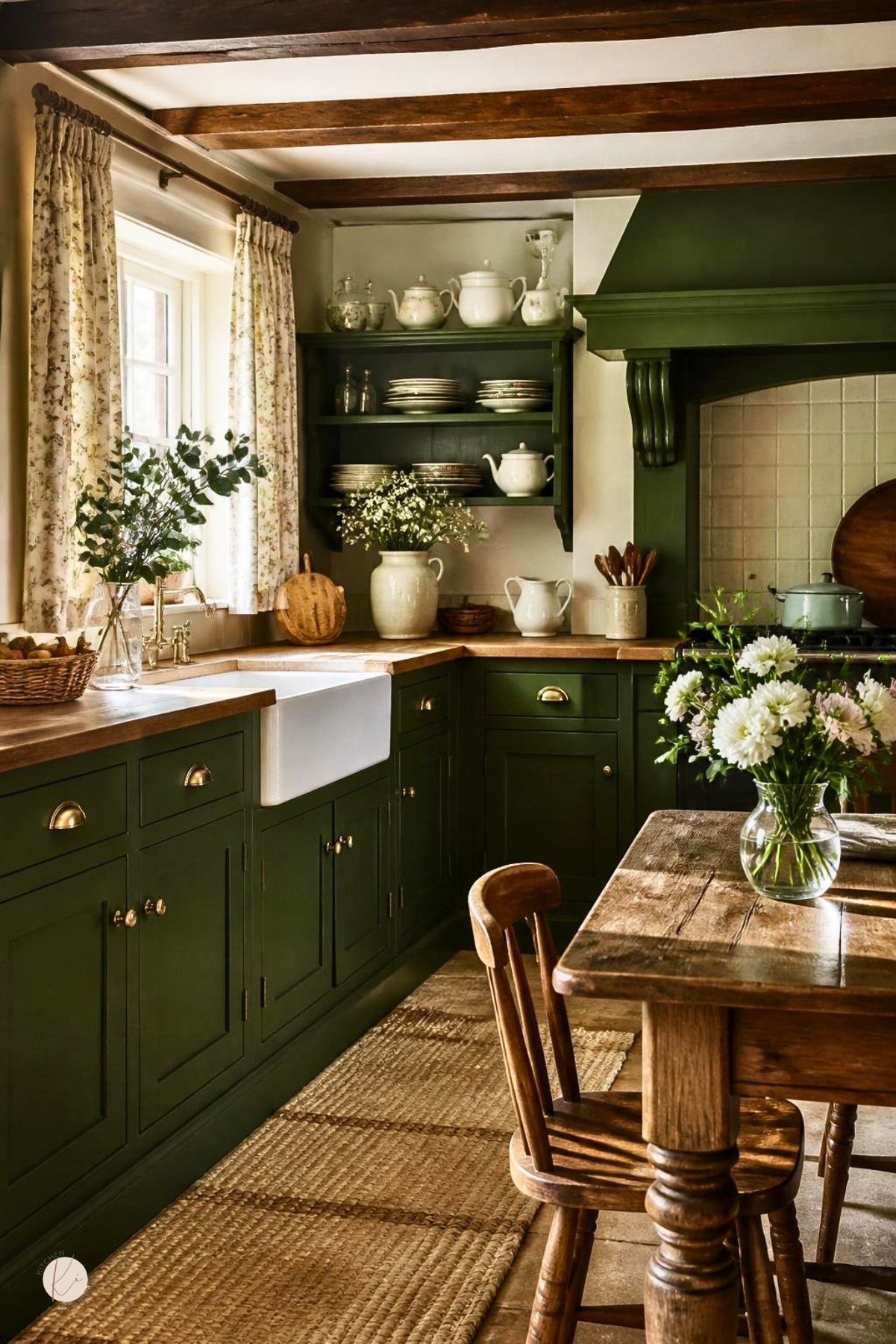
Green can feel peaceful, formal, or even a bit heavy, depending on the shade and what’s around it. The right choice depends on light, floor color, counter material, and how much you want the cabinets to stand out.
Soft Sage And Heritage Tones
Soft sage works in kitchens that need a lighter touch. It suits older cabinets, small rooms, or spaces with not much daylight—keeps things airy.
Heritage greens like muted olive or gray-green make a kitchen feel rooted and classic. They look great with creamy walls, wood counters, and aged brass hardware.
Deep Moss And Forest Shades
Deep moss and forest green create a richer, more formal vibe. These work best if you have plenty of natural light, or if the rest of the room is on the lighter side.
These shades can help older cabinets feel intentional—not just old. They’re also good at hiding everyday wear, which is handy in a busy kitchen.
Matching Paint Depth To Room Size And Light
Pick your paint depth based on the room’s light. North-facing kitchens often need softer greens so they don’t feel chilly. South-facing rooms can handle deeper tones without going gloomy.
Dark greens on lower cabinets can work, even in small kitchens, if you keep uppers, counters, and backsplashes light. Always think about your fixed features—like flooring and backsplash—because they change how green looks throughout the day.
Cabinetry Details That Shape the Style
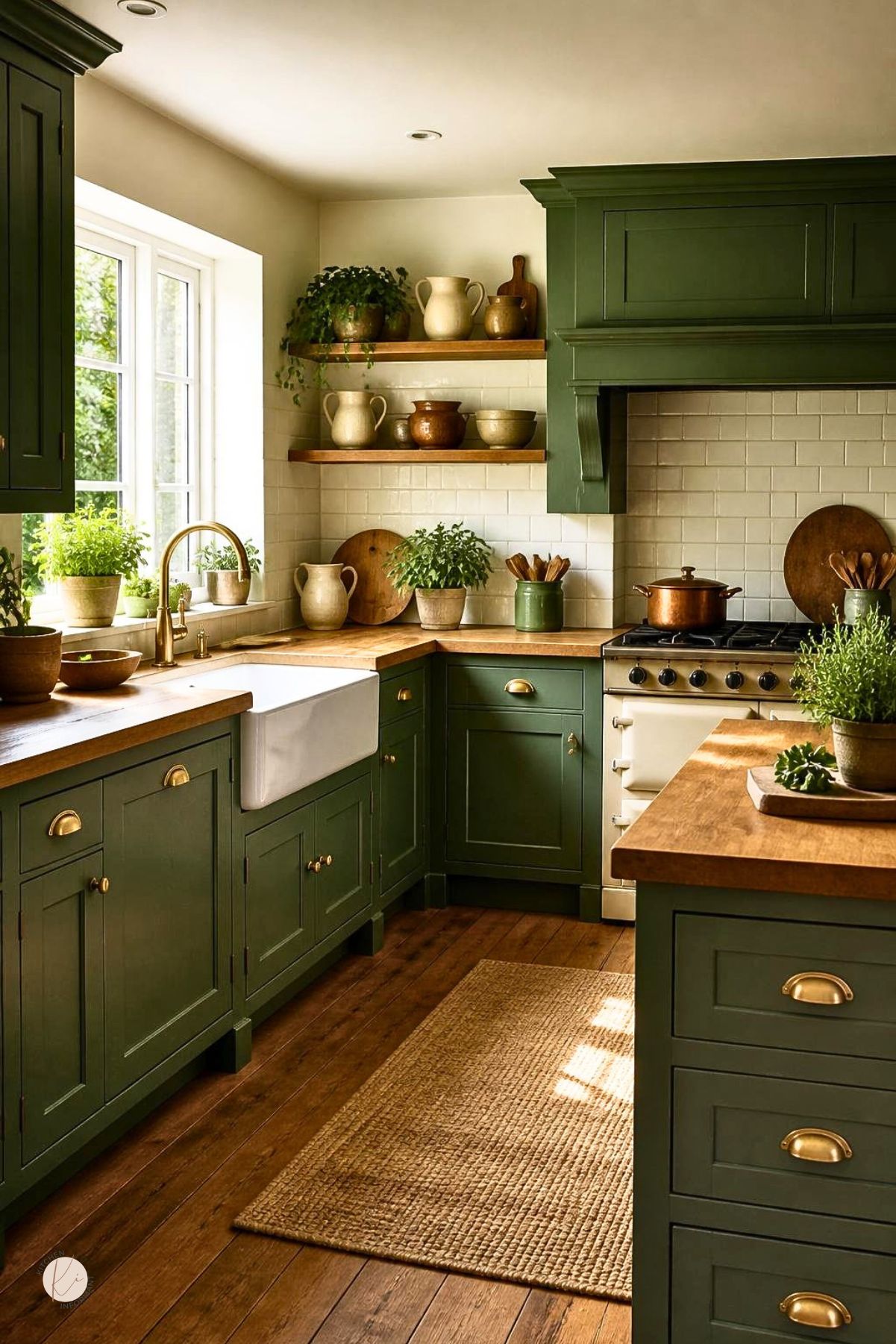
Cabinet profile and hardware matter just as much as paint color. Little details can make the same green feel traditional, plain, or even a bit fancy.
Shaker Doors And Beaded Fronts
Shaker doors are a go-to for English country kitchens. They’re simple, timeless, and let the color and materials do the talking.
Beaded fronts add a touch more decoration. They fit period homes, especially if you’ve got wood, stone, or classic trim elsewhere in the kitchen.
Aged Brass, Cup Pulls, And Latches
Aged brass hardware brings warmth to green cabinets and keeps things from looking flat. Cup pulls give a traditional feel, while latches or simple knobs add that period character.
Go for a soft finish over shiny. Too much chrome can break the English country vibe—unless you use it sparingly.
Glazed, Painted, And Hand-Finished Surfaces
A smooth painted finish looks tidy and suits updated kitchens. If your home’s older, a hand-finished surface with a bit of glazing or brush marks can feel more genuine.
The choice depends on cabinet quality. Good cabinets can handle a richer painted finish. If you’re working with lower-quality doors, a simpler paint job might hide flaws better.
Materials and Finishes That Support Warmth
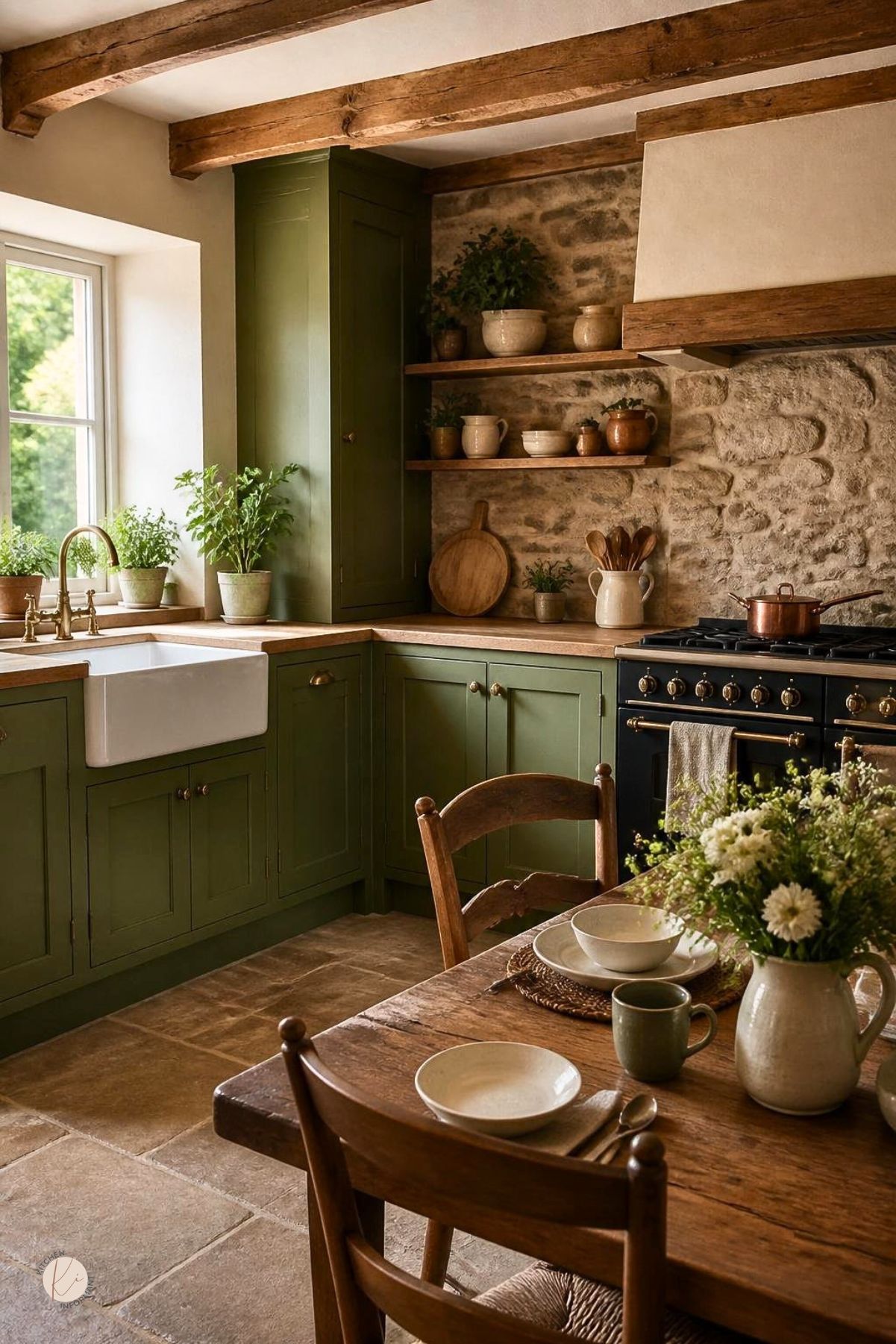
Green cabinets look best when the other materials add warmth and texture. The goal is a kitchen that feels sturdy and calm—not glossy or overdone.
Wood Countertops And Natural Stone
Wood countertops soften painted green cabinets and add a handcrafted touch. They’re especially nice on islands or prep spots, where the wood can age naturally.
Natural stone—marble, soapstone, or honed quartz—brings balance. Lighter stone stops darker greens from feeling too heavy.
Wall Tiles, Limewash, And Painted Plaster
Tile backsplashes in soft white or handmade finishes break up all that cabinet color. A bit of texture goes a long way to making things feel real.
Limewash or painted plaster on the walls adds depth without busy patterns. These finishes work best if your cabinets already have plenty of visual impact.
Flooring That Grounds The Space
Flooring should anchor everything. Wood floors, worn stone, brick-look tile, or muted ceramics all fit the English country vibe.
Cool gray floors can fight with green cabinets unless you’ve got warmth elsewhere. Richer undertones in the floor help tie the cabinets to the rest of the room.
Color Pairings and Room Balance
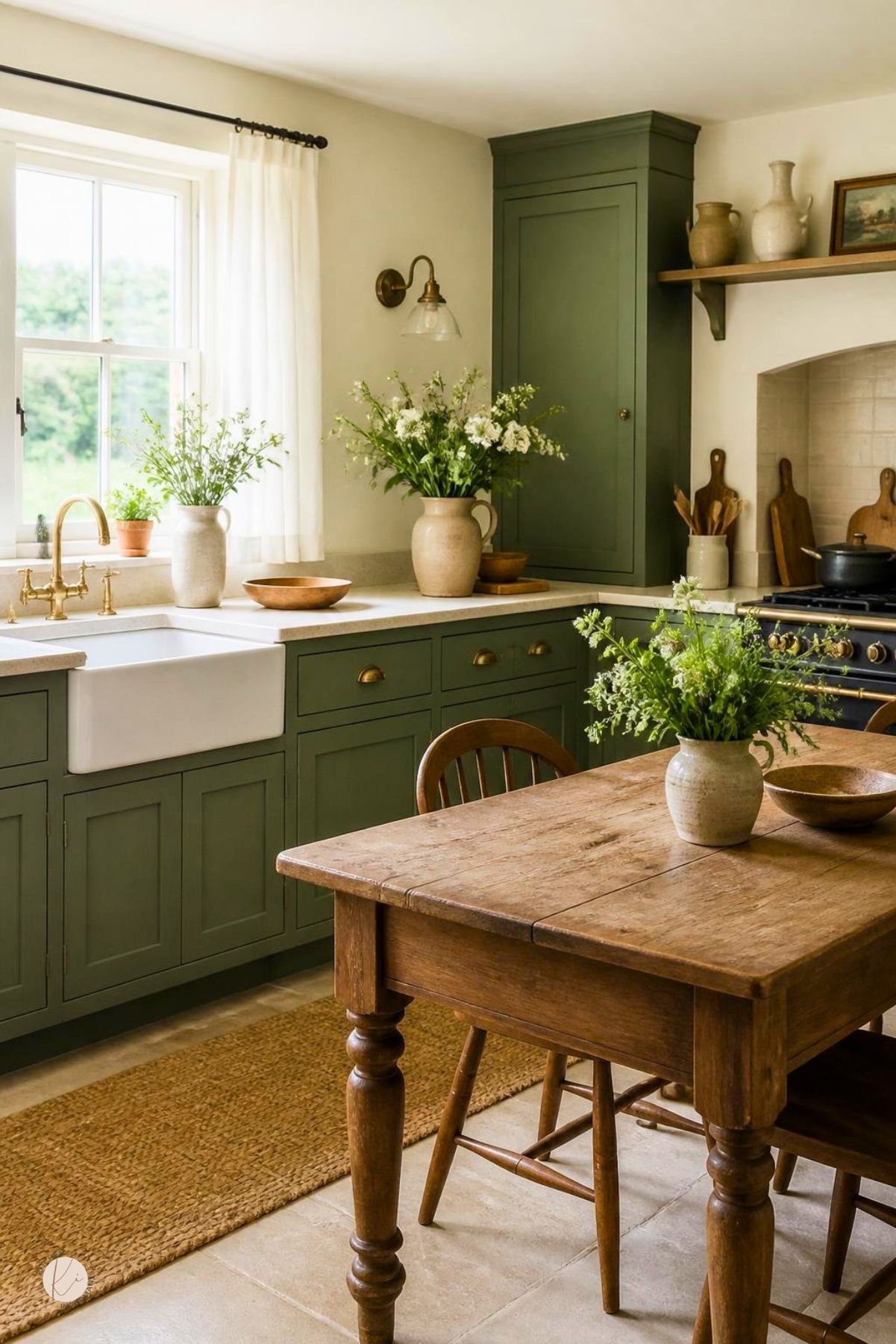
Green kitchens need colors around them that support, not compete. The best pairings are soft, muted, and pop up in more than one spot.
Cream, Ivory, And Warm Neutrals
Cream and ivory are classic partners for green cabinets. They keep things light and traditional, and work well on walls, trim, curtains, or even the ceiling.
These tones help older cabinets look refreshed, but not stark. They also soften the jump from cabinet color to natural wood or stone.
Muted Blues And Ochre Accents
Muted blue adds depth without making things loud. Try it in textiles, dishes, or a backsplash border.
Ochre accents bring a bit of warmth and nod to the countryside. Best used in small touches—pottery, lampshades, or maybe a patterned runner.
Using Pattern Without Visual Clutter
Keep patterns under control. Checks, florals, stripes, or hand-painted tile work if they share the same muted palette.
The room needs space for your eyes to rest. If cabinets are green, keep walls, counters, and floors calm so things don’t feel crowded.
Layout, Lighting, and Everyday Function
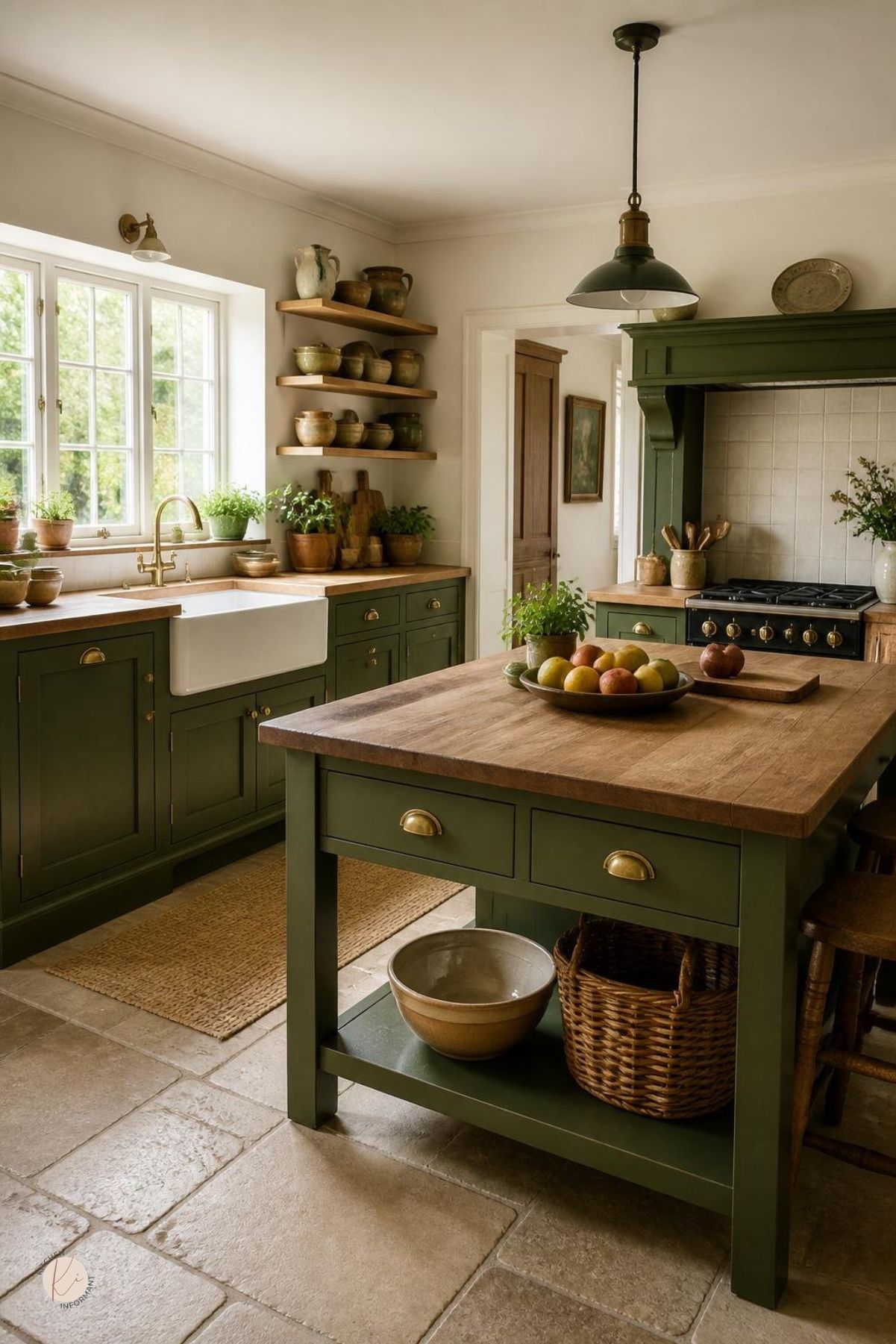
An English country kitchen should actually work for daily life. Good layout and lighting help green cabinets feel like a natural fit instead of overwhelming.
Freestanding Elements And Fitted Storage
Freestanding pieces make the room feel collected and a bit flexible. A dresser-style cabinet, island, or butcher block table can break up a wall of fitted green cabinets.
You still need fitted storage for daily use. A mix of closed storage below and lighter, open pieces above usually hits the mark.
Layered Lighting for a Softer Atmosphere
Layered lighting matters—green changes a lot under different lights. Combine ceiling fixtures, under-cabinet lights, and maybe a pendant or table lamp.
Warm bulbs usually look better than cool white. They help the paint look richer and keep wood and brass from looking harsh or washed out.
Open Shelving, Dressers, And Display Zones
Open shelving really shines when you keep it selective. Just a few shelves for pottery, glass, or maybe some cookbooks can add charm.
Too many things crowd the room, so less is more here. Display zones feel better when you edit them down and avoid packing every inch.
Choose a small set of useful objects. Let repeated materials and open space do the heavy lifting—your kitchen stays calm and actually works for you.
You May Also Like: