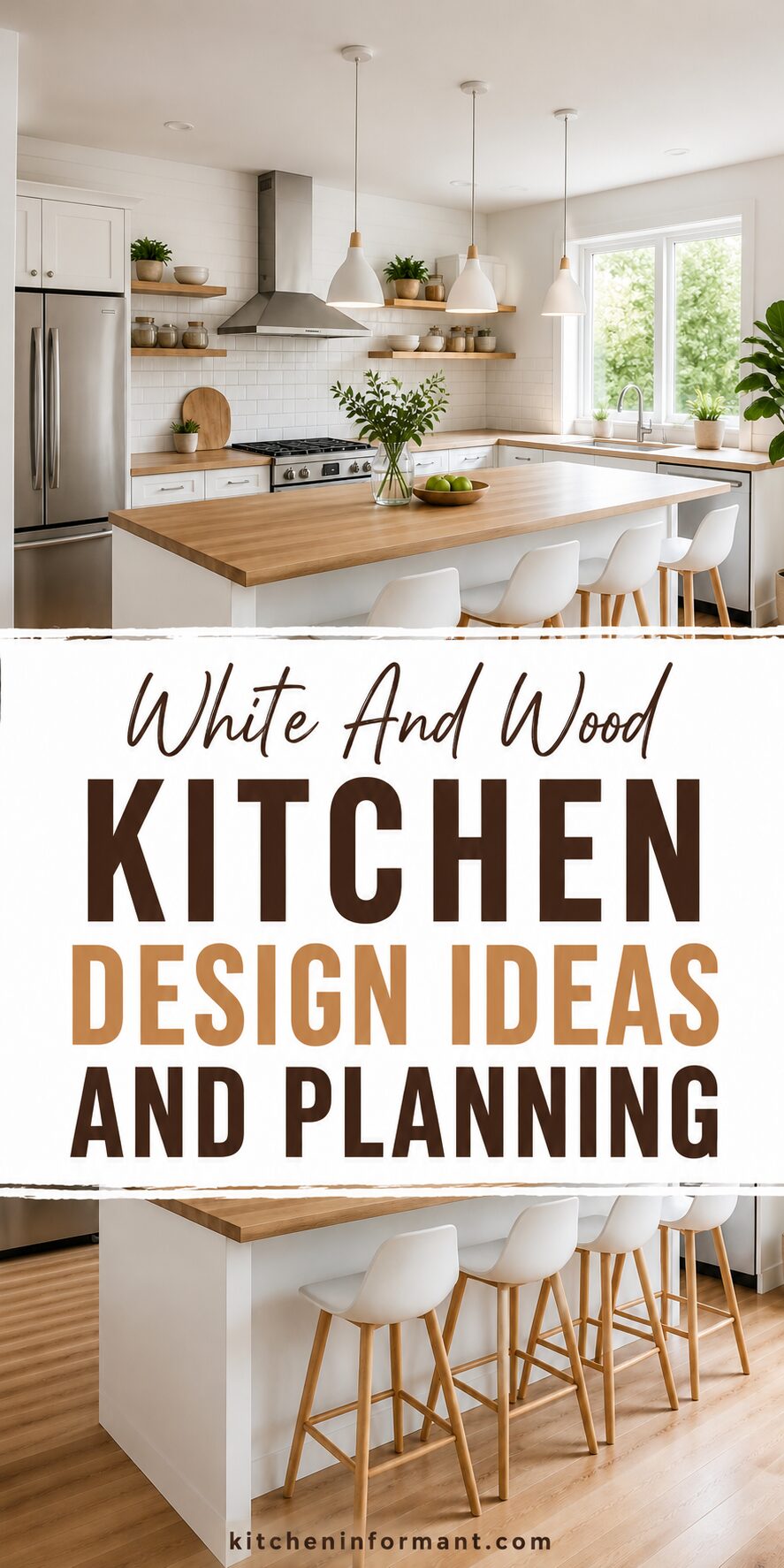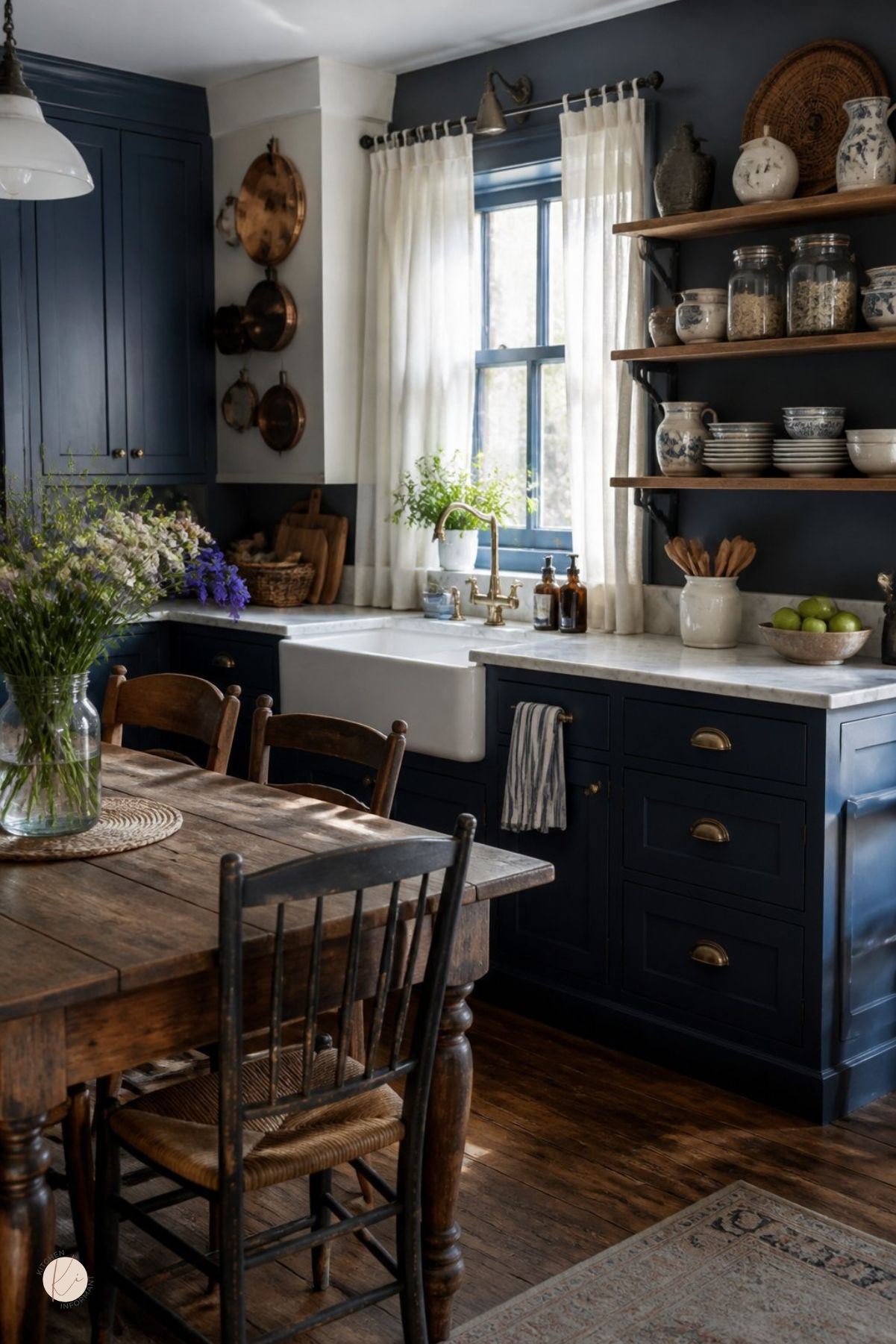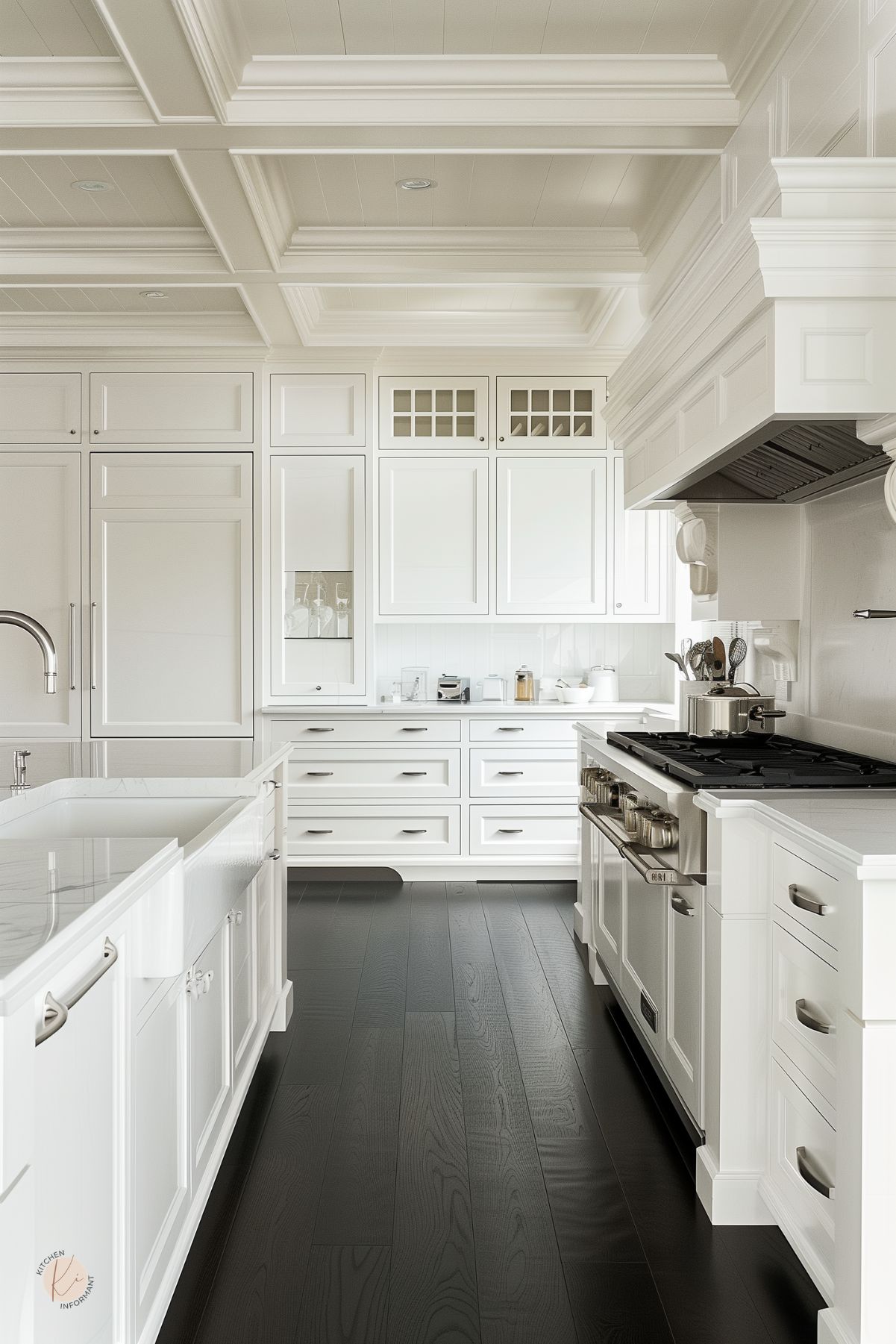
A White And Wood Kitchen can feel current, calm, and practical when you plan the white surfaces and wood tones with care.
This look works especially well if you want to keep good cabinets, soften older oak, or add warmth to a space that feels too bright or a bit sterile.
The strongest results come from balancing cabinet quality, wood undertone, lighting, and finish choices before you buy anything.
That helps your kitchen look intentional, even if you’re just updating paint, hardware, or a couple of surfaces.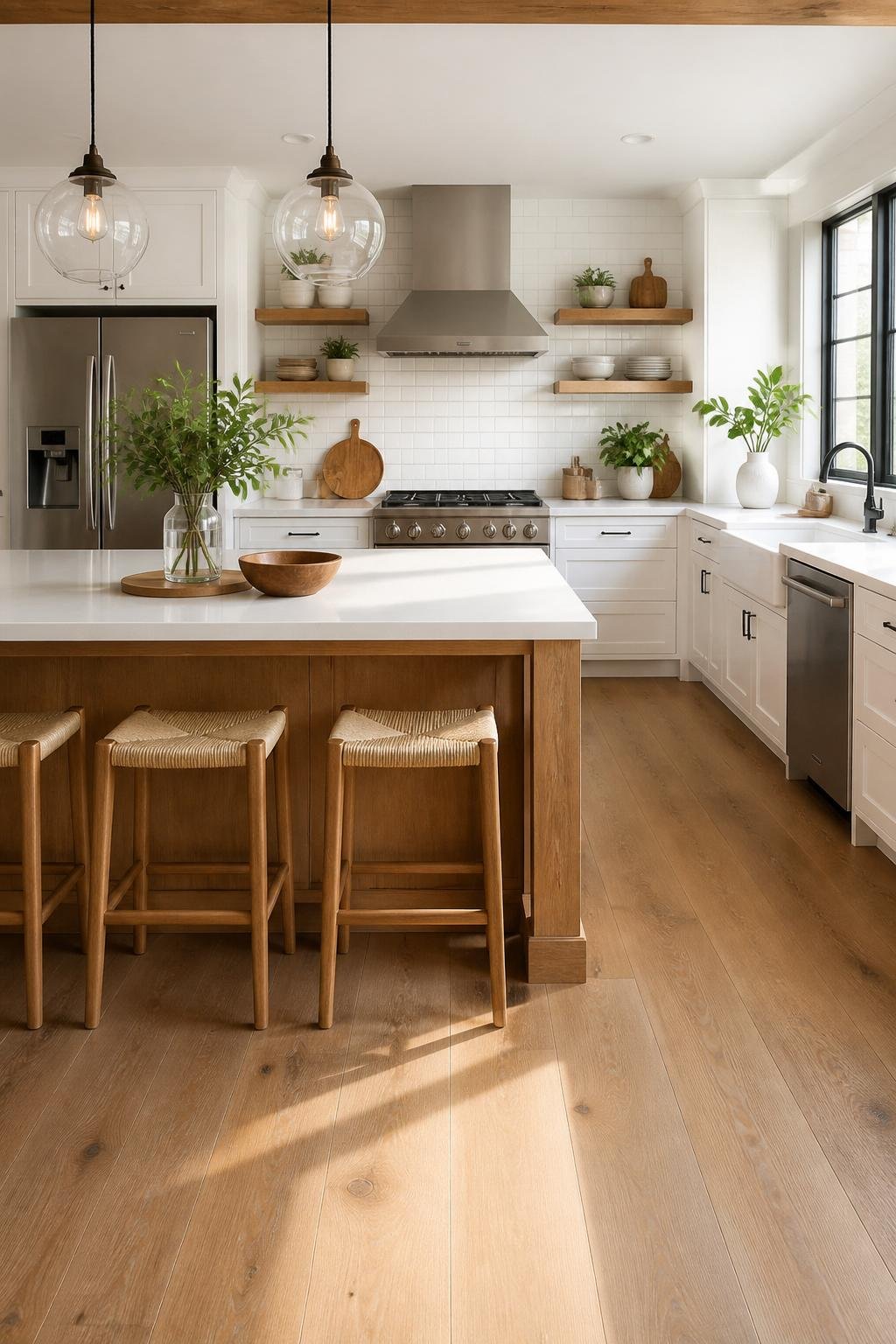
Core Elements of the Look
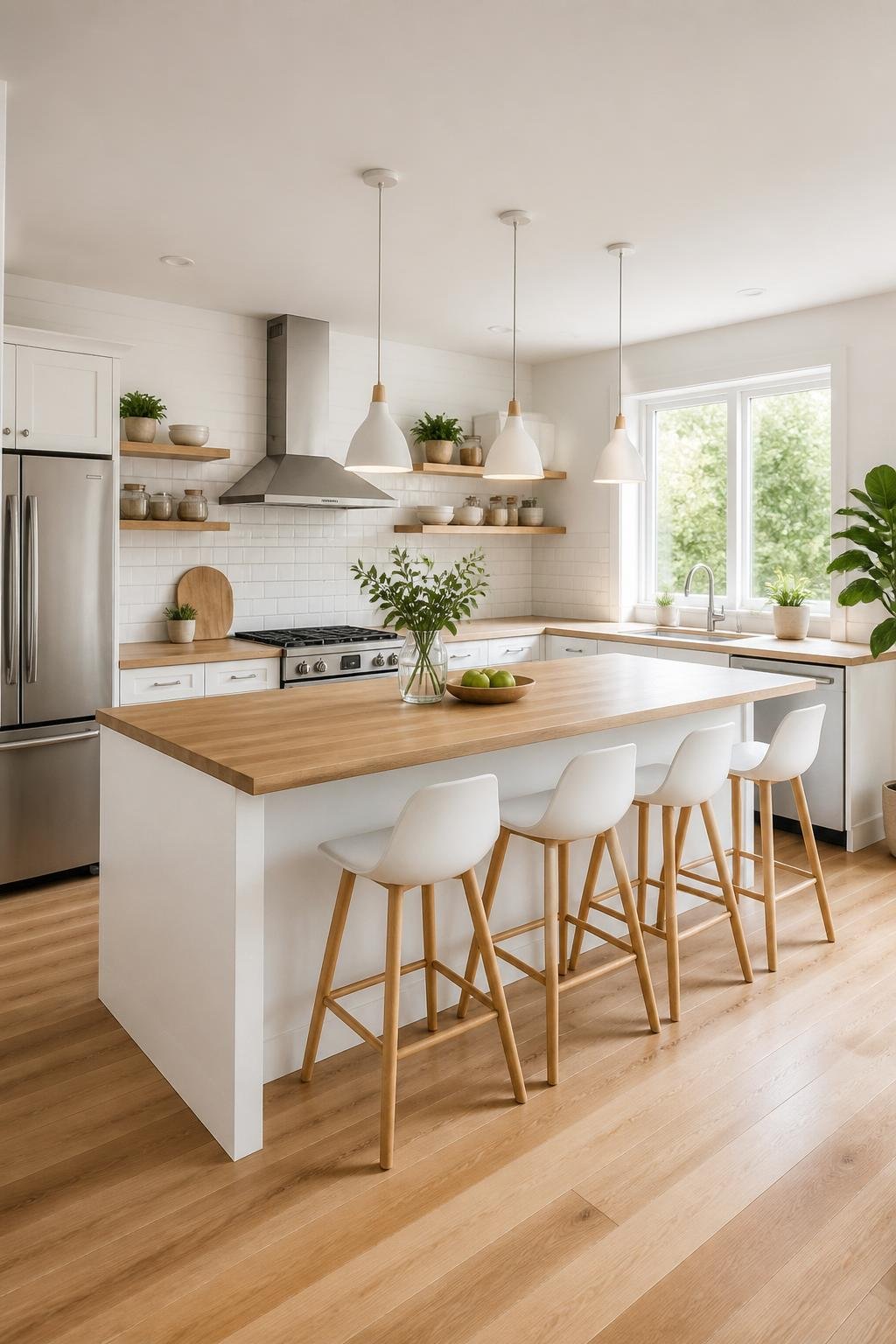
A successful White And Wood Kitchen usually relies on three things: a clear white base, a wood element with visible texture, and enough contrast to keep things from feeling flat. Perfect symmetry isn’t the goal here. You want a kitchen that feels bright, grounded, and lived in.
White Cabinet Finishes
White cabinets set the tone by bouncing light around and making the room feel bigger. Painted shaker fronts, smooth slab doors, and lightly textured matte finishes all give off a different vibe, so pick a cabinet style that matches the home’s age and how much natural light you get.
Warm whites usually feel softer in older homes, while crisp whites look cleaner in modern spaces. A very cool white can make nearby oak look more orange, so undertones really matter.
Natural Wood Tones
Wood brings the needed warmth. Oak, walnut, maple, ash, and white oak all look and feel different, and the grain is part of the design, not just the color.
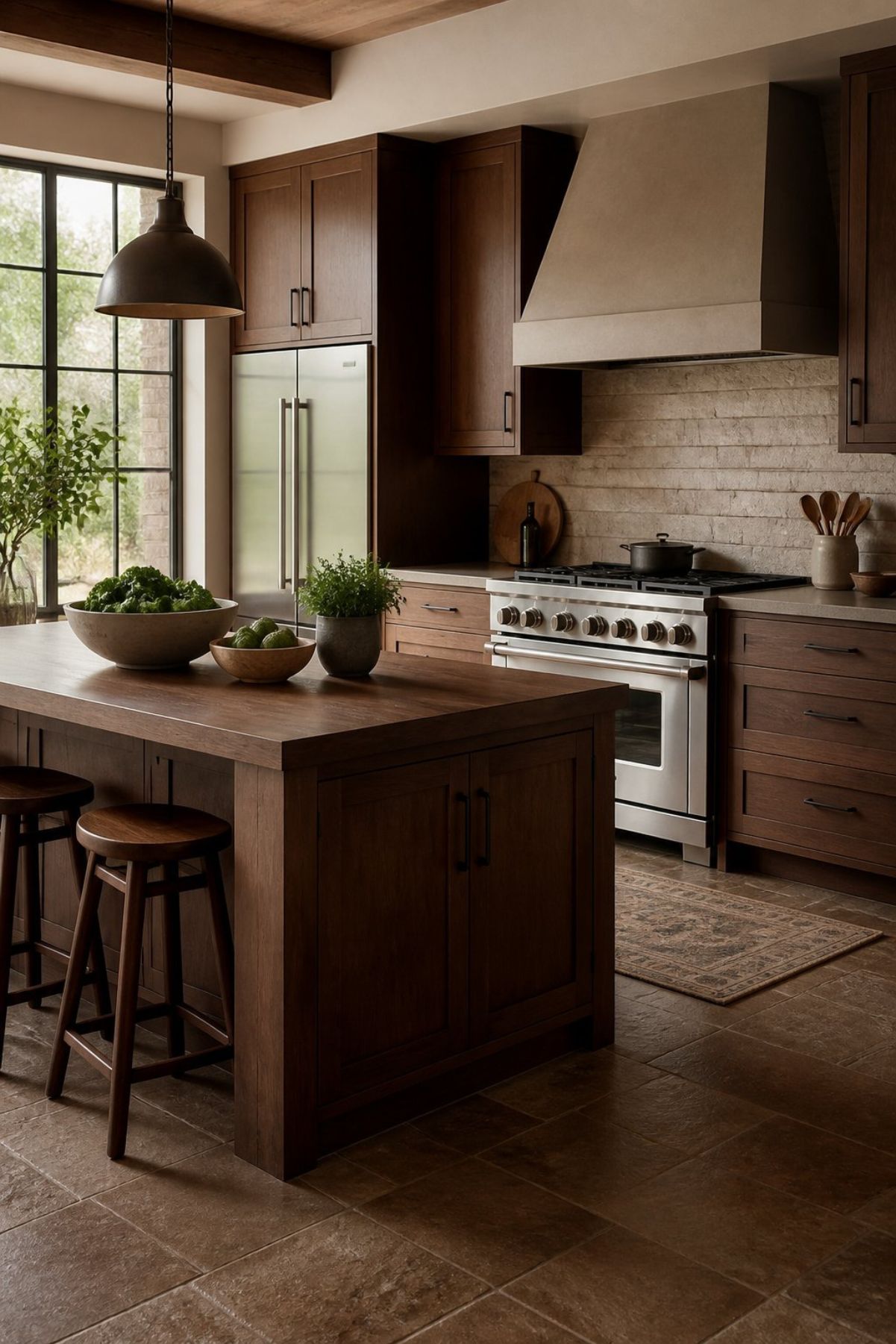
Older oak cabinets can still look great if you control the stain and keep the rest of the finishes simple. Lighter woods tend to feel more updated, while darker woods give the room stronger contrast.
Balance Between Warmth and Brightness
Too much white can make a room feel cold and plain. Too much wood can turn things heavy and dark.
The best mix usually puts white on the biggest surfaces and wood in defined spots—think island, open shelves, hood trim, or lower cabinets. That keeps the kitchen bright but still warm.
Choosing the Right Materials

Material choice matters as much as color. Painted cabinets, wood species, countertops, and backsplash surfaces all affect how your kitchen looks in daylight and under artificial light.
The right mix can make older wood feel intentional, not just old. Sometimes, it’s all about those little tweaks.
Painted Cabinet Surfaces
Painted cabinet surfaces need a finish that can handle regular cleaning and some bumps. Factory-finished or professionally sprayed cabinets usually hold up better than a quick brush job.
If you’re updating what you already have, check adhesion, door condition, and what finish is already there. If the boxes are solid, paint can work wonders.
Wood Species and Grain Patterns
The wood species really shapes the mood. Oak’s grain is bold and works if you want texture. Maple feels smoother and more subtle. Walnut brings depth, and white oak is lighter and more current.
Grain patterns matter too. Busy grain adds character in a simple kitchen. In a more detailed space, a quieter grain is usually easier to pair with white.
Countertop and Backsplash Pairings
Countertops and backsplashes should support your cabinet tones, not fight them. Light quartz, honed stone, or simple ceramic tile help keep things calm.
If you’ve got busy wood cabinets, a cleaner backsplash helps. If your cabinets are plain, a subtle tile pattern or textured stone can add just enough interest.
Layout and Visual Balance
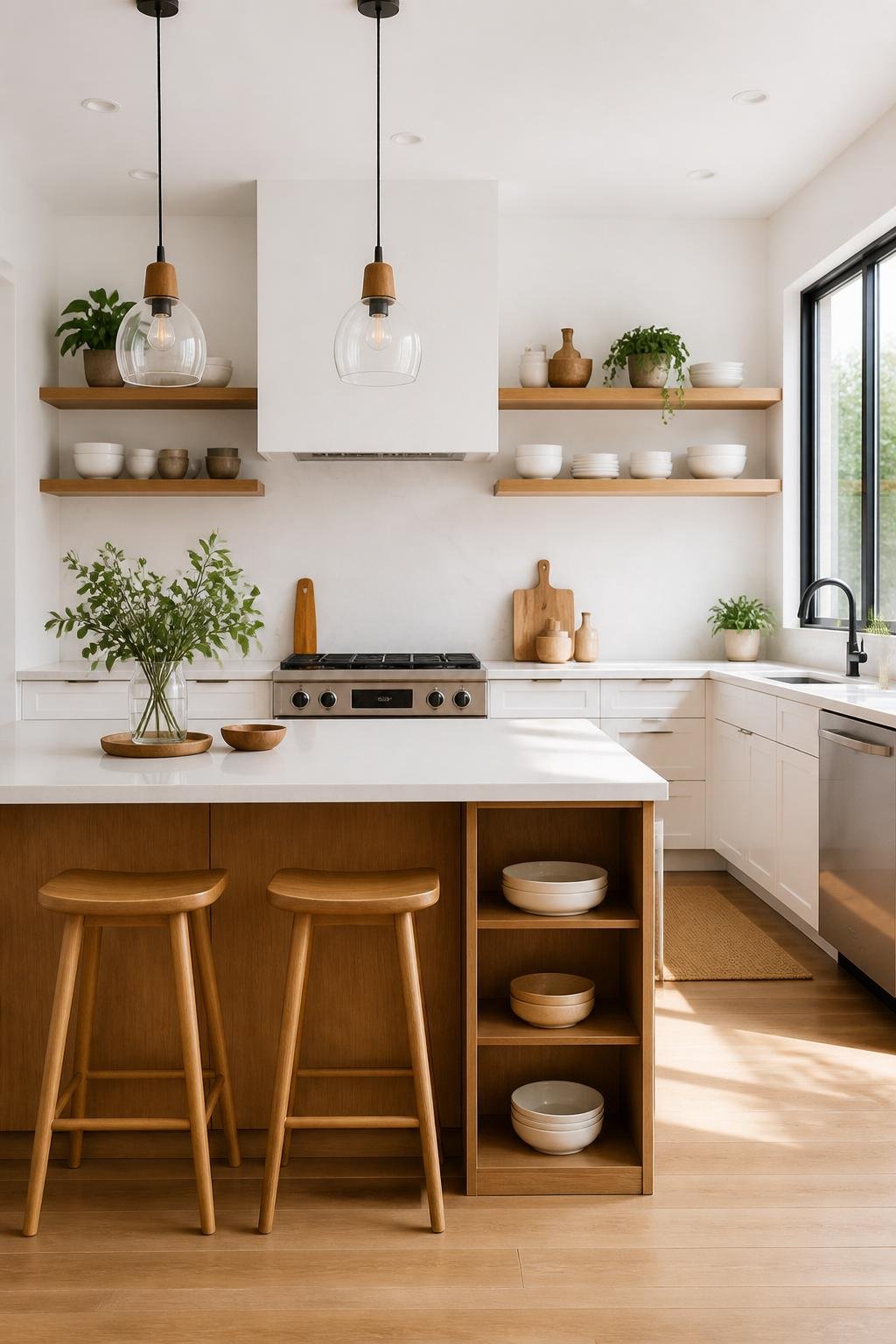
Layout shapes how the materials look from across the room. White and wood work best when your eye can move between light and dark areas without getting stuck.
A balanced layout also helps older cabinets blend in with any new additions.
Two-Tone Cabinet Placement
Two-tone placement works well when you use white on uppers and wood on lowers, or vice versa. Both choices can cut down visual bulk.
In smaller kitchens, white uppers keep things open. In bigger kitchens, wood lowers add weight where you want it.
Island Contrast Strategies
An island is a great spot for contrast. A wood island base can warm up an all-white kitchen, while a white island calms a room with strong wood cabinets.
The island can also help update an older oak kitchen. A painted island, new countertop, and updated seating can make the rest of the space feel more intentional.
Open Shelving and Solid Fronts
Open shelving works best when you keep it limited. It’s great for a few objects and can tie white and wood together.
Solid fronts are better if you need a lot of storage or if your cabinets already have a strong grain. Too much open shelving can leave things feeling unfinished.
Color Pairings and Finish Details
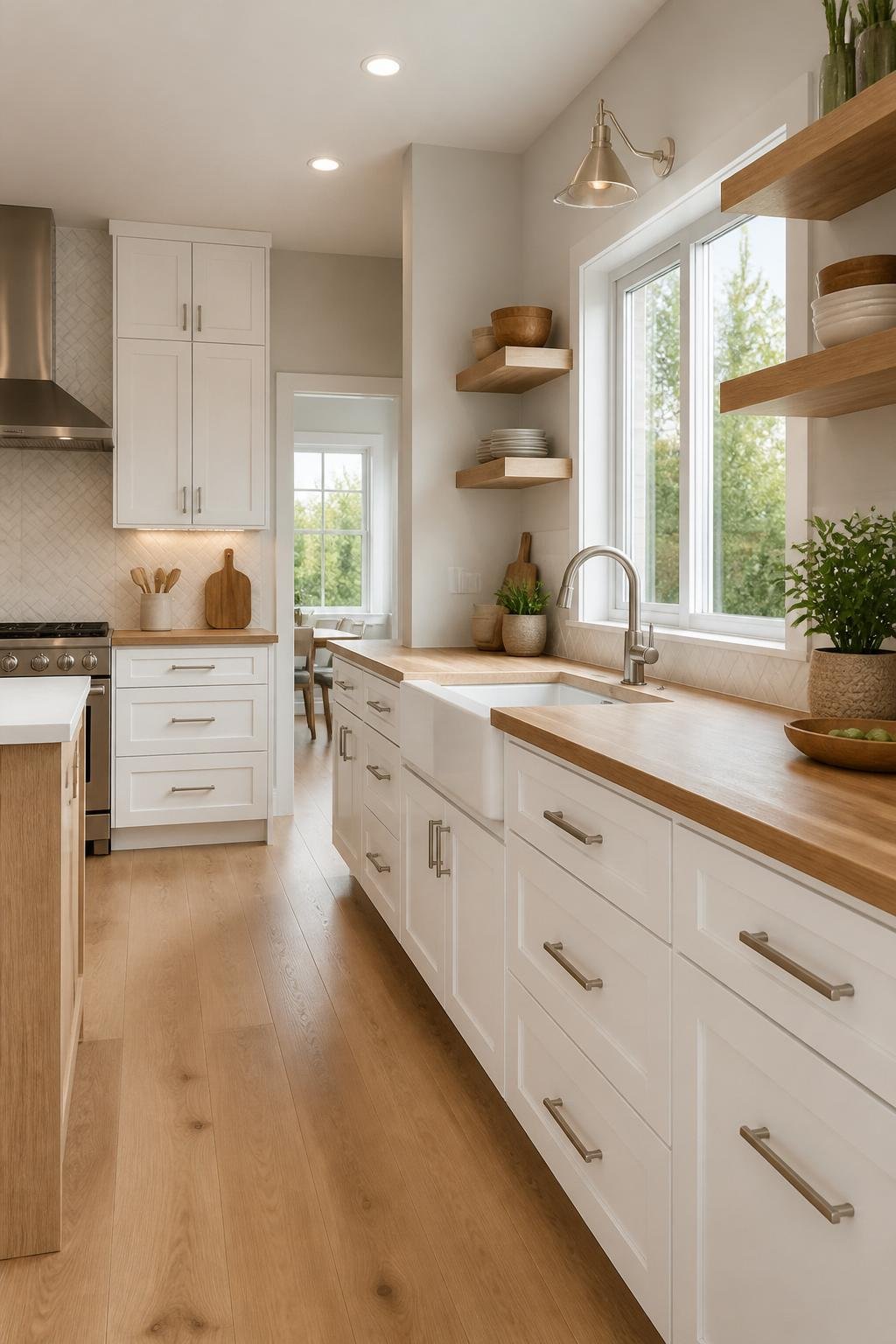
Small finish choices can change the vibe. Hardware, wall color, and flooring all need to back up both the white and the wood. These details matter even more if you’re keeping the cabinet boxes.
Hardware Finishes
Hardware should match your kitchen’s level of contrast. Brushed nickel, matte black, and aged brass are popular because they work with both white paint and natural wood.
Black hardware gives sharper definition. Brass warms things up. Nickel stays quiet and simple.
Wall Color Coordination
Wall color should connect your cabinets to the rest of the room. Soft warm white, pale beige, light greige, and muted sage all work, but it depends on your wood tone.
Walls that are too cool can make oak stand out more than you want. A slightly warm wall color often helps older wood feel a bit softer and more up-to-date.
Flooring That Supports the Palette
Flooring needs to bridge the gap between white cabinets and wood finishes. Light oak, medium wood-look, neutral tile, or warm gray stone can all work.
Very red or orange floors can make oak cabinets feel heavier. If your floor is already strong, quieter cabinets and simple counters are usually the safest bet.
Lighting That Enhances Texture
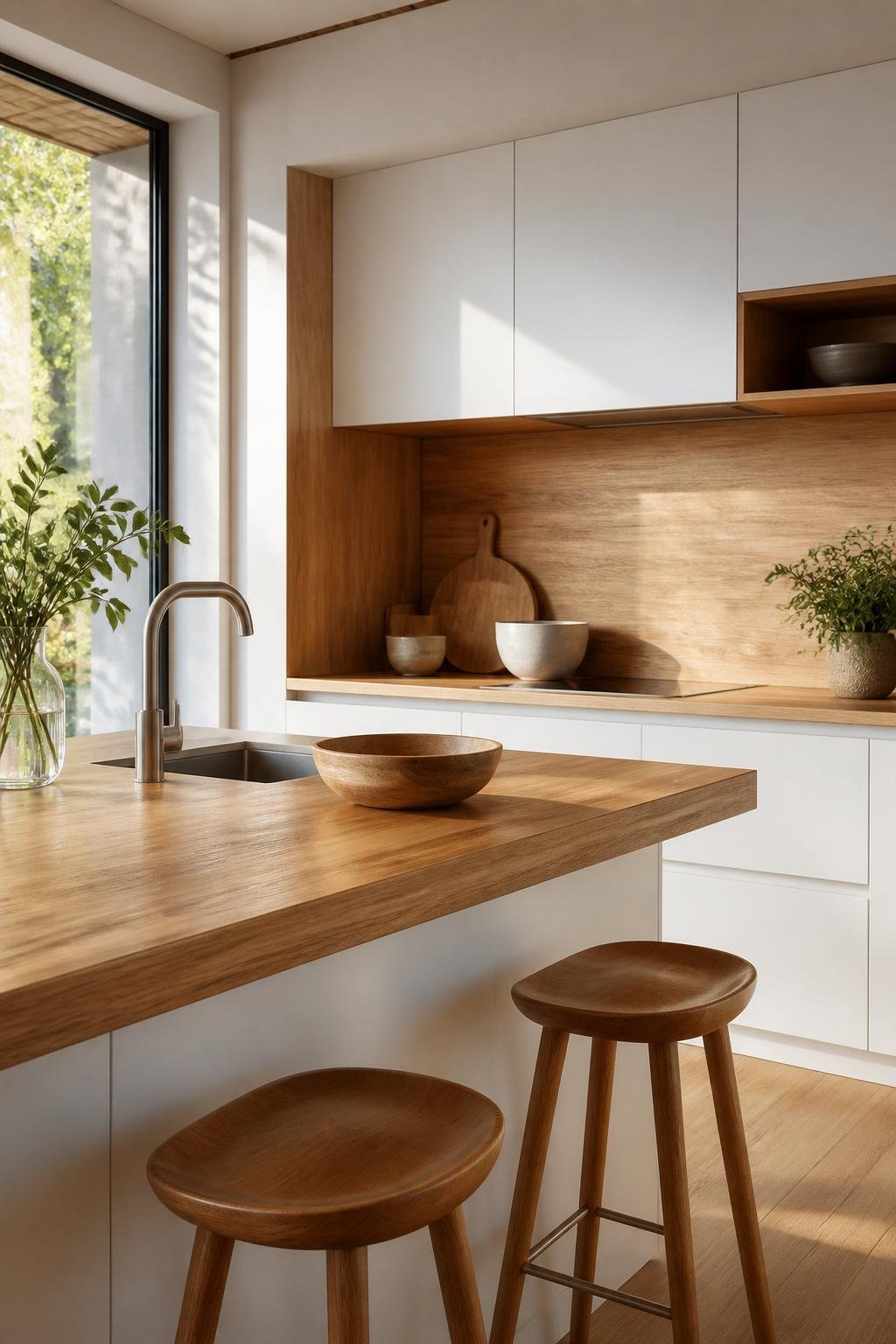
Lighting totally changes how white looks and how much wood grain pops. The same kitchen can look bright and smooth at one time of day and flat or yellow at another.
If you plan out your lighting early, you’ll avoid surprises after everything’s installed.
Natural Light Considerations
North-facing kitchens usually get cooler light, so warm whites and warmer wood tones help soften the space. South-facing kitchens handle cooler whites better since they get more direct sun.
If your kitchen doesn’t get much natural light, use reflective white surfaces and keep wood in smaller, defined spots. Too much dark wood in a dim room can make it feel closed in fast.
Task and Ambient Layers
Layer your lighting. Ceiling lights give general brightness, under-cabinet lights help with tasks, and pendants add focus over the island or peninsula.
Warm white bulbs usually make wood look better than really blue light. Try to keep the lighting temperature consistent so your finishes don’t clash.
How Light Changes White and Grain
White paint can shift from creamy to cool throughout the day. Wood grain pops more under angled light, especially on textured oak or rift-cut surfaces.
Before you pick finishes, check samples in morning, afternoon, and evening light. It’s a small step that can save you a headache later.
Budget-Friendly Update Paths
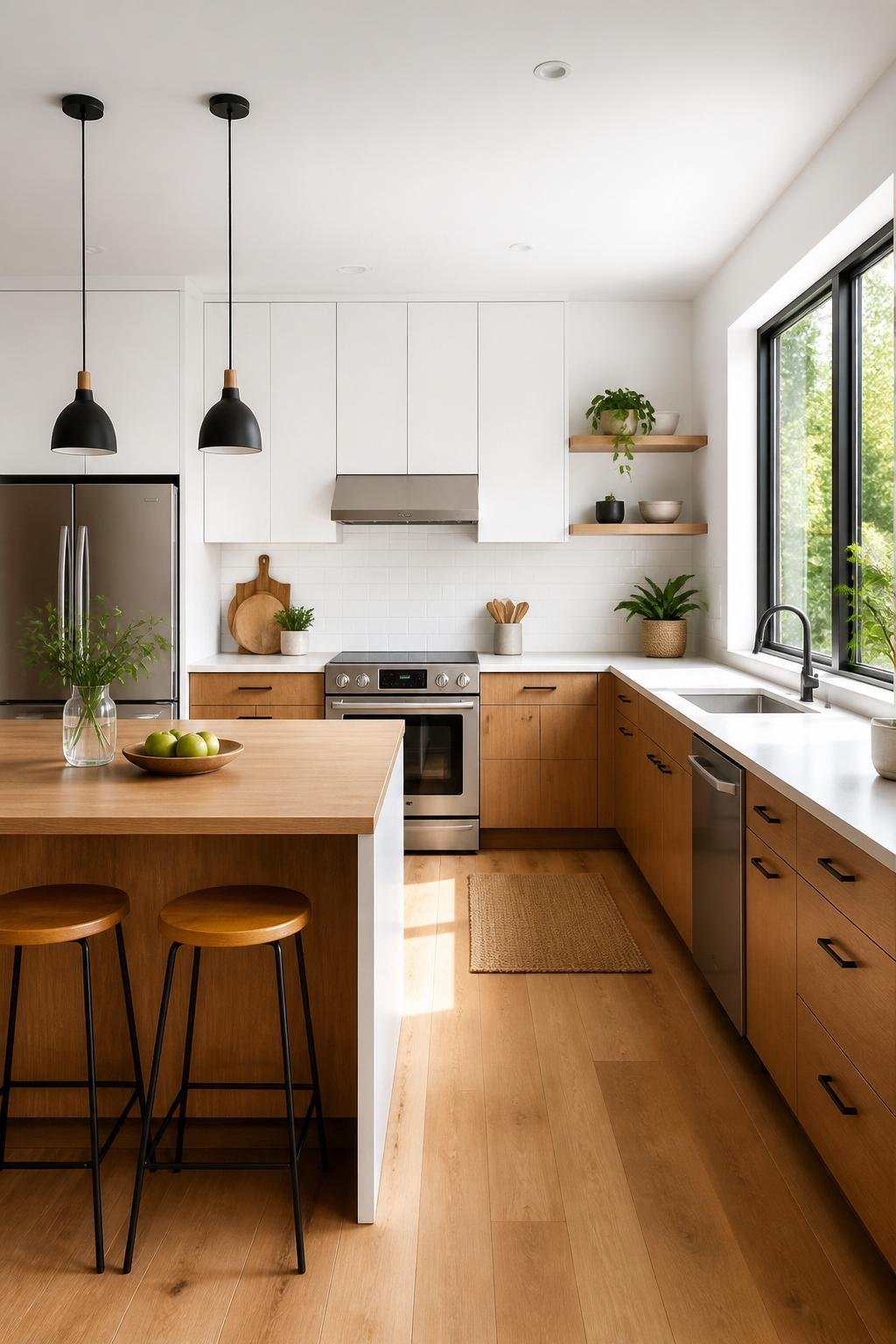
You don’t always need a full gut job for a White And Wood Kitchen. Many older kitchens can look way better with targeted updates, especially if the cabinet boxes are solid and the layout still works.
The right approach depends on cabinet condition, finish quality, and how far you want to shift the style.
Keeping Existing Cabinets
It’s usually worth keeping existing cabinets if the boxes are solid, the doors close well, and the layout is functional. If the wood is durable and not too banged up, a cosmetic update may be all you need.
For older oak, just cleaning, swapping hardware, updating countertops, and painting the walls lighter can make a real difference. Sometimes, that’s enough to modernize the room without replacing anything big.
Refacing or Repainting Options
Refacing works when the cabinet structure is good but the door style feels dated. You get new door fronts and veneers but keep the boxes.
Repainting is usually the most affordable visible change. It works best if you prep the old finish properly and the cabinets are in decent shape. A smooth, durable paint job can lighten oak and open up the space.
Where Full Replacement Makes Sense
Full replacement really comes into play when cabinet boxes start to fall apart or the layout just doesn’t work anymore. If you’re staring at swollen particleboard or doors that won’t close, it’s probably time to let go.
Major storage headaches? That’s another big sign. When you want a totally new layout, better function, or need to fit in different appliances, starting fresh might actually save you headaches—and cash—down the road.
With a new plan, you can shape your White And Wood Kitchen from scratch, making sure the materials and style actually fit together this time.
You May Also Like: