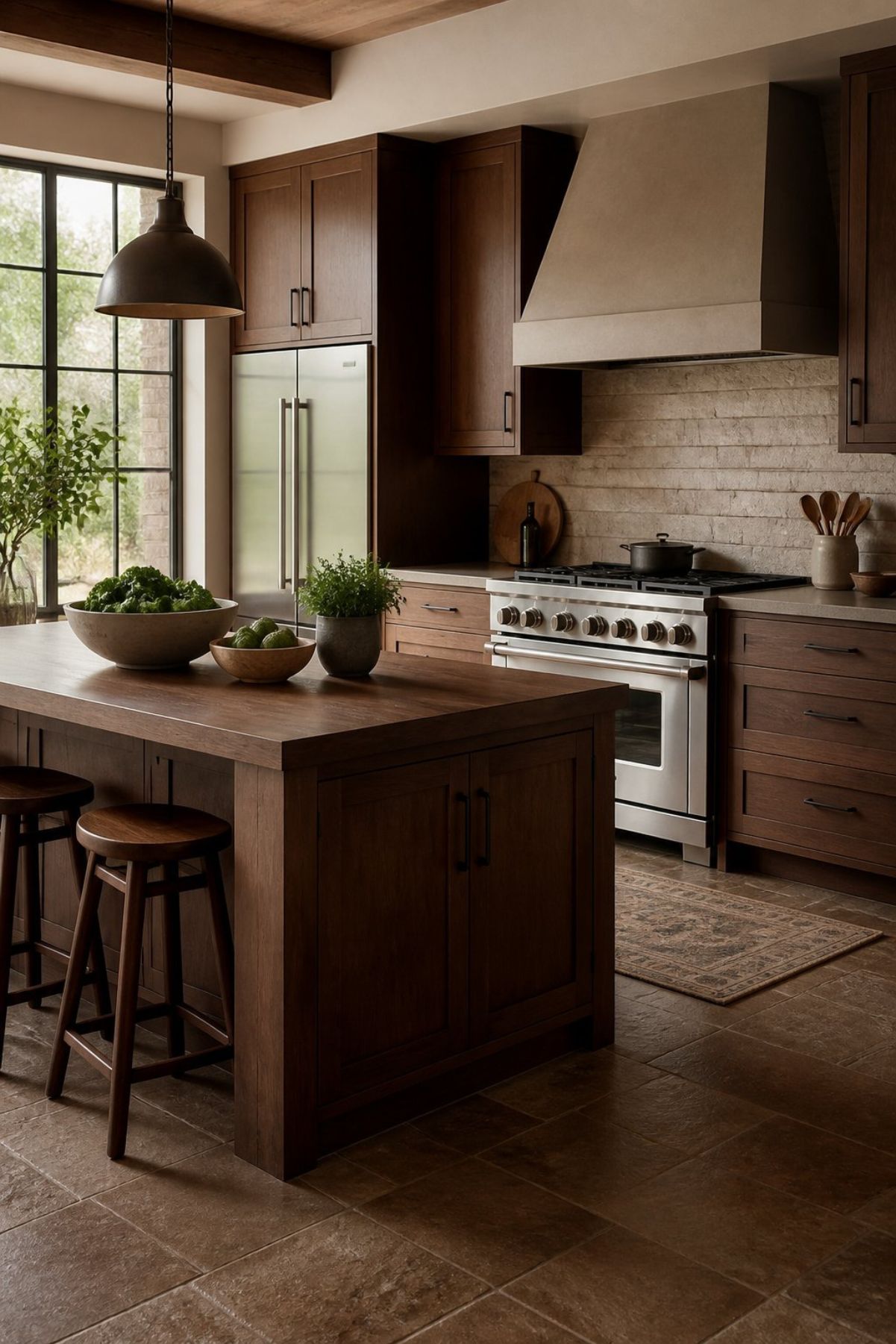
Kitchens with walnut cabinets stand out because the wood brings color, grain, and depth into the room without needing much extra decoration.
The tone can feel warm and grounded, while still fitting modern, transitional, or classic kitchen plans.
A good walnut kitchen depends on balance, so the cabinet color, door style, counters, backsplash, lighting, and hardware all need to work together.
That matters whether the cabinets are being kept, refreshed, or replaced.
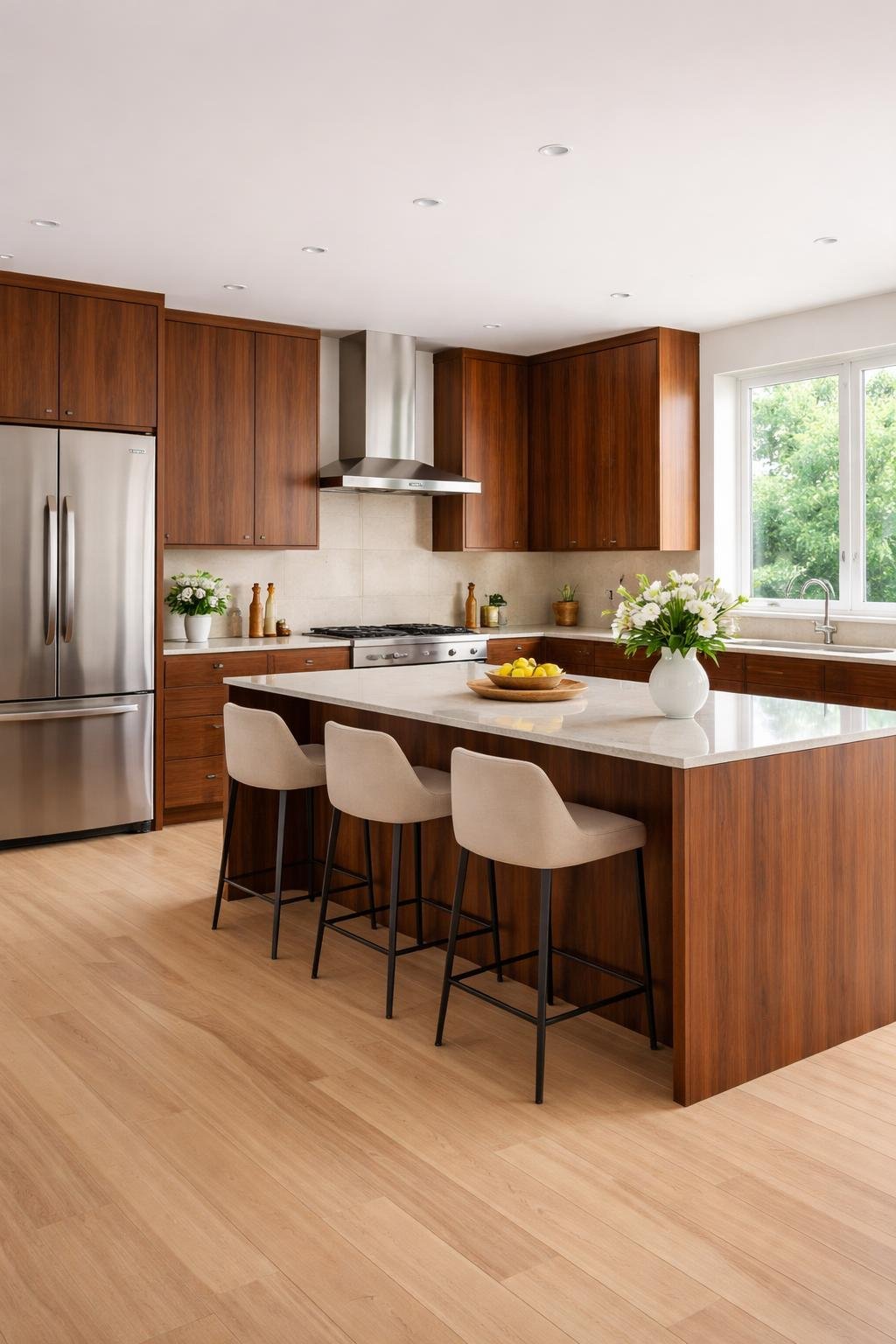
For homeowners and renovators, walnut is useful because it can support a full design or act as the main visual anchor in a smaller update.
The key is to read the wood correctly and choose pairings that keep the kitchen bright, useful, and coherent.
Why Walnut Works in a Kitchen
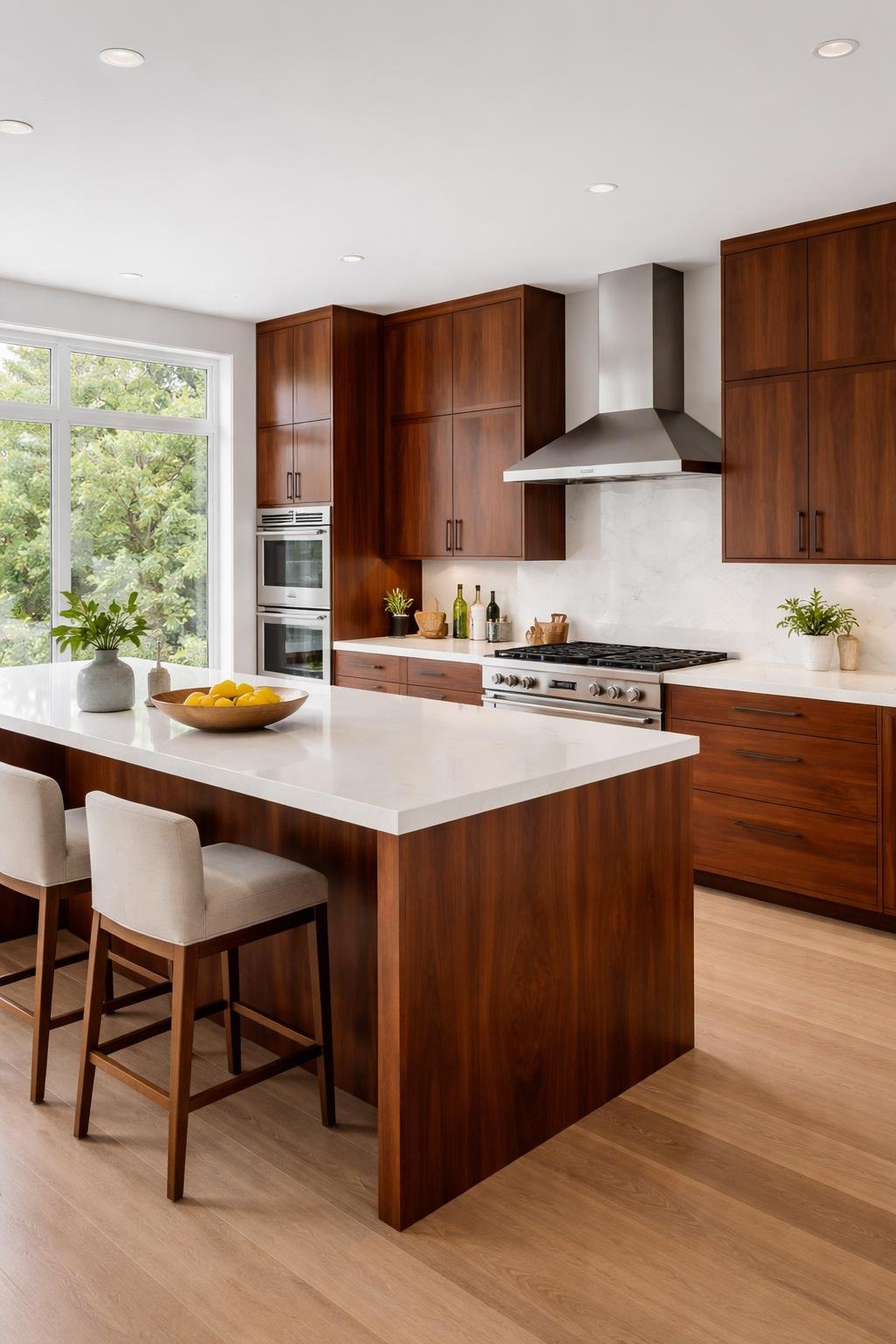
Walnut works well in kitchens because it has strong natural character and a color range that can feel rich without looking flat.
It also reacts well to both light and dark finishes, which gives designers and homeowners room to adjust the mood of the space.
Natural Grain Character
Walnut grain usually reads clearly, even from across the room.
That makes it a useful choice when the cabinet fronts need to add texture without using heavy pattern, ornate trim, or bold paint.
The grain can be straight, wavy, or mixed, which gives the kitchen a natural variation that painted cabinets do not have.
For many homes, that visual detail helps a simple layout feel more finished.
Warmth and Visual Depth
Walnut adds warmth through its brown tone, which often includes hints of chocolate, taupe, or muted red.
In kitchens with a lot of hard surfaces, that warmth helps soften the room.
The wood also creates depth in photos and in person.
Under strong light, it can look lighter and more open; in lower light, it can look richer and more grounded.
How Walnut Compares With Oak, Maple, and Painted Finishes
Compared with oak, walnut usually looks smoother and more refined because the grain is less coarse.
Oak can feel lighter and more casual, while walnut usually reads as more restrained and tailored.
Maple has a cleaner, quieter surface, so it suits a more uniform look.
Painted finishes can be easier to color-match, yet they do not show natural grain, which means they miss the layered look that walnut provides.
Choosing the Right Cabinet Style
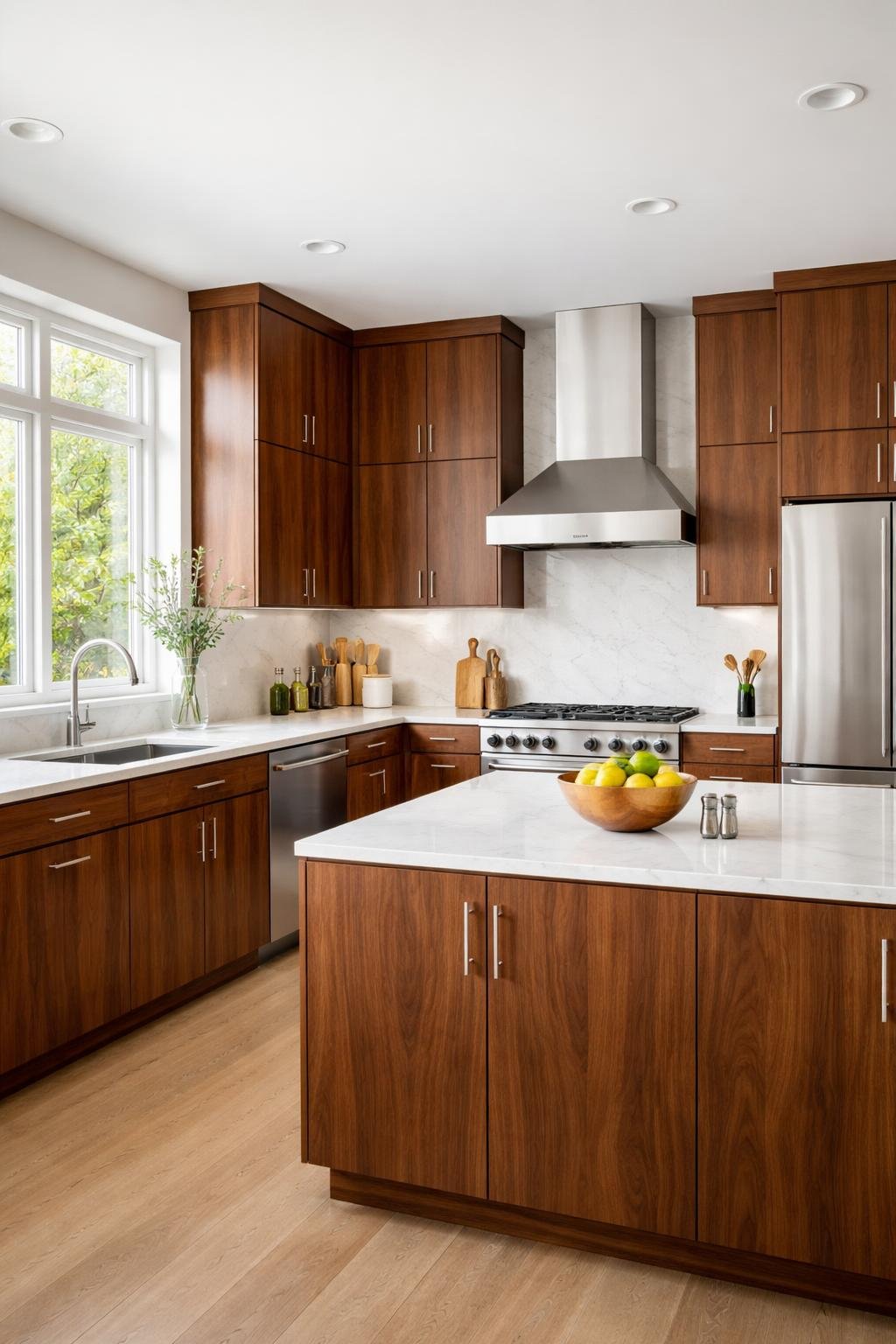
Cabinet style changes how walnut reads in the room.
The same wood can feel modern, traditional, or transitional depending on the door profile, edge detail, and surface finish.
Flat-Panel Doors for a Modern Look
Flat-panel doors keep the visual field clean, which lets walnut grain become the main feature.
This style works well in kitchens with simple hardware, slim counters, and minimal trim.
It also suits smaller kitchens that need a less busy appearance.
The lack of detail helps the room feel orderly and open.
Shaker Profiles With Rich Wood Tones
Shaker cabinets bring a familiar frame-and-panel look that works well with walnut’s depth.
The style adds structure without hiding the wood.
This choice often fits transitional kitchens best.
It can pair with stone counters, tile backsplashes, and mixed metal hardware without feeling too formal.
Slab and Veneer Options for Budget Control
Solid slab walnut doors can be costly, so veneer is often worth considering for larger runs or full-height storage.
A quality veneer can still show real walnut grain while reducing material waste and cost.
The important point is construction quality.
Stable door cores, even grain matching, and clean edge work matter more than the price tag alone.
Color Pairings That Complement Walnut
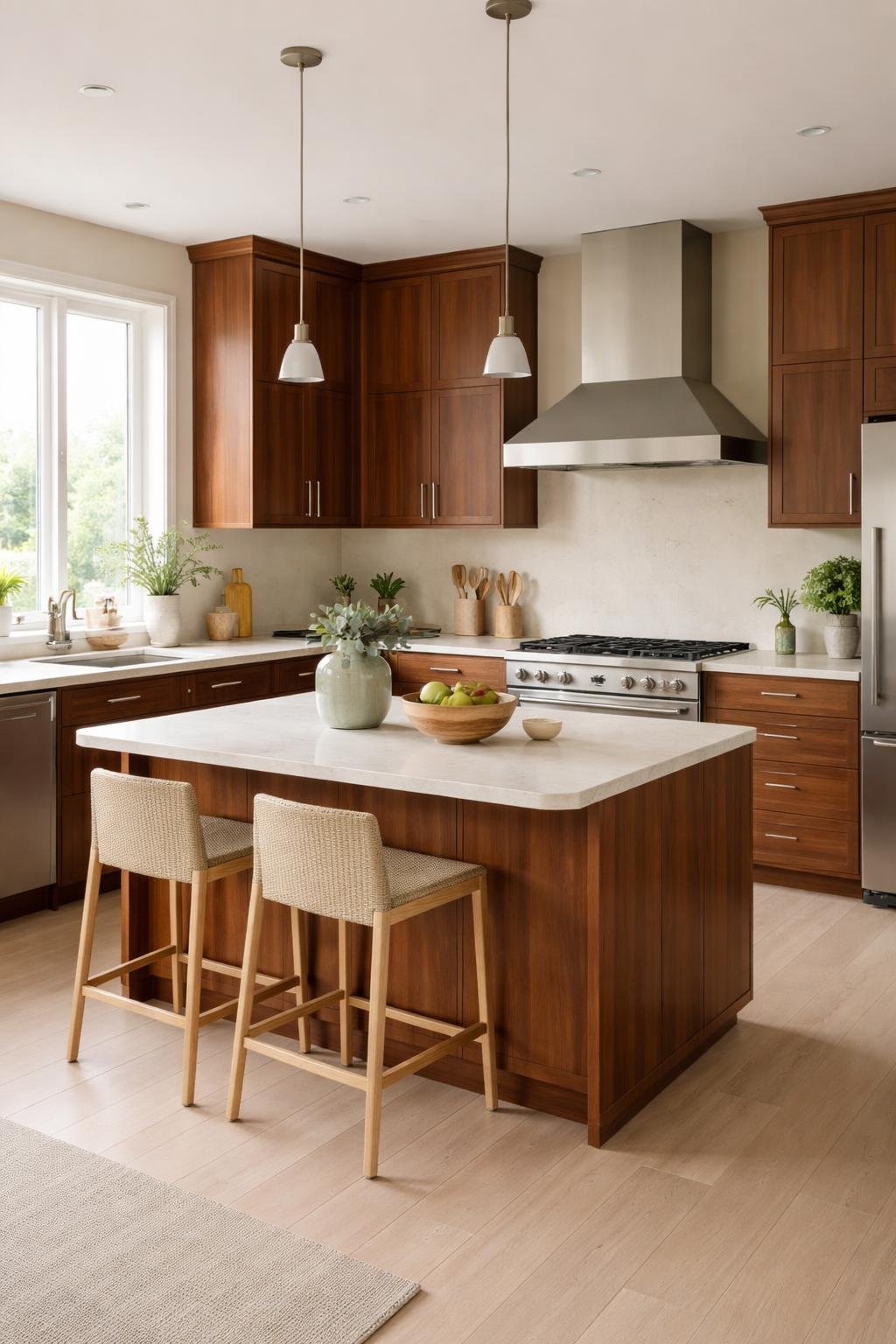
Walnut pairs best with colors that support its warmth without making the room feel heavy.
Light neutrals offer contrast, while selected accent colors can shape the mood.
White and Cream for Contrast
White and cream help walnut cabinets stand out and keep the kitchen bright.
This is useful when the cabinets are dark or when the room has limited daylight.
Cream often feels softer than pure white and can work better with walnut’s brown undertones.
It is a strong option for walls, uppers, or ceiling color.
Blue Accents for Balanced Warmth
Blue adds cool contrast that keeps walnut from feeling too dense.
Muted navy, slate blue, or gray-blue can work well on an island, a pantry wall, or bar stools.
These shades are useful when the kitchen needs calm rather than strong contrast.
They also pair well with stainless steel and polished chrome.
Yellow Notes for a Livelier Palette
Soft yellow, butter cream, or warm ochre can bring energy to walnut without fighting the wood.
These tones work best as accents, not large surface colors.
A small amount can brighten the room and make the wood feel more inviting.
Too much yellow can push the kitchen toward a dated look, so restraint matters.
Countertops, Backsplashes, and Hardware
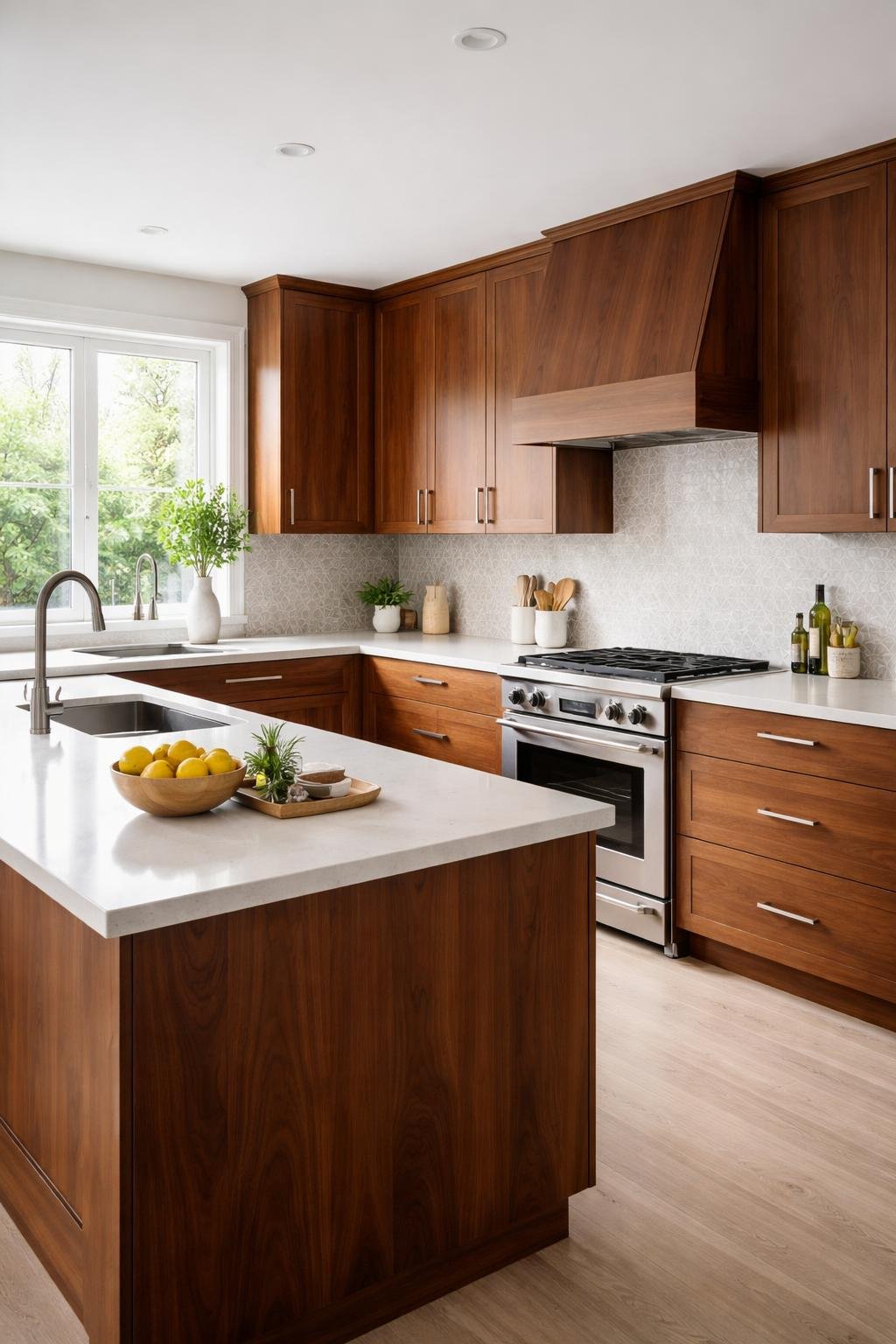
Countertops, backsplashes, and hardware have a strong effect on walnut because they either lighten the room or reinforce its depth.
The best choices add contrast and keep the cabinet color from dominating.
Stone Surfaces That Suit Dark Wood
Light quartz, pale marble, and soft beige stone all help walnut cabinets feel more open.
These surfaces add brightness and give the kitchen a cleaner edge.
If a darker stone is preferred, it works best when there is enough daylight and enough contrast elsewhere in the room.
Otherwise, the space can feel compressed.
Backsplash Materials That Add Lightness
Glossy tile, zellige-style tile, and lightly patterned stone can reflect light and break up the visual weight of walnut.
A backsplash in cream, white, pale gray, or muted green often works well.
Simple patterns are usually the safest choice.
Strong contrast or heavy movement can compete with the natural grain in the cabinets.
Metal Finishes That Fit the Overall Mood
Brushed brass can warm up walnut and make the kitchen feel more finished.
Stainless steel and chrome create a cleaner, cooler mood, especially in modern layouts.
Black hardware can work too, especially with light counters.
The key is to keep the finish consistent across pulls, faucets, and lighting details.
Lighting and Layout Considerations
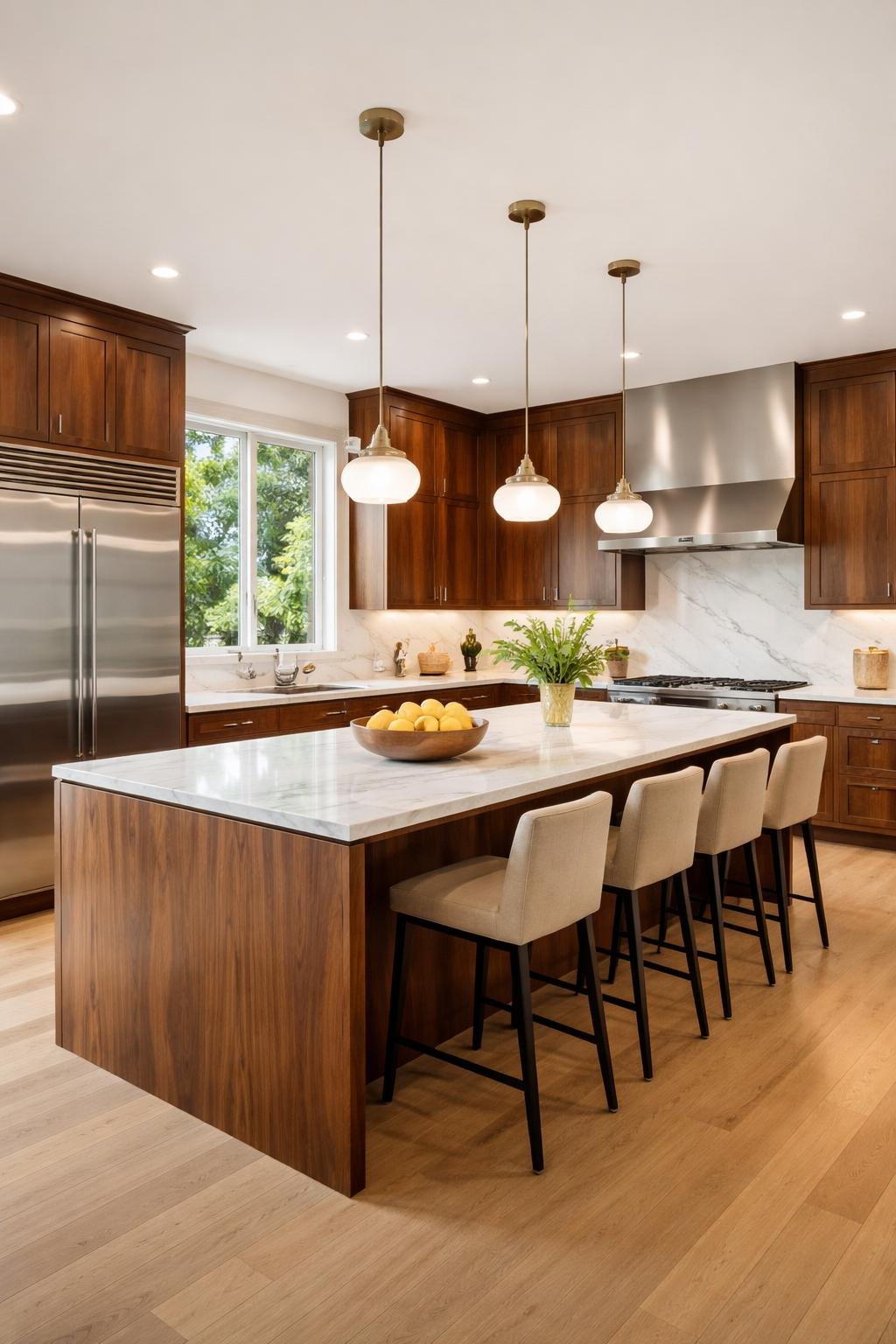
Walnut responds strongly to light, so layout and illumination matter as much as color choice.
A kitchen with good lighting can make walnut feel crisp and defined, while poor lighting can make it seem heavier than it is.
Managing Natural Light in Darker Kitchens
In kitchens with north-facing windows or limited daylight, lighter counters and walls become more important.
They help balance the dark wood and prevent the room from feeling closed in.
European walnut or lighter walnut tones can also help in smaller spaces.
Lower cabinets in walnut with lighter uppers is a practical way to keep warmth without overwhelming the room.
Layered Artificial Lighting Strategies
A single ceiling fixture is rarely enough in a walnut kitchen.
Task lights, under-cabinet lighting, and ceiling lights should work together to brighten work zones and show the wood properly.
Warm white bulbs often suit walnut best, since very cool light can make the wood look flat.
Dimming control also helps the kitchen shift from work mode to evening use.
Using Islands and Open Shelving Carefully
A walnut island can create a strong focal point without covering every wall in dark wood.
That works well when the perimeter cabinets are lighter or when the room is open to another space.
Open shelving should be used sparingly.
Too much exposed storage can make the room feel busy, especially when walnut is already providing strong visual detail.
Budget, Durability, and Maintenance
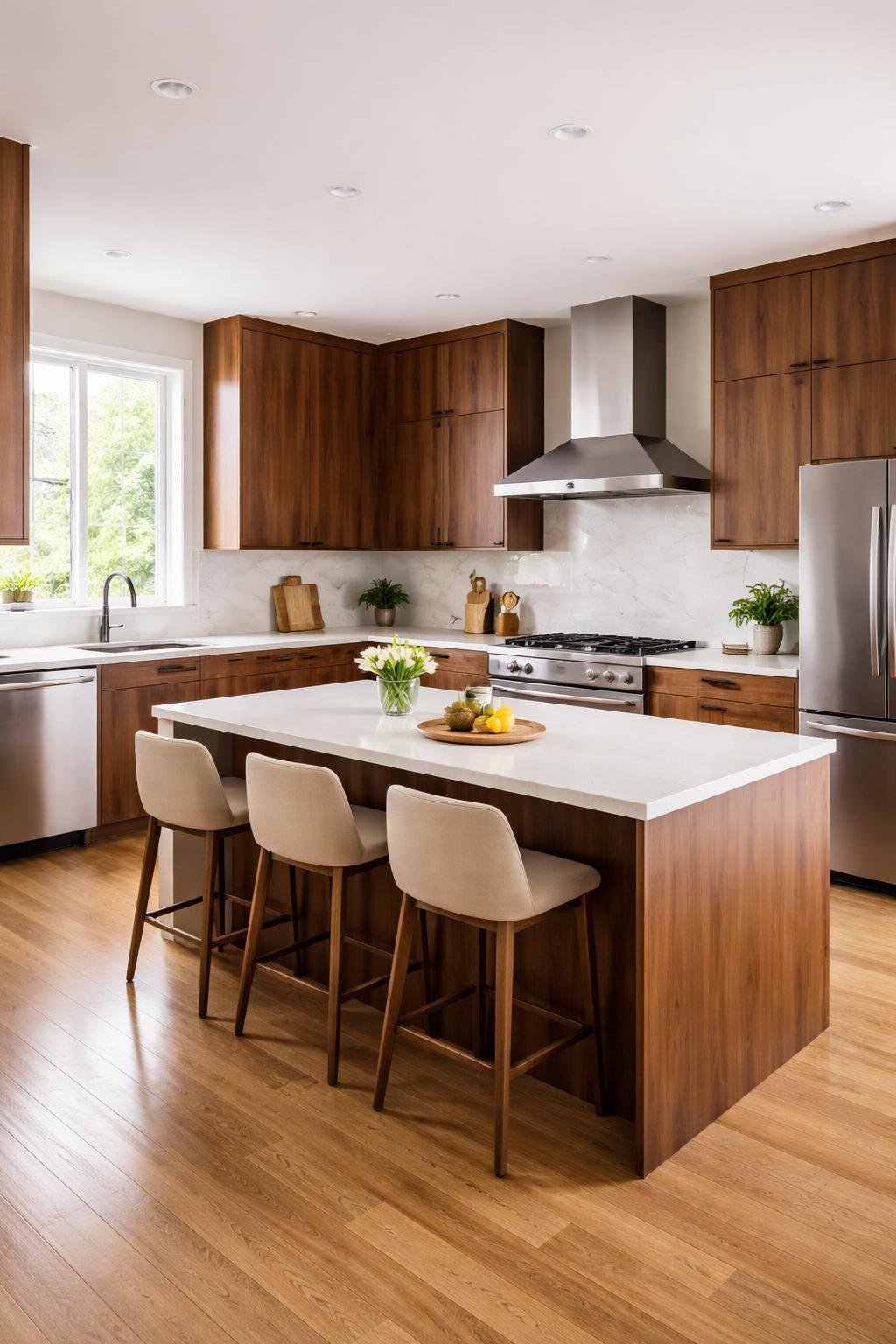
Walnut cabinets can be a strong long-term choice, yet cost and care depend on how they are built and finished.
Buyers should compare solid wood, veneer, and the total scope of the project before making a decision.
Solid Walnut vs Walnut Veneer
Solid walnut offers the most material depth and can be appealing in custom work.
It is also more expensive and may move more with changes in humidity.
Walnut veneer is often a practical choice for cabinet boxes, large panels, or budget-sensitive remodels.
A well-made veneer cabinet can still look high quality and usually gives more control over cost.
What Affects Cost Most
Cabinet construction, door style, custom sizing, and finish quality usually affect price more than the wood species alone.
Full-height runs, specialty storage, and integrated panels can raise the total quickly.
Replacement versus refacing also changes the budget.
If the cabinet boxes are sound, keeping the structure and updating doors or finishes may be the smarter route.
Cleaning and Long-Term Care
Walnut cabinets do best with gentle cleaning and steady indoor humidity.
A soft cloth, mild soap, and dry wiping are usually enough for routine care.
Harsh cleaners and prolonged moisture should be avoided.
Sunlight can also change the color over time, so window treatment and even lighting help preserve a more consistent look.
You May Also Like: