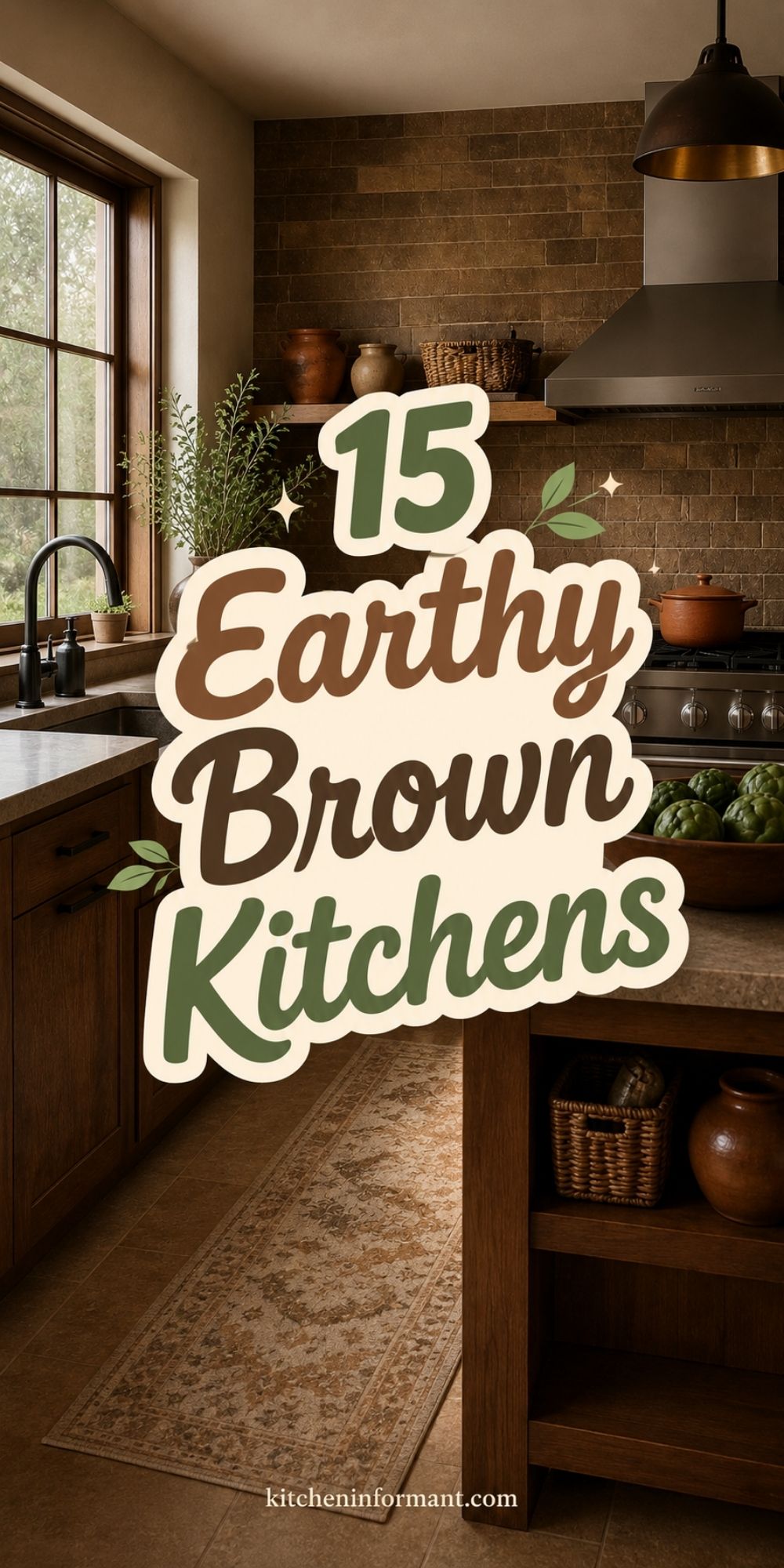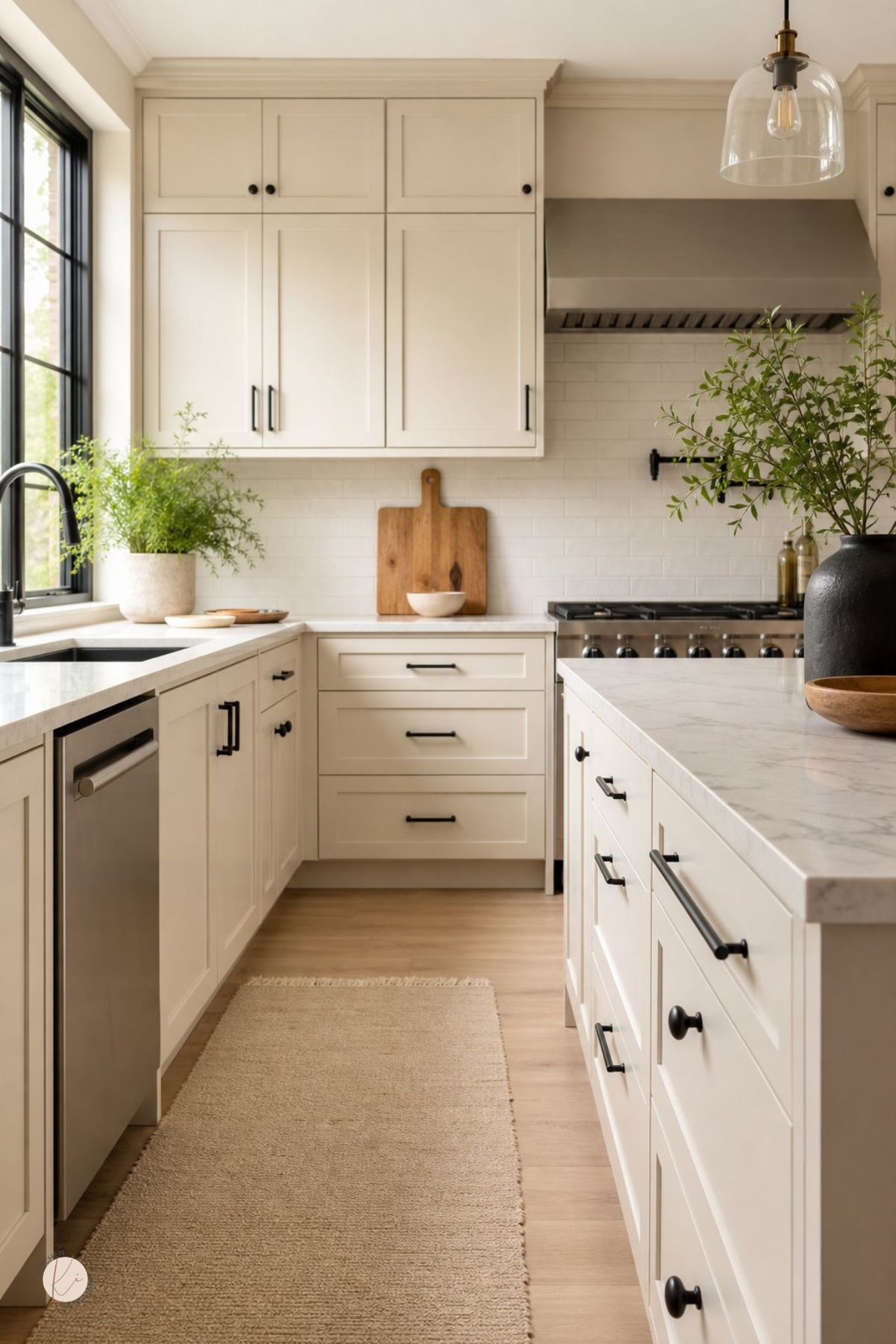
Creating an earthy brown kitchen can bring warmth and comfort to any home.
By incorporating natural materials and cozy tones, this kitchen style creates an inviting space for family and friends to gather.
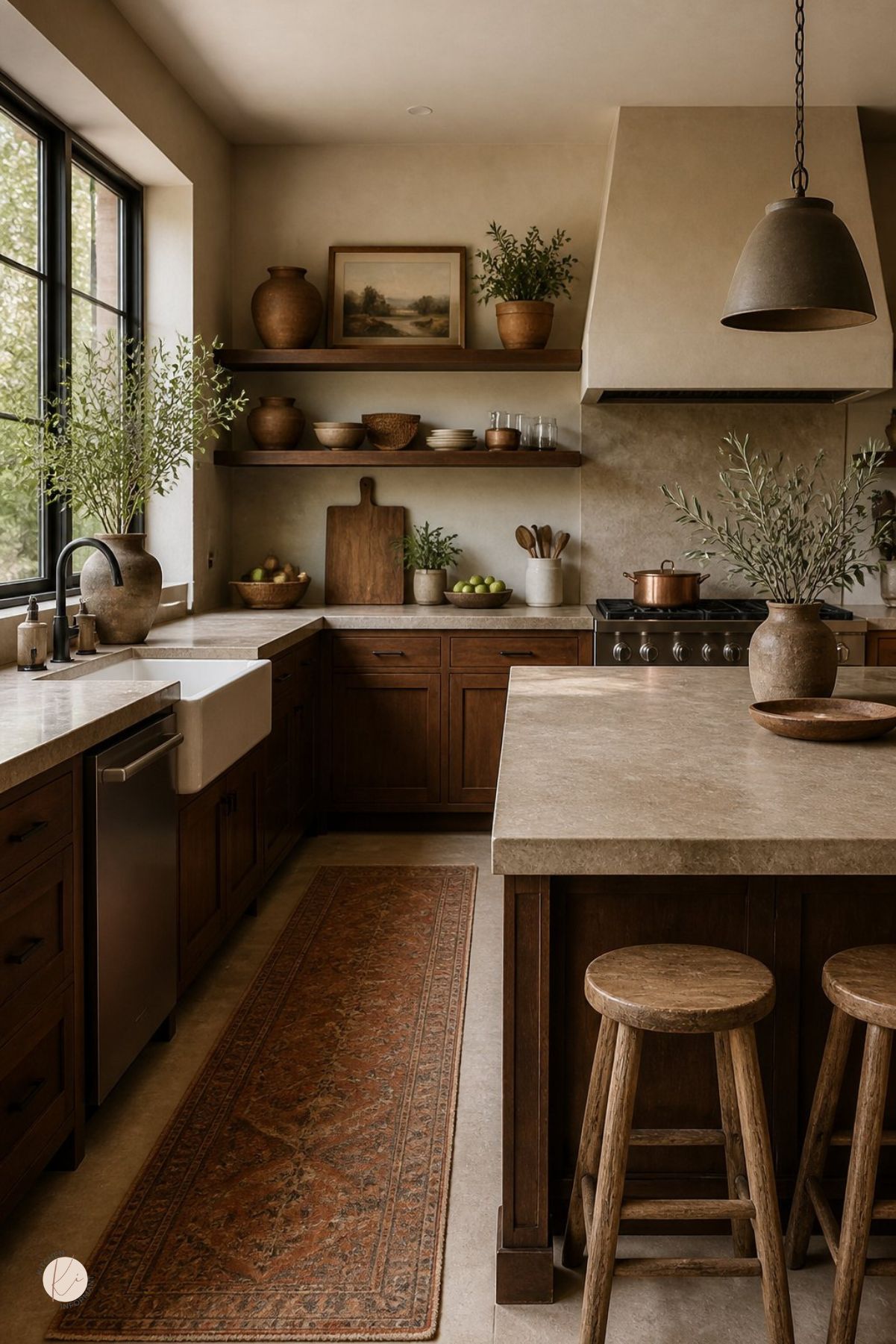
Elements like terracotta tiles and wooden cabinetry blend beautifully, enhancing the connection to nature. Simple touches, such as a brown chalkboard wall, add both style and utility.
With thoughtful design choices, anyone can achieve a warm and welcoming earthy brown kitchen that reflects personal taste and serves as the heart of the home.
Choosing the right earthy tones allows for a versatile design that can suit various styles, from rustic to modern.
By focusing on comfort and aesthetics, this kitchen trend offers endless possibilities for creating a space that feels truly special.
The Appeal of Earthy Brown Kitchens
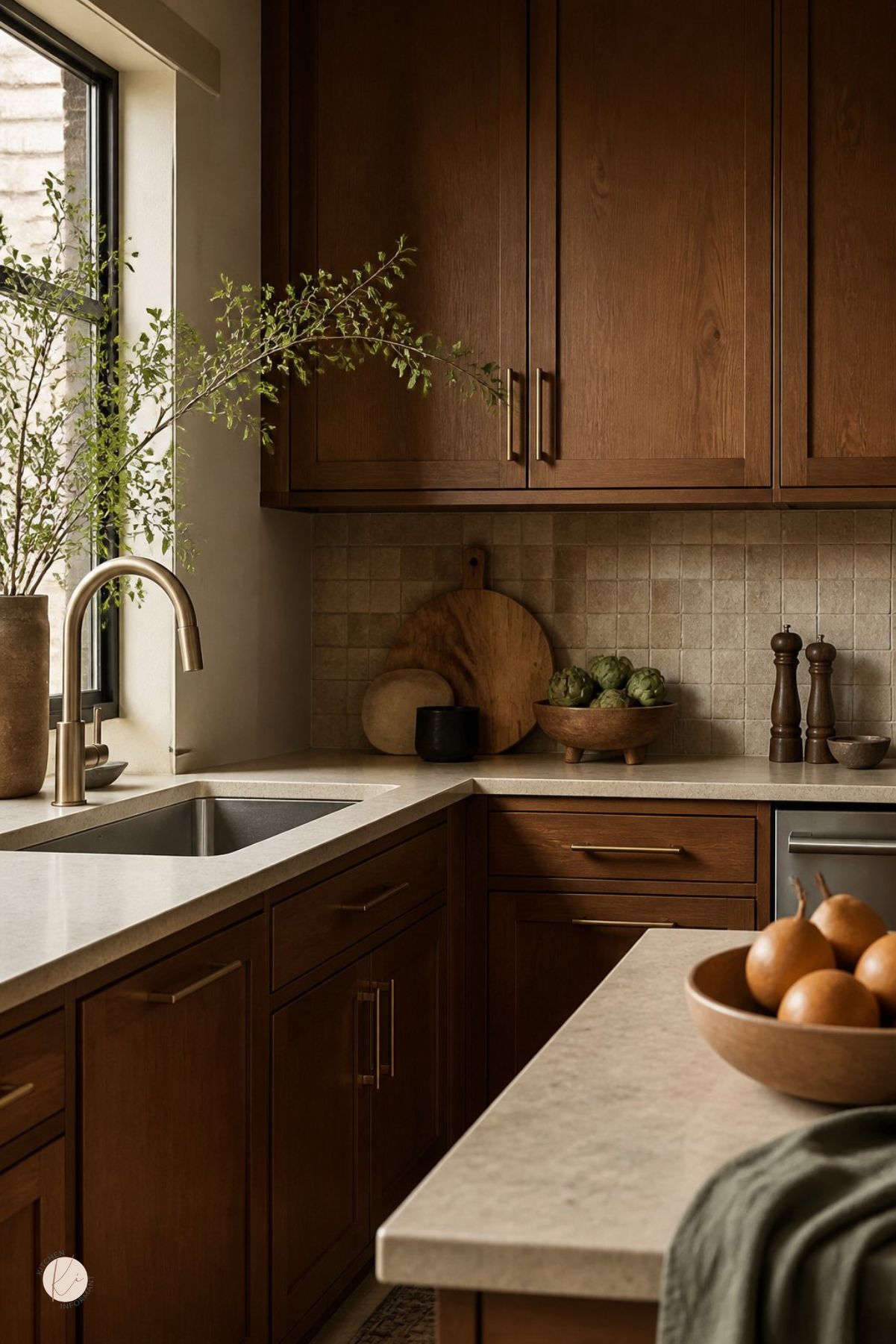
Earthy brown kitchens have unique characteristics that draw people in. These spaces evoke a comforting vibe while also reflecting style and tradition.
The following explores the psychology behind the color choices and the historical context of brown in home design.
Color Psychology in Kitchen Design
Brown is a color often linked to warmth and stability. It creates a cozy atmosphere, making kitchens feel inviting and homey.
People feel more at ease surrounded by earthy tones.
This choice can help foster social connections. In a brown kitchen, family and friends are likely to gather more. The color encourages relaxation and comfort, which is essential for a space where meals are prepared and shared.
Dark browns can add depth, while lighter shades can create an airy feel. Mixing different browns helps achieve a layered look, promoting visual interest.
A well-planned brown kitchen can blend aesthetics with practicality, making it a favorite among homeowners.
Historical Significance of Brown in Interior Design
Historically, brown has been a staple color in interior design. Its use dates back to natural materials like wood and clay. These materials have been common in homes for centuries, grounding spaces in nature.
In earlier times, brown tones symbolized reliability and sturdiness. Many homes featured wooden beams and furnishings, connecting indoor spaces to the outside world.
As trends changed, brown maintained its popularity, adapting to contemporary styles.
Today, earthy browns are regarded as timeless. Designers frequently incorporate them in modern renovations. They allow for flexibility in pairing with other colors, making it easy to create personalized spaces.
Brown kitchens continue to reflect both tradition and current design trends, ensuring their appeal remains strong.
Designing Your Earthy Brown Kitchen
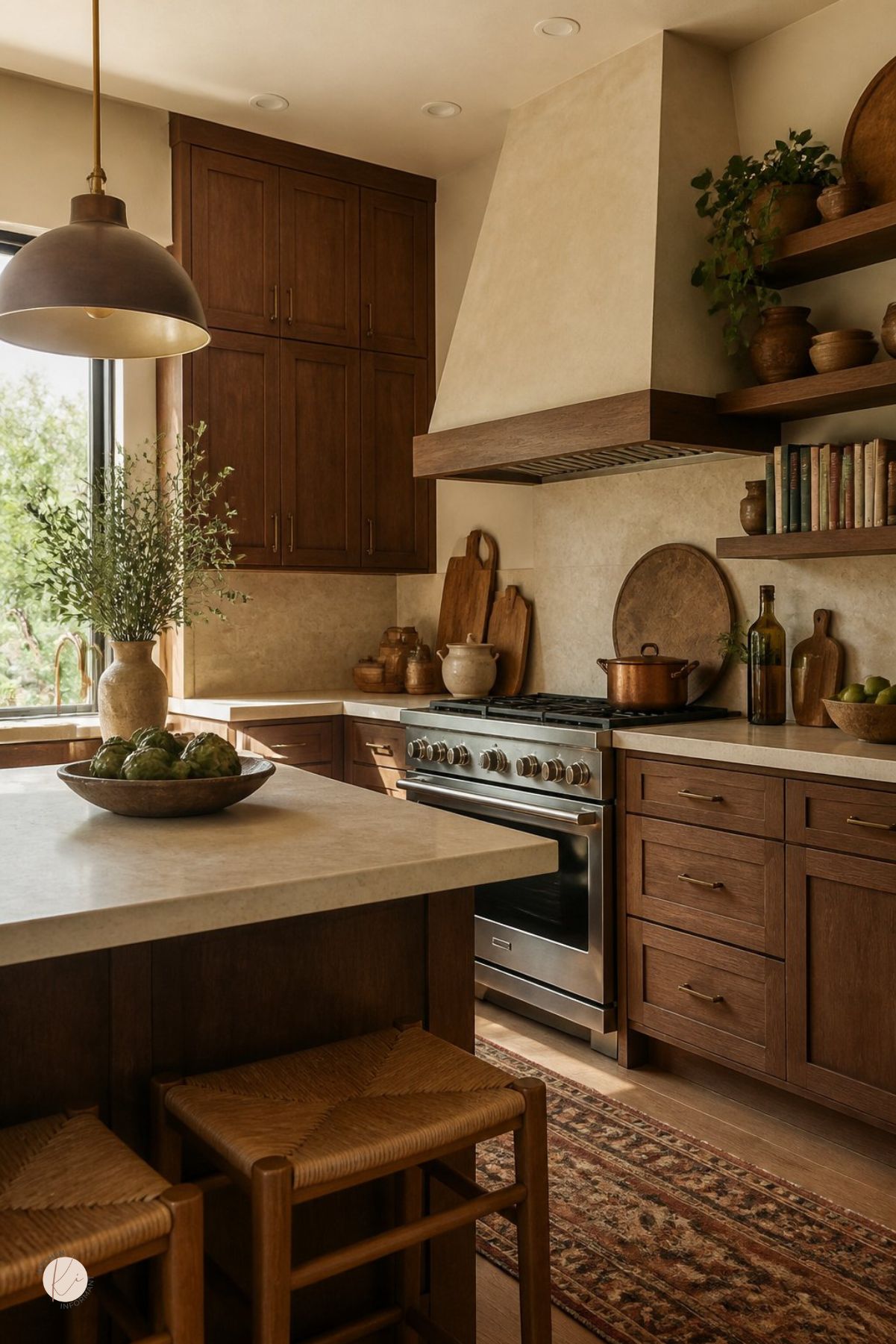
Creating an earthy brown kitchen combines warmth and elegance. It involves careful selection of colors, materials, and textures to ensure a cohesive look. Here’s how to get it just right.
Choosing the Right Shade of Brown
Selecting the perfect shade of brown is crucial in setting the tone of the kitchen. Lighter shades like beige or soft taupe create an airy, spacious feel. Meanwhile, darker browns such as chocolate or espresso can add depth and richness.
Consider the following tips when choosing your shade:
- Test samples on the walls in different lighting.
- Complement existing elements like flooring and countertops.
- Use lighter tones for cabinets and darker for accents or island features.
This approach ensures that the kitchen feels inviting and harmonious.
Balancing Color Palettes
Balancing the color palette is essential for a well-designed earthy brown kitchen. Pair brown with complementary colors to enhance the space.
Try these combinations:
- Earthy greens or muted yellows for a natural vibe.
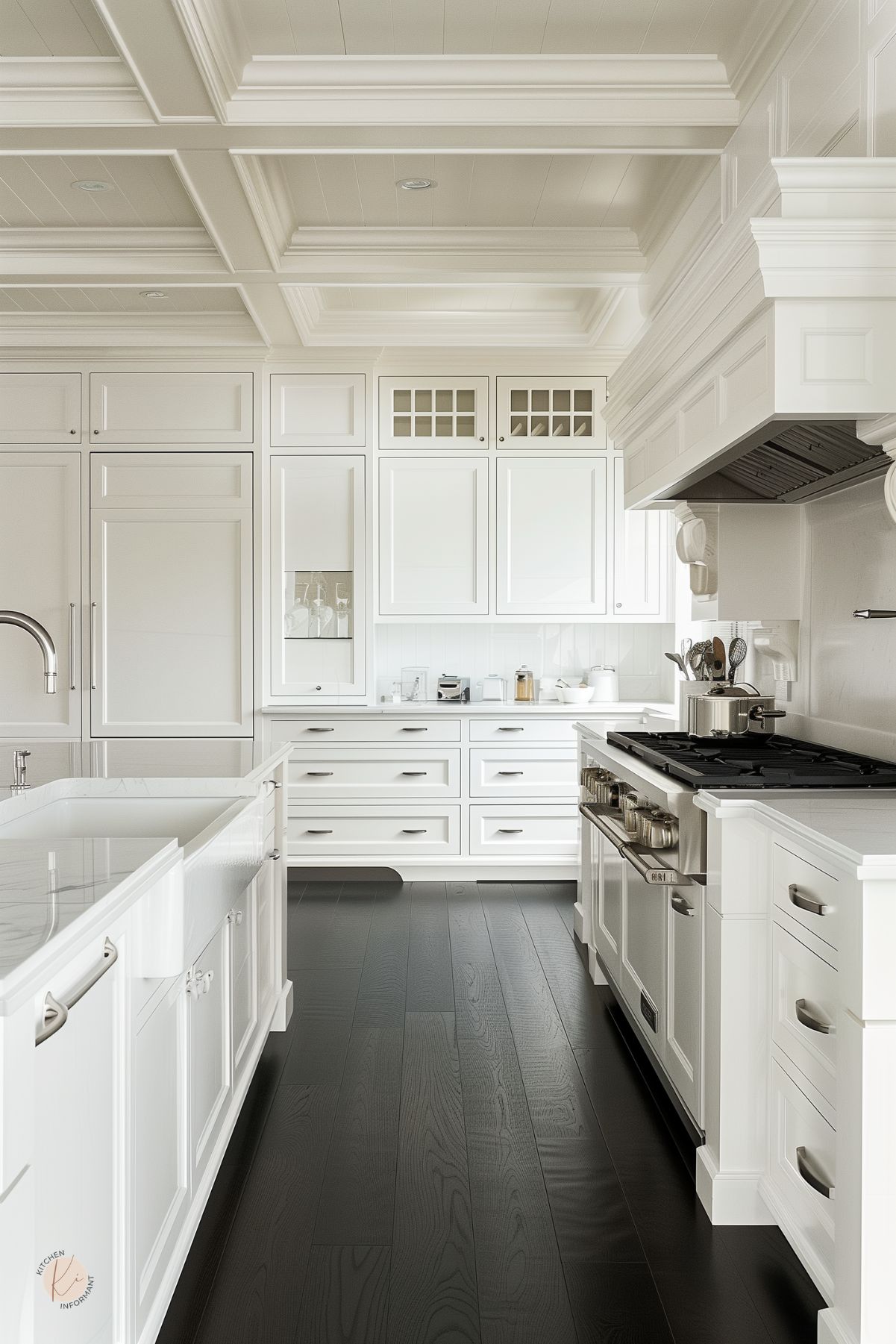
- Cream or white accents to create contrast and brightness.
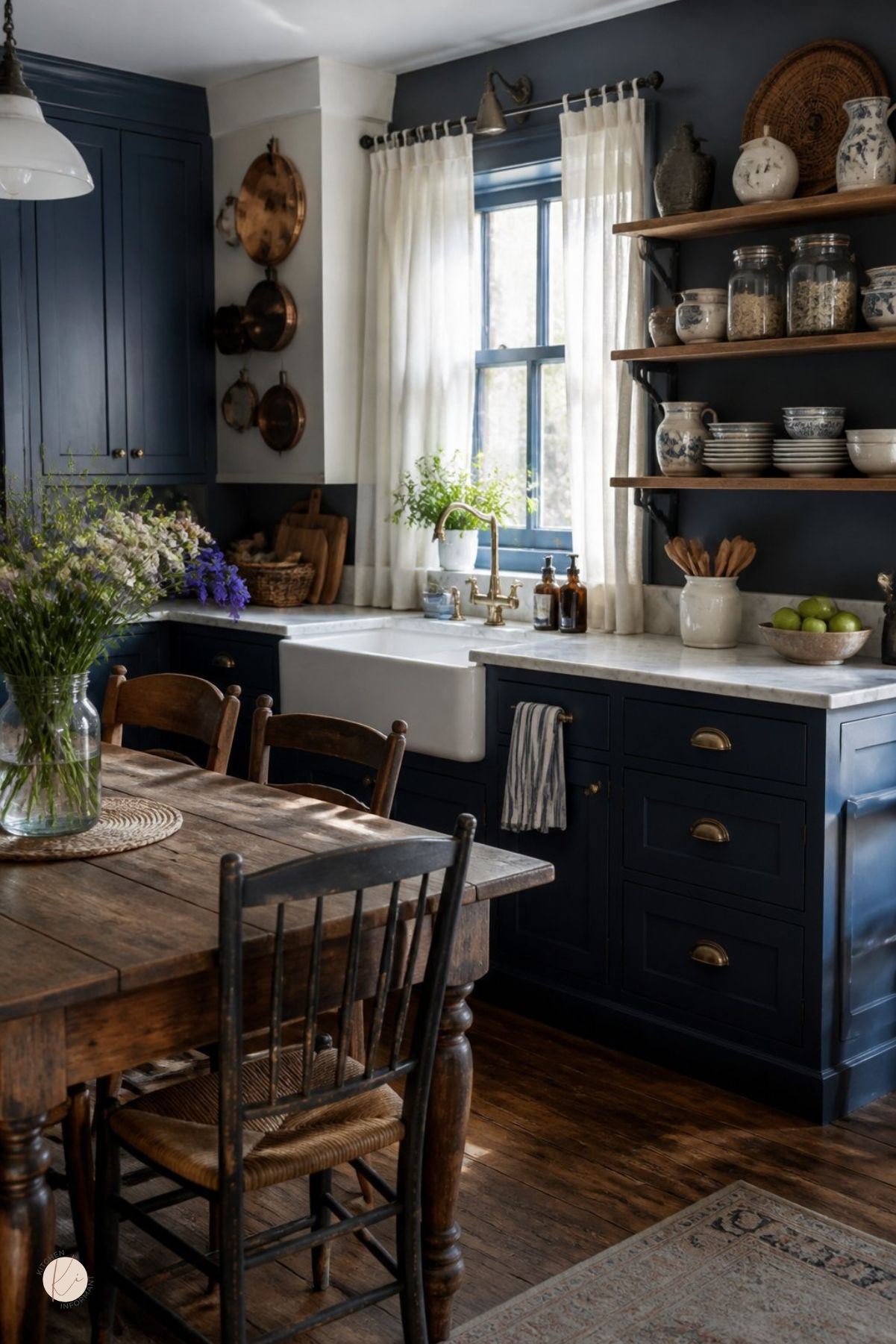
- Deep blues or warm rust to add personality without overwhelming the brown tones.
Use these colors strategically in decor, backsplashes, or wall paint to maintain a cohesive look that feels balanced and inviting.
Materials and Textures
The choice of materials and textures plays a significant role in defining the earthy brown kitchen’s style. Natural materials like wood, stone, and terracotta bring warmth and authenticity.
Key options include:
- Wooden cabinets in walnut or oak for a classic touch.
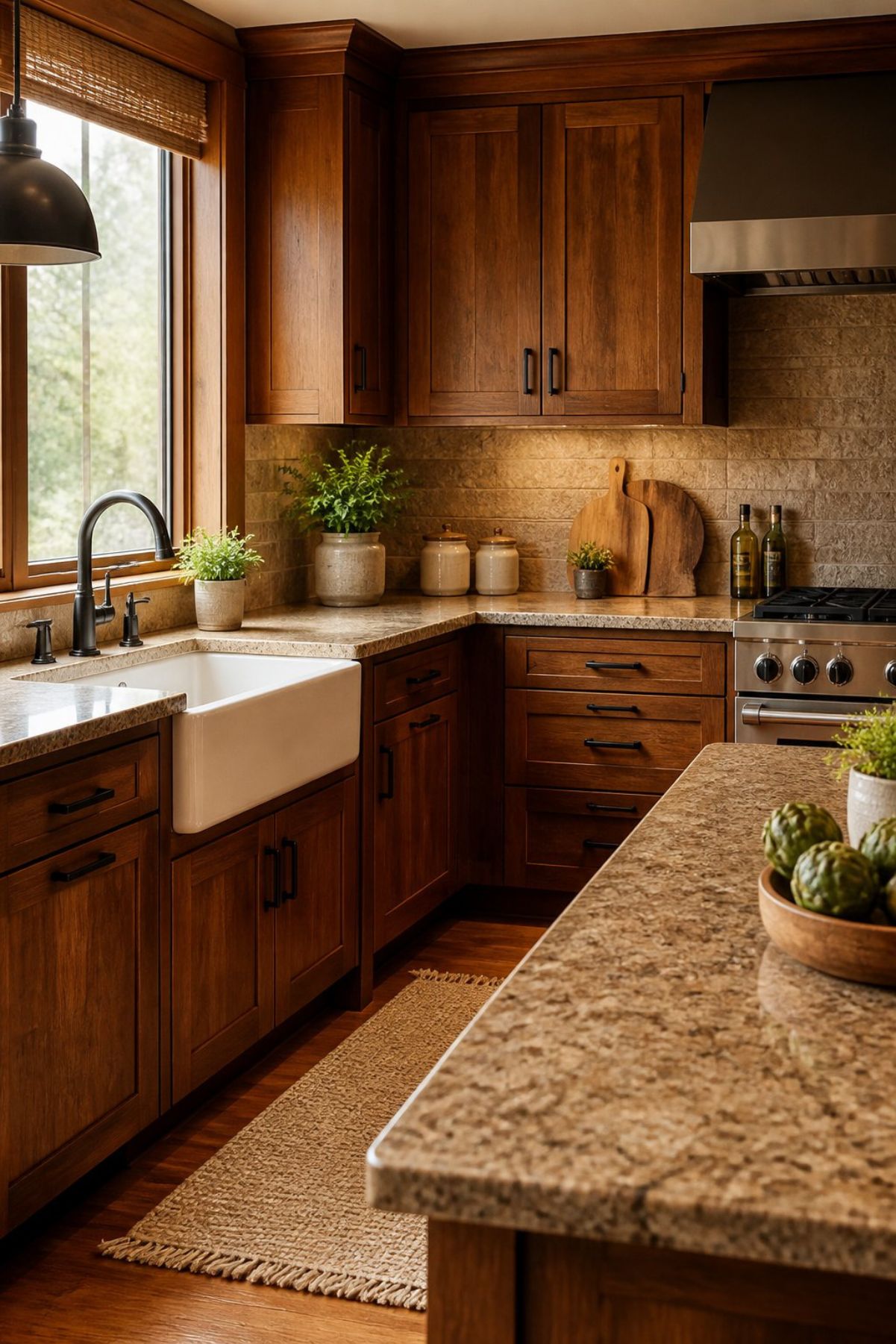
- Stone countertops like granite or quartz in warm tones for durability.
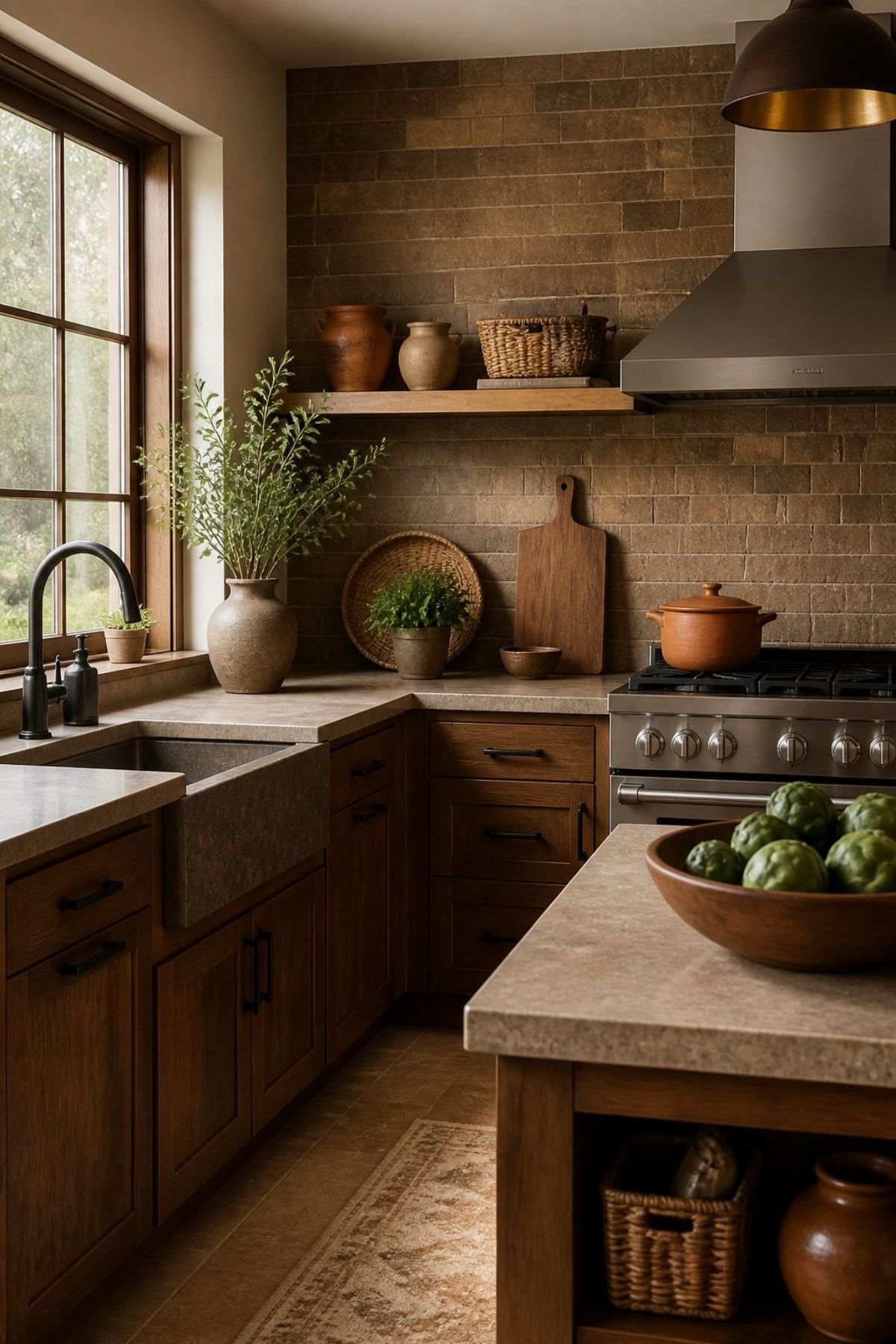
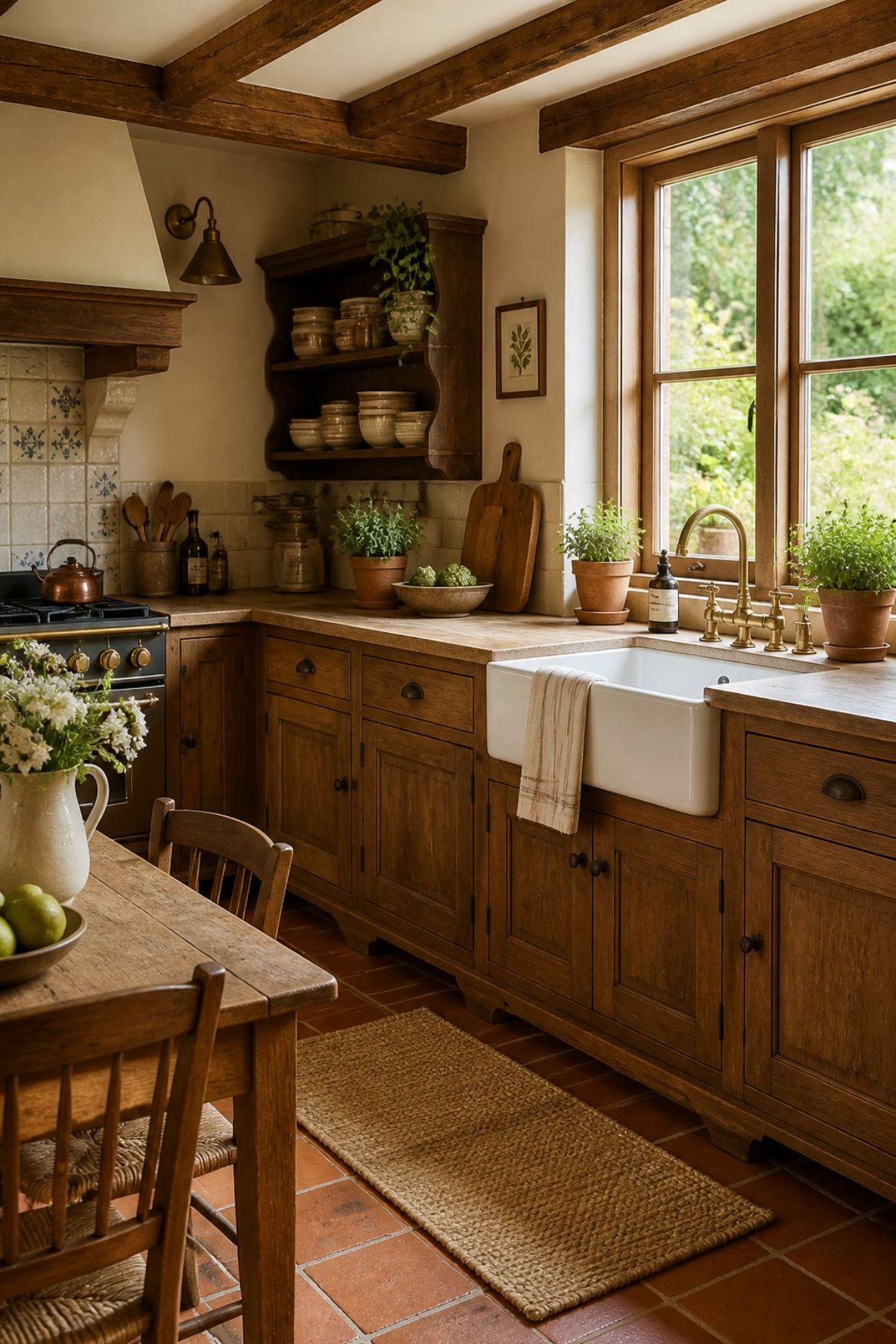
- Terracotta tiles for backsplashes adding rustic charm and easy maintenance.
Mixing different textures, like smooth countertops with rustic tiles, creates interest and dimension in the design.
Key Elements of a Brown Kitchen
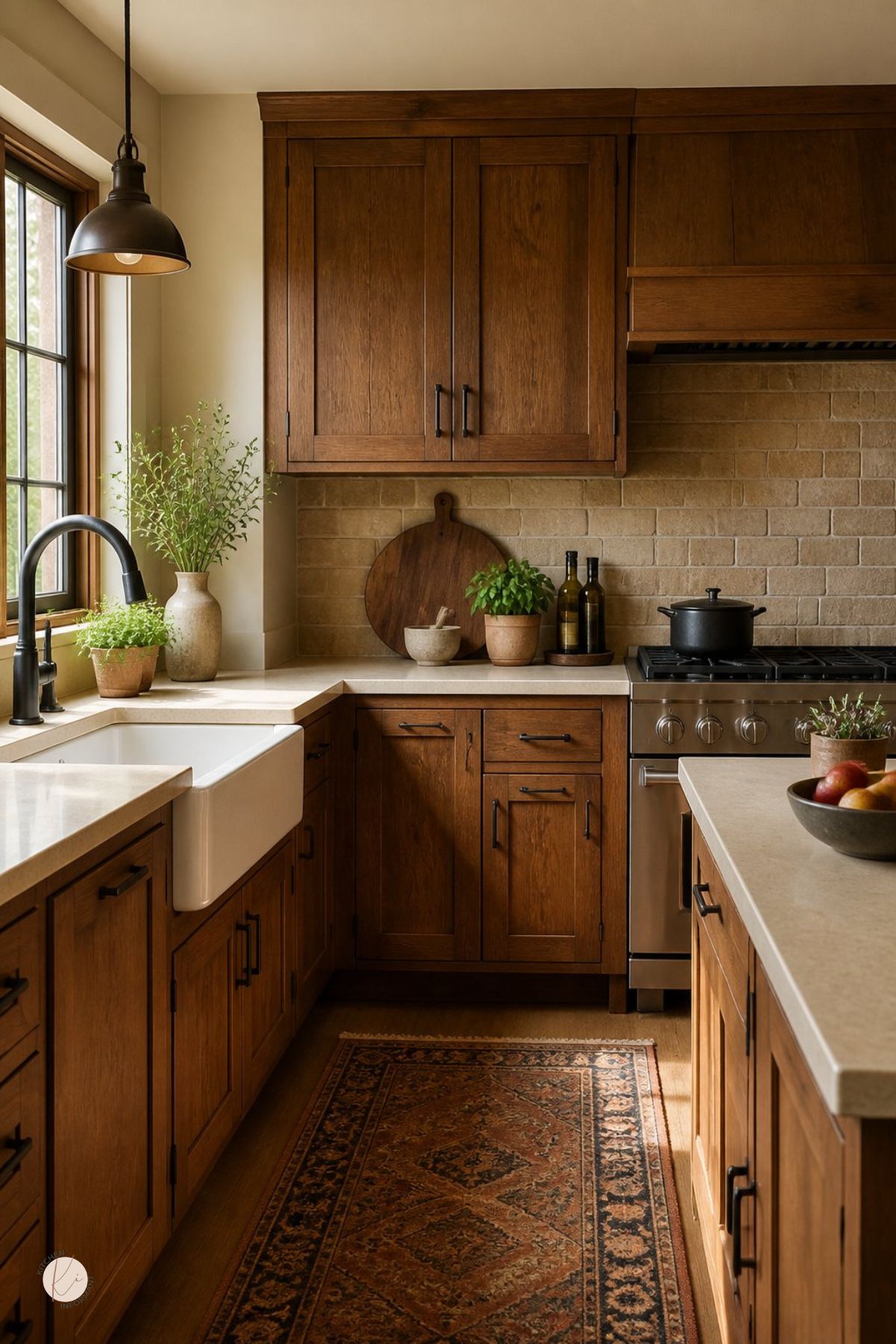
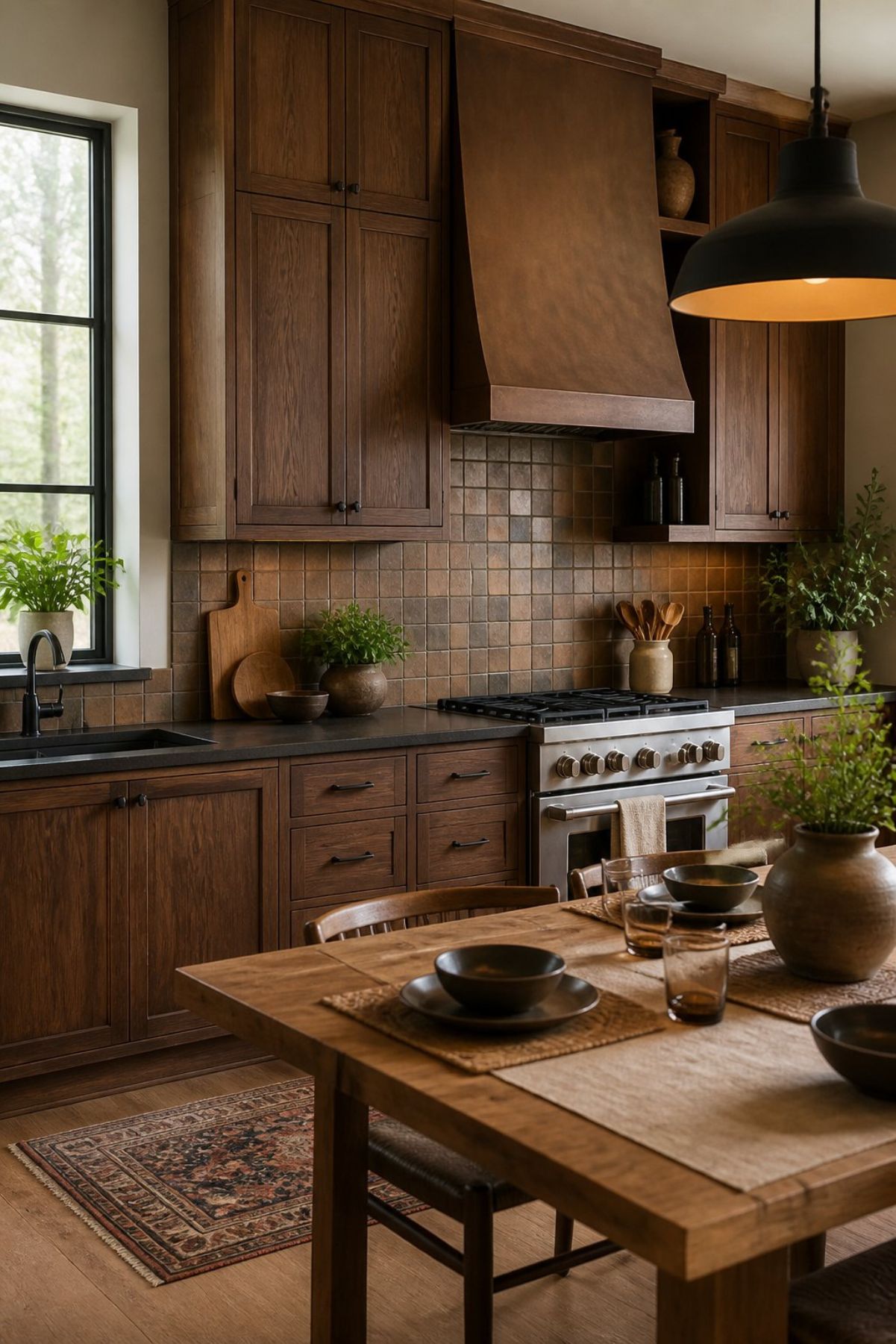
A brown kitchen can create a warm and inviting atmosphere. Key components like cabinetry, countertops, flooring, and appliances play a significant role in achieving this cozy look.
Cabinetry and Woodwork
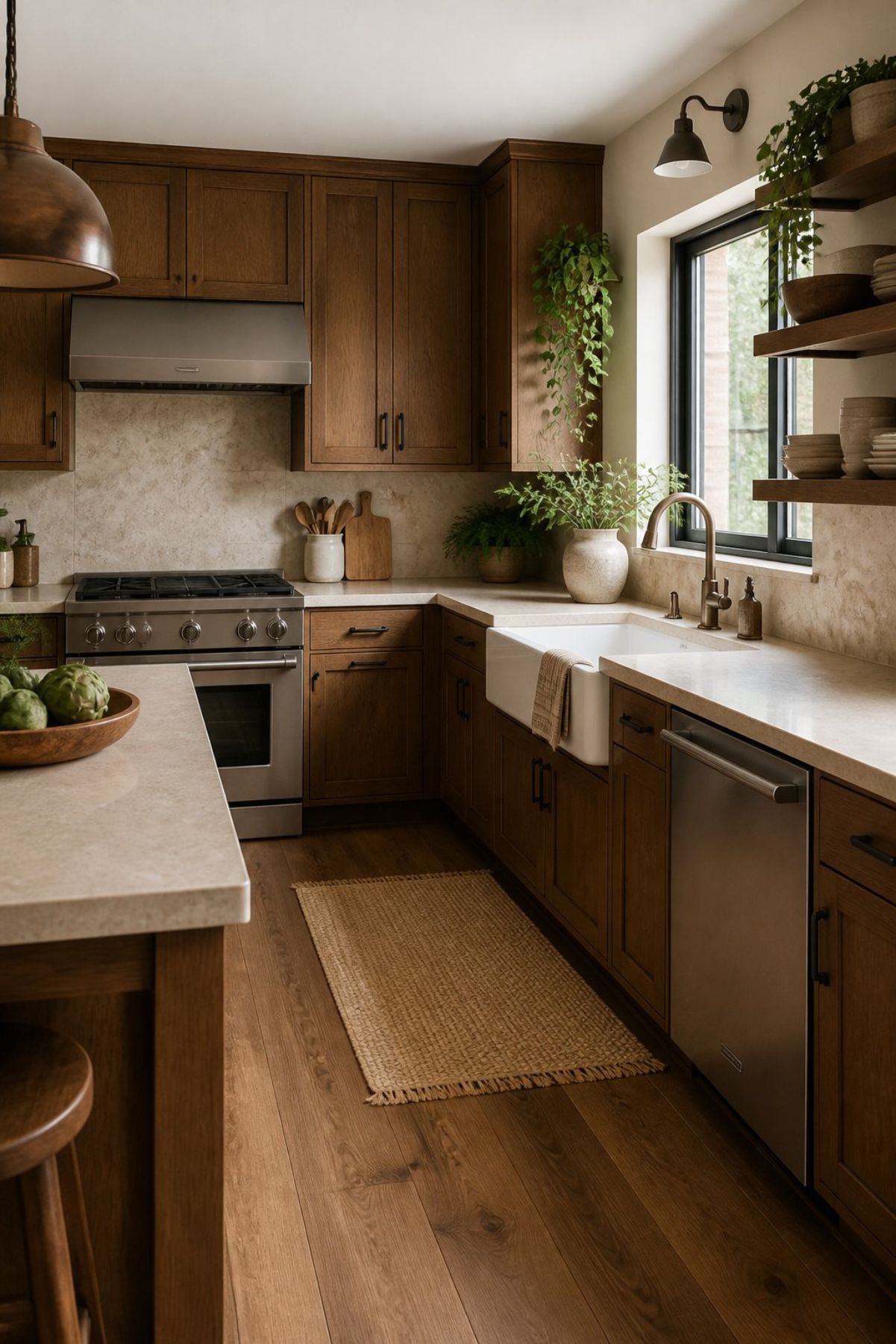
Cabinets set the tone in a brown kitchen. Choosing rich, earthy tones enhances warmth. Options like cherry, walnut, or maple provide beautiful finishes. They can be left natural or stained darker, depending on personal style.
Rustic styles add character and warmth. Shaker-style cabinets are also popular for a clean, modern look.
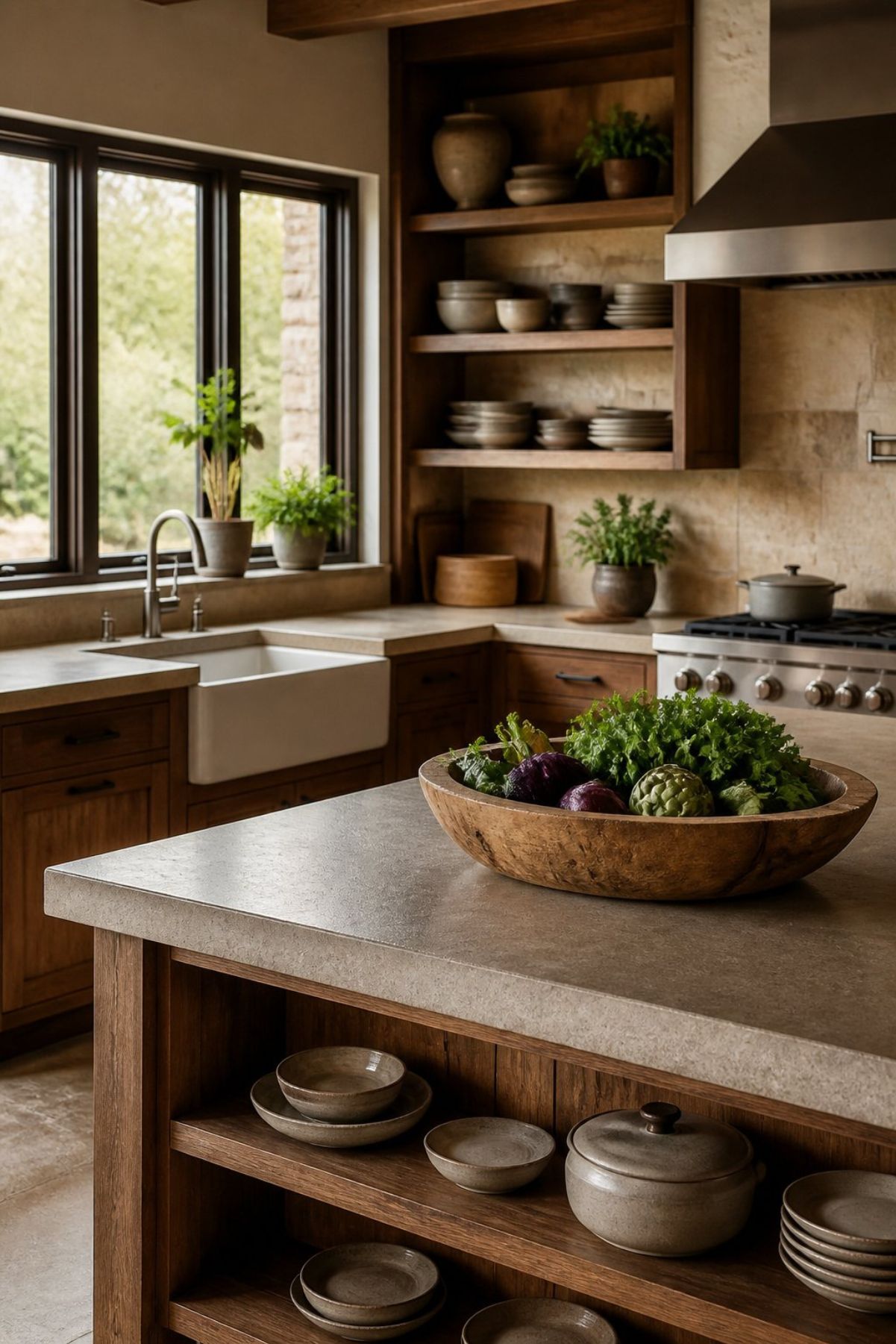
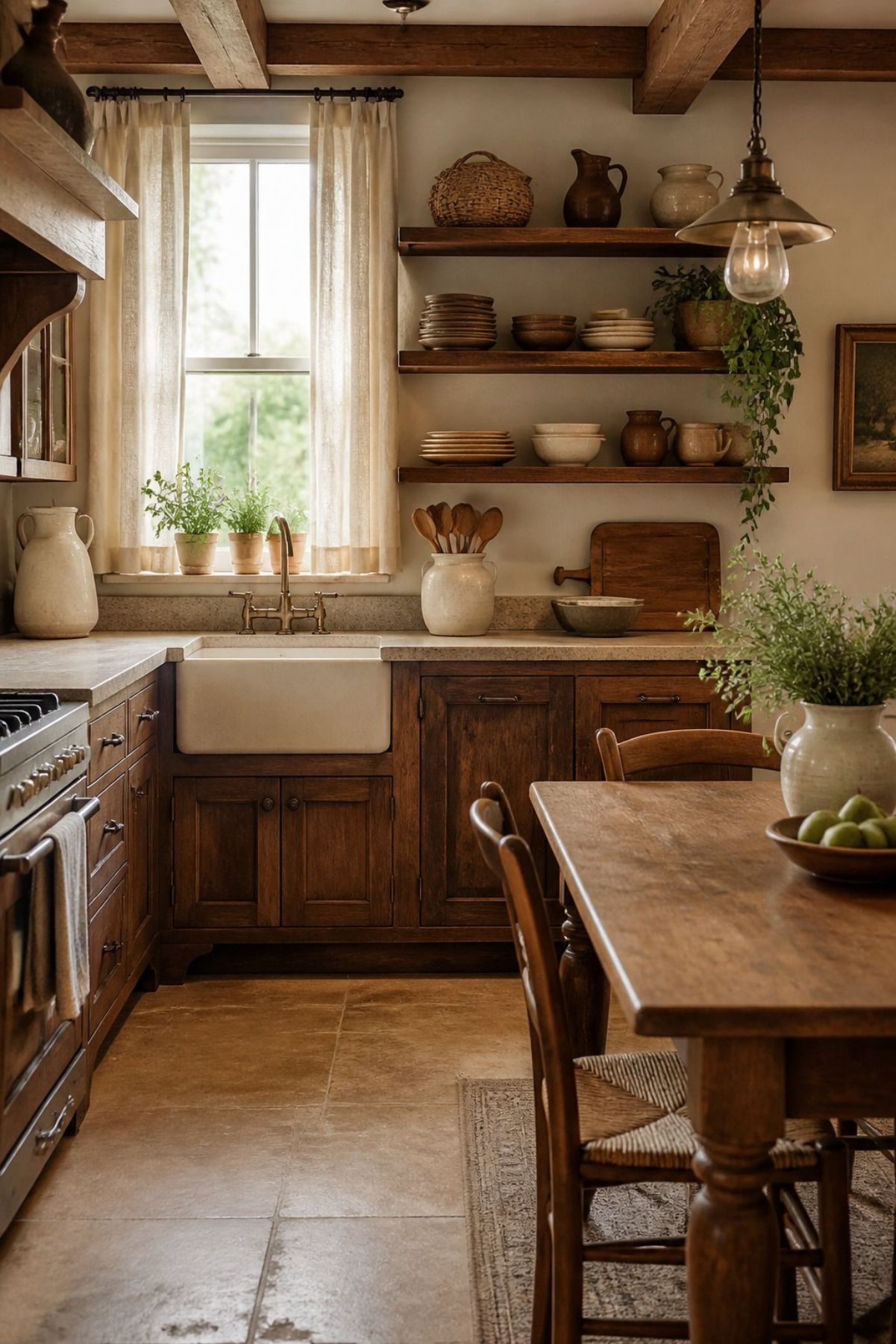
Using open shelving can break up the heaviness of brown tones and display decorative items or dishes for added interest.
Accessorizing with warm-toned hardware, like bronze or oil-rubbed gold, complements brown cabinetry. This small detail can elevate the overall design.
Countertops and Backsplashes
Countertops in earthy shades complete the visual spectrum of a brown kitchen. Granite and quartz in hues of beige or soft brown pair nicely with wooden cabinets. They add durability and functionality.
Backsplashes can introduce contrast or complementary tones.
Consider using ceramic tiles in warm earth tones to maintain cohesion. Natural stone options also add texture and depth, enhancing the overall aesthetic.
Incorporating patterns or textures in the backsplash can make a statement without overwhelming the space. A subtle natural stone tile can beautifully complement the cabinet colors.
Flooring Options
Flooring is crucial for tying the room together. Hardwood floors in darker shades, like mahogany or espresso, work well with brown kitchens. They add depth and warmth.
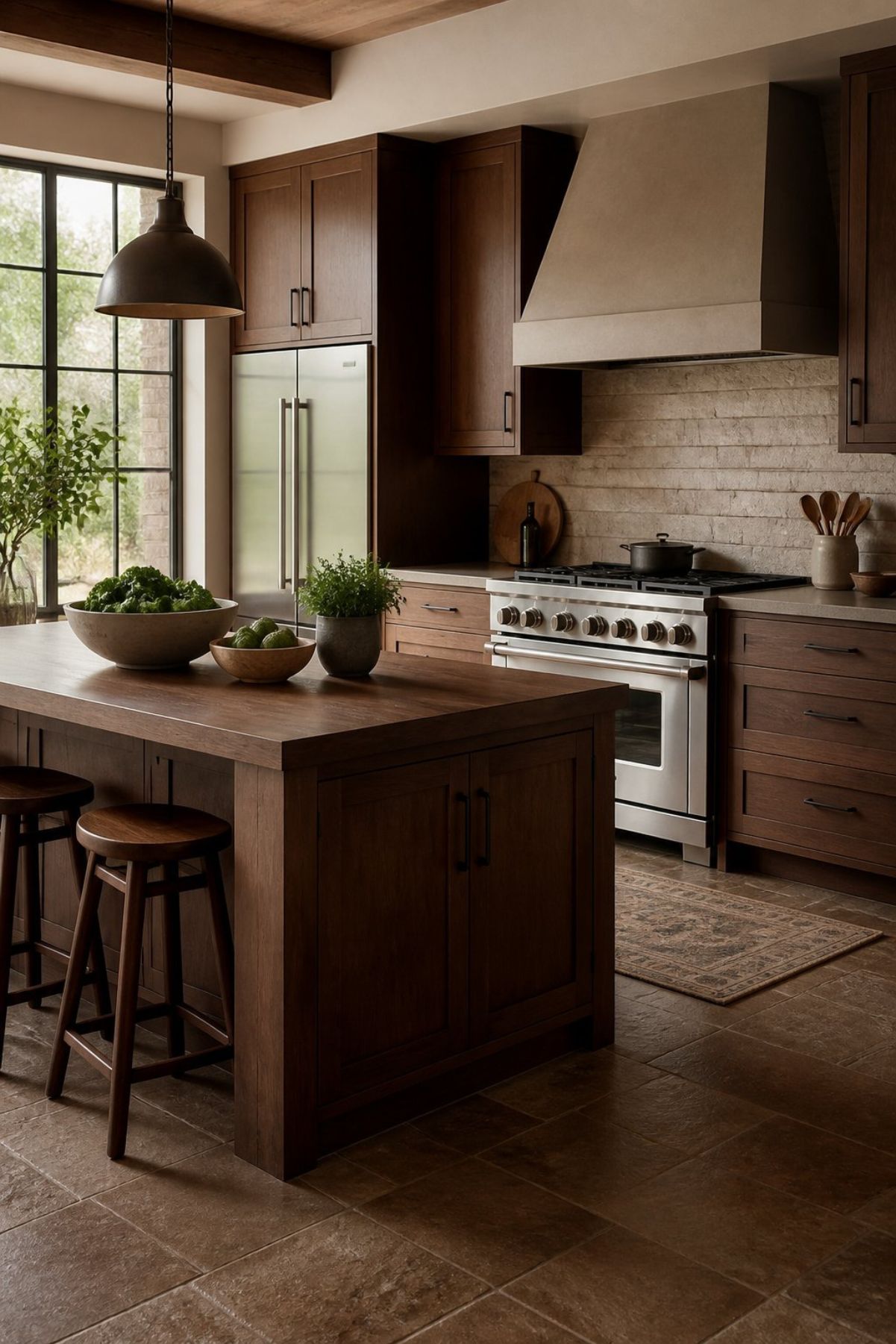
Tile flooring is another popular choice. Options in earthy tones mimic wood but offer easier maintenance.
Large tiles can create a seamless look and make the space feel larger.
Rug placements can also add warmth and color. Area rugs in natural fibers or warm patterns can enhance comfort. Pairing these with the floor color can create a unified look.
Appliances and Fixtures
Stainless steel appliances offer a modern contrast to brown kitchens. They provide a sleek finish and reflect light, balancing the warmth of wood tones.
Alternatively, choosing matte black appliances can add a sophisticated edge.
Fixtures, like faucets and handles, should harmonize with the kitchen’s earthy theme.
Opting for copper or brushed nickel can enhance the rustic charm. These materials work well with wooden elements, tying everything together.
Adding decorative fixtures, like pendant lights in warm tones, can create a spotlight effect. This not only enhances visibility but also adds style and warmth to the overall aesthetic.
Lighting and Ambiance
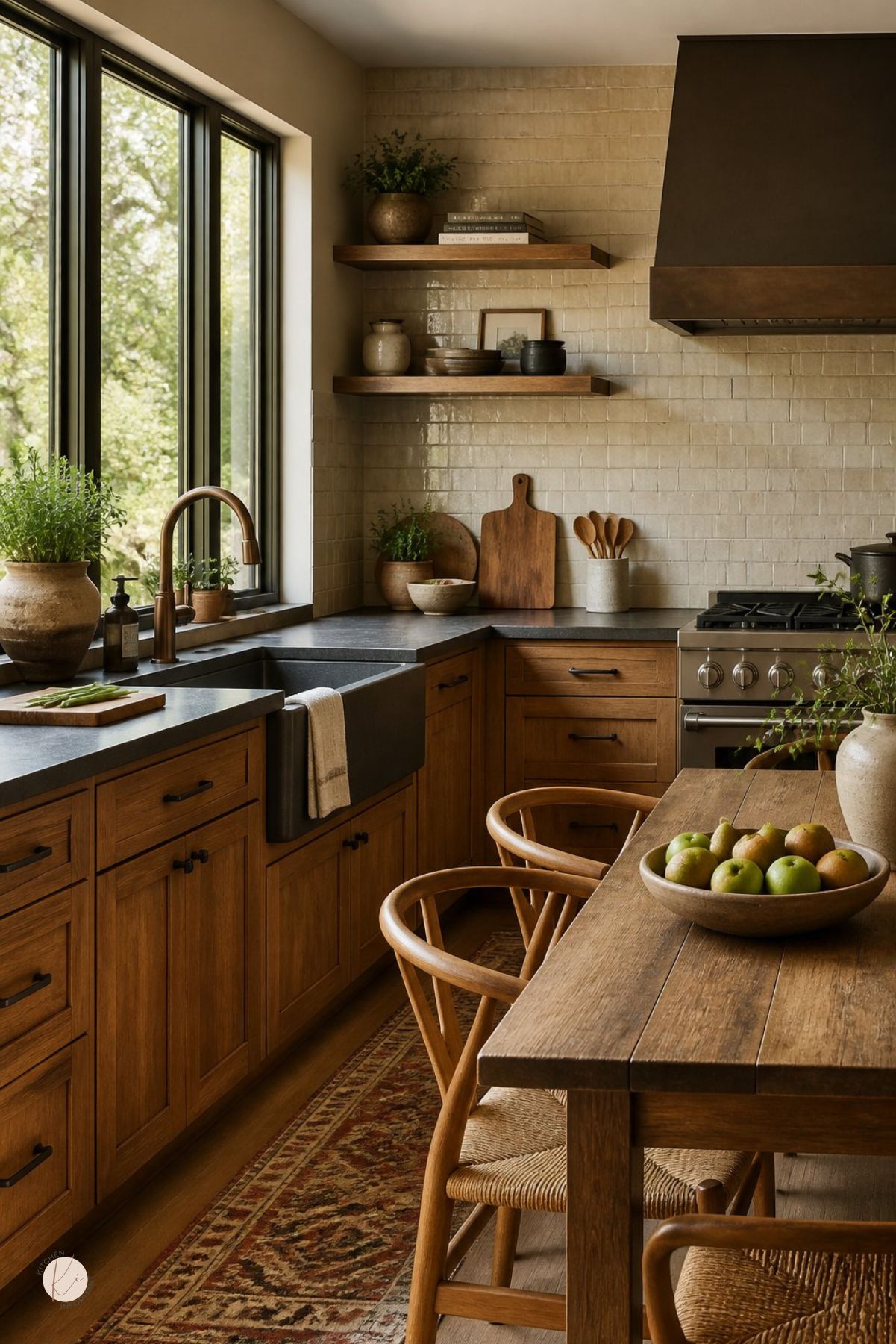
Creating the right lighting and ambiance in an earthy brown kitchen enhances the warmth and comfort of the space. Combining natural light with well-chosen fixtures can set the mood for cooking and gathering.
Natural Light vs. Artificial Light
Natural light brings a lively atmosphere to any kitchen. This can be achieved by maximizing windows and using light-colored curtains.
Sunlight highlights the rich tones of brown in cabinets and countertops, making the kitchen feel more open.
For those without much natural light, artificial lighting becomes essential.
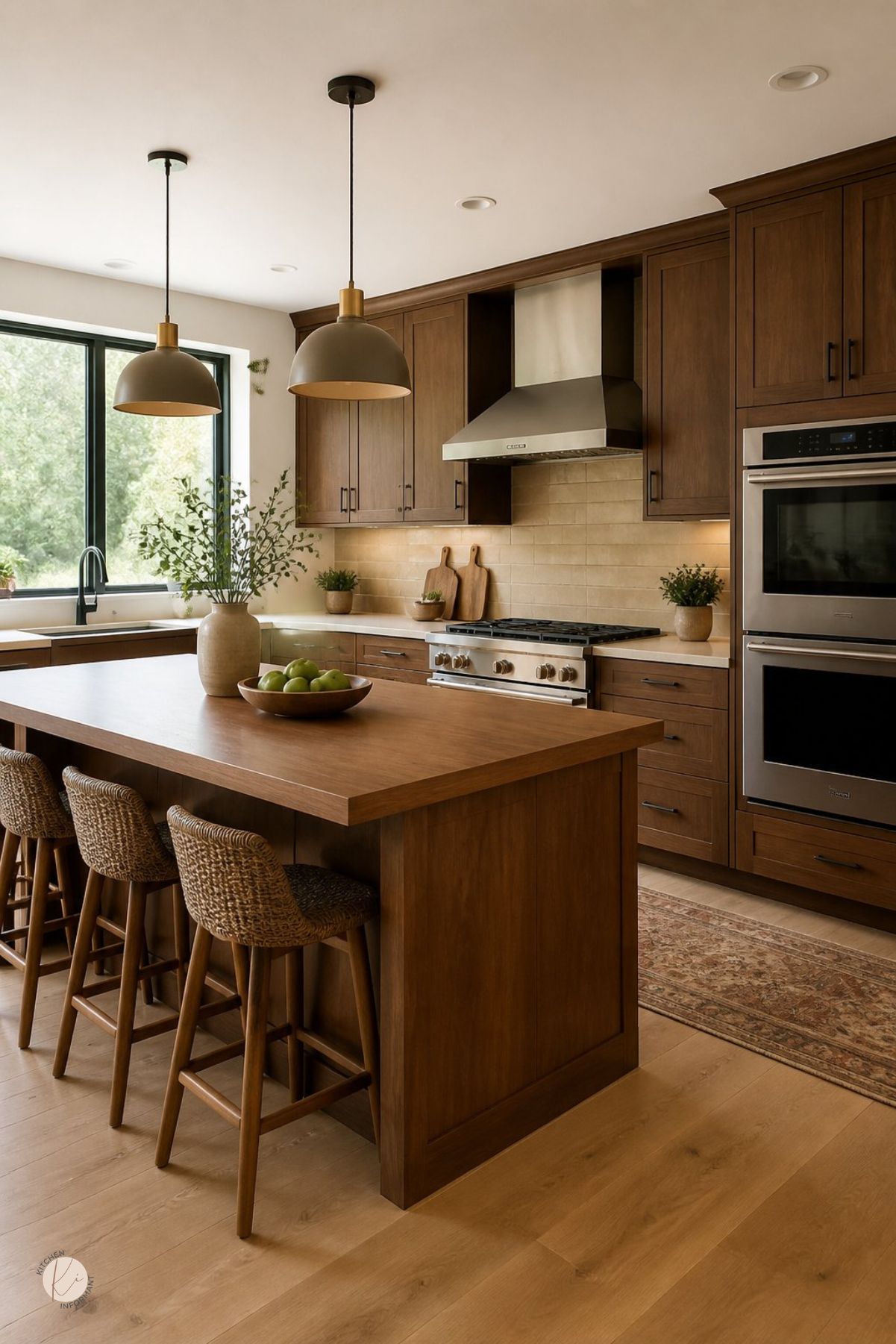
Choosing warm LED bulbs can mimic sunlight, enriching the earthy tones in the kitchen. Pendant lights above islands or dining areas can create cozy spots.
Using dimmers allows for adjusting the brightness based on the time of day or activity.
Choosing Light Fixtures
Selecting the right light fixtures is key to enhancing an earthy brown kitchen. Fixtures should complement the rustic style while providing practicality.
Consider pendant lights made of natural materials like wood or metal. These elements can add texture and tie in with the earthy theme.
Recessed lighting works well for an even glow, especially in smaller spaces. It highlights the kitchen’s features without overwhelming the decor.
Using a combination of fixture types creates layers of light. This design choice offers flexibility and appeal, ensuring the kitchen remains inviting during all times of the day.
Decorating and Accessorizing
Creating a warm and inviting earthy brown kitchen involves thoughtful decoration and careful selection of kitchenware. Attention to detail can enhance the overall feel of the space, making it cozy and functional.
Decor Tips for Earthy Tones
When decorating with earthy tones, split the text into at most two sentences per paragraph. Choose color palettes that complement brown. Warm hues like beige, cream, and soft greens can enhance the natural feel.
Consider these decor tips:
- Wall Colors: Soft earth tones on walls can create a calming backdrop. Shades like taupe or sandy brown work well.
- Textiles: Use natural materials for curtains, tablecloths, and cushions. Linen or cotton in muted colors can add texture without overwhelming the space.
- Artwork: Select artwork that reflects nature, like landscapes or botanical prints. These elements can tie the room together without being too bold.
- Plants: Adding greenery such as herbs in pots can bring life to the kitchen. They also enhance the earthy vibe.
Selecting Kitchenware
Choosing the right kitchenware is essential for an earthy brown kitchen. Look for pieces that reflect the warm tones of the décor.
Key considerations include:
- Material: Opt for natural materials such as ceramic, wood, or stone. These options not only add rustic charm but are also durable.
- Color: Select kitchenware in shades of brown, beige, or terracotta. This keeps the look cohesive and inviting.
- Functionality: Choose utensils and cookware that are multi-functional and easy to store.
- Functionality: Items like stackable mixing bowls or nesting containers save space.
- Style: Look for handmade or artisanal pieces that show character. Unique designs add a personalized touch to the kitchen.
You May Also Like: