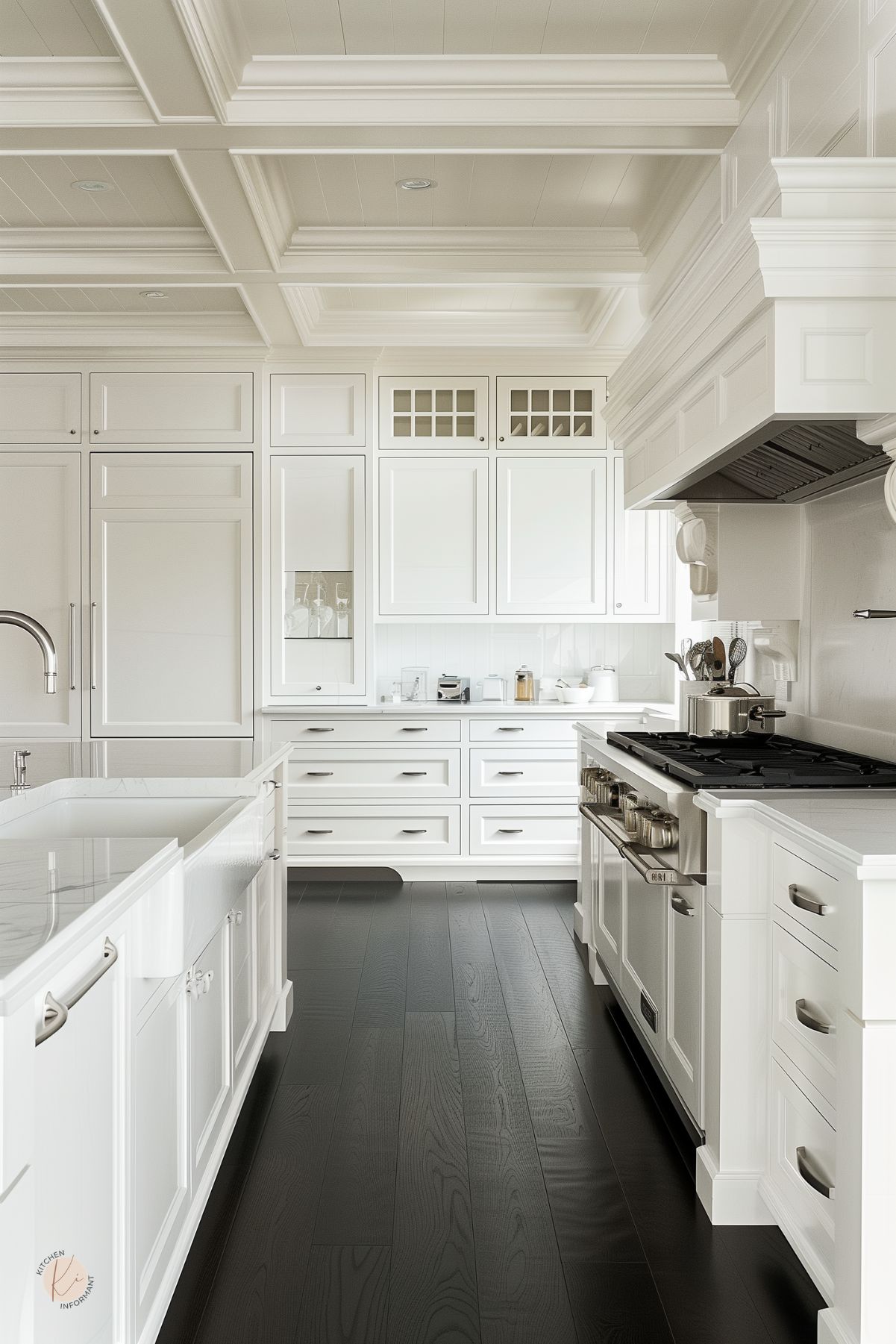
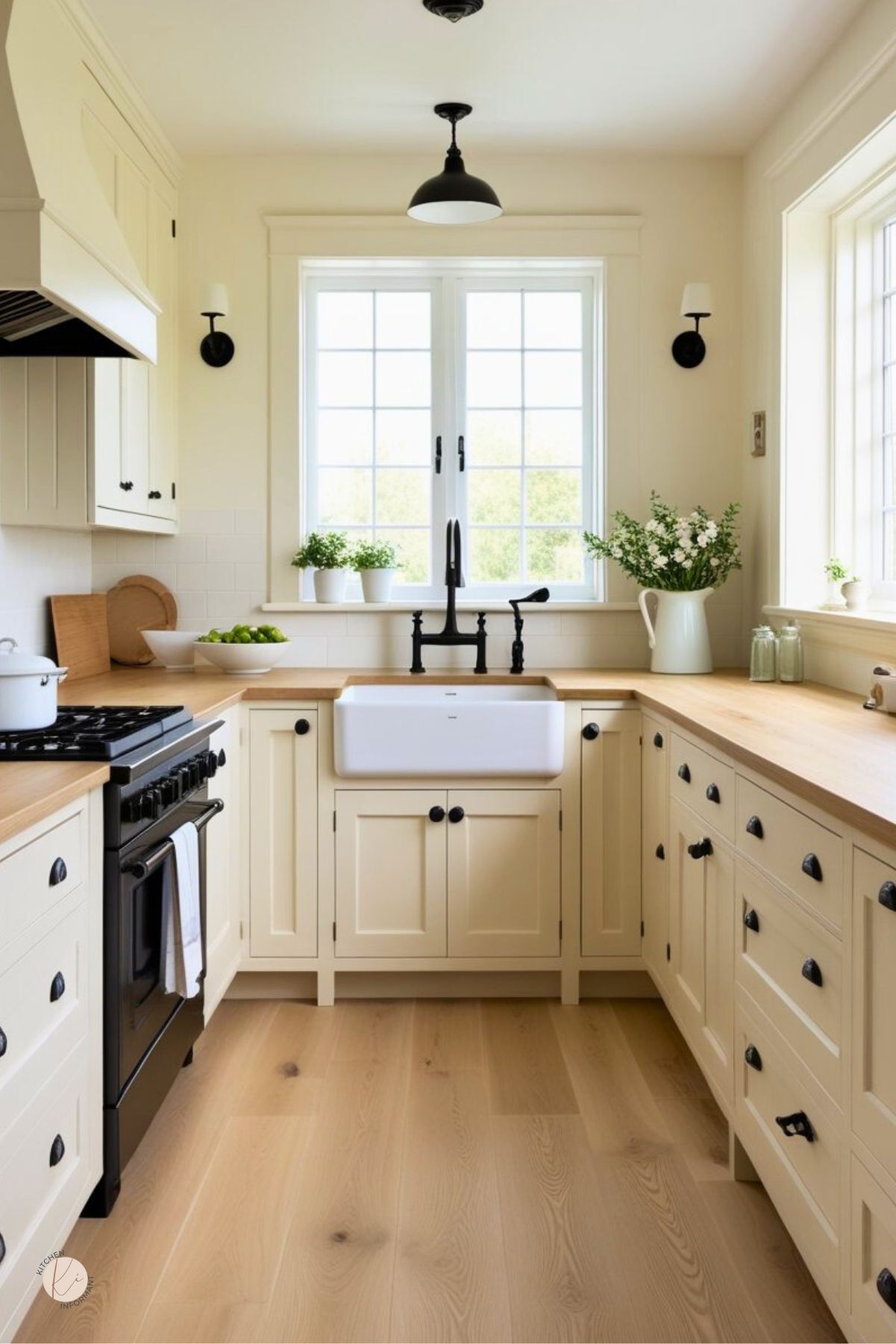
Cream kitchens paired with white oak floors create a space that feels bright, timeless, and fresh.
The soft warmth of cream cabinets blends with the natural tones of white oak flooring, offering a look that works in all sorts of kitchen styles.
This combo enhances light and space, making kitchens feel larger and more open. It’s a classic pairing that doesn’t really go out of style.
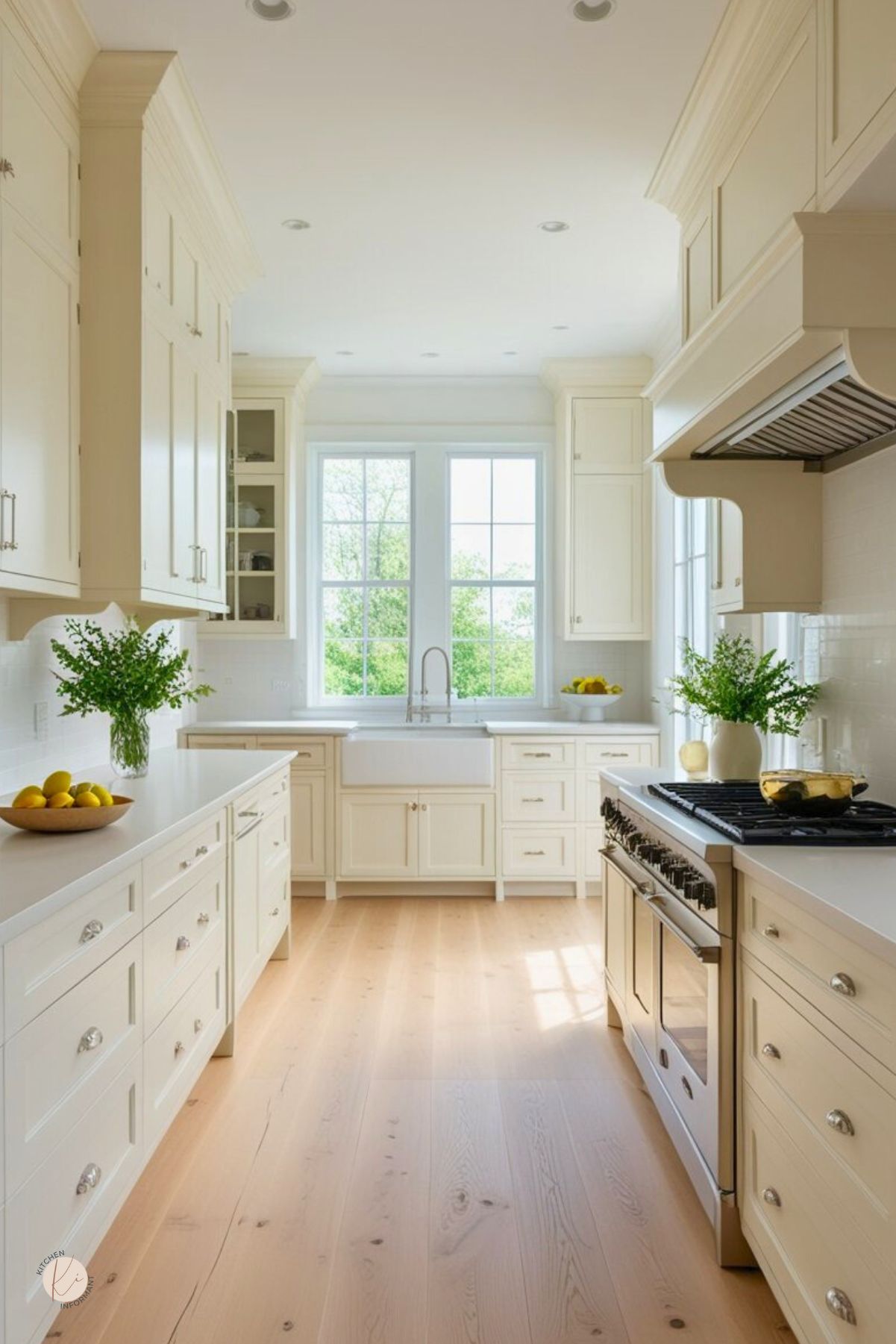
Choosing cream cabinets with white oak floors gives a clean, elegant finish while adding subtle warmth. The light shades complement each other and offer flexibility for countertops, backsplashes, and decor.
This mix suits both modern and traditional kitchens. White oak floors add texture and organic beauty, while cream cabinets soften the look for a welcoming atmosphere.
Benefits of Cream Kitchens With White Oak Floors
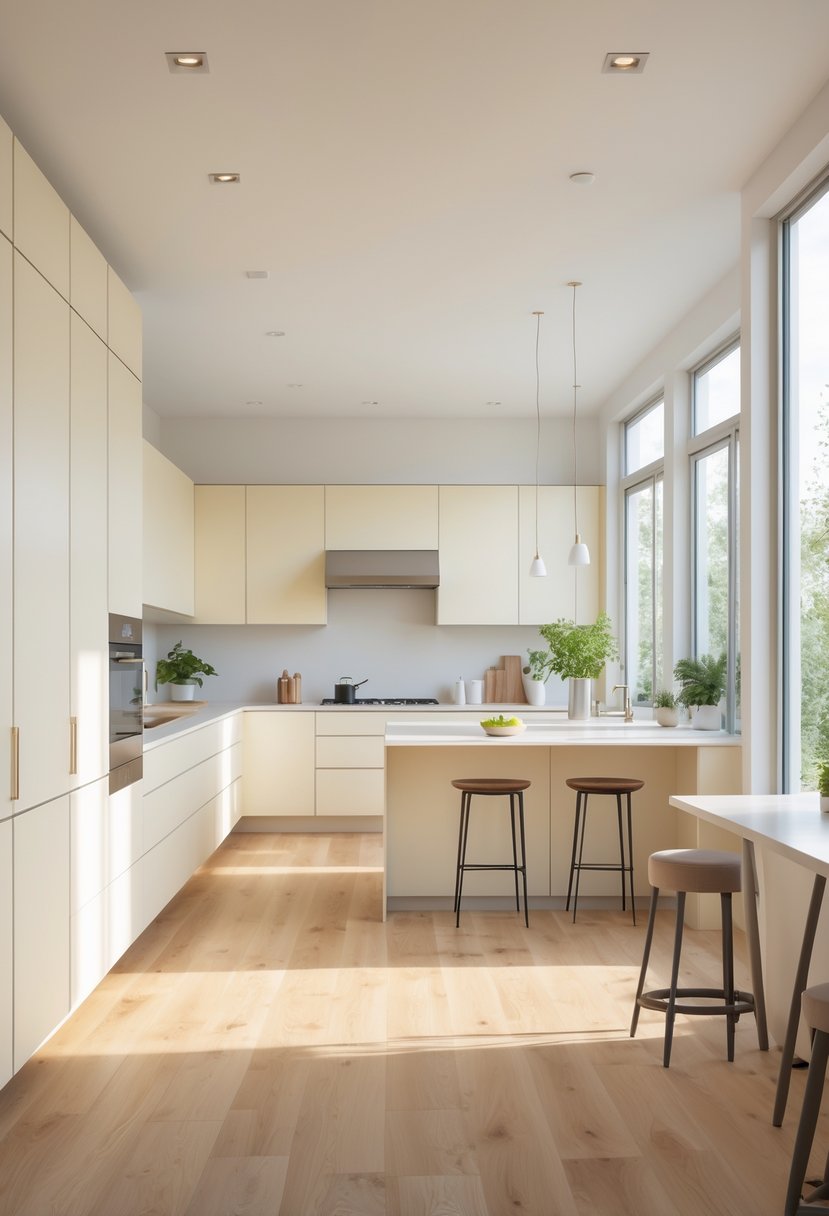
Cream kitchens with white oak floors strike a balance between style and function. They bring a bright, inviting vibe and let a mix of styles and textures work together. This pairing stands up well over time and supports timeless elegance.
Timeless Appeal
Cream cabinets with white oak flooring create a look that never really feels dated. Cream is softer than pure white, so the kitchen won’t feel cold or clinical.
White oak brings in natural wood tones that add warmth without taking over the space. This pairing works for both modern and traditional designs.
The subtle color contrast keeps things clean and fresh. Neutral colors like these are easy to update with new accessories or hardware, so you can refresh the look without a full remodel.
Enhanced Natural Light
Light colors like cream and white oak soak up and reflect natural light. This makes kitchens feel more open and airy.
In smaller kitchens or rooms with fewer windows, this effect really helps the space feel bigger. White oak floors add a soft glow thanks to their natural grain and lighter tones.
Cream cabinetry boosts that glow by softening shadows. Together, they make it easier to see while cooking and cleaning—no harsh contrasts.
Versatile Design Pairings
Cream kitchens with white oak floors play well with all sorts of decor styles and colors. You can pair them with marble, quartz, or ceramic countertops in a range of shades.
Furniture and fixtures in black, brass, or stainless steel bring striking contrasts or subtle accents. This combo gives you freedom in choosing backsplashes, lighting, and accessories.
It adapts easily if you want to shift from rustic to modern. The neutral base supports bold colors or muted tones in the overall design.
Design Elements To Consider
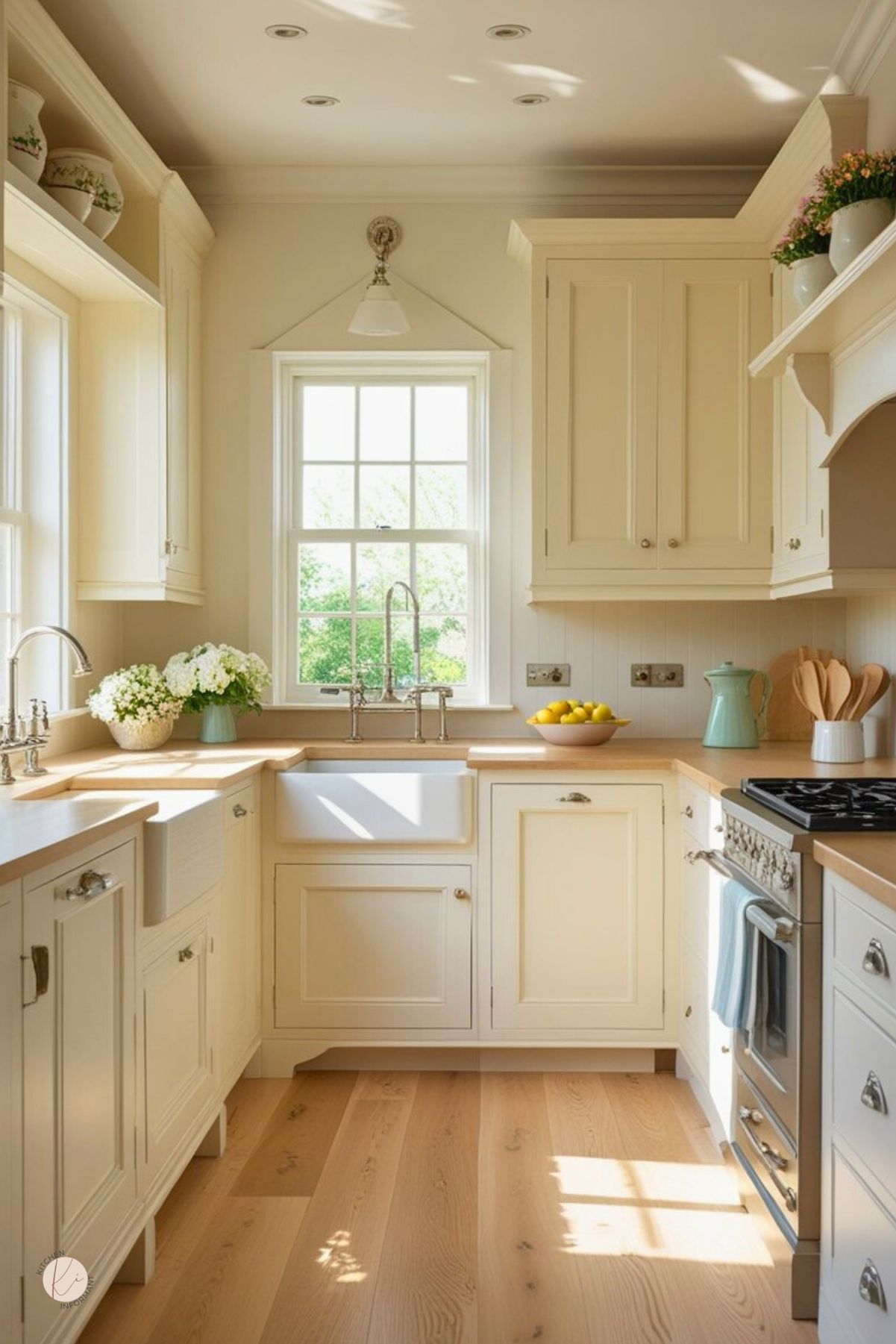
Picking the right cabinets, flooring, and surfaces really shapes the character of a cream kitchen with white oak floors. Choices about style, pattern, and material all influence how light moves and how durable things feel.
Cabinet Styles and Finishes
Cabinet style sets the kitchen’s tone. Shaker cabinets with clean lines give a timeless feel and work well with the warm grain of white oak.
Flat-panel or slab cabinets lean modern and minimalist, letting the wood stand out. Finish matters too—creamy matte or satin finishes add softness and cut down on glare.
Glossy finishes reflect more light, making the space feel bigger, though sometimes they look a bit too polished next to natural oak. Hardware should stay subtle and coordinated.
Matte black or brushed nickel handles create a balanced contrast without stealing the show from cream cabinetry.
Flooring Patterns and Finishes
White oak flooring changes the mood depending on pattern and finish. Straight plank layouts suit both traditional and modern spaces and show off the natural grain.
Chevron or herringbone patterns add visual interest and a sense of craftsmanship. These layouts work for kitchens that blend classic and contemporary styles.
Oak floor finishes range from natural matte to light stains. A matte or low-sheen finish highlights warmth and feels organic. It’s best to avoid dark stains, which can clash with cream cabinets or shrink the room visually.
Countertop and Backsplash Coordination
Countertops and backsplashes should complement both the cream cabinets and oak floors. Marble-look quartz with soft veining offers elegance and is easy to clean.
Lighter countertop tones help keep things open and bright. Backsplashes can pull the look together—creamy pearl tiles arranged vertically add height and interest without competing with other elements.
Textured tile or subtle patterns add depth but don’t overwhelm. Neutral colors with simple lines keep things harmonious and avoid visual clutter.
Popular Layouts and Configurations
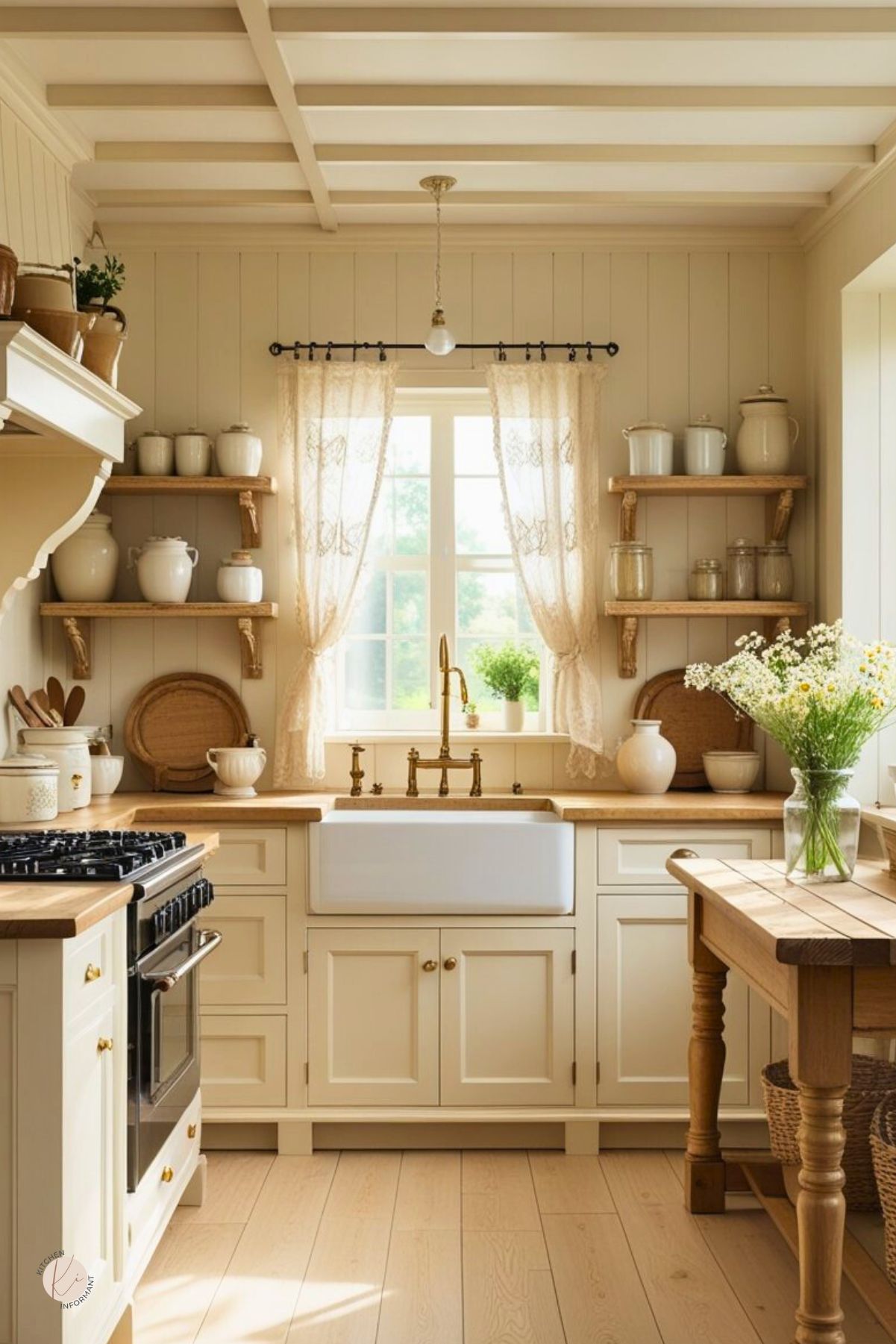
Cream kitchens with white oak floors usually focus on bright, clean lines and open spaces. The warmth of oak and the soft tone of cream cabinets make the space inviting and functional.
Layout affects flow, storage, and light—pretty important for both usability and style.
Open Concept Cream Kitchens
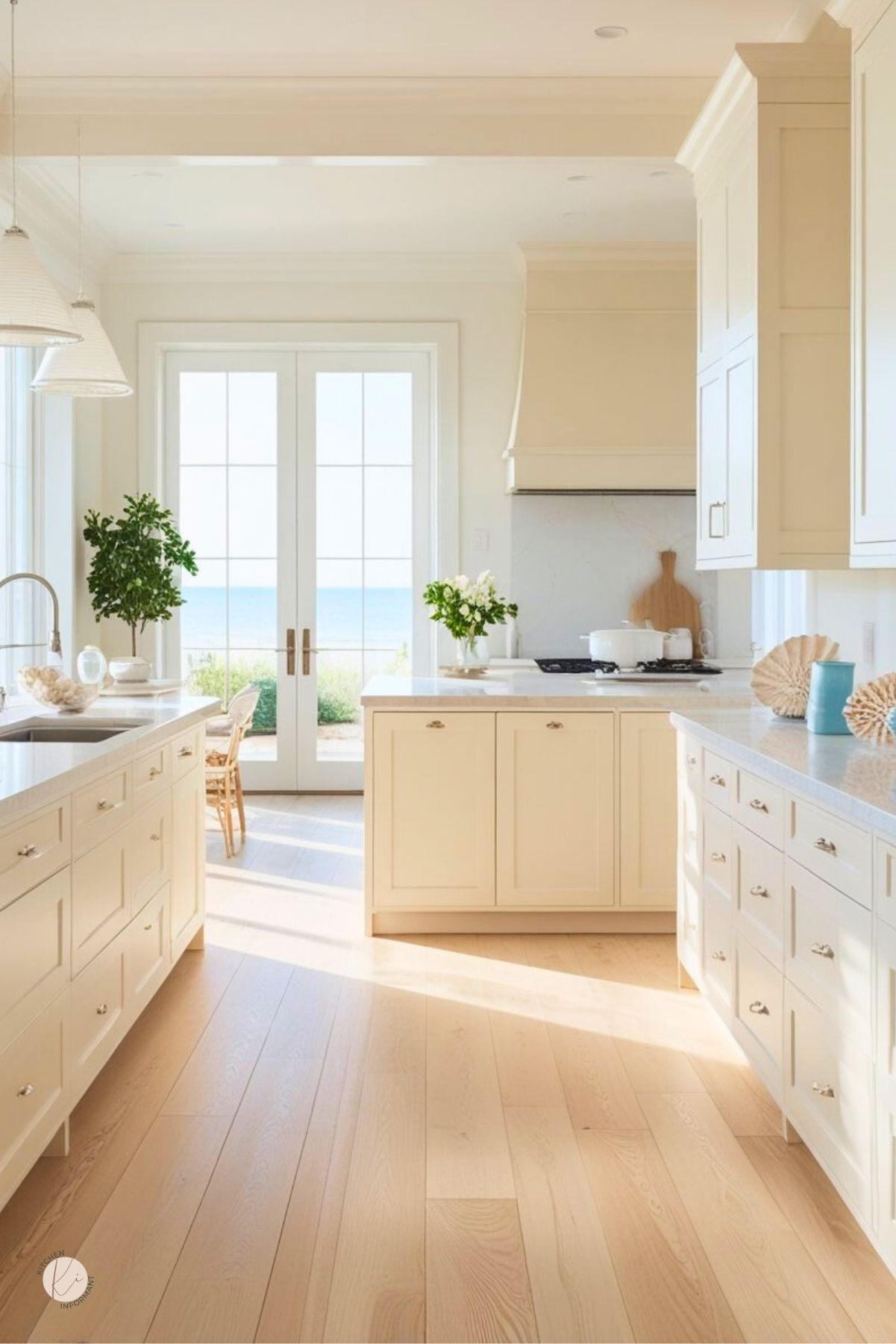
Open-concept kitchens blend the cooking area with living or dining spaces. Big windows let natural light spill across the room, showing off cream cabinets and oak flooring.
The open layout makes everything feel more airy. It’s great for easy movement and social time, whether it’s family dinners or hanging out with friends.
Large islands or peninsulas with cream finishes are common. They add storage, prep space, and seating without blocking the flow.
Under-cabinet lighting or pendant lights keep things bright but simple.
Galley and L-Shaped Designs
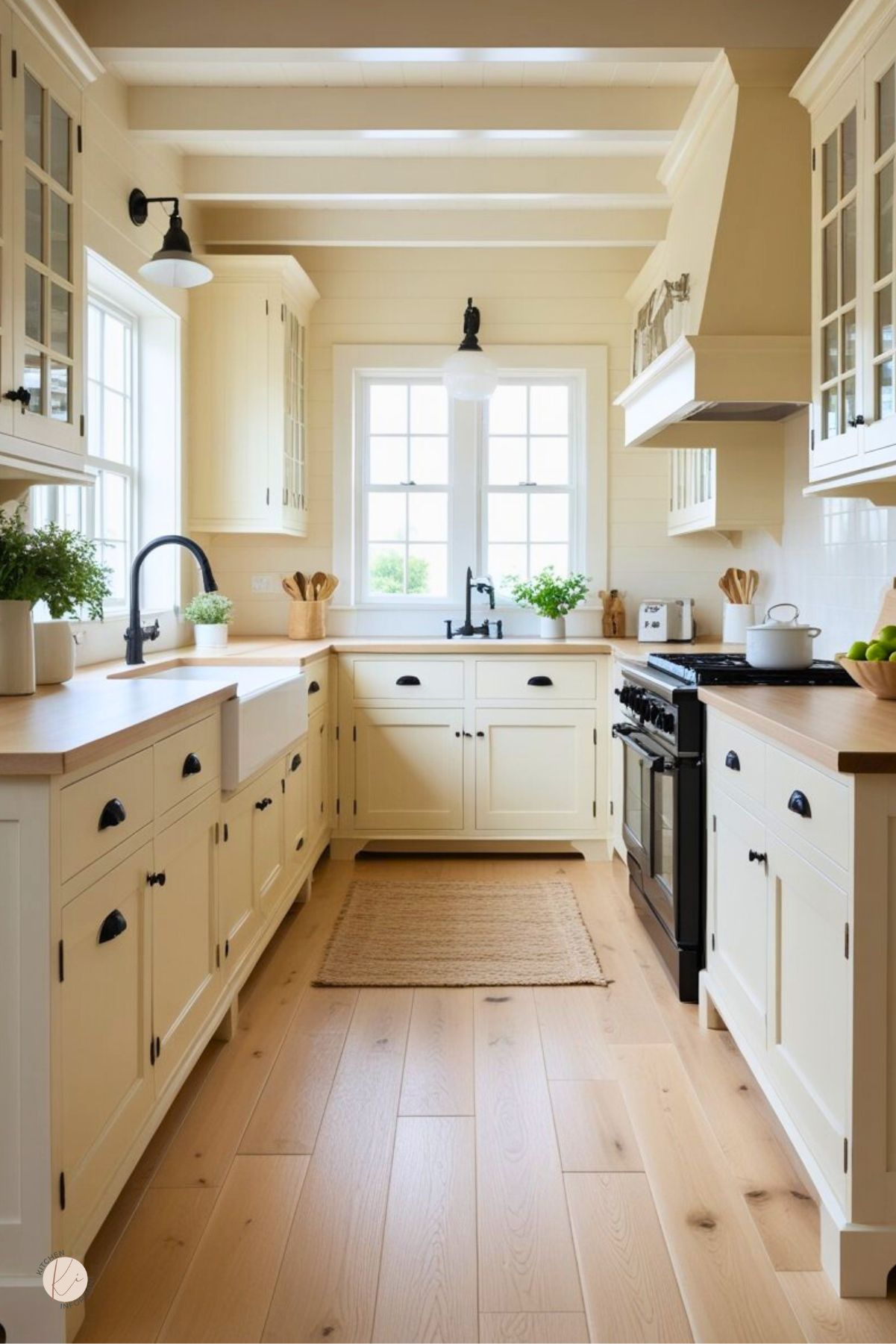
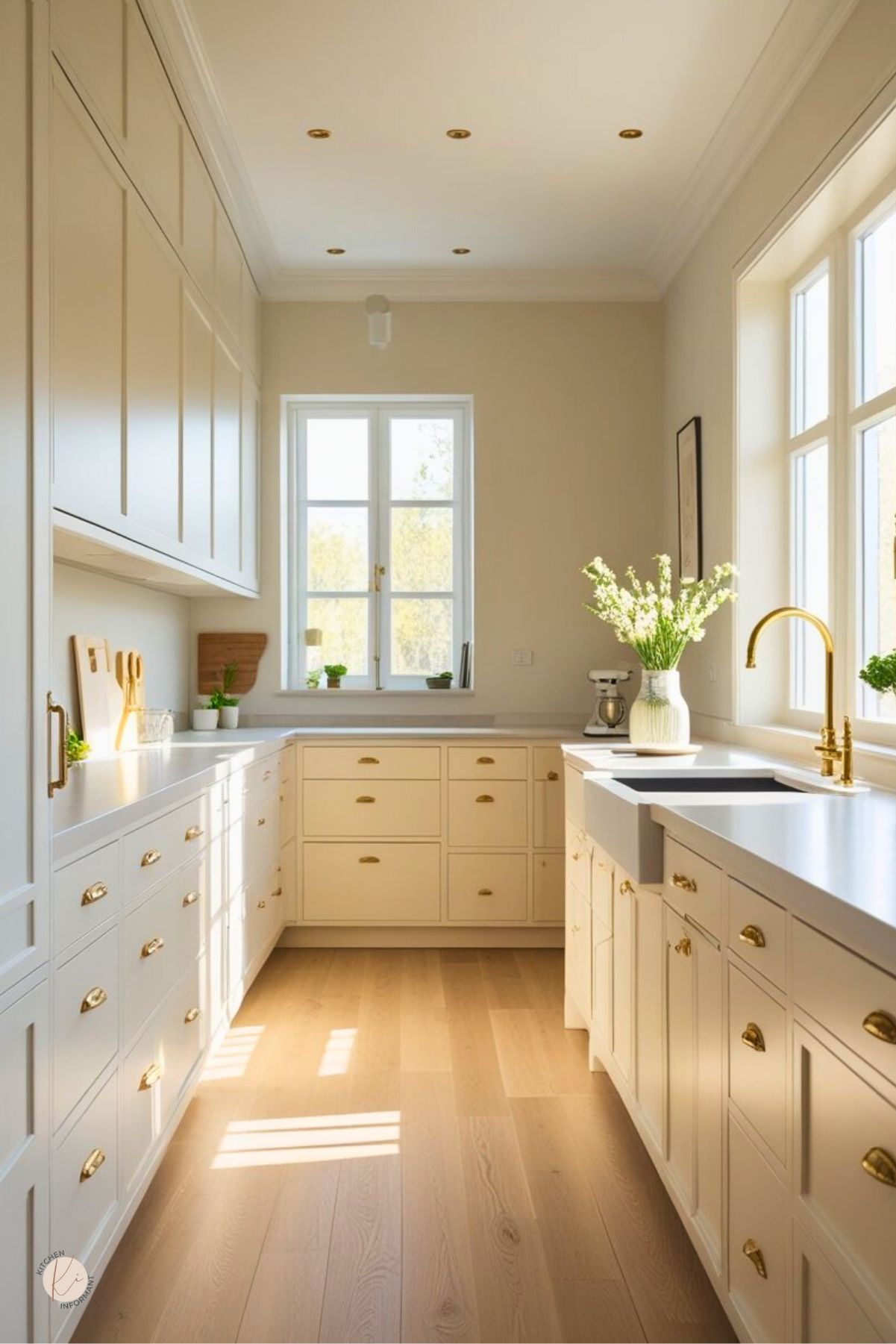
Galley kitchens use two parallel counters and cabinets to maximize efficiency in smaller spaces. Cream cabinets help these often narrow kitchens feel open and warm, while white oak floors add texture and depth.
L-shaped kitchens wrap two walls of cabinets around a corner, making a natural work triangle between sink, stove, and fridge. The combo of cream cabinetry and white oak flooring keeps things functional and modern.
Both layouts can use open shelving or glass doors for vertical interest and lightness. They’re a smart choice when a full open concept isn’t possible but you still want a fresh, bright kitchen.
Color Palettes and Material Choices
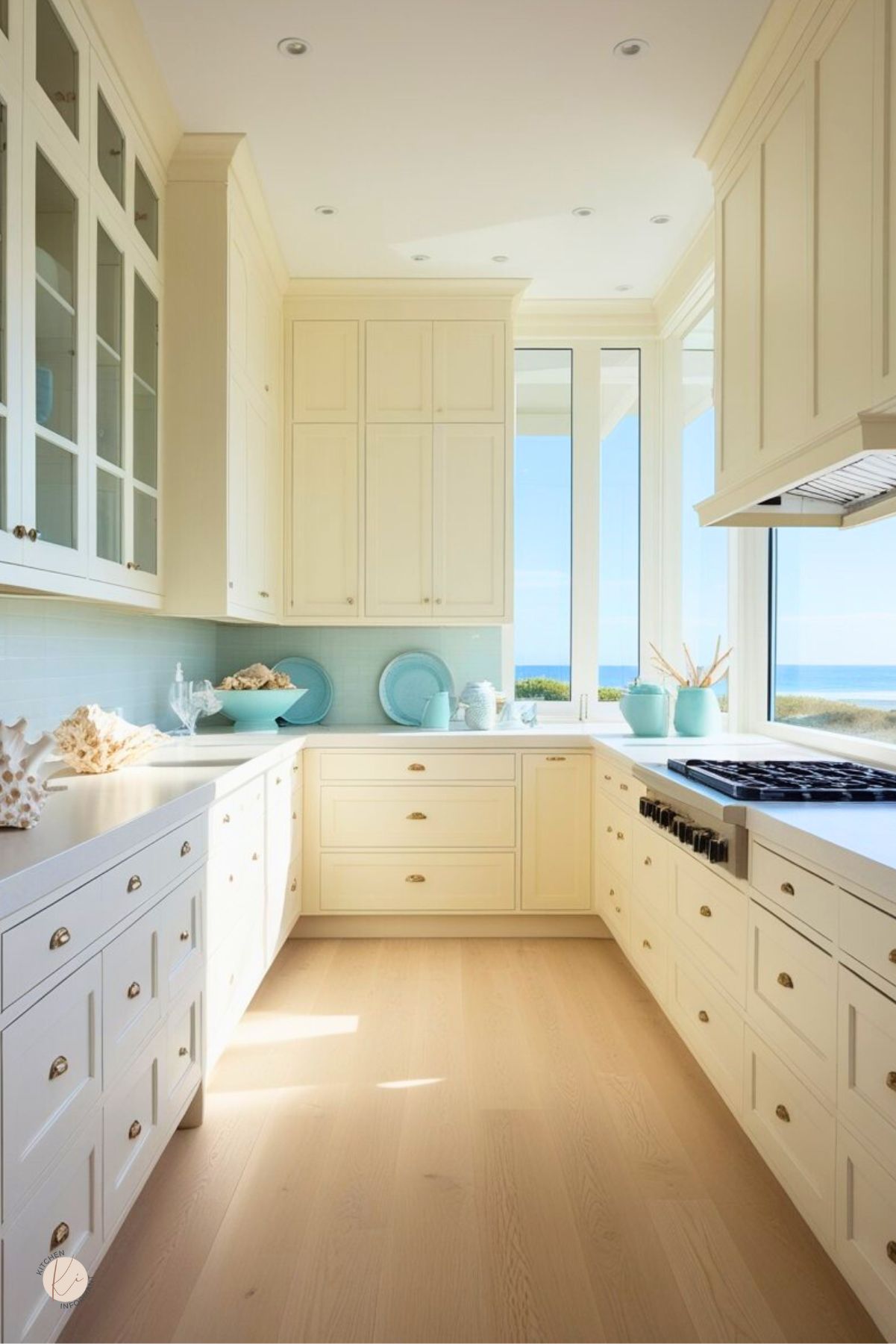
A cream kitchen with white oak floors gives you a warm, natural base for thoughtful color and material pairings. Wall color, hardware, and appliance choices can highlight the warmth or add crisp contrasts.
Balancing these elements creates a kitchen that feels both inviting and elegant—at least, that’s the goal.
Complementary Wall Colors
Soft greens and muted blues work with cream cabinets and white oak flooring, adding cool contrast without taking over. Warm neutrals like beige or taupe also play up the wood’s natural tones and keep things calm.
If you want more brightness, light grays or off-whites make a gentle backdrop that lets the cream and wood shine. It’s wise to skip super-saturated or dark colors—they tend to clash with these soft, earthy tones.
Matte or eggshell paint finishes help keep the look sophisticated and cut down on glare.
Accent Hardware and Fixtures
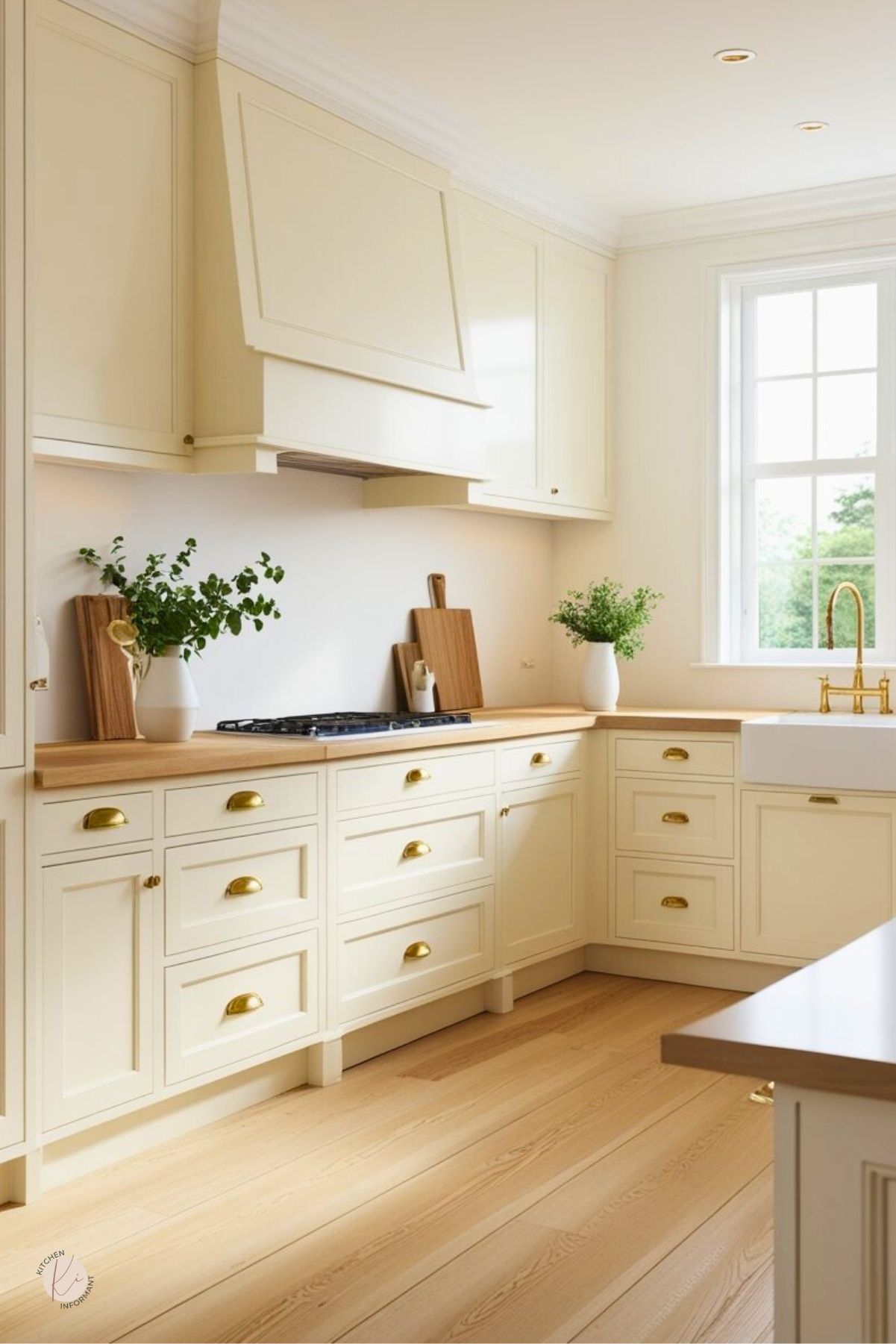
Brushed brass or matte black hardware brings a modern edge to a cream-and-oak kitchen. Brass ties into the golden hues of the wood and cream, while matte black offers sharp contrast without feeling harsh.
Cabinet knobs and handles look best with clean lines and simple shapes. For fixtures like faucets and lights, polished chrome or satin nickel adds brightness without overpowering the palette.
Mixing metal finishes is possible but can get busy fast. Usually, one finish for hardware and another for fixtures works best.
Appliance Integration Options
Stainless steel appliances fit right in with white oak floors and cream cabinets, adding a sleek, modern touch. Their neutral tone doesn’t fight with other colors.
Panel-ready appliances with custom cream cabinet fronts keep the focus on cabinetry and flooring for a seamless look. Black or matte finish appliances create bold contrast, especially with lighter walls.
It helps to match these with similar-tone hardware or fixtures for balance. Built-in or under-cabinet options maximize space and keep the kitchen layout clean.
Lighting and Ambiance
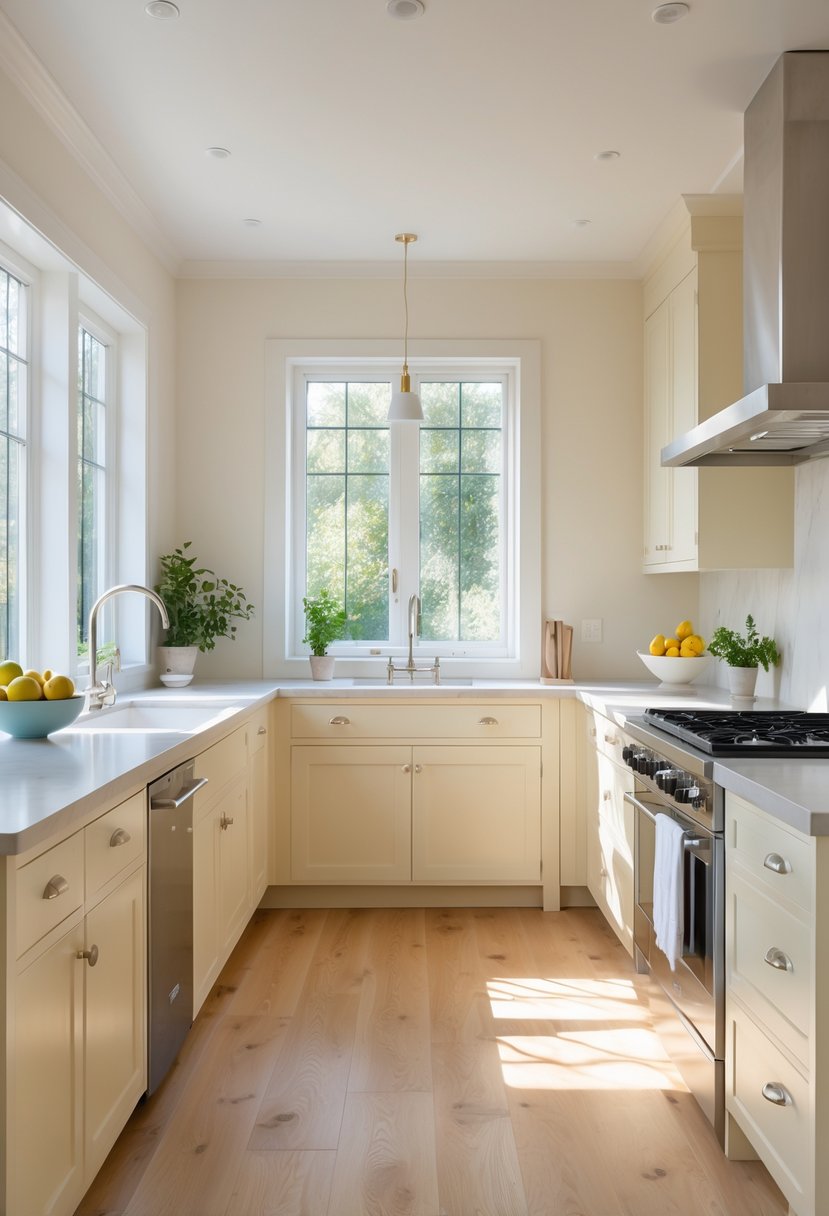
Lighting makes a huge difference in cream kitchens with white oak floors. It changes how colors look and sets the mood—sometimes that’s subtle, sometimes it’s dramatic.
Mixing lighting types and balancing natural and artificial light creates a warm, inviting space. It’s worth spending a little extra time getting this right.
Layered Lighting Solutions
Layered lighting uses different sources for function and style. In cream kitchens with white oak floors, under-cabinet LED strips highlight counters and cut down on shadows.
Pendant lights above islands add focused light and a decorative touch. Recessed ceiling lights give overall illumination without adding clutter.
Mixing ambient, task, and accent lighting creates depth. Ambient lights fill the room, task lights focus on prep areas, and accent lights highlight cool details or textures on cabinets and floors.
Simple lighting fixtures keep the look sophisticated and airy. Sometimes less really is more.
Natural Versus Artificial Lighting
Natural light really makes cream kitchens with white oak floors shine. Big windows and skylights let in sunlight, boosting the light tones and making everything feel open.
White oak’s warm texture bounces this light around in a soft, pleasant way. It’s kind of amazing how much difference that makes.
Artificial lighting steps in when the sun isn’t cooperating. Warm bulbs (think 2700–3000K) match the cozy feel of cream cabinets and oak floors.
This keeps the kitchen from feeling cold or too sterile. Nobody wants a kitchen that looks like a hospital, right?
Styling Tips for a Cohesive Look
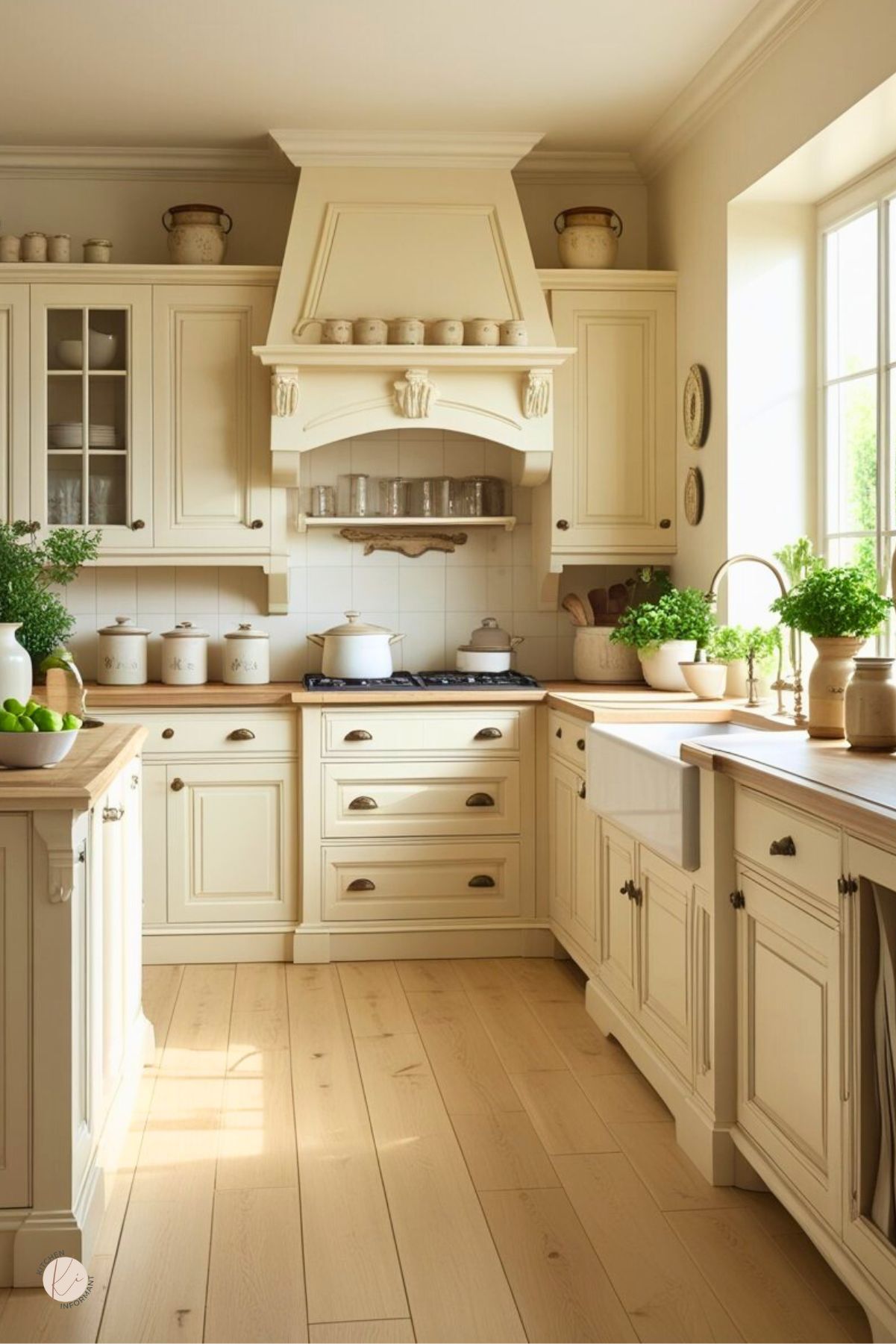
Pulling off a balanced cream kitchen with white oak floors takes some thought. Color, texture, and details matter more than you’d think.
Accessories and textiles can really tie things together. They add warmth and style, making the space feel more lived-in.
Decorative Accessories
The right decorative accessories highlight the natural look of white oak and complement cream cabinets or walls. Warm metals like brass or matte gold bring a hint of sparkle without overpowering the soft palette.
Simple ceramics or glass jars with natural textures do the trick. Wooden cutting boards, stoneware bowls, or woven baskets add organic elements that echo the floor’s grain.
Plants—especially little potted herbs—add life and a gentle green contrast. Just don’t overdo it; a handful of well-placed pieces add interest without taking over.
Textile Selections
Textiles bring softness and comfort to all those hard surfaces. Linen or cotton curtains in light shades like ivory or pale beige keep things airy and match those cream tones.
For rugs, low-pile options in muted patterns or natural fibers like jute work really well. They’re comfy underfoot and blend in with white oak floors instead of stealing the show.
Cushions or seat pads in neutral or pastel colors add a little contrast and make seating comfier. It’s also an easy way to freshen up the look later without a big commitment.
Care and Maintenance for Cream Kitchens and White Oak Floors
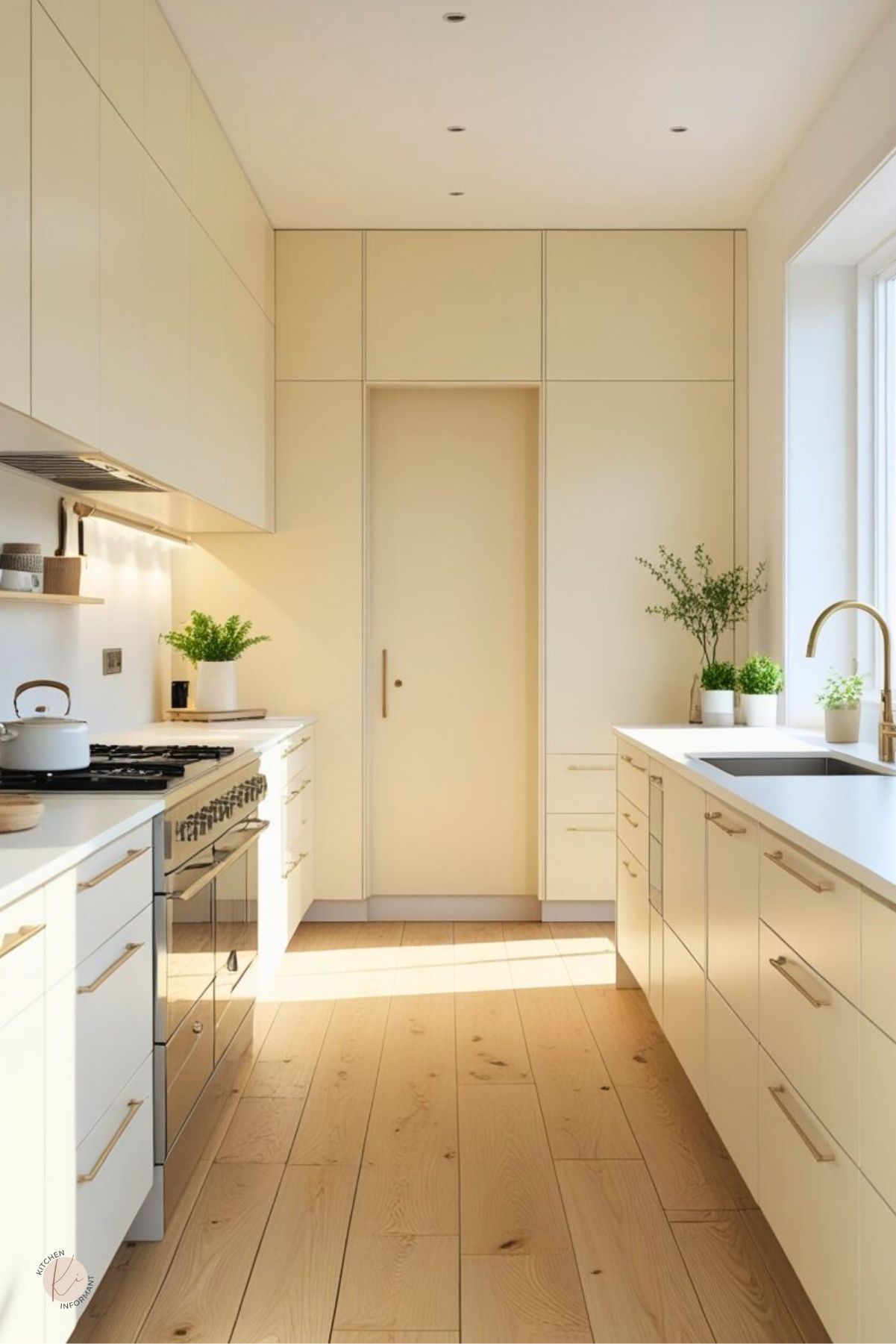
Keeping cream kitchens with white oak floors looking good means paying attention to cleaning and protecting finishes.
The right care keeps cream cabinets soft and elegant, and preserves the natural beauty of the oak floors.
Cleaning Best Practices
Regular cleaning stops dirt and grime from building up on cream cabinets and white oak floors. Use a soft cloth or microfiber mop to gently wipe away dust and spills.
Skip the harsh cleaners—they can mess up finishes or discolor wood. For cream cabinets, a little mild soap in warm water works fine. Wipe with a damp cloth, then dry right away to avoid water spots or warping.
Sweep floors daily, and use a pH-neutral wood floor cleaner once a week to protect the wood. Quick spot cleaning helps prevent stains and keeps things looking even.
Protecting Cabinet and Floor Finishes
Protect cream cabinets by steering clear of oils, acids, or harsh cleaning products that eat away at finishes. Soft-close hinges help reduce wear from opening and closing all the time.
Use handle pulls instead of pushing on cabinet faces to cut down on damage. For white oak floors, pop felt pads under furniture legs to avoid scratches.
Rugs or mats in busy spots and near sinks help reduce water damage and wear. Check for small scratches now and then, and use a good wood floor polish or refinisher to keep the floor looking sharp.
Common Challenges and Solutions
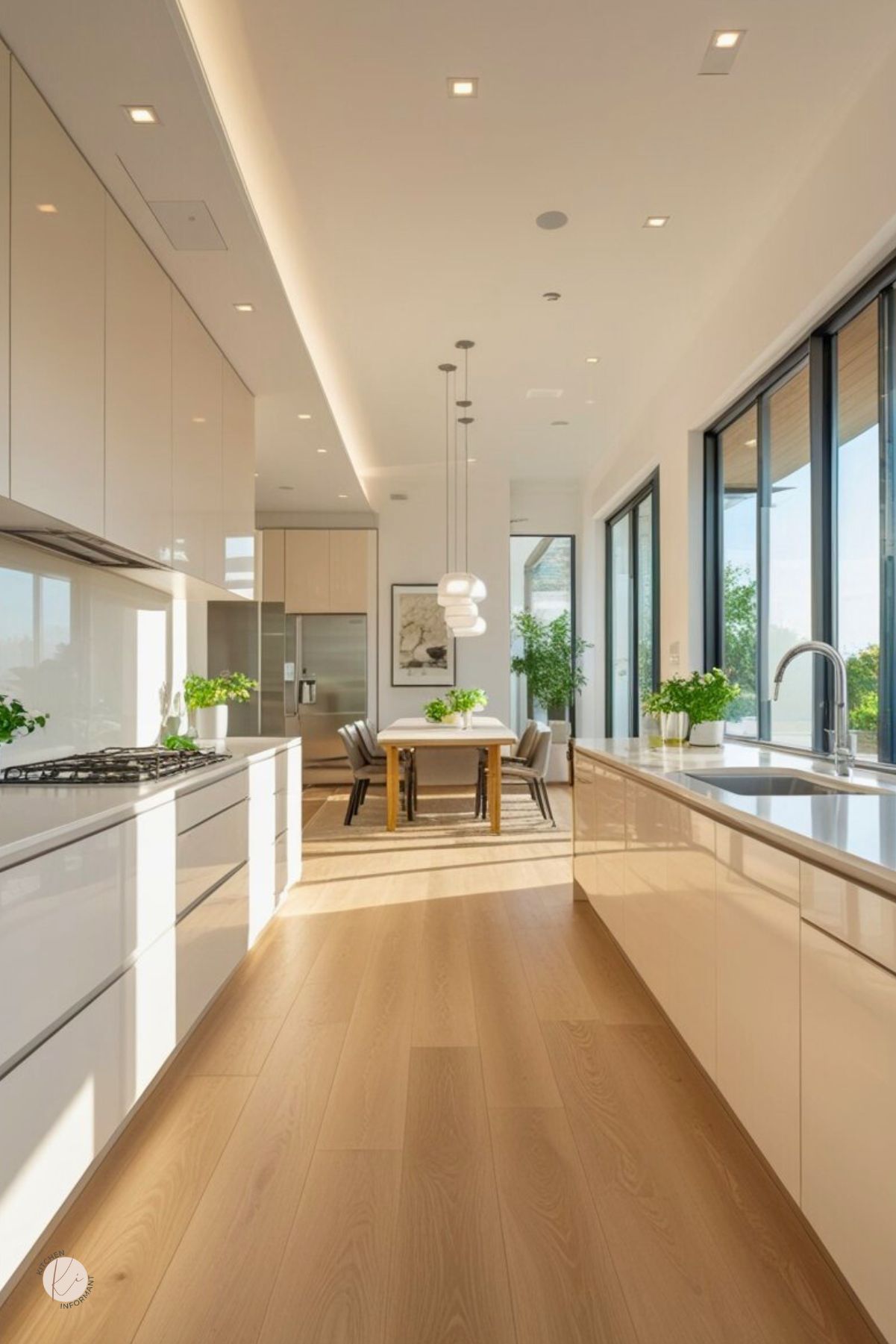
Living with cream kitchens and white oak floors means you’ll face daily wear and the occasional mishap. Staying on top of care helps both elements stay fresh and last longer.
Stain and Scratch Prevention
White oak floors can show stains and scratches, especially in a busy kitchen. Wipe up spills right away to prevent stains.
Mats or rugs in high-traffic areas help cut down on wear. Put furniture pads under chairs and tables to protect the floor from scratches, and avoid dragging heavy stuff across the wood.
Regularly applying a wood-friendly sealant adds a protective layer. For cream cabinets, stick with mild soap and water on a soft cloth—harsh cleaners just aren’t worth the risk.
Addressing Wear Over Time
White oak floors develop a patina as they age, which can look great, but you can extend their fresh look. Refinish the surface now and then by sanding out minor damage and renewing the finish.
Check floors for deeper scratches or water damage, and fix issues quickly before they get worse. Touch-up kits for cream cabinets hide small chips and wear marks.
Keep humidity balanced to prevent the oak from warping or cracking. Humidifiers or dehumidifiers help maintain stable conditions, which protects both floors and cabinetry over the years.
Inspiring Examples
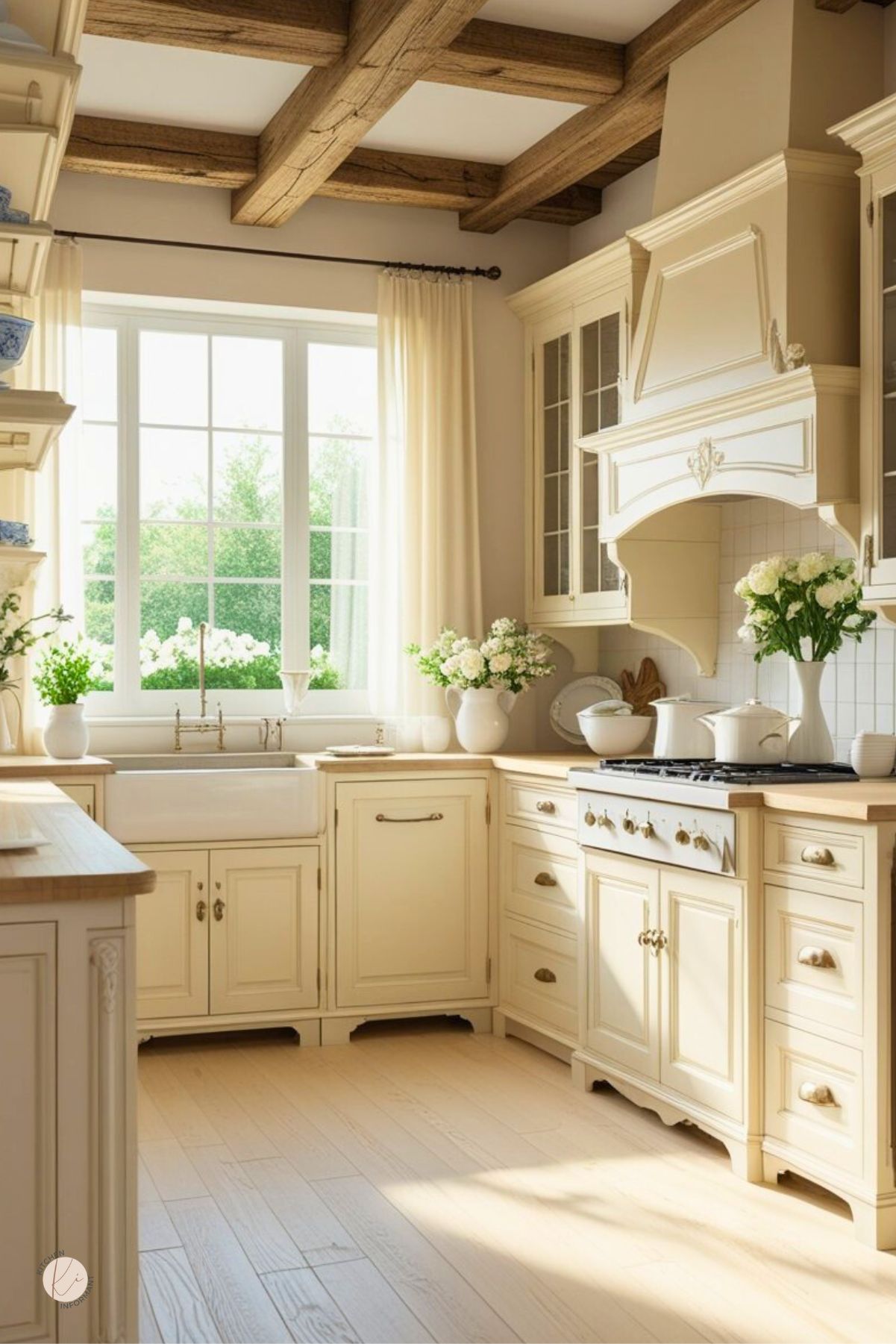
Cream kitchens and white oak floors make for spaces that are both good-looking and practical. Some kitchens go for a classic, cozy vibe, while others feel sleek and modern.
Both styles prove these materials play nicely together in all sorts of homes. There’s a lot of room for personality here.
Traditional Cream Kitchens With White Oak Floors
Traditional cream kitchens with white oak floors usually have warm, inviting color palettes. Cream cabinets in soft, muted tones blend smoothly with the natural grain of the oak.
Details like raised panel cabinetry and classic hardware add that timeless feel. You’ll often see farmhouse sinks, crown molding, and vintage-style light fixtures in these spaces.
The white oak floors typically show off their natural texture without looking too glossy. The final look is balanced and grounded—never stuffy, just comfortable.
Modern Interpretations
Modern cream kitchens with white oak floors lean into clean lines and a sense of minimalism. Most people gravitate toward flat panel or slab-style cabinets, usually finished in a soft matte cream.
The white oak floors bring in warmth and contrast, but the space still feels fresh and airy. Metal accents—think gold or matte black hardware—offer a little luxury without making things feel overdone.
You’ll often see open layouts and integrated appliances, which help the kitchen stay spacious and uncluttered. Lighting tends to be simple and practical, letting those smooth surfaces and natural wood tones do the talking.
| Feature | Traditional | Modern |
|---|---|---|
| Cabinet Style | Raised panel | Flat panel/slab |
| Hardware | Vintage/Classic | Gold, matte black, minimal |
| Floor Finish | Natural, textured | Smooth, light |
| Overall Feel | Warm, cozy | Clean, airy |
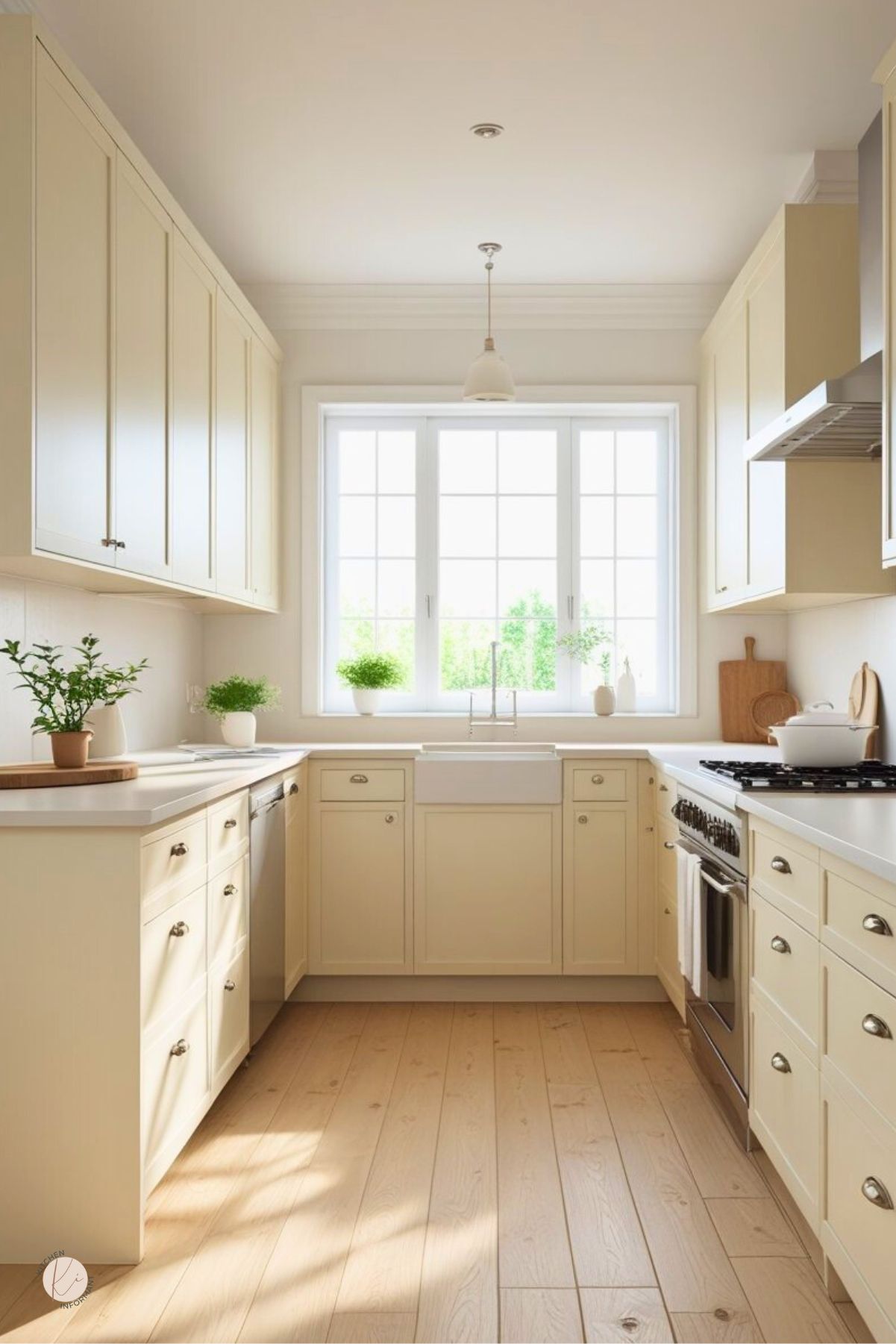
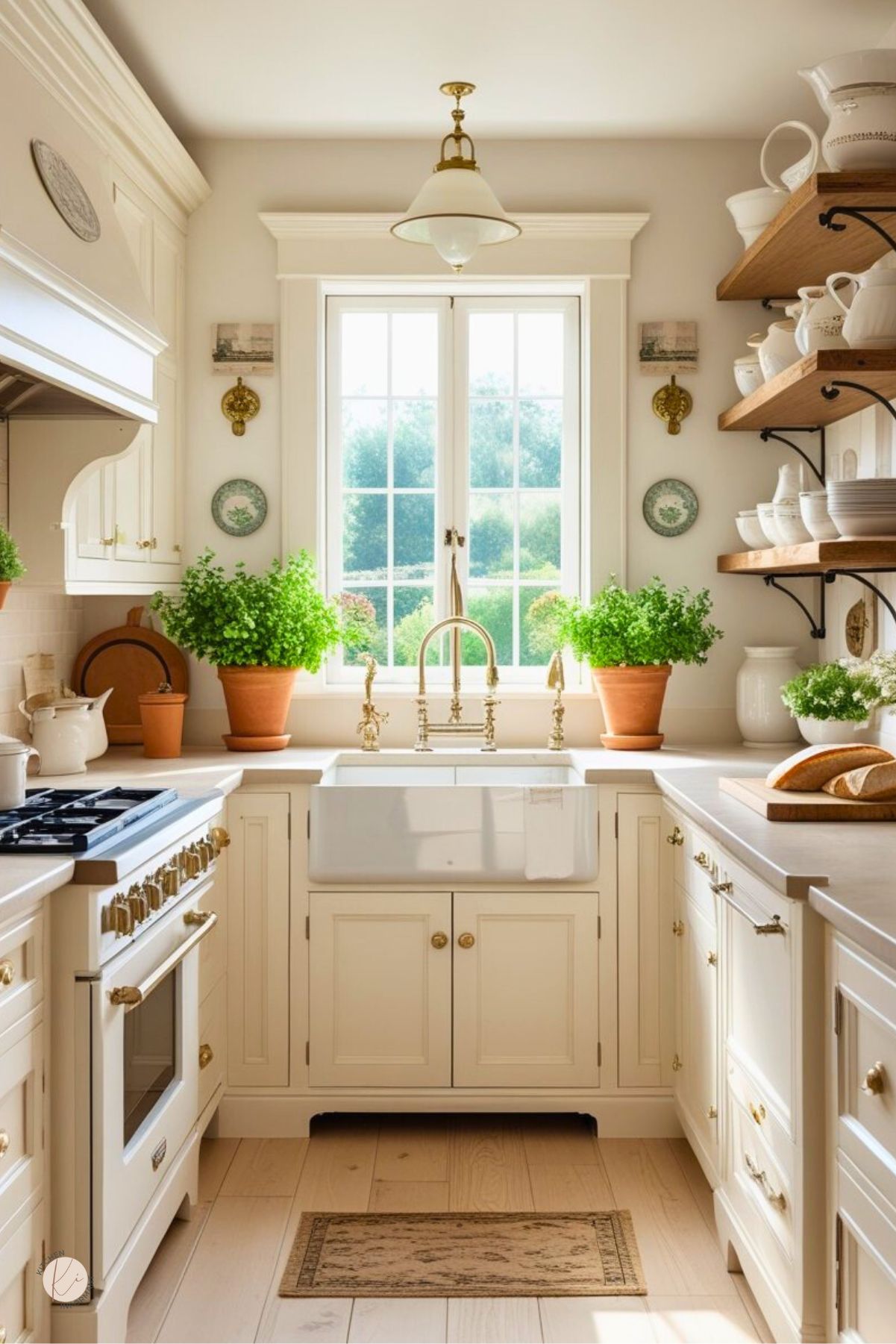
You May Also Like: