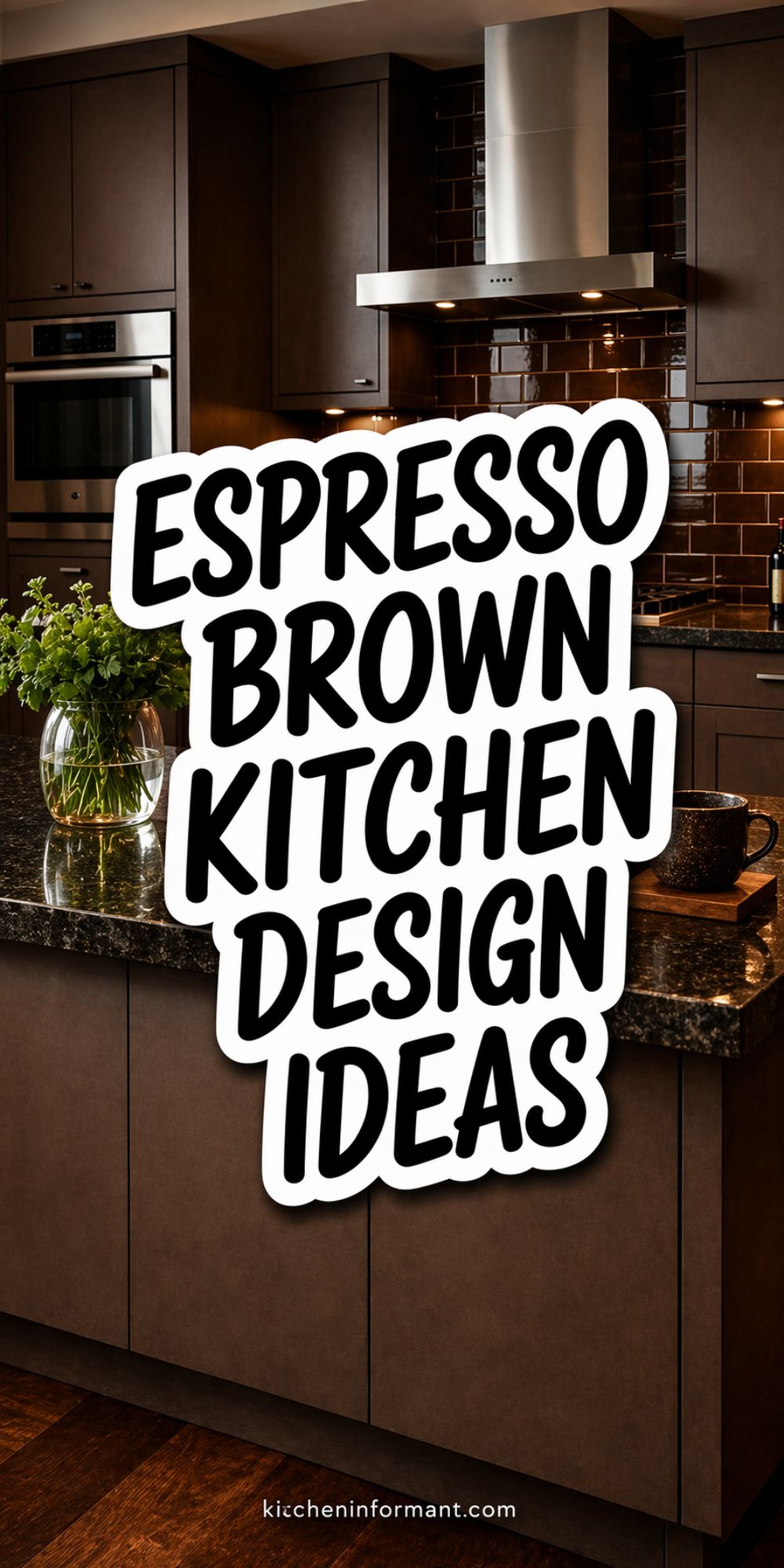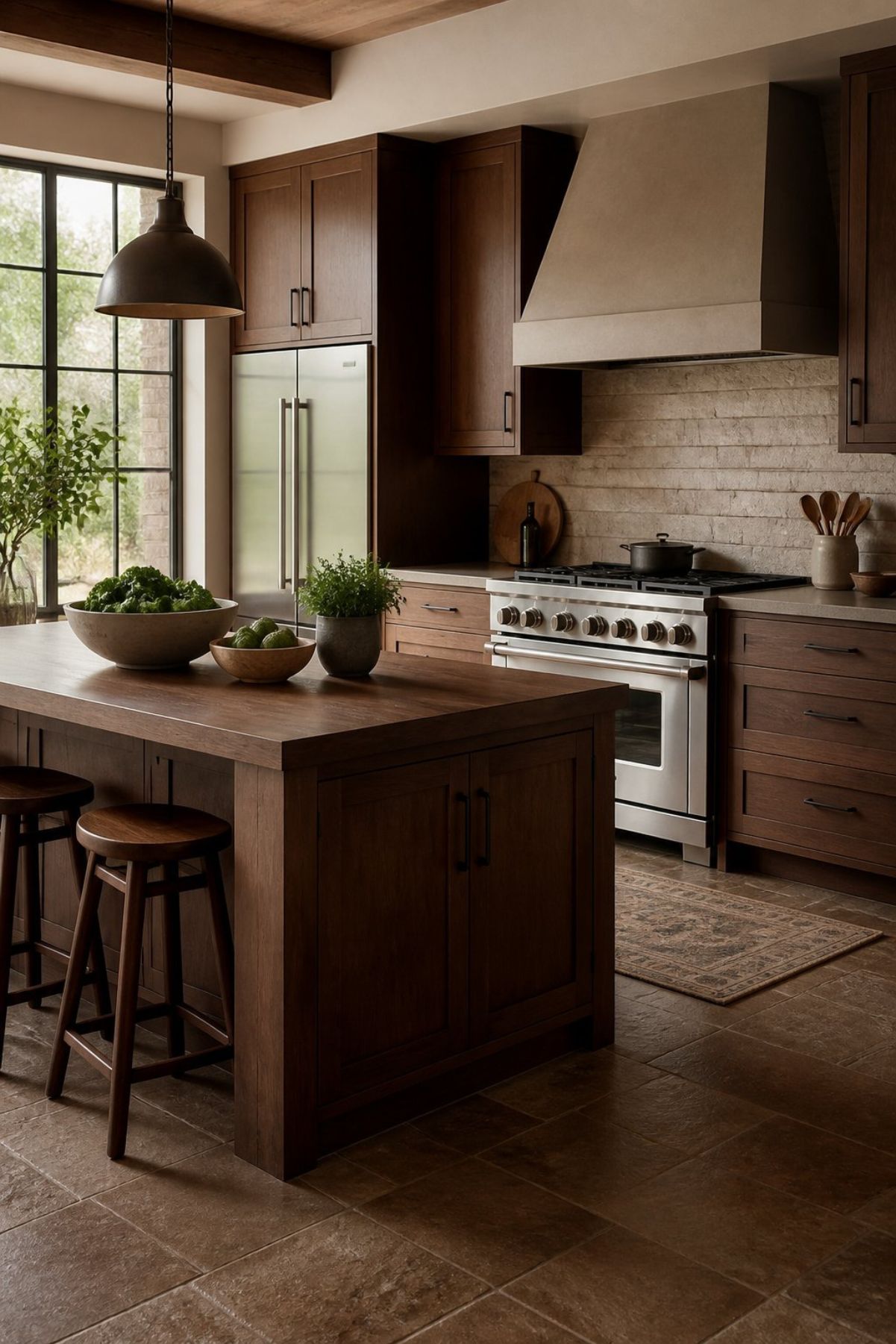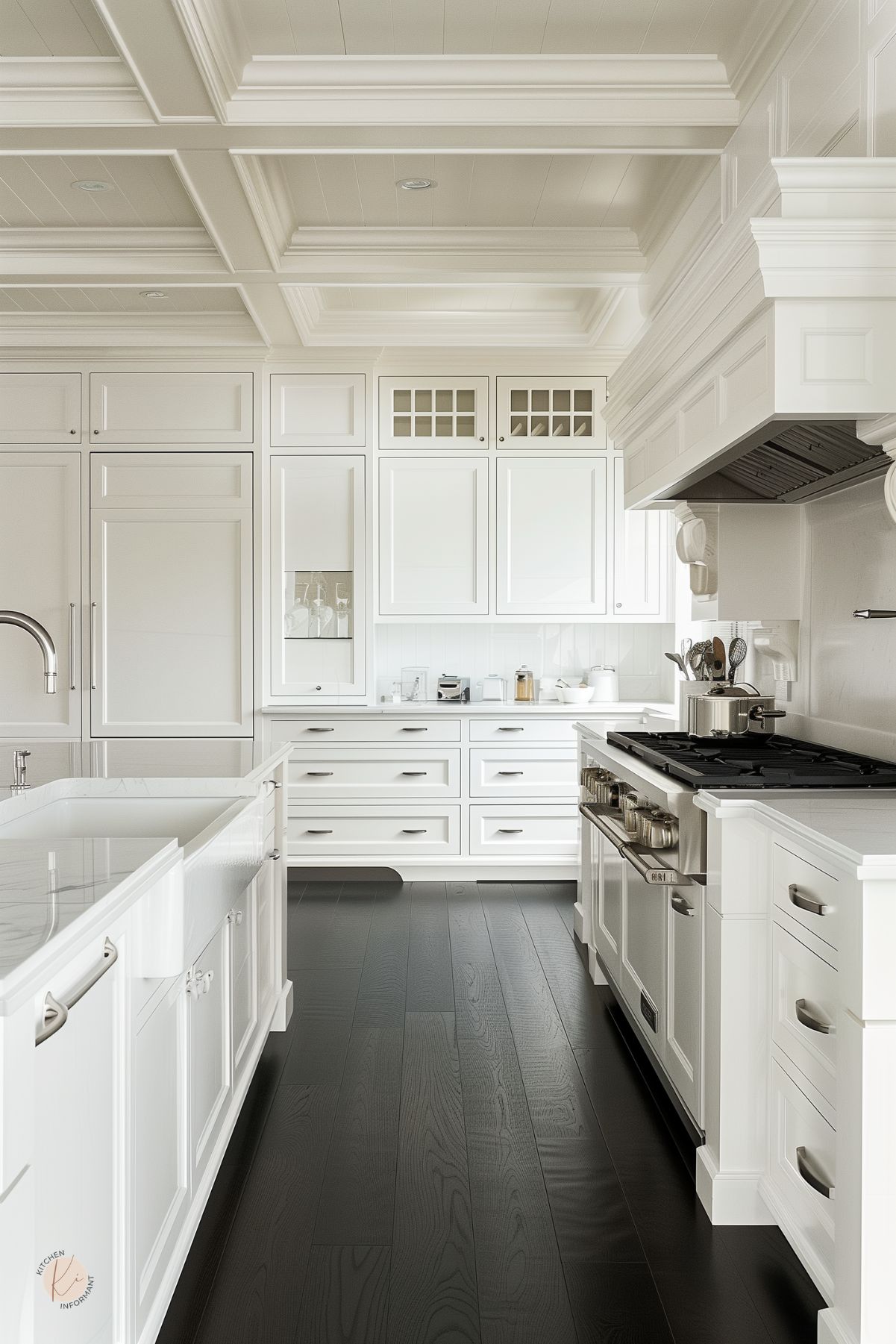
Espresso brown kitchen design works well when it is treated as more than a color choice. It affects how large the room feels, how much light is needed, and which materials will look balanced next to it.
The strongest espresso brown kitchen plans start with cabinet condition, undertone, and lighting. Then choose finishes and accents that keep the room grounded without making it feel heavy.
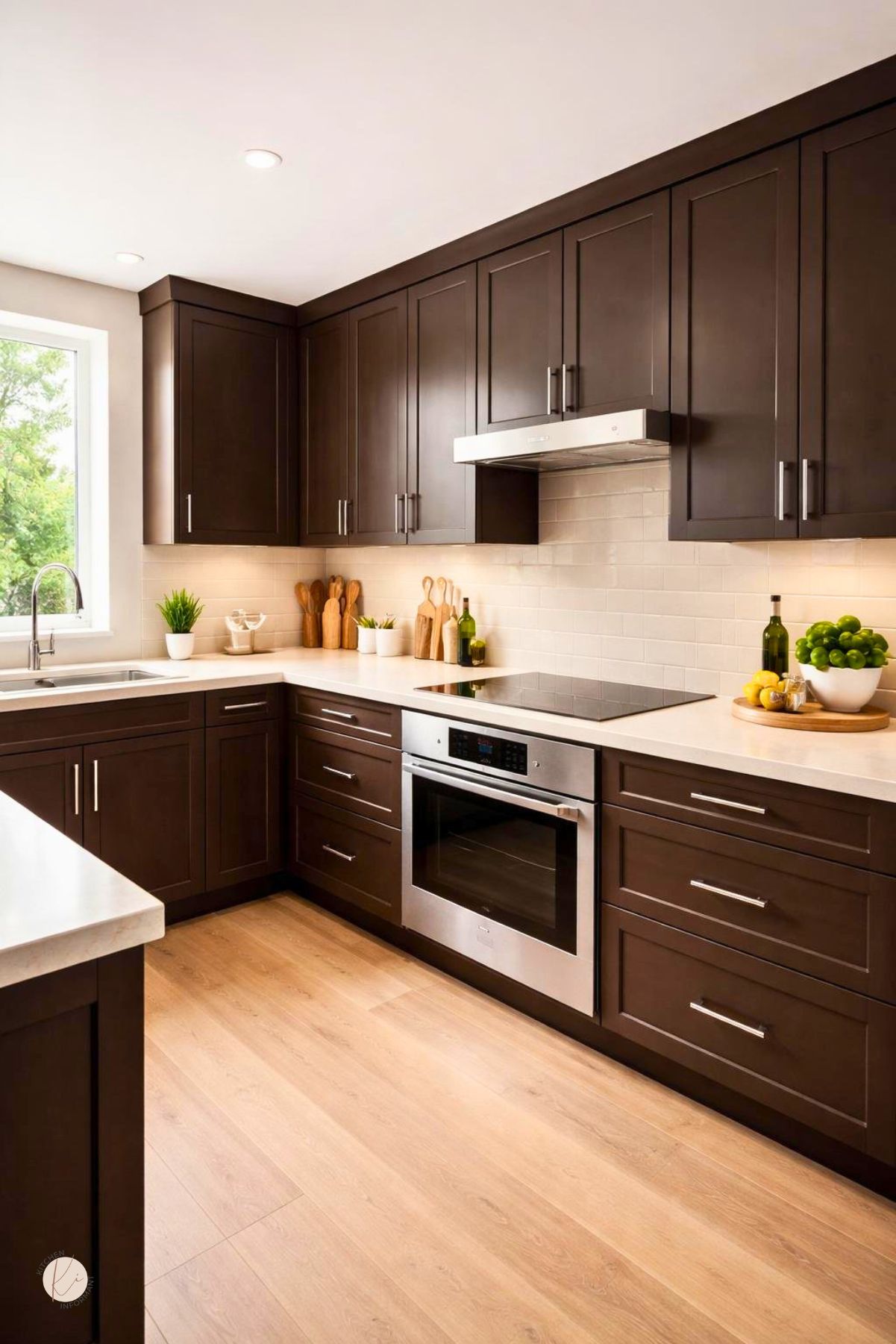
For many U.S. homes, espresso brown cabinets create a rich, steady base that can feel traditional, transitional, or modern depending on the surrounding details. The right update path may be as simple as new hardware and paint, or it may call for replacement if the cabinet structure is weak or the finish cannot be changed well.
What Espresso Brown Brings to a Kitchen
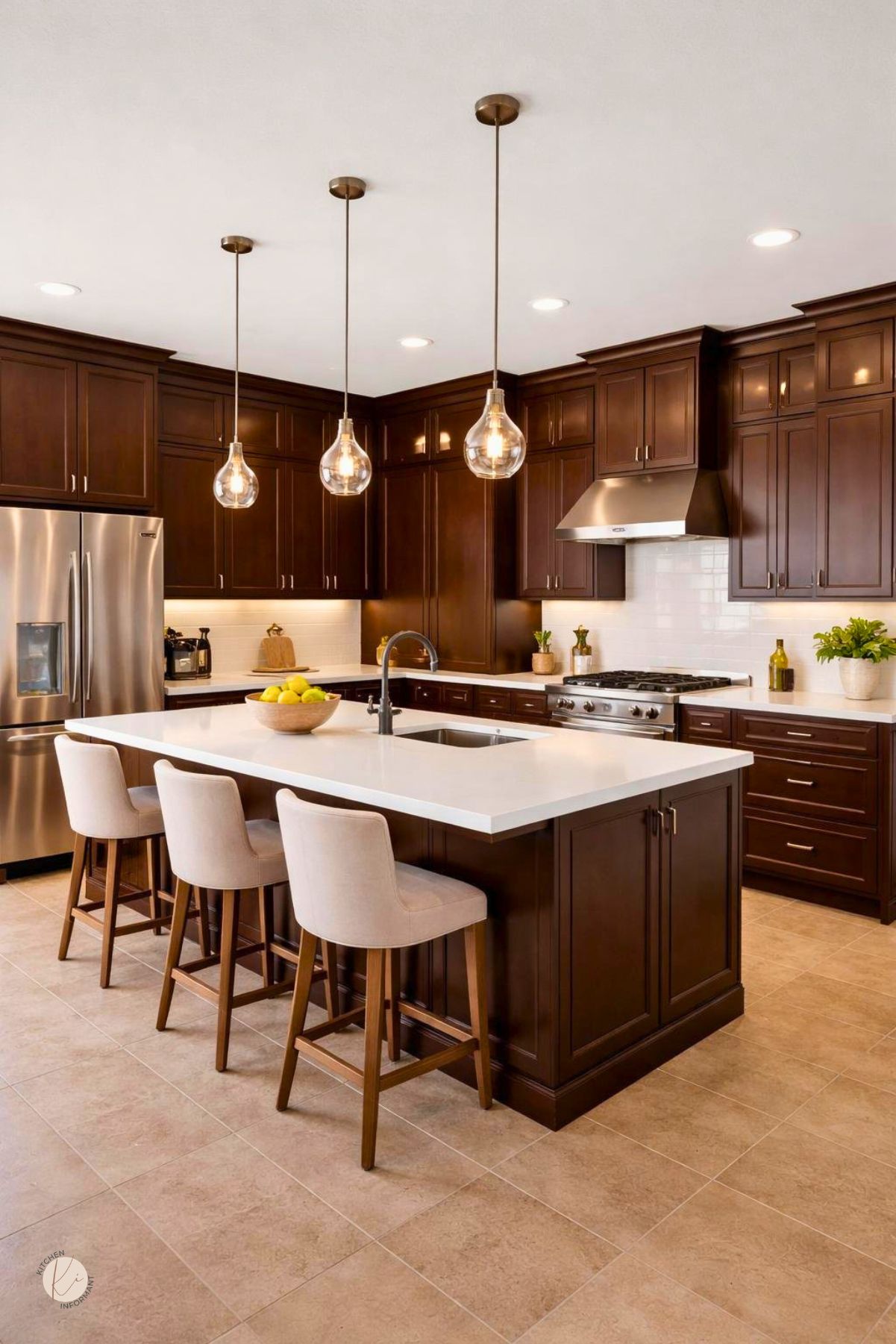
Espresso brown adds depth, warmth, and a strong visual anchor. It can make a kitchen feel more finished, especially when the room has enough light and some lighter surfaces to create contrast.
Core Visual Characteristics
Espresso brown is a deep brown with dark undertones, often close to coffee or black cherry in low light. It reads as rich rather than bright, so it tends to hide everyday wear better than pale finishes.
The finish can look smooth and formal in a painted cabinet, or more natural when it comes from stained wood. Matte, satin, and low-sheen finishes usually feel more current than a very glossy surface.
Where This Finish Works Best
It works well in kitchens with good daylight, open sight lines, or lighter counters and walls. It also suits homes that want a calmer, more grounded look.
Espresso brown can support modern, transitional, and classic designs. In smaller rooms, it usually needs more planning so the space does not feel closed in.
Common Design Missteps
A frequent mistake is pairing espresso brown with too many other dark elements. Dark floors, dark counters, and black hardware can make the room feel heavy.
Another issue is ignoring undertone. If the cabinet brown leans red, green-gray walls or cool stone may clash.
Matching the finish to the rest of the room matters more than the label on the cabinet sample.
How to Evaluate Existing Cabinets Before Making Changes
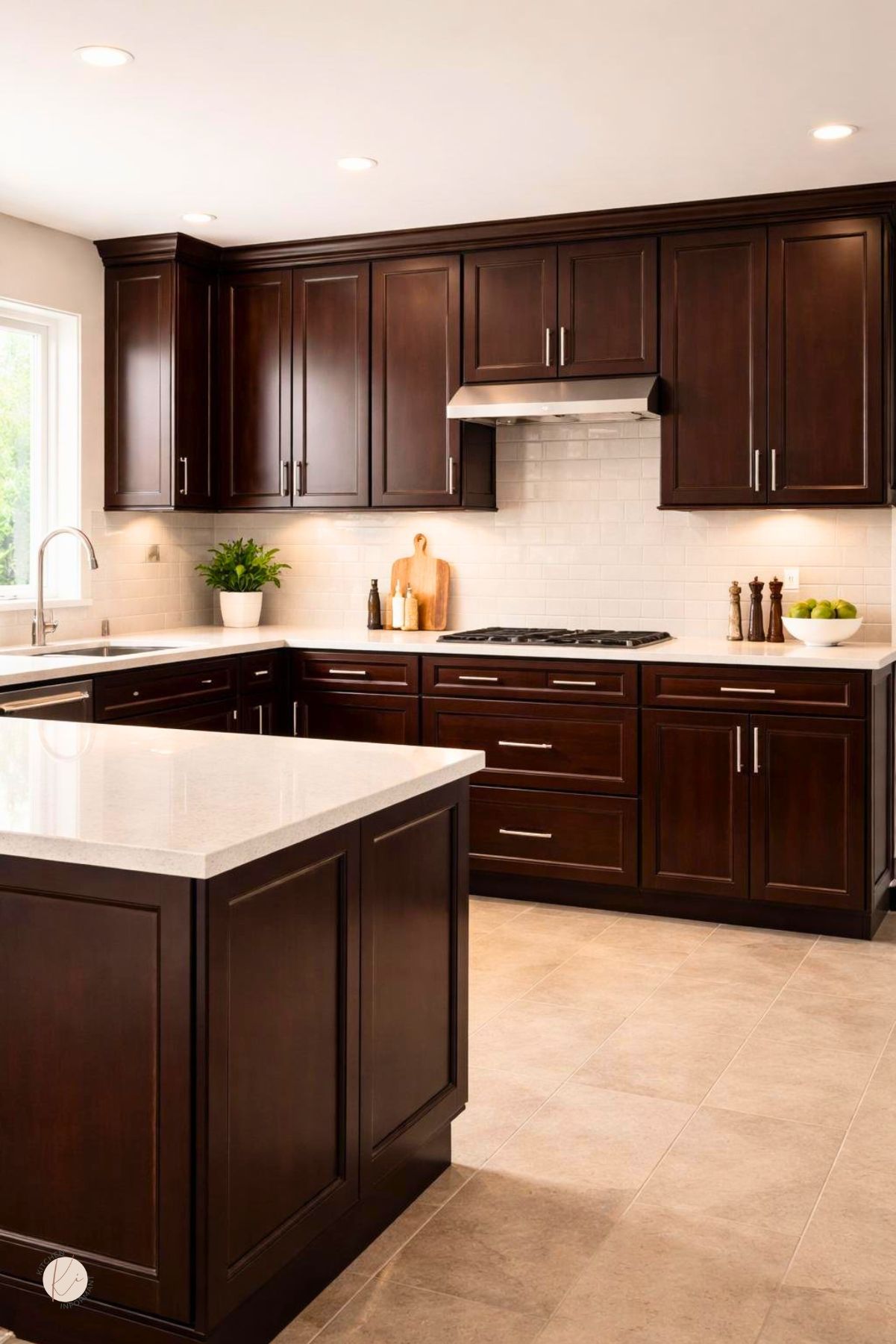
Before choosing paint, stain, or replacement, the cabinet structure needs a close look. A strong cabinet box can support a refresh, while damage, warping, or poor construction can limit what a makeover can achieve.
Cabinet Box and Door Condition
The cabinet boxes should be checked for swelling, loose joints, broken hinges, soft spots, and water damage near sinks and dishwashers. Doors and drawer fronts should close squarely and sit flat.
If the boxes are solid and the door style still fits the room, a finish update is often worth considering. If the structure is failing, cosmetic work will not solve the problem.
Wood Species and Undertone Check
Different woods absorb stain in different ways. Maple often looks smooth and even, while oak can show more grain and a stronger color shift.
A sample door should be viewed in morning and evening light. That helps reveal whether the brown leans red, yellow, or cool black.
When Refinishing Makes Sense
Refinishing makes sense when the cabinet doors are in good shape, the finish can be stripped or scuffed safely, and the current layout still works. It is also a good choice when the homeowner wants to keep the same style but change the color depth.
When Replacement Is the Better Option
Replacement is the better option when the boxes are failing, the layout is inefficient, or the finish cannot be updated evenly. It also makes sense when the cabinet style is dated beyond what a color change can fix.
If doors are warped or the surfaces are peeling, new cabinetry often saves time and produces a cleaner result.
Lighting and Room Conditions That Affect the Look
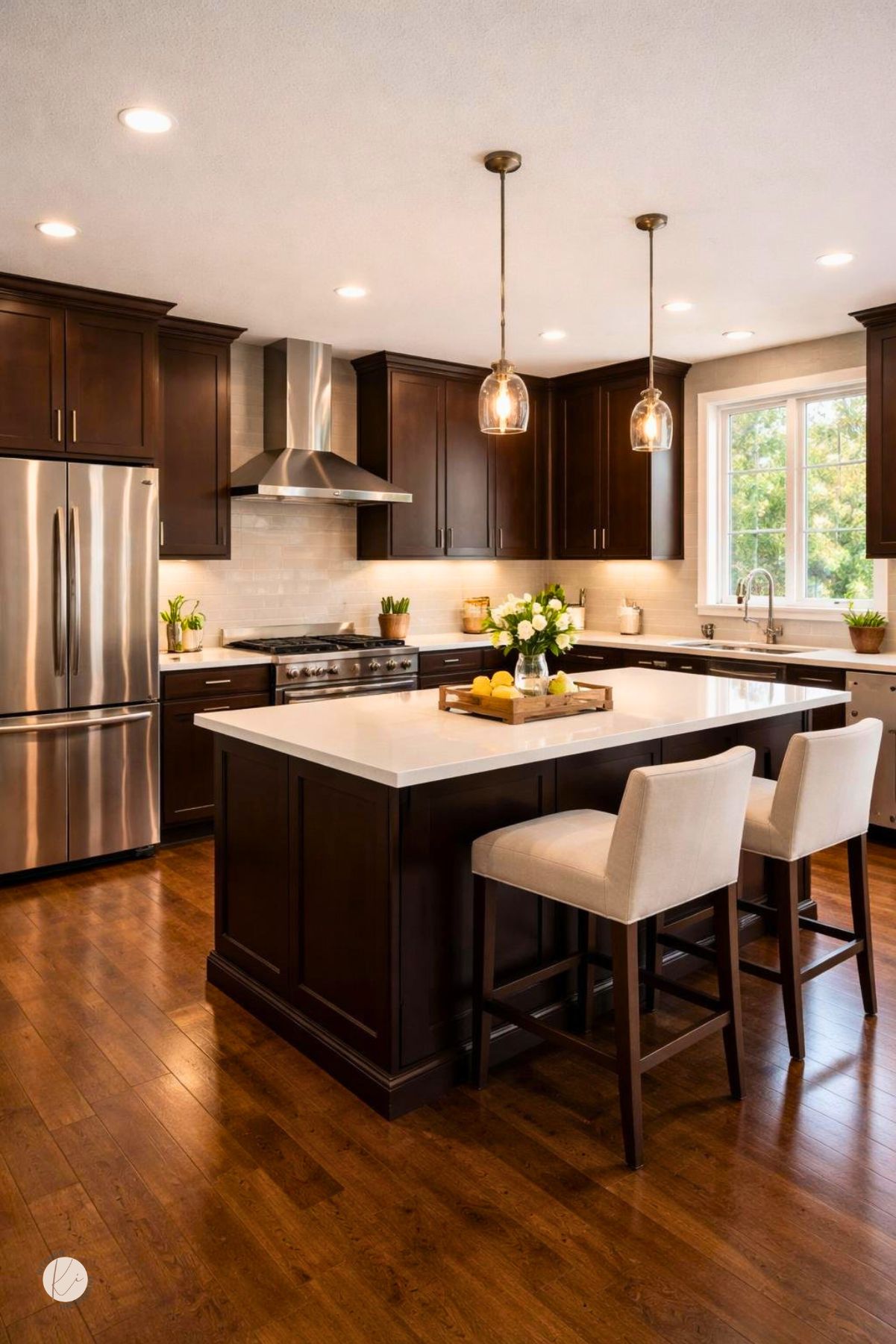
Espresso brown changes a lot with light. A finish that looks warm in a bright showroom may read much darker at home, so room conditions should guide the design choice.
Natural Light Direction
North-facing light tends to look cooler, which can make espresso brown appear deeper and more muted. South-facing light usually brings out warmth and keeps the color from feeling flat.
East light is brighter in the morning, while west light can add warmth later in the day. A sample should be checked at different times before any final decision.
Artificial Lighting Temperature
Warm white bulbs in the 2,700 to 3,000 Kelvin range often enhance the cozy side of espresso brown. Cooler bulbs can make the kitchen feel sharper and more modern.
A mix of recessed lighting, task lights, and under-cabinet lights usually works best. That layers brightness where it is needed and reduces dark corners.
Ceiling Height and Room Size
High ceilings can help darker cabinets feel intentional instead of heavy. In a smaller kitchen, espresso brown works better when upper walls, trim, and counters stay light.
Glass fronts, open shelves, or reflective tile can also help. They break up the visual weight without changing the cabinet color itself.
Color Pairings That Keep the Space Balanced
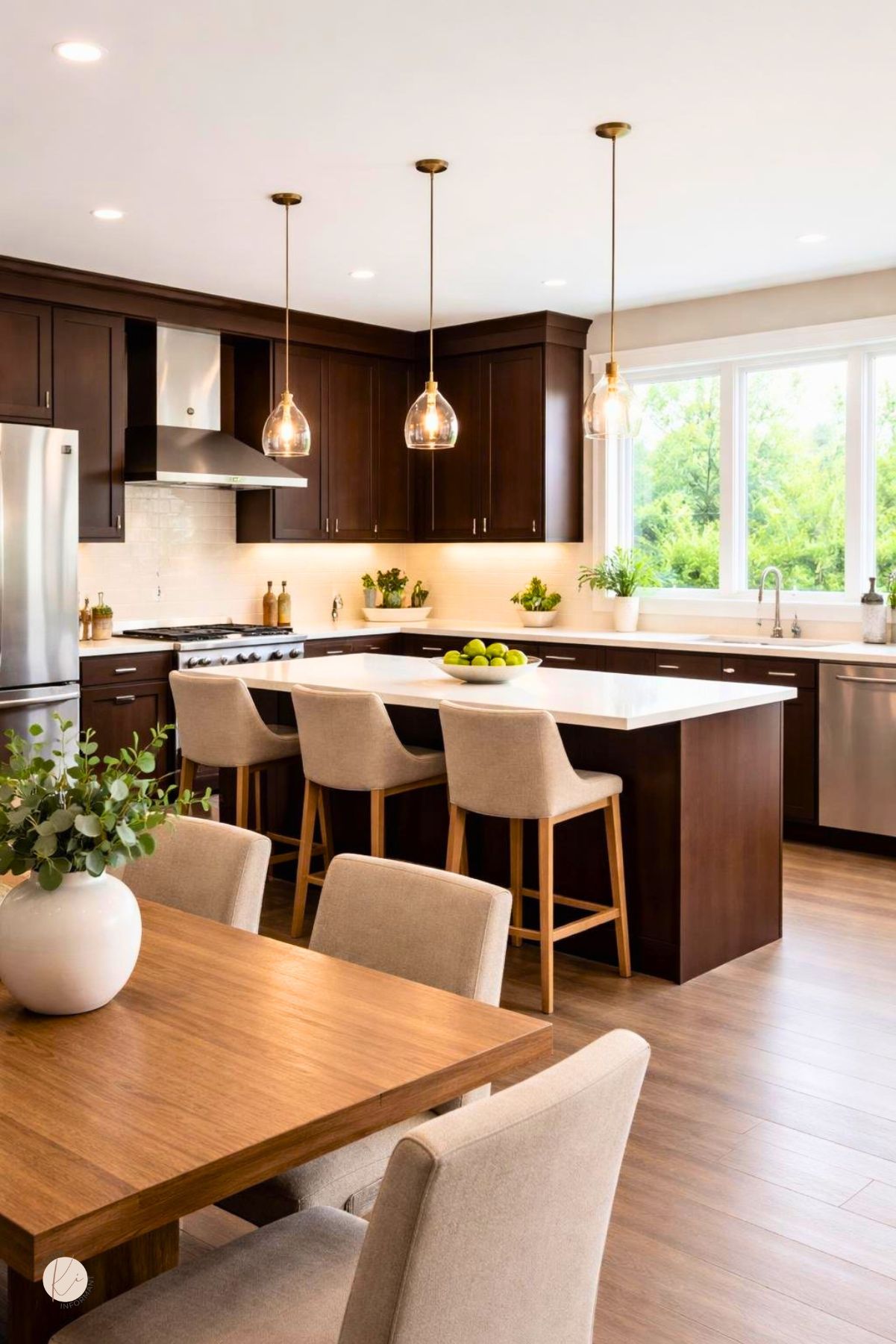
Color choices around espresso brown should support contrast and keep the room readable. Light neutrals do most of the work, while selected accent colors can add shape and warmth without crowding the palette.
Blue Accents That Add Contrast
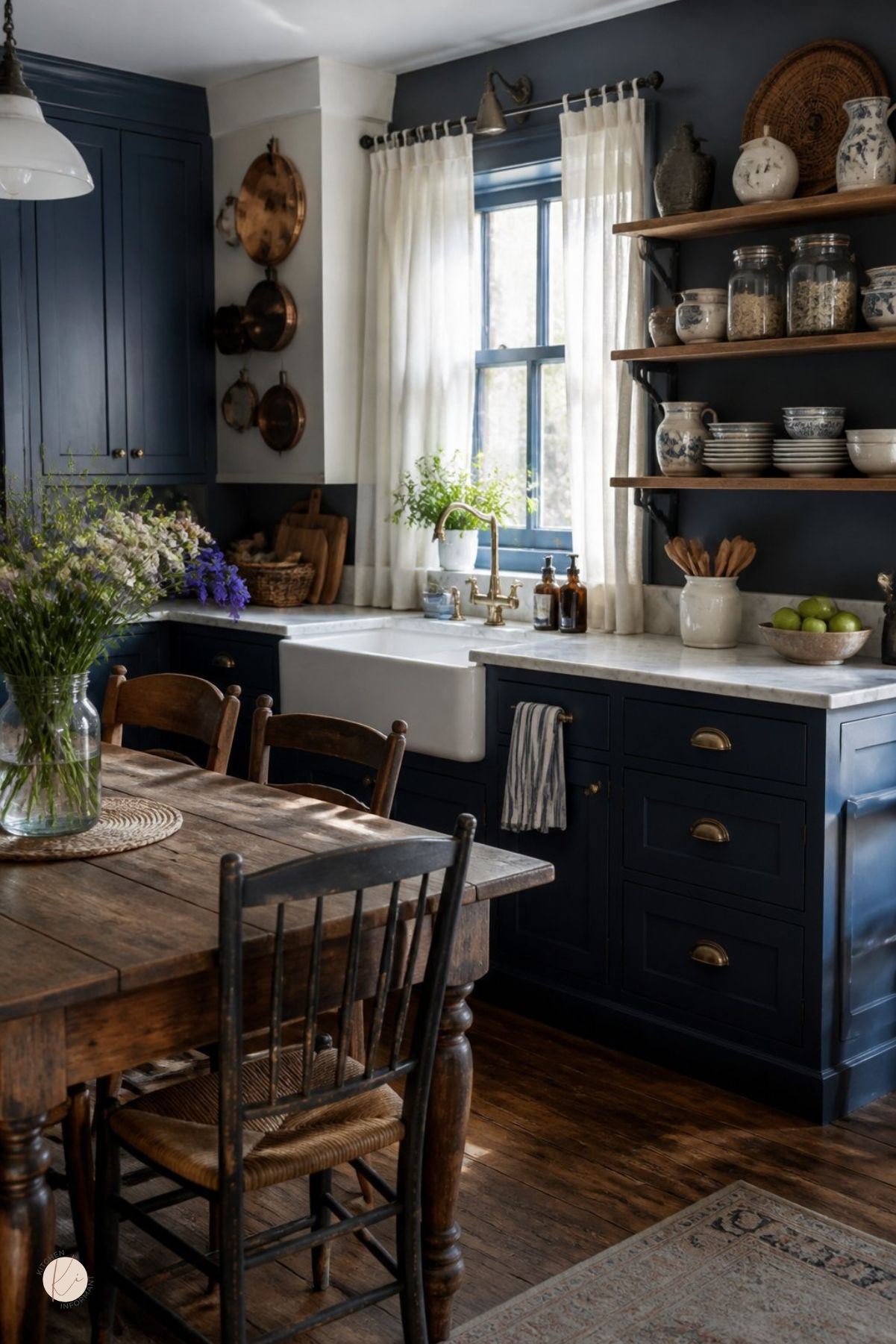
Blue works well because it gives espresso brown a cool counterpoint. Soft navy stools, blue-gray tile, or muted blue dishware can add interest without looking loud.
Deeper blues suit more formal kitchens, while pale blue-gray feels calmer. The best blue accents are usually used in small doses rather than across every surface.
Yellow Notes That Warm the Room
Yellow brings warmth and can keep espresso brown from feeling too cold or heavy. It works well in textiles, art, fruit bowls, or small decor pieces.
Muted mustard, cream yellow, or soft ochre usually fits better than bright primary yellow. The goal is a warm accent, not a high-contrast statement.
Wall and Trim Colors That Support Depth
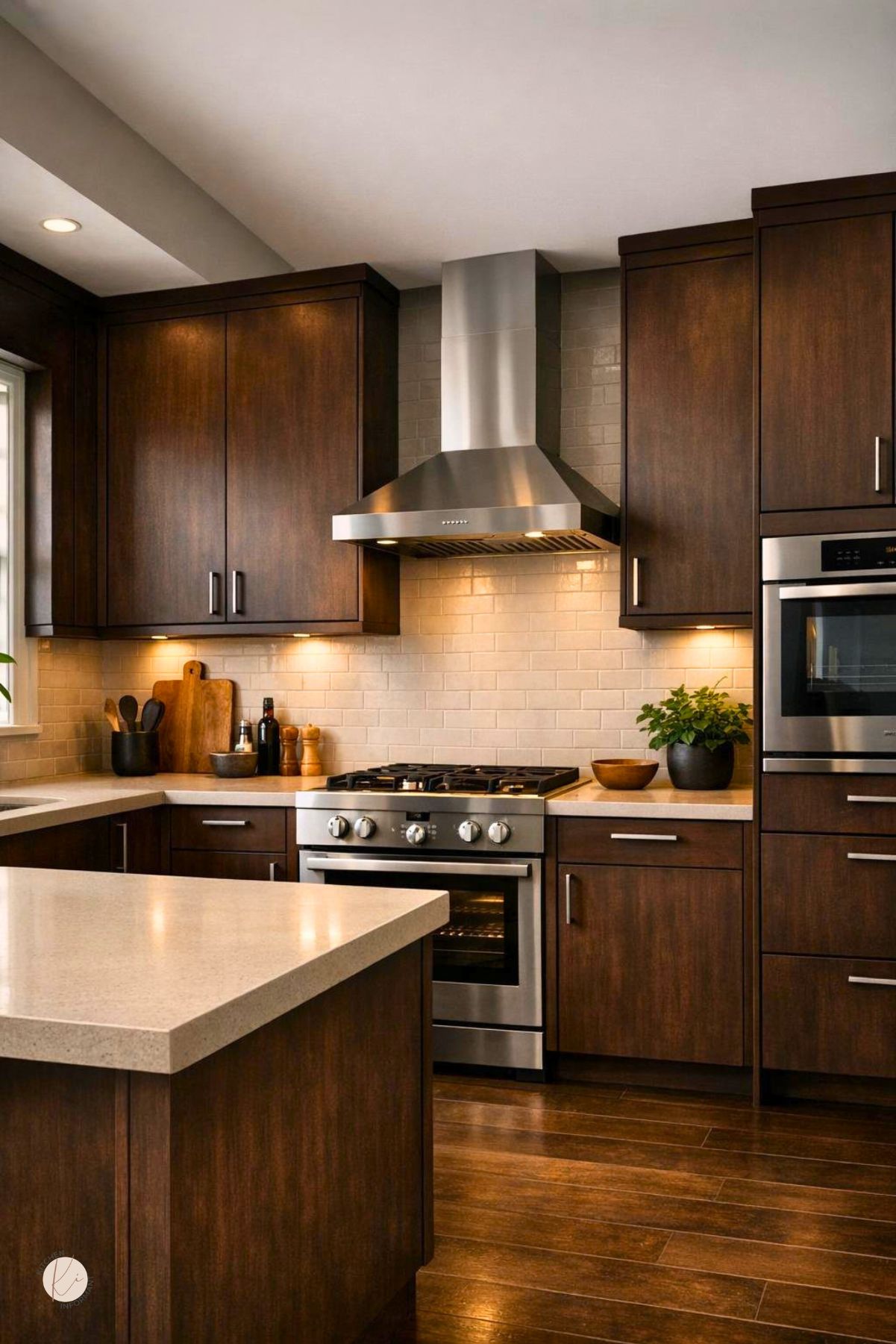
Soft white, warm ivory, light taupe, and pale gray usually pair well with espresso brown cabinets. These shades keep the room bright and give the cabinets a clear edge.
Trim should stay lighter than the cabinet color so the walls do not blend into the cabinetry. That creates a cleaner outline and more depth.
Countertop and Backsplash Coordination
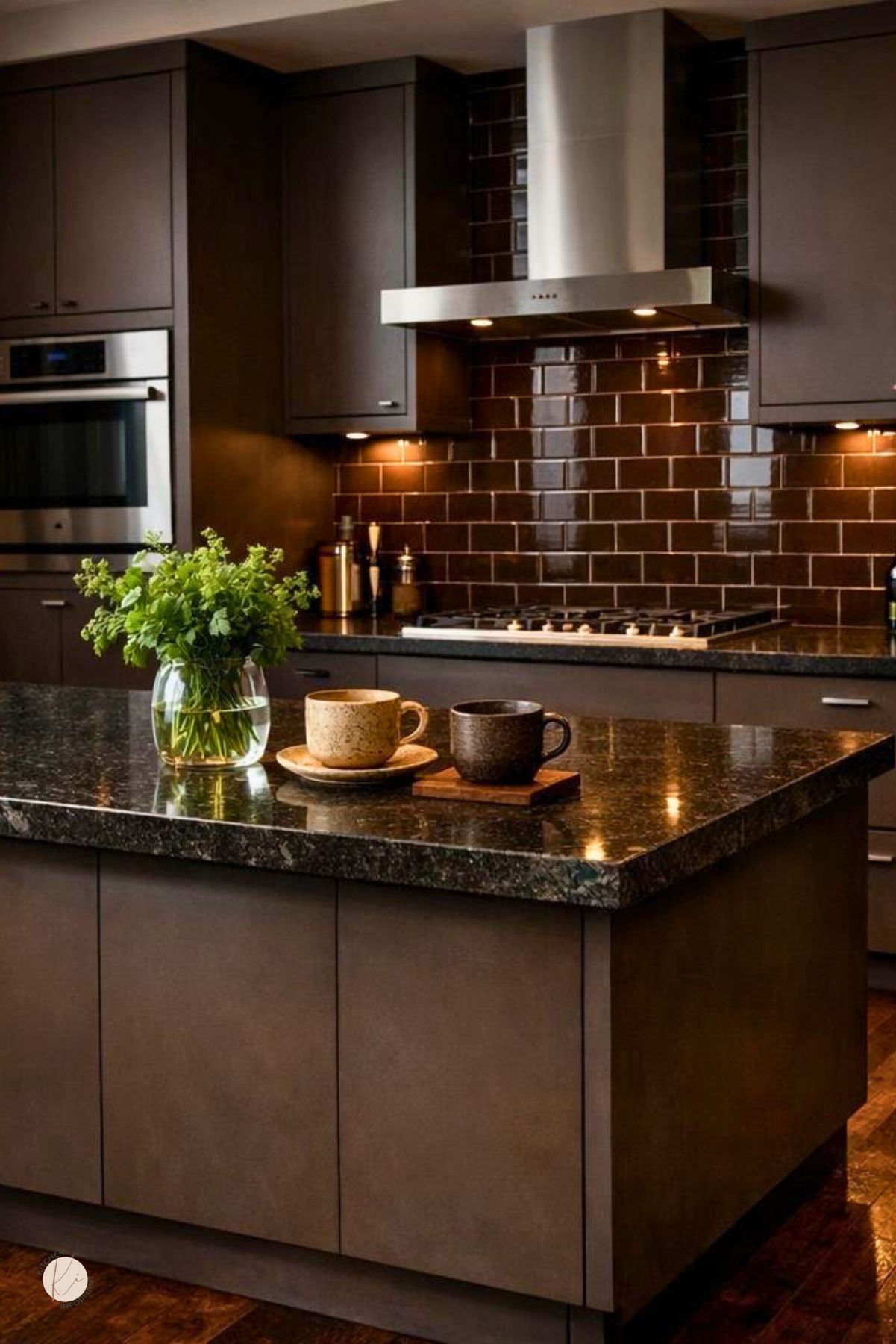
Light quartz, white marble-look surfaces, and pale stone usually balance dark cabinets well. A backsplash with some texture can add interest without adding more visual weight.
Avoid pairing espresso brown with another very dark slab unless the room has strong natural light and a large footprint. Contrast is usually the safer path.
Materials and Finishes That Work With Dark Cabinetry
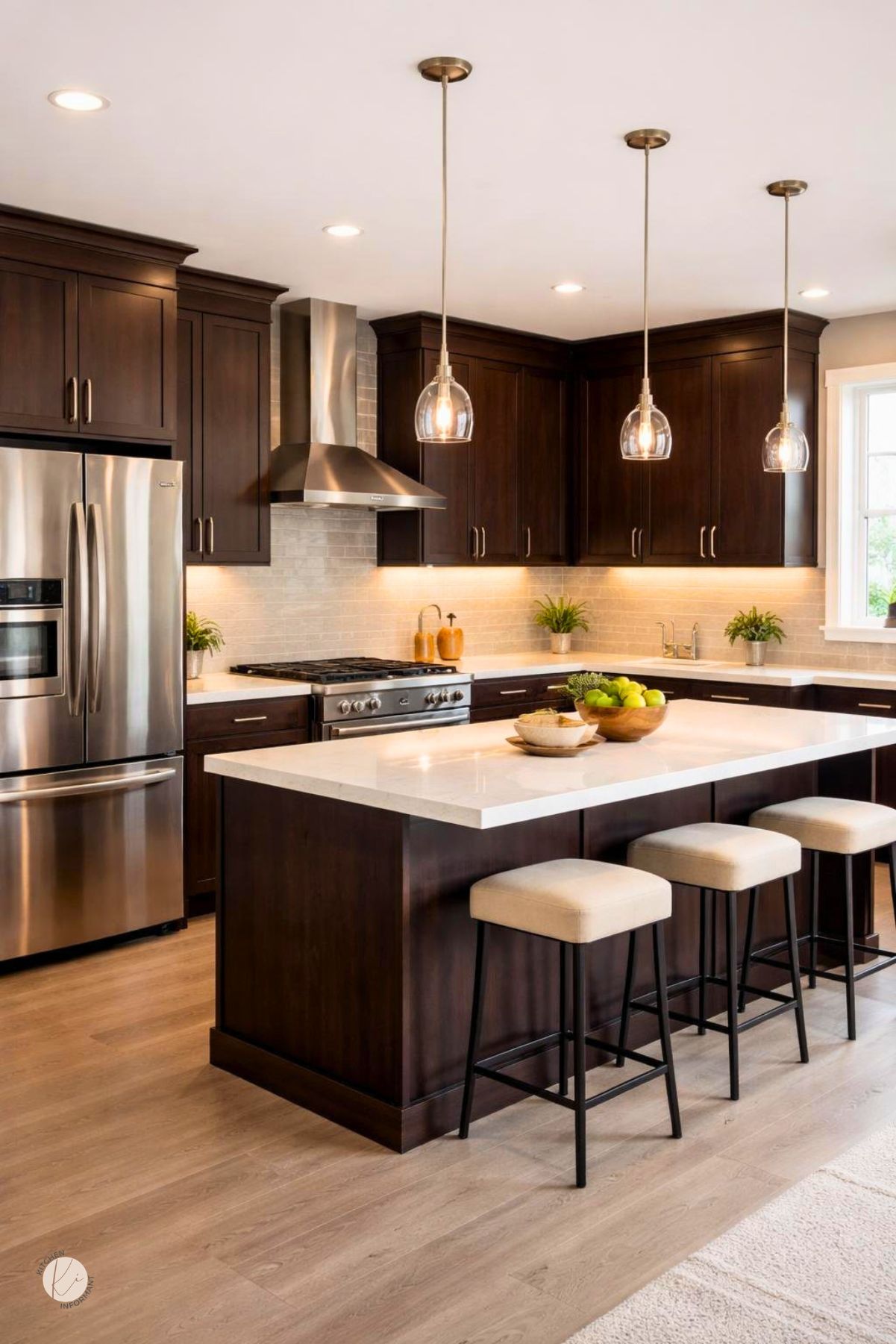
Materials near espresso brown should add clarity, not clutter. Hardware, flooring, and paint finish need to work together so the kitchen feels intentional and easy to use.
Hardware Finishes
Warm brass, brushed gold, matte black, and stainless steel can all work, depending on the look. Brass and gold soften the dark color, while stainless steel keeps the room more neutral and practical.
Very shiny hardware can feel busy on dark cabinets. A brushed or satin finish is often easier to live with.
Flooring Compatibility
Light oak, medium-toned wood, and soft stone usually pair well with espresso brown. They give the room some warmth without competing with the cabinets.
Dark floors can work, yet they need lighter counters, walls, and lighting to avoid a closed-in result. A strong contrast between floor and cabinet usually improves balance.
Paint and Stain Pairing Strategy
If the cabinet doors are being refinished, the paint or stain should be tested next to the floor, wall color, and countertop sample. Espresso brown can shift warmer or cooler depending on the base material.
A matching stain on every wood element is not required. It is usually better to coordinate undertones than to force an exact match.
Practical Update Paths for Different Budgets
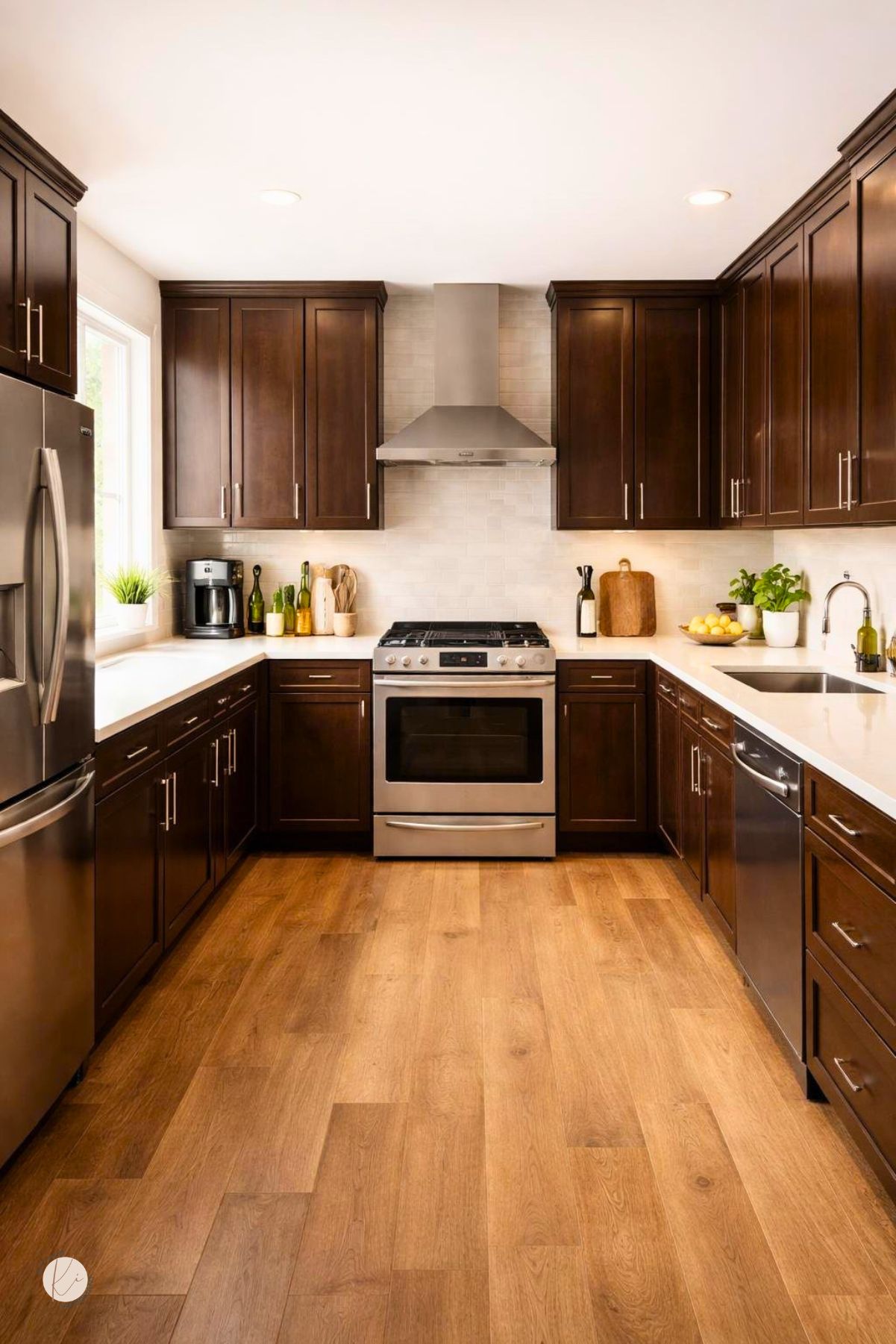
The right update path depends on cabinet quality, layout, and budget. Some kitchens need only surface changes, while others are better suited to a full rebuild.
Low-Cost Cosmetic Improvements
Simple updates can improve an espresso brown kitchen without major construction. New cabinet pulls, brighter bulbs, fresh caulk, and a lighter wall color can change the feel quickly.
Other small moves include swapping in a lighter rug, adding under-cabinet lighting, and reducing visual clutter on counters. These changes work best when the cabinets are already in good shape.
Mid-Range Refresh Options
A mid-range refresh may include repainting, refacing, new countertops, or a new backsplash. This route works well when the layout is fine, but the color or finish feels dated.
Refacing is useful when the cabinet boxes are solid and the homeowner wants a cleaner, newer look without full replacement. It can also help when the doors need a style update.
Full Renovation Decision Factors
Full replacement makes sense when the cabinets are damaged, the layout is inefficient, or the kitchen needs better storage and workflow.
It is also the right move when the existing finish cannot be matched or repaired well.
A full renovation gives the most control over the final espresso brown tone and door style.
It costs more, so the decision should be tied to function as well as appearance.
You May Also Like: