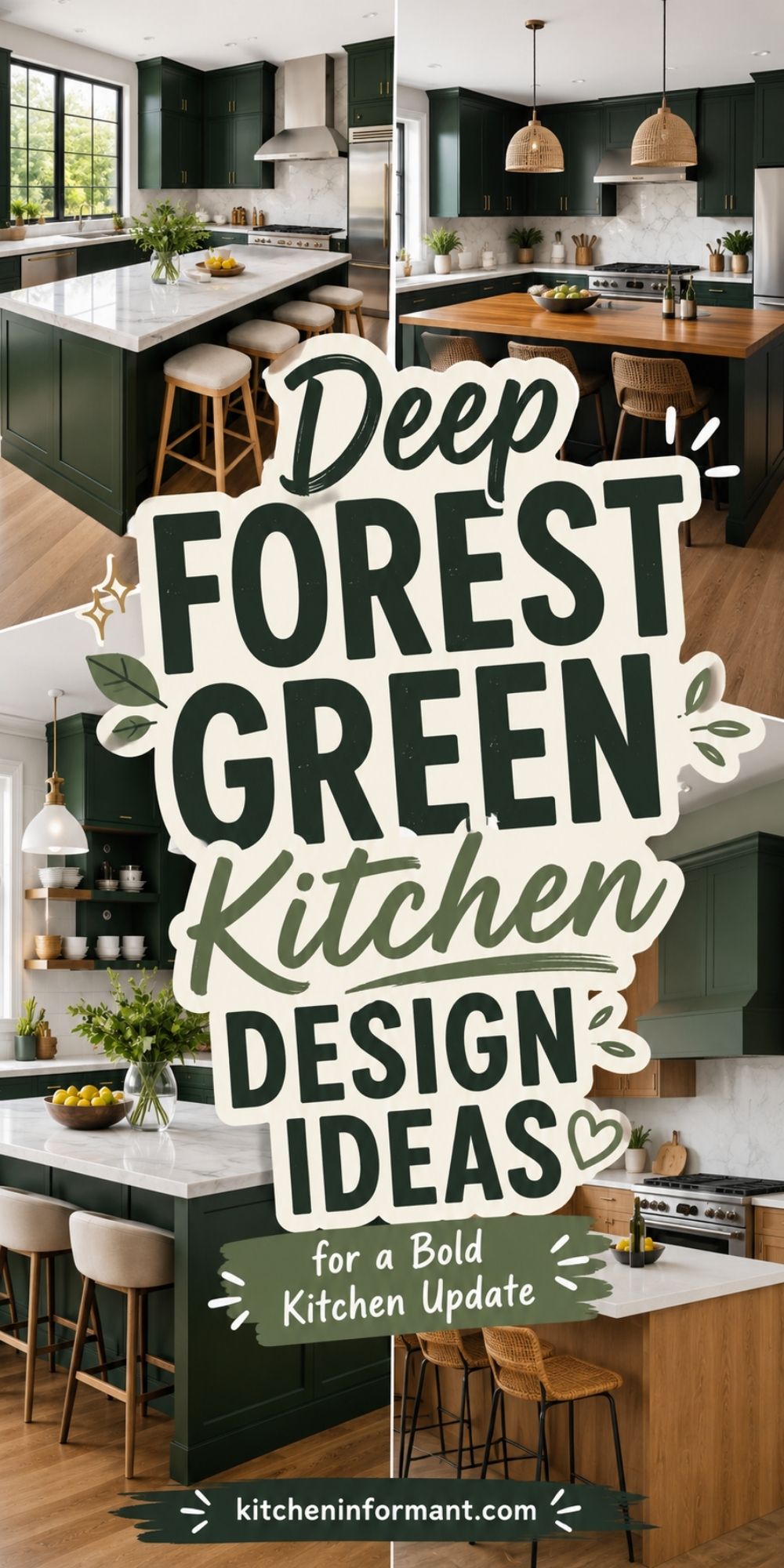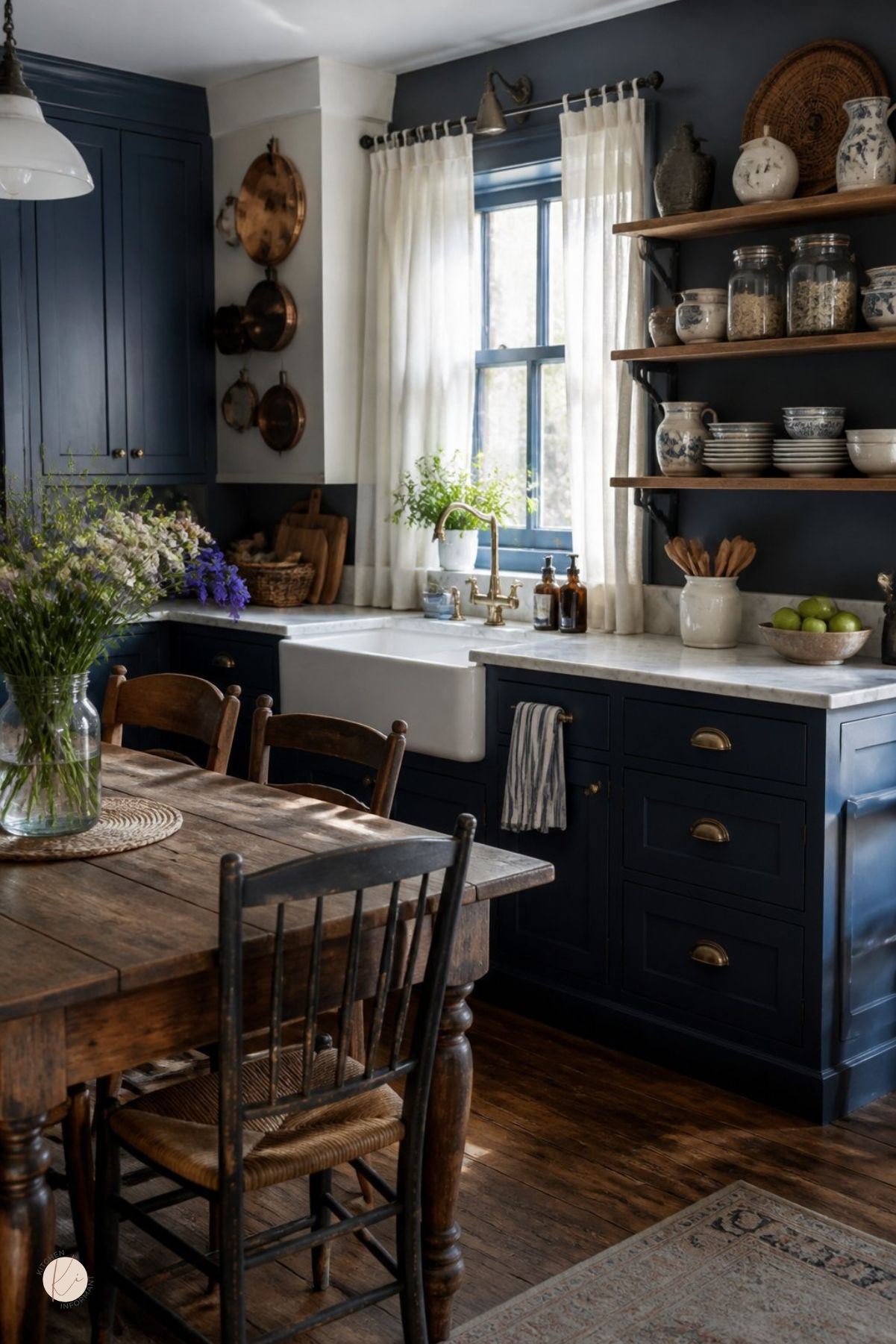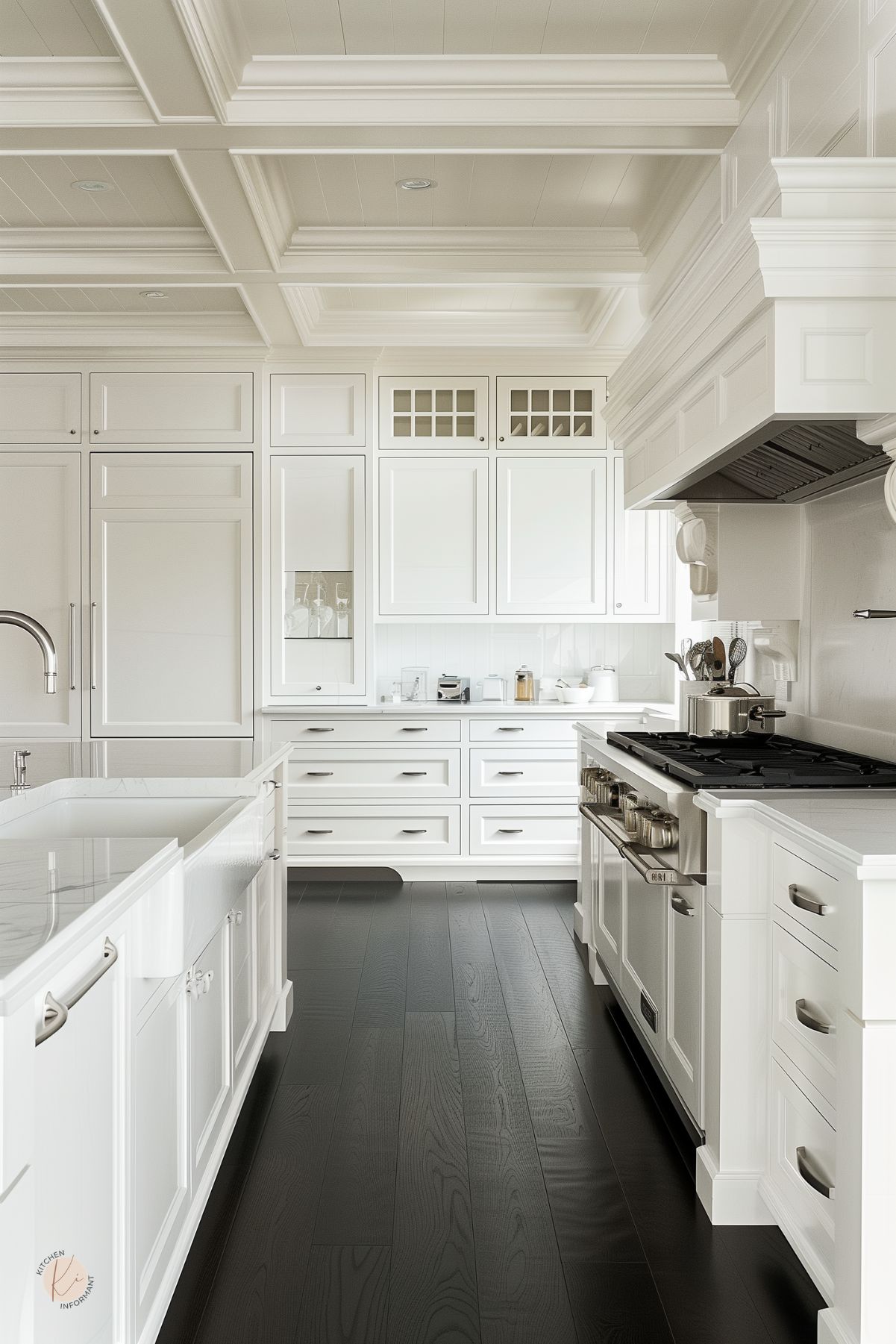
Deep Forest Green Kitchen design works because it adds depth without needing a full overhaul.
It can make older oak cabinets feel more current, especially when the rest of the room is planned with care.
The best results come from checking cabinet quality, oak undertones, and light direction before choosing paint, counters, or hardware.
That step helps the color feel grounded, not dark or mismatched.
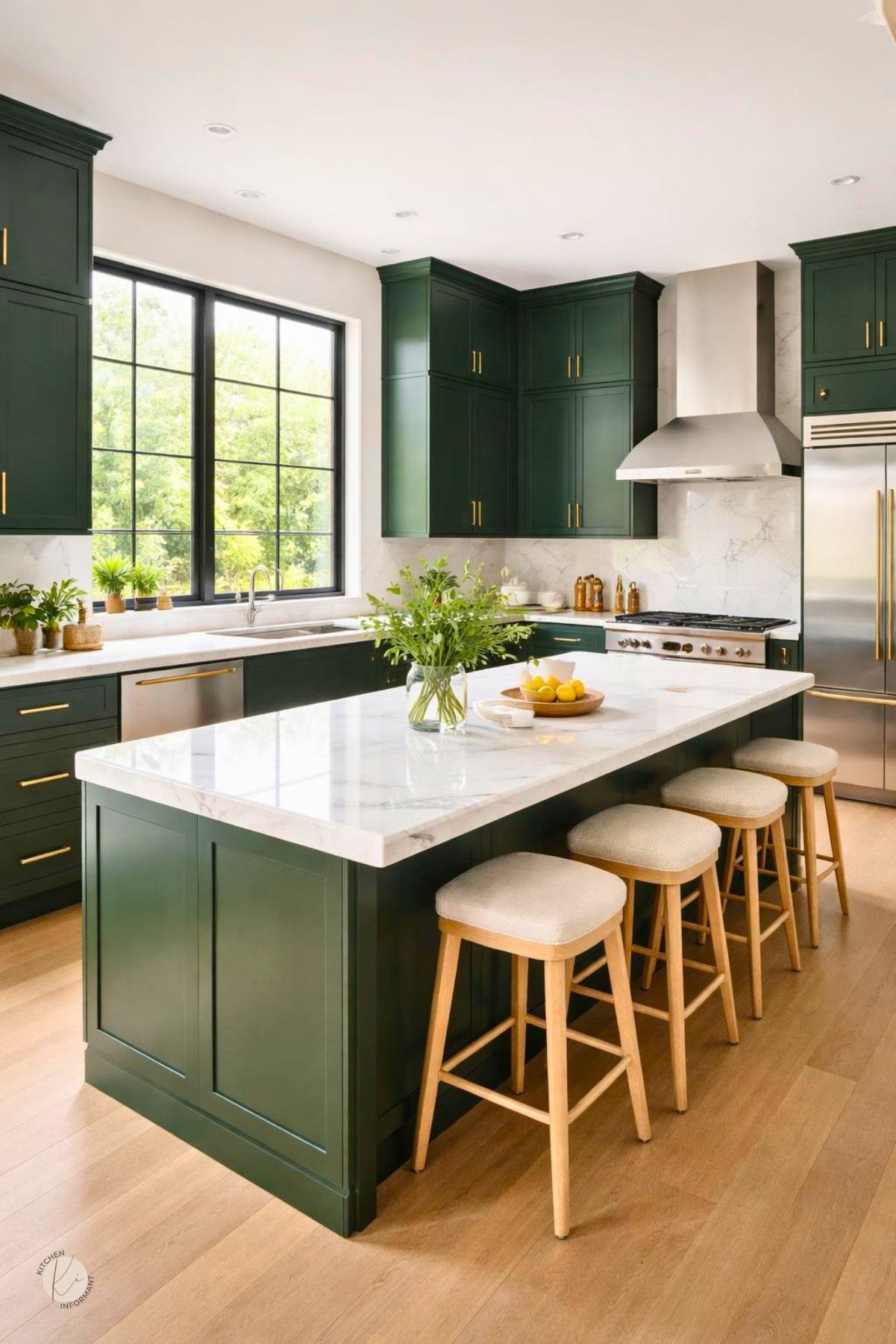
A deep forest green kitchen can look calm, rich, and practical at the same time.
It fits a wide range of home styles, from traditional houses to updated farmhouses and more modern spaces.
Why This Shade Works in a Kitchen
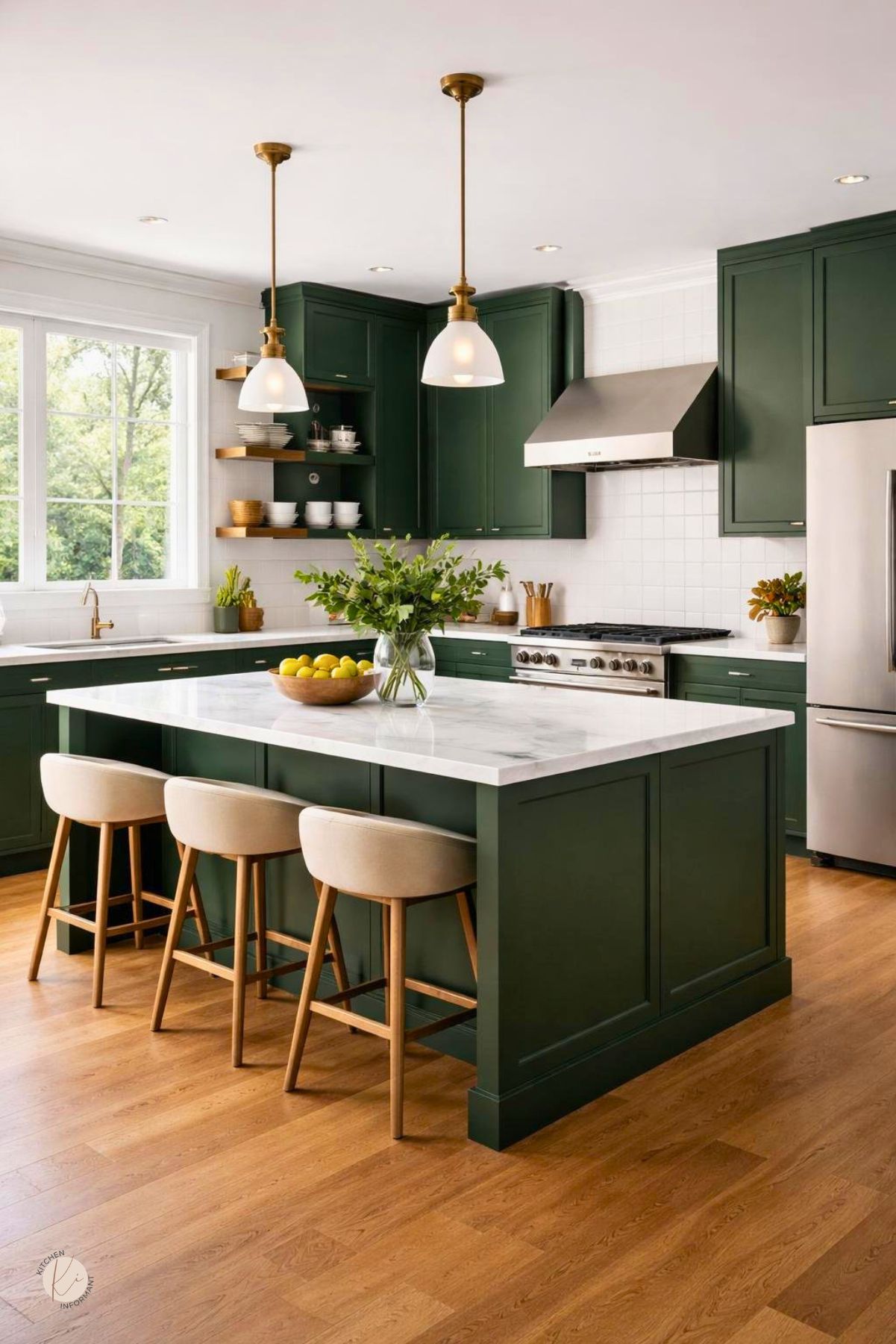
Deep forest green brings visual weight to a kitchen in a controlled way.
It reads as a natural color, which helps it feel steady rather than harsh.
Mood and Visual Impact
Forest green creates a calm, grounded mood.
It can make a kitchen feel more finished, especially when paired with simple materials like oak, stone, or painted trim.
The color also gives cabinets more presence.
Instead of looking flat, the room gains contrast and depth.
Best Home Styles for the Color
This shade works well in older homes, Craftsman spaces, farmhouse kitchens, and transitional layouts.
It also suits kitchens with shaker cabinets, where panel lines add structure to the darker color.
In more modern homes, deep green can soften a space that has lots of white, black, or metal.
It adds warmth without losing a clean look.
When the Look Can Feel Too Heavy
The color can feel dense in a small kitchen with little daylight.
That risk rises when the walls, counters, and floors are also dark.
Lighter upper walls, reflective backsplash tile, and a clear finish plan help the room stay open.
Open shelves or glass cabinet doors can also reduce visual weight.
How to Balance Dark Green With Oak Cabinets
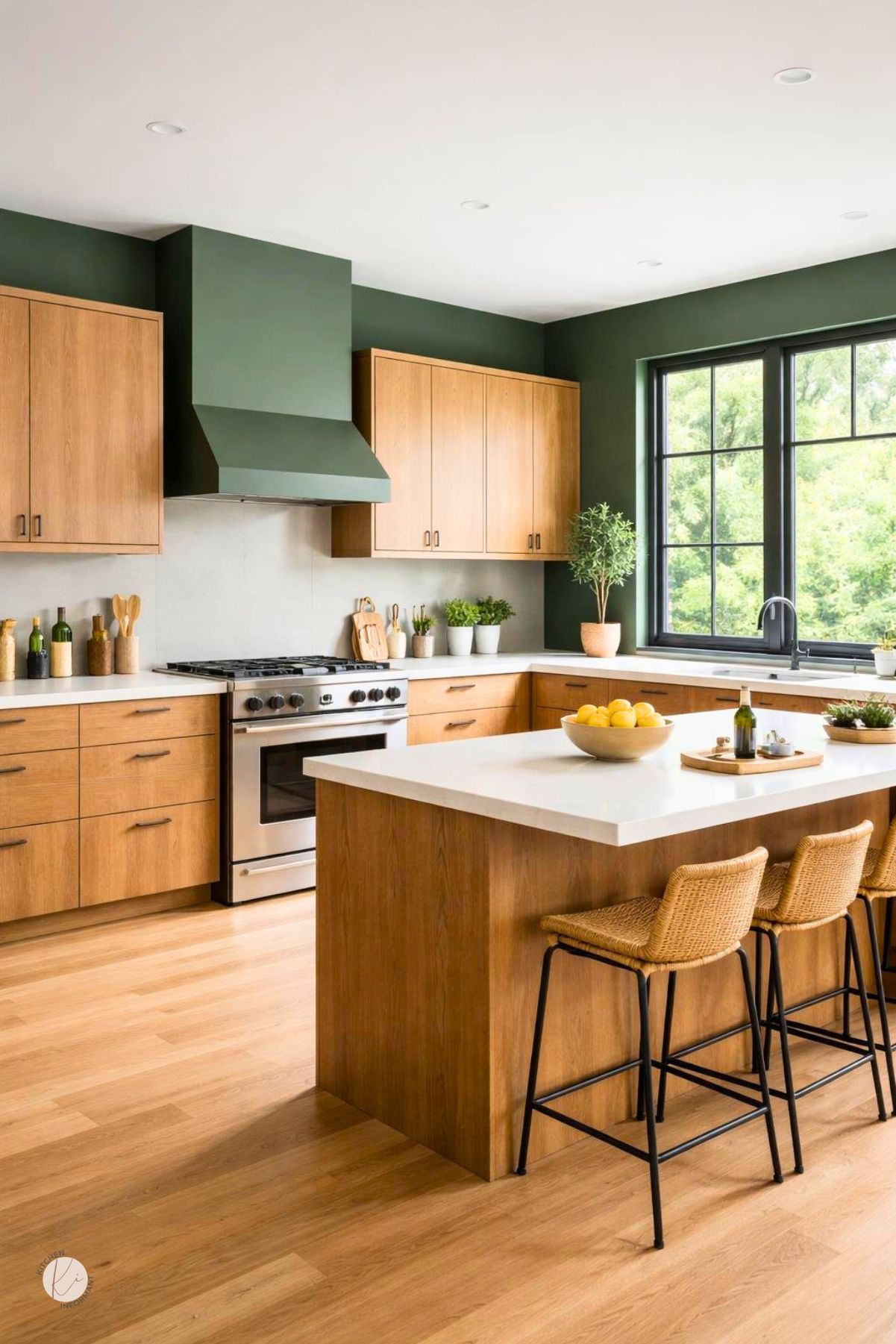
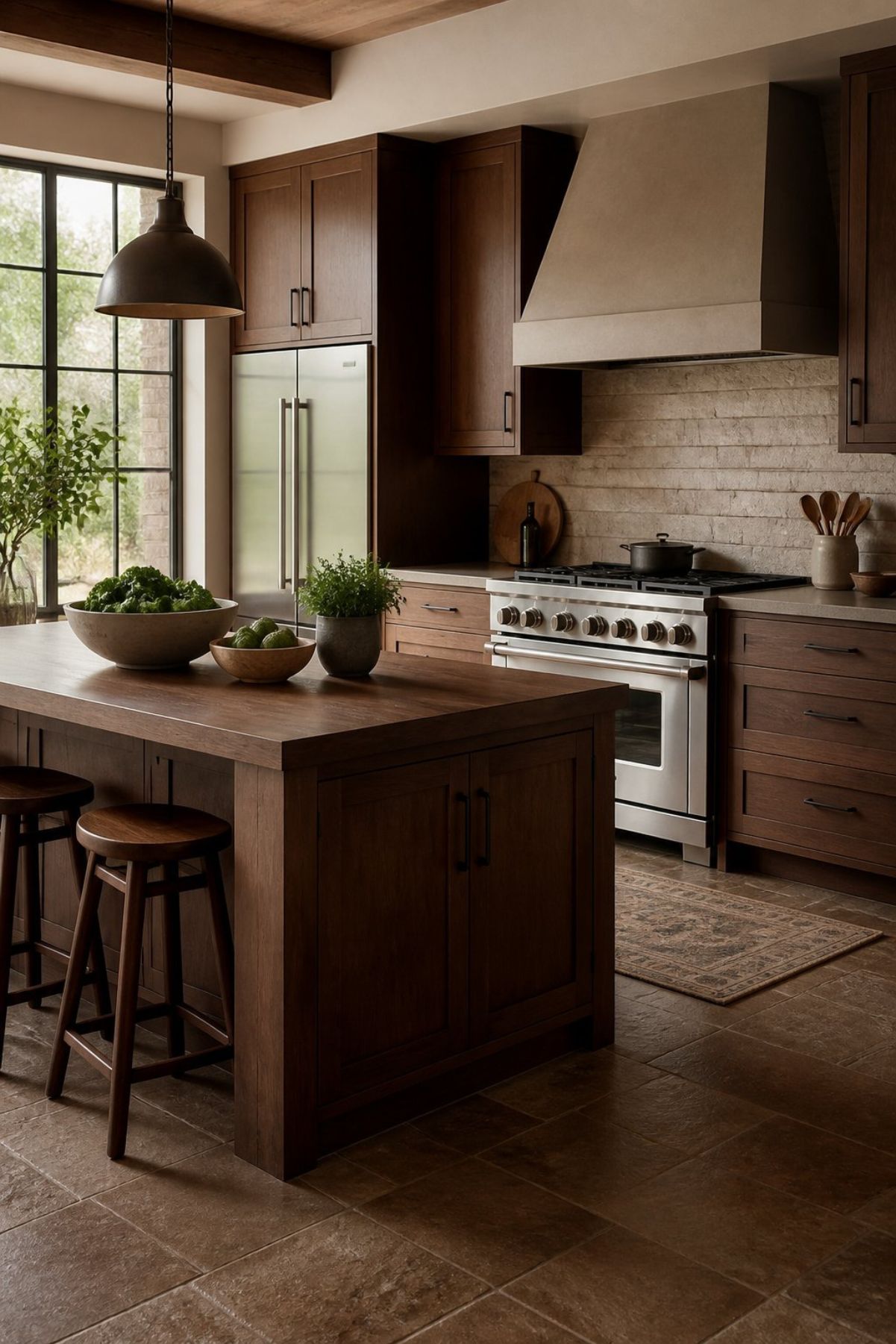
Oak and deep green can work well together when the undertones match.
The goal is not to hide the wood, it is to make the wood and paint look intentional in the same room.
Reading Oak Undertones Correctly
Oak can lean yellow, orange, red, or light brown.
Yellow oak usually works best with warmer greens, while orange or red oak often needs a deeper green with more muted depth.
A sample board placed beside the cabinets helps more than guessing from a paint chip.
Morning and evening light can change the look enough to matter.
Using Blue and Yellow as Supporting Accents
Blue accents can cool the palette and keep the room from feeling too brown.
Think dishware, patterned fabric, a rug, or even a blue-gray wall color in a nearby space.
Yellow works in a smaller dose.
It can show up in art, ceramics, or a warm undertone in tile and textiles.
Too much bright yellow can fight with oak, so it should stay soft and controlled.
Matching Warm Wood With Cooler Surfaces
Cooler surfaces help oak and green feel balanced.
White quartz, pale marble, brushed nickel, and light grout all reduce the heaviness of warm wood.
A kitchen with oak cabinets and deep green walls or an island often looks stronger when the counters stay light.
That contrast keeps the room readable at a glance.
Lighting and Room Conditions to Check First
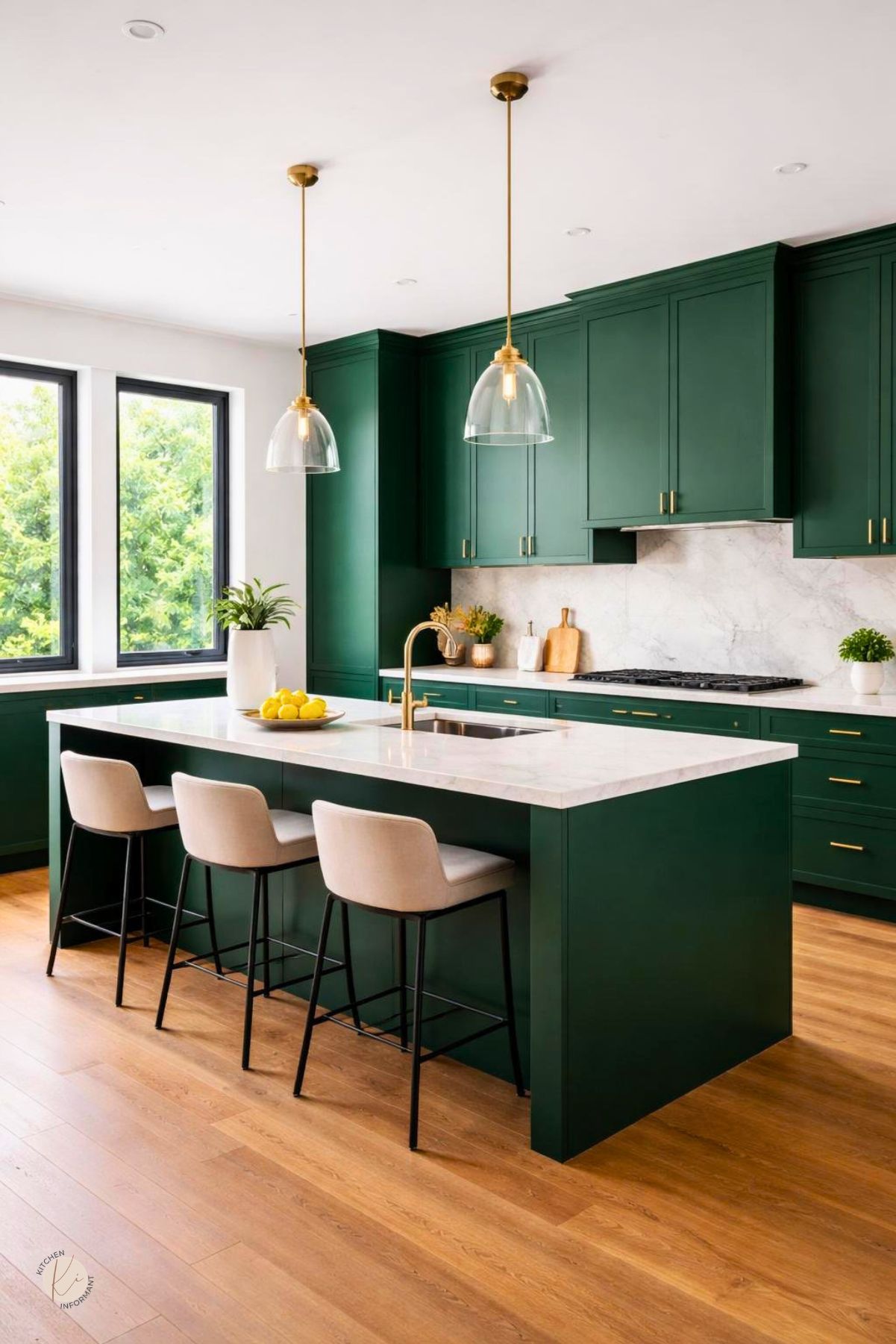
Light changes deep green more than many homeowners expect.
The same paint can look rich, gray-green, or nearly black depending on the room.
North- Versus South-Facing Light
North-facing kitchens usually receive cooler, softer light.
In those rooms, deep forest green may look darker and more muted, so a slightly warmer version can help.
South-facing kitchens often get stronger light for more of the day.
That brightness can support a deeper, cooler green without making the room feel closed in.
How Natural Light Changes the Paint
Morning light, midday light, and late-afternoon light all shift the color.
A green that looks balanced at noon may feel much heavier at sunset.
Samples should be viewed on more than one wall.
They should also be checked next to cabinets, counters, and floor finishes, since nearby materials affect the final read.
Artificial Lighting That Keeps Green True
Warm bulbs can make forest green feel browner.
Cooler bulbs can push it too far toward gray or blue.
A balanced approach often works best, with high-quality LED lighting in a warm-neutral range.
Under-cabinet lights also help the finish stay clear and usable at night.
Cabinet Strategy: Keep, Refresh, or Replace
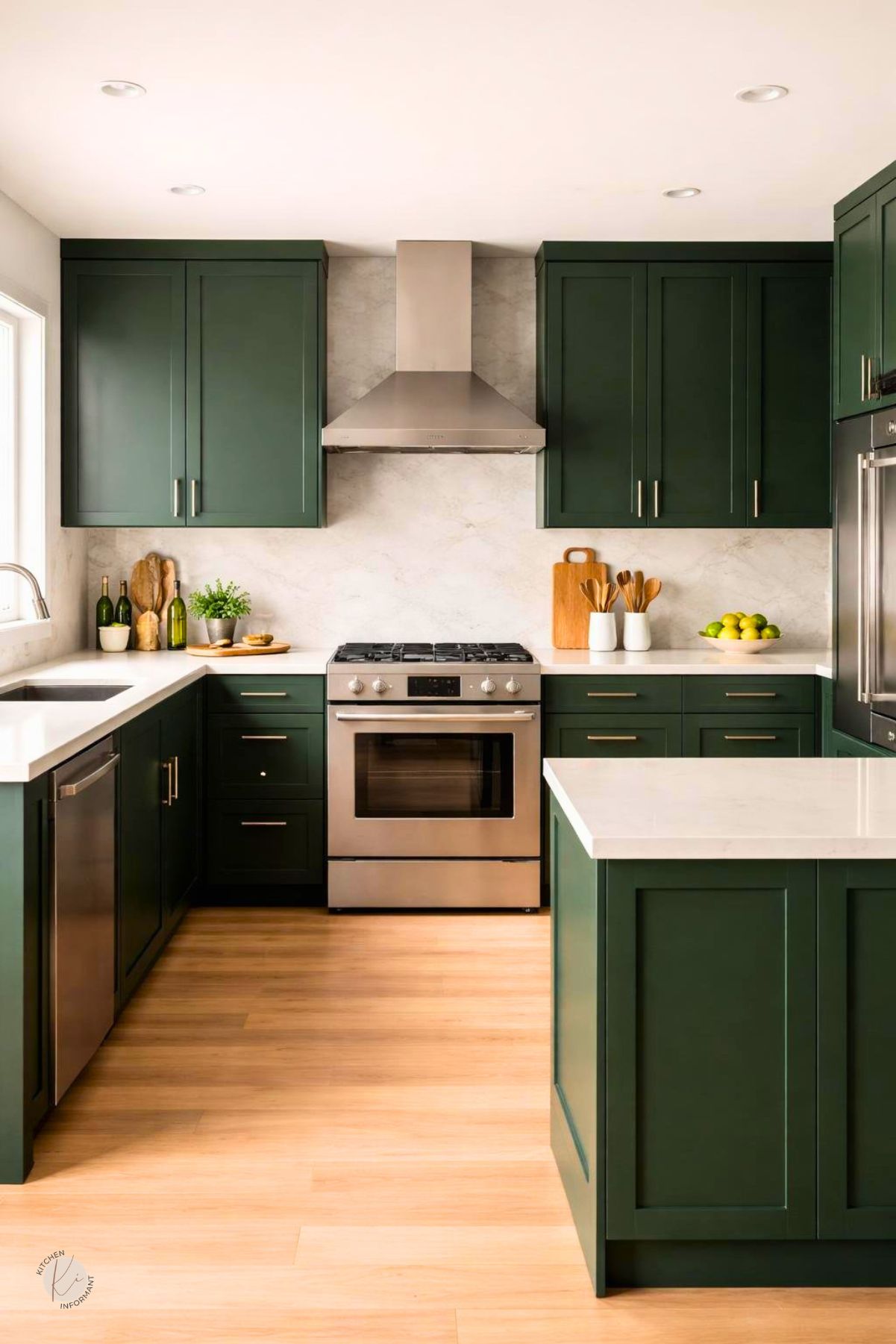
Older oak cabinets do not need to be replaced just because the color feels dated.
A careful check of the cabinet box, doors, and layout usually points to the right path.
Signs Existing Cabinet Boxes Are Worth Saving
Solid boxes, sturdy hinges, and doors that still close well are good signs.
If the layout works and the cabinets are not warped or water-damaged, a refresh may be enough.
Oak cabinets with good bones often take paint, stain, or new hardware well.
The structure matters more than the surface finish.
Cosmetic Updates That Change the Look Fast
New hardware, updated lighting, and a fresh wall or island color can change the room quickly.
Painting only the lower cabinets or island in deep forest green is also a practical step.
Refacing doors or adding new fronts can improve the look without changing the cabinet box.
That approach often costs less than full replacement and keeps the kitchen usable.
When Replacement Makes More Sense
Replacement is more reasonable when the layout does not work, the boxes are failing, or moisture damage is present.
It also makes sense when the cabinet style is too damaged for paint or new veneer.
If the kitchen needs better storage, better drawer access, or a new work triangle, replacement may solve more than color alone.
In that case, the green finish can be part of the new plan rather than the whole solution.
Materials and Finishes That Pair Well
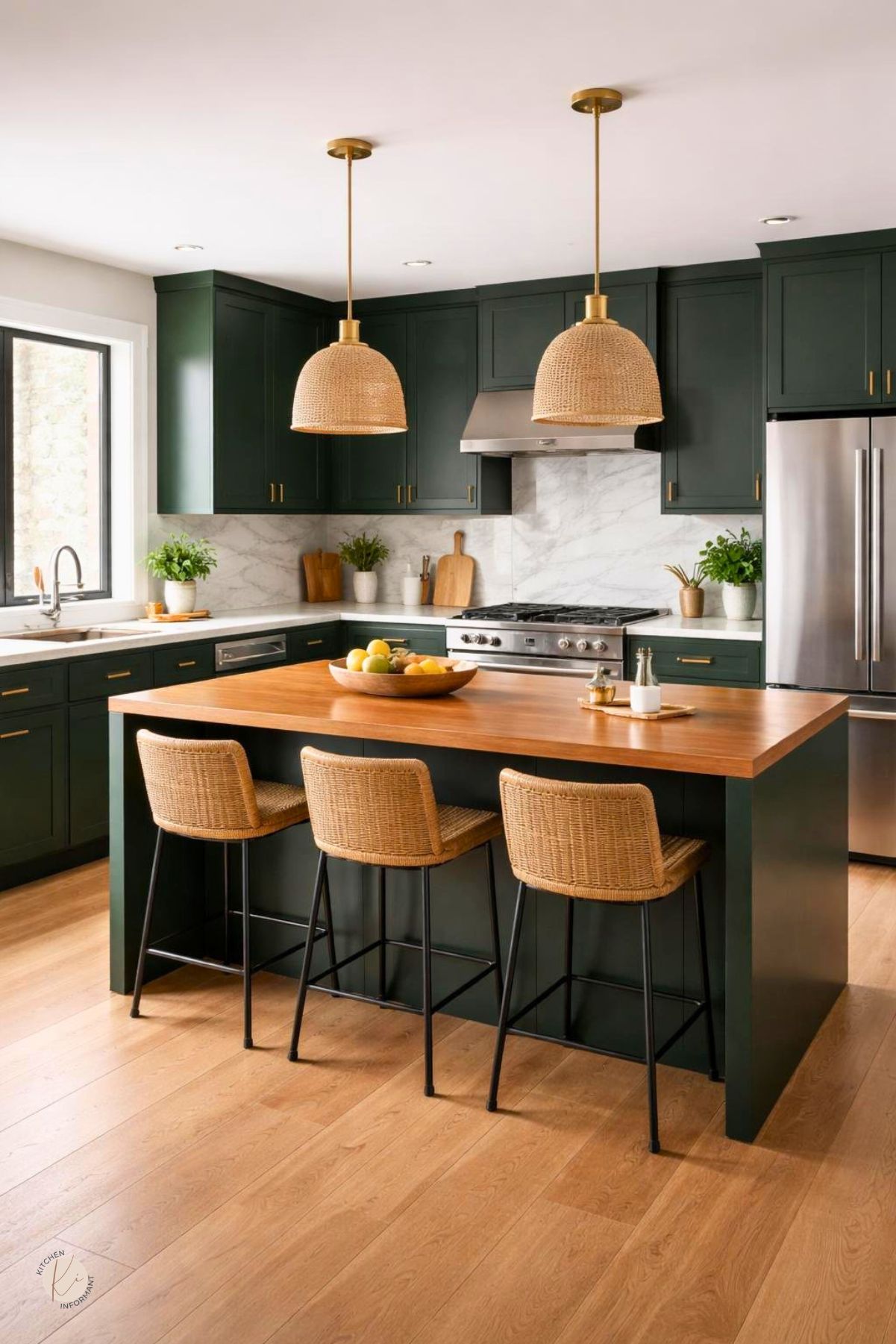
Deep green needs supporting materials that add contrast without competing for attention.
The most useful pairings usually mix warmth, light reflection, and a small amount of shine.
Countertop Options That Add Contrast
White quartz, pale marble, and light granite help keep the room bright.
Wood counters can also work, especially when the kitchen needs more warmth and texture.
A butcher block island can soften the look of forest green cabinets.
It also helps older oak cabinetry feel less visually abrupt.
Backsplash Choices That Prevent Color Clash
Simple tile often works best.
White subway tile, handmade-look ceramic, and marble slab backsplashes keep the green from becoming too dominant.
If the room already has oak cabinets, the backsplash should avoid strong pattern overload.
A quiet surface gives the eye a place to rest.
Hardware Metals That Suit the Palette
Brass adds warmth and works well with deep green and oak.
It often feels like the safest metal choice for a classic look.
Brushed nickel and stainless steel support a cooler, cleaner style.
Matte black can work too, especially in modern kitchens, though it needs enough light and contrast to avoid feeling severe.
Practical Styling and Maintenance
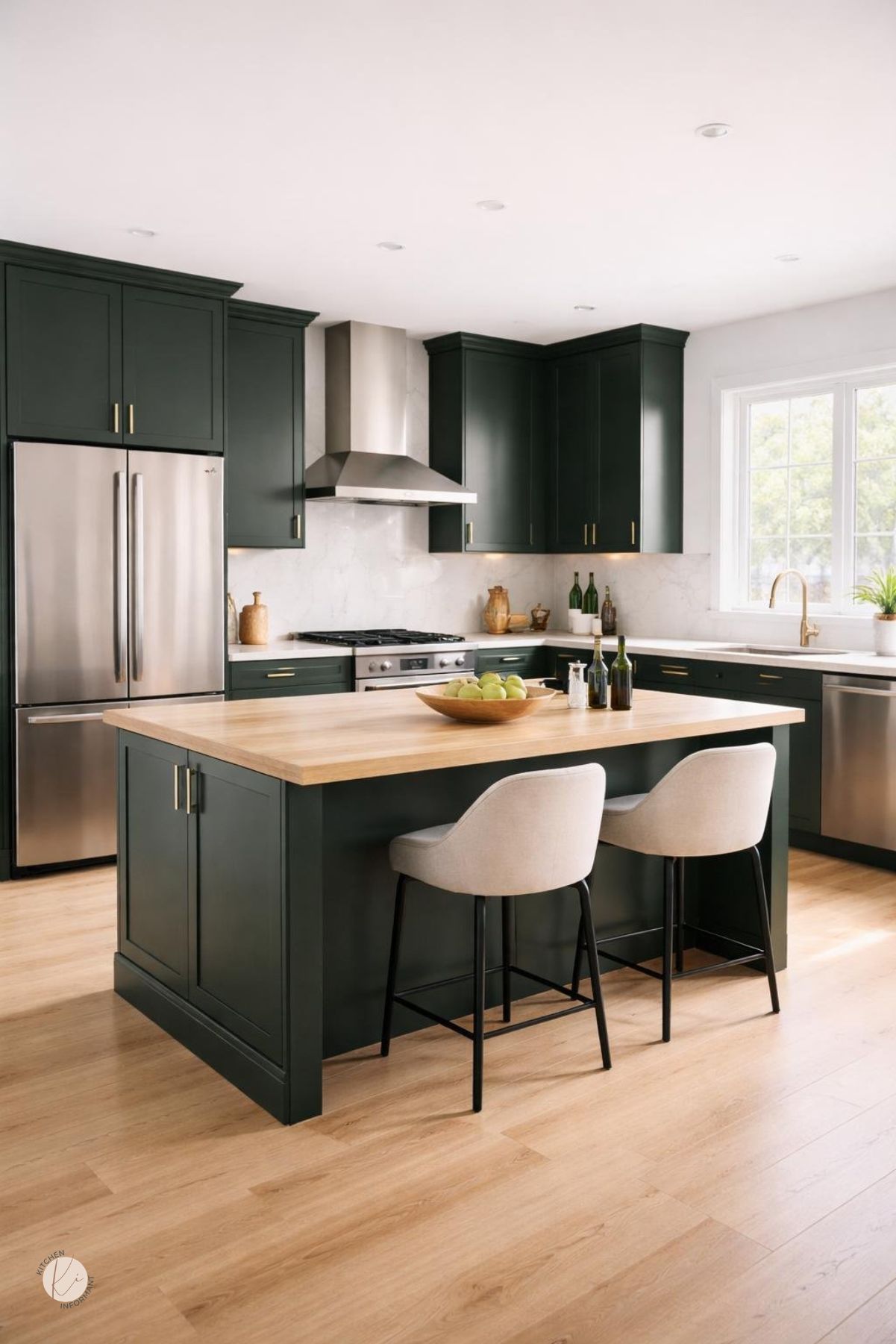
A deep green kitchen looks best when the surrounding details stay simple and useful.
Durable finishes, clear sightlines, and a few well-chosen accents make the room easier to live with.
Flooring That Supports the Color Scheme
Medium wood floors, light oak, and warm neutral tile often work best.
They connect well with both oak cabinets and forest green finishes.
Very dark flooring can make the room feel lower and heavier.
Very cool gray floors can separate the palette in a way that feels less natural.
Decor Details That Keep the Space Cohesive
Small accents can tie the room together without clutter.
Linen textiles, ceramic bowls, wooden cutting boards, and restrained blue or yellow details all support the color plan.
Plants also fit the palette, though they should not crowd the counters.
A few living greens are enough to reinforce the natural look.
Cleaning and Wear Considerations
Dark green cabinets can show dust, fingerprints, and grease depending on the sheen.
Satin or matte finishes often hide wear better than high gloss.
High-use areas near handles and sinks need durable paint or factory finishes.
Wipeable backsplash tile and easy-clean hardware help the kitchen stay sharp with less effort.
You May Also Like: