After the holidays, kitchens usually feel cluttered and messy from all the cooking and celebrations. A proper reset brings back order and cleanliness, making the kitchen more pleasant to use again.
The best way to reset a kitchen after the holidays is to clear out expired items, deep clean appliances, and organize storage areas like the pantry and fridge.
This refresh not only makes the kitchen feel new but also makes it easier to find what you need for everyday meals.
Cleaning surfaces, wiping down shelves, and decluttering will make the coming weeks less stressful. A systematic reset helps turn chaos back into a functional space.
Organize and Declutter the Kitchen

Resetting the kitchen means getting rid of holiday-only items, sorting out tools, and tossing old food. This creates space and makes daily cooking way easier.
Clear Out Holiday-Specific Items
After the holidays, pack away dishes, decorations, and cookware you only use once a year. Getting these things out of the way frees up counter and cabinet space fast.
Gather up those holiday-specific items, clean them if they’re sticky, and stash them in labeled boxes or bins. That way, they’ll be easy to find next year. Removing extra serving platters, themed towels, and seasonal utensils helps bring the kitchen back to normal.
Sort and Store Kitchen Tools
Kitchen tools have a way of piling up, especially after big holiday meals. Sort utensils, gadgets, and cookware by how often you actually use them. Keep daily tools like knives and spatulas within reach.
Put less-used tools in drawers or cabinets set aside for them. Grouping similar items together makes them easier to find. Drawer dividers or containers help keep things neat and stop clutter from sneaking back in. This kind of organizing speeds up both cooking and cleanup.
Dispose of Expired or Leftover Ingredients
Holiday meals usually leave behind a lot of leftovers and random ingredients. Check dates on pantry items, spices, and stuff in the fridge. Toss anything that’s expired or looks sketchy.
Leftover sauces, baked goods, or produce you won’t eat soon? Time to let them go. Freezing what you can saves food from going to waste.
Keeping the pantry and fridge fresh and clean cuts down on clutter and food safety problems.
Deep Clean Kitchen Surfaces

After all that holiday cooking, kitchen surfaces are probably grimy. Countertops, appliances, cabinets, and drawers need attention to get rid of dirt and bacteria.
Wipe Down Countertops and Backsplashes
Countertops and backsplashes catch most of the mess from cooking. Start by clearing off any stuff and brushing away crumbs.
Use a gentle cleaner that matches your counter material—dish soap for laminate, stone cleaner for granite. Spray it on and wipe with a clean cloth or sponge.
Don’t ignore corners and edges where flour and grease hide. Backsplashes, especially behind the stove, might need a little extra scrubbing to get rid of splatters.
Dry everything with a microfiber cloth so you don’t get streaks. Keeping these spots clean is key for both hygiene and the look of your kitchen.
Sanitize Appliances
Appliances take a beating during the holidays. Ovens, microwaves, fridges, and dishwashers need a good clean to get rid of food gunk and odors.
Unplug appliances for safety. Take out trays and racks, and wash them in warm, soapy water.
For stubborn stains in ovens or microwaves, use a cleaning spray or baking soda paste. Wipe down exteriors, knobs, and handles with disinfectant to kill germs.
Small appliances like toasters or coffee makers deserve some love too. Empty out crumbs or buildup so they keep running well.
Clean Cabinets and Drawers
Cabinets and drawers get greasy and full of crumbs after all that use. Empty them out completely before cleaning.
Wipe inside with a mild cleaner or vinegar solution. For sticky spots, a soft brush or sponge does the trick.
Toss expired food or packaging waste. Wipe cabinet doors and drawer fronts with a damp cloth, then dry them off. Regular cleaning keeps buildup away and helps your cabinets last longer.
Refresh Food Storage Areas

Food storage areas need attention too. Clearing out old stuff, organizing staples, and restocking essentials creates a clean space. It makes cooking easier and helps cut down on waste.
Clean Out the Refrigerator and Freezer
Start by emptying the fridge and freezer. Check dates and toss anything that’s spoiled or ancient. Wipe down shelves, drawers, and door seals with warm, soapy water or a gentle cleaner.
Organize food by type and how often you use it. Use clear containers or bins to group things like dairy or leftovers. Put the most-used items at eye level so you can grab them fast.
If the freezer’s frosty, defrost it and label stuff to avoid freezer burn. Keeping a list of what’s inside helps you avoid buying doubles and wasting food.
Organize Pantry Staples
Give the pantry a full reset. Pull everything out and trash anything expired or stale. Wipe down shelves before putting items back.
Group grains, canned goods, snacks, and baking supplies together. Airtight containers keep dry goods safe from pests and moisture. Clear jars or labels make it easy to spot what you need.
Shelf risers or baskets can maximize space and keep things tidy. Store heavier stuff on lower shelves to avoid accidents.
Check and Replenish Essential Supplies
Once everything’s clean and organized, check what you’re low on. Make a list of pantry, fridge, and freezer basics that need restocking.
Focus on essentials like cooking oils, spices, flour, sugar, and canned veggies. Replace fresh items like milk, eggs, butter, and produce as needed.
Only buy what fits in your kitchen to avoid new clutter. A well-stocked storage area makes meal prep way smoother after the holidays.
Restore Kitchen Workflow
Getting the kitchen workflow back on track means making sure everything you need is easy to find. This saves time and cuts down on stress during meal prep.
Organize things by how often you use them, and set up clear zones for cooking and prep.
Reorganize Frequently Used Items
Keep daily or weekly items within arm’s reach. Utensils, pots, pans, cutting boards, and spices all belong close to where you use them. Drawers or cabinets near the stove are perfect for these.
Clear containers or labeled baskets keep small stuff neat and easy to spot. Store spice jars in a rack near the stove. Put bigger tools like mixers or blenders somewhere handy but off the counters.
Move rarely used appliances out of sight to free up space. This simple change makes cooking more efficient and saves you from hunting for tools.
Set Up Cooking and Prep Zones
Divide the kitchen into zones for different tasks. The cooking zone gets the stove, oven, pots, pans, and utensils. The prep zone needs counter space, cutting boards, knives, and bowls.
Keeping these zones separate stops clutter from piling up. Prepping veggies near the sink, close to your prep zone, saves you extra steps. Clean surfaces between tasks for a smoother flow.
Clear zones help you move from one step to the next without interruption. This setup even makes cleanup easier since messes stay in one spot.
Address Kitchen Linens and Utensils
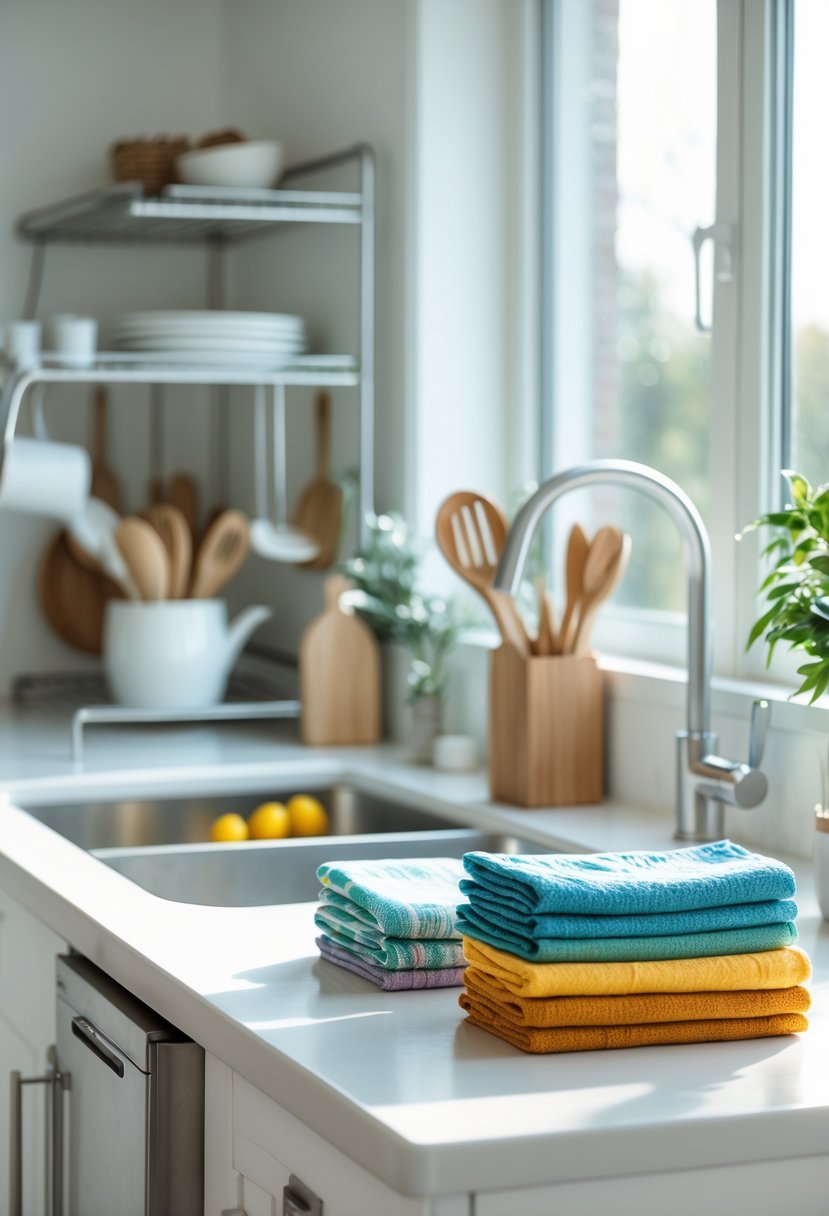
Refreshing kitchen linens and taking care of utensils keeps your kitchen clean and efficient. Wash or replace fabrics that got messy over the holidays.
Make sure knives are sharp and stored safely—it really makes cooking easier.
Wash and Replace Towels and Oven Mitts
Kitchen towels and oven mitts get a workout during the holidays. They soak up grease, stains, and germs after days of use.
Wash them in hot water with strong detergent to get rid of grime and bacteria. Bleach or vinegar can help with tough stains and freshen up the fabric.
Rough or burnt towels should go. Old oven mitts lose heat protection and can be dangerous. Swap out damaged mitts for new ones to avoid burns. Having fresh, clean linens on hand makes kitchen tasks a lot more pleasant.
Sharpen and Store Knives Properly
Holiday cooking dulls knives fast. Sharp blades make prep safer and quicker. Use a sharpening stone or honing rod to restore the edge. Regular sharpening, especially after heavy use, keeps knives in good shape.
Store knives safely—magnetic strips or blocks work well. Don’t just toss them in a drawer, since that dulls the edges and can cause accidents. Well-maintained knives make future meals way easier.
Maintain Post-Holiday Kitchen Routines

Keeping your kitchen tidy after the holidays comes down to sticking with simple routines. Planning meals ahead helps avoid waste and encourages better eating habits.
It’s not always perfect, but a little effort goes a long way in keeping things under control.
Establish a Regular Cleaning Schedule
Setting a regular cleaning schedule keeps messes from piling up. Try to include daily tasks like wiping countertops, washing dishes, and sweeping floors.
These small habits keep surfaces free of crumbs and spills. Weekly chores might mean cleaning the refrigerator, emptying the trash, or mopping the floor.
Assigning certain days to each task adds a bit of structure. It definitely helps cut down on stress, too.
Some people like a checklist or calendar reminder so nothing slips through the cracks. Honestly, this approach saves you from those dreaded deep cleans and keeps the kitchen ready for whatever comes up.
Plan Healthy Meals Moving Forward
After the holidays, planning meals can help with portion control and cutting food waste. Making a weekly shopping list based on balanced recipes keeps you focused and avoids buying too much.
Adding more fresh veggies, lean proteins, and whole grains is always a smart move. Prepping meals ahead or batch cooking can really save time when life gets hectic.
Keep track of leftovers and find creative ways to use them. It stops food from spoiling and means less trash.
Sustainable Disposal and Recycling

Resetting the kitchen after the holidays is a great time to manage waste in an eco-friendly way. Sorting food scraps and packaging properly cuts down on landfill waste and helps with sustainability goals at home.
Compost Organic Waste
Composting gives food scraps a second life instead of tossing them out. Things like vegetable peels, fruit cores, coffee grounds, and eggshells break down in a compost bin and turn into nutrient-rich soil for plants.
Skip composting meat, dairy, or greasy foods—they’ll just cause trouble with pests and smells. A kitchen compost container with a lid keeps things tidy and helps trap odors.
Turning the compost now and then speeds things up. If you don’t have garden space, check if your community offers a green waste collection—lots do these days.
Recycle Packaging and Containers
After the holiday cooking frenzy, recycling packaging materials really helps cut down on clutter and waste. Cardboard boxes, paper bags, glass jars, aluminum cans, and plastic containers all need a good rinse before you toss them in the bin.
This quick step keeps your recycling from getting contaminated. Honestly, it’s easy to forget, but it makes a difference.
Always check your local recycling rules so you know which plastics and materials they’ll actually take. Some things, like plastic wrap, styrofoam, and greasy pizza boxes, usually don’t make the cut.
If you sort your bins by material—paper here, cans there—it makes everything simpler. It might even boost your recycling rate (or at least, that’s the hope).
And hey, using reusable containers and bags when you shop or store leftovers? That’s a smart move for next time, since it keeps packaging waste way down.
You May Also Like: